What to Do if Pipes Freeze in Salt Lake City: Emergency Steps
If your pipes freeze in Salt Lake City, it’s important to act quickly to prevent damage. First, check for frost or bulging on any exposed pipes. Listen carefully for slow water flow or unusual noises that might indicate a problem.
If you spot a burst pipe, shut off your main water valve immediately to avoid flooding. Next, carefully thaw the pipes using warm air or hot towels. Avoid using open flames, as they can be dangerous.
To prevent future freezing, insulate your pipes and keep your home warm during cold weather. Learning these steps will help you respond fast and avoid costly damage this winter.
Identify Frozen Pipes Quickly
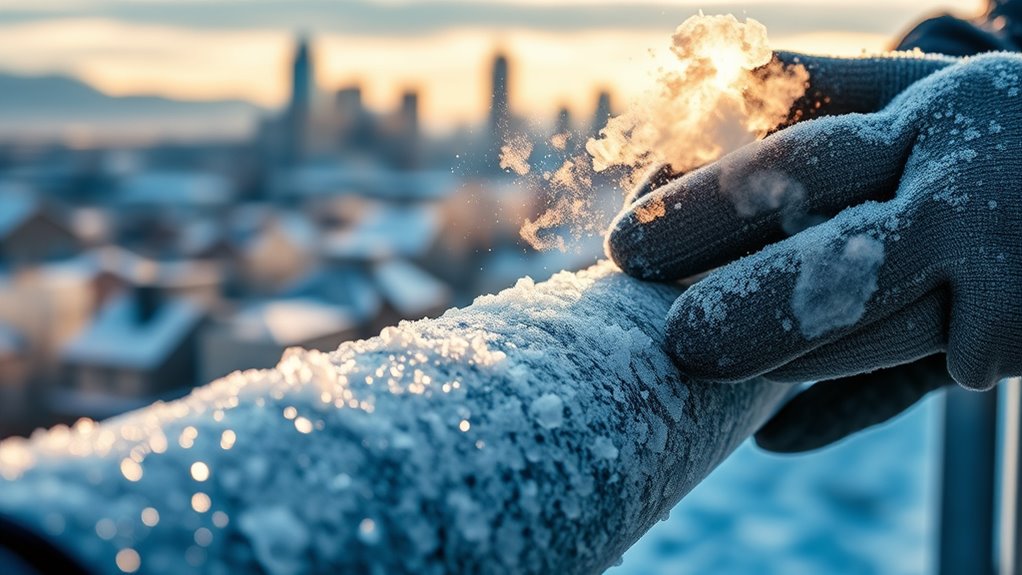
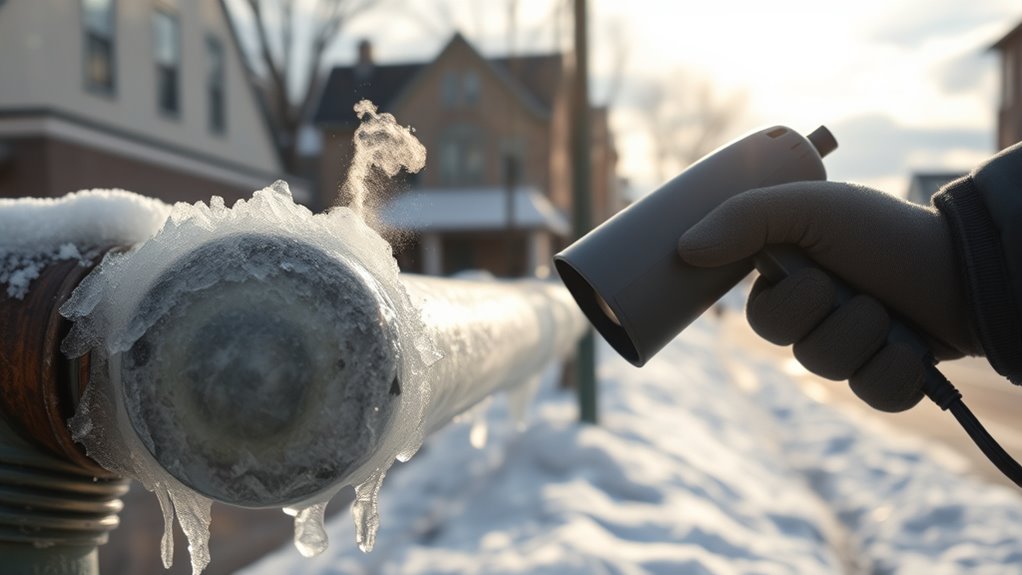
Although frozen pipes can be hard to spot at first, you can identify them quickly by checking for visible frost or condensation on exposed pipes, especially in unheated areas like basements or crawlspaces. Pay close attention to uninsulated sections and exterior walls where cold spots often develop.
If you notice bulging pipes, leaks, or ice buildup, these are clear signs that freezing is occurring inside the pipe. Slow or stopped water flow from faucets connected to these pipes signals a blockage caused by ice.
Listen carefully for unusual noises such as banging, clanking, or bubbling, which suggest internal ice movement.
Take Emergency Steps If Frozen Pipes Burst
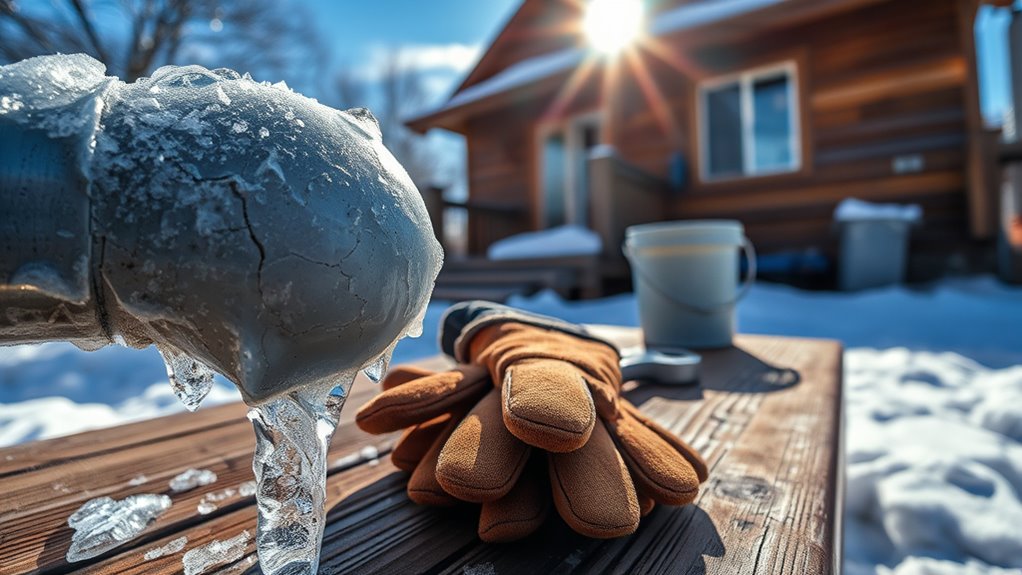
Recognizing frozen pipes early helps you act before a burst occurs, but if a pipe does break, you need to respond quickly to minimize damage. First, shut off water at the main valve to stop water leakage and prevent further water damage. Open faucets to relieve pressure and drain remaining water.
Avoid contact with standing water, especially near electrical outlets. Use towels to soak up leaks and protect your floor. Then, call a plumber for emergency repairs to fix the pipe crack and any burst pipe issues safely.
| Step | Action | Purpose |
|---|---|---|
| 1 | Shut off water | Prevent flooding |
| 2 | Open faucets | Relieve pressure |
| 3 | Soak up water | Protect floors |
| 4 | Avoid standing water | Ensure safety |
| 5 | Call a plumber | Emergency repairs |
How to Safely Thaw Your Frozen Pipes
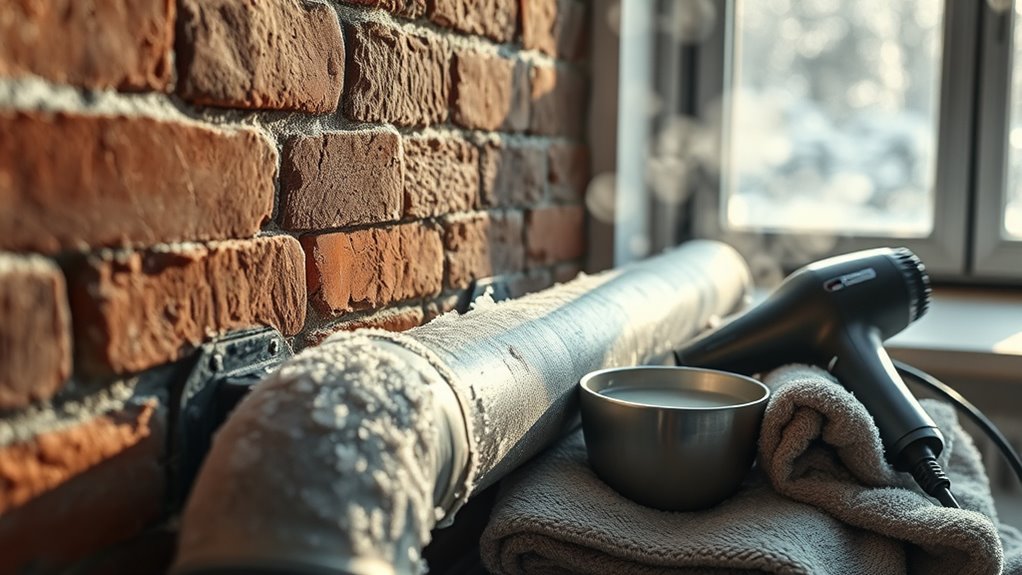
When your pipes freeze, you need to thaw them carefully to avoid causing damage or creating hazards. Start by turning on the faucet to relieve water pressure and let melting ice escape.
Use a hairdryer, space heater, or heat tape to apply warm air gradually, beginning at the faucet and moving outward along the frozen pipes.
Apply warm air gently with a hairdryer or heat tape, starting at the faucet and moving outward.
Avoid open flames or high heat to prevent pipe damage. Wrapping pipes with towels soaked in hot water can also help thaw them slowly and evenly.
Keep an eye out for any leaks during the process.
If thawing doesn’t work or you detect a leak, call a licensed plumber immediately.
Using proper pipe insulation and heat tape plays a key role in preventing frozen pipes, but safely thawing them requires patience and care.
Prevent Frozen Pipes This Winter
To prevent your pipes from freezing this winter, you’ll want to take proactive steps like insulating exposed pipes in unheated spaces and sealing any gaps that let in cold air. Use pipe insulation or foam sleeves in basements, attics, and crawl spaces to protect plumbing from cold temperatures.
Don’t forget to disconnect garden hoses and insulate outdoor faucets with faucet covers or insulated tape for leak prevention. Maintaining a steady indoor temperature of at least 65°F helps prevent freezing too.
During severe winter weather, let faucets drip slightly to keep water moving.
For extra home protection, consider installing heat cables on vulnerable pipes. These measures collectively reduce the risk of frozen pipes and costly damage, helping you stay ahead of winter’s chill.
When to Call a Professional for Frozen Pipes
If you suspect a pipe has burst or can’t safely thaw a frozen pipe yourself, call a licensed plumber immediately. Don’t wait if you notice extensive leaks or visible pipe damage like cracks or bulges. Attempting thawing pipes in hazardous spots, like behind walls or in the attic, also means it’s time to call a professional.
Ignoring these signs can lead to severe water damage requiring restoration services.
| When to Call a Professional | Why It’s Important |
|---|---|
| Burst pipes or extensive leaks | Prevents serious water damage |
| Unsafe or failed thawing attempts | Avoids pipe damage |
| Frozen pipes in inaccessible areas | Ensures safe and effective repair |
| Visible pipe damage | Requires specialized repair |
Always seek professional help to minimize risks and costly repairs.
Frequently Asked Questions
Do You Drip Hot Water to Prevent Pipes From Freezing?
Yes, you should drip hot water to prevent pipes from freezing. Keep a slow, steady stream flowing, about the width of a spaghetti strand, especially during extreme cold.
This helps maintain warmth without wasting water or raising bills.
Should You Shut Your Water off if Your Pipes Freeze?
Yes, you should shut off your water if your pipes freeze. Doing so prevents pressure buildup and potential bursts, minimizing damage.
Then, call a licensed plumber to safely thaw and repair the pipes.
Will Salt Water Unfreeze Pipes?
No, salt water won’t unfreeze pipes. It lowers freezing points but can’t thaw frozen pipes.
You’ll need to use gentle heat or professional help to safely thaw frozen pipes without causing damage or bursts.
How Long Can Pipes Stay Frozen Before Bursting?
Frozen pipes can be ticking time bombs; you’ve got about 24 to 48 hours before they likely burst.
Don’t wait—thaw them quickly to dodge costly damage and keep your home safe and dry.
Conclusion
Just when you think a quiet Salt Lake City winter can’t surprise you, frozen pipes might catch you off guard. But if you act fast—spotting the freeze, safely thawing the pipes, or calling a pro when needed—you’ll avoid costly damage.
Remember, prevention is your best friend before the cold hits. So, stay prepared and don’t wait for a burst to remind you how important these steps really are.
By knowing what to do if pipes freeze in Salt Lake City, you can protect your home and save on expensive repairs. Staying vigilant and taking early action keeps your plumbing safe all winter long.