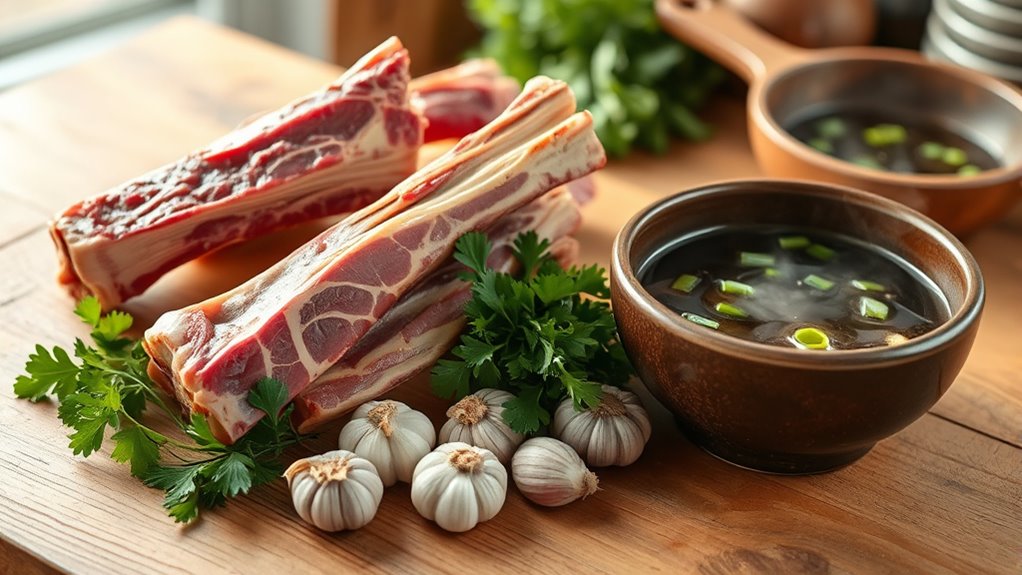
What to Do With Beef Soup Bones
If you have beef soup bones, start by roasting them to boost flavor. This simple step enhances the depth and richness of your broth.
Then, simmer the bones slowly with water, vinegar, and aromatics to create a rich, nutrient-packed broth.
This broth makes a great base for soups, stews, or even sipping for health benefits.
You can also use the marrow in sauces or spreads to add extra depth and complexity to your dishes.
With gentle cooking and proper seasoning, you’ll release rich flavors and nutrients from the bones.
Keep exploring to discover tips for preparation, recipes, and storage to make the most of your beef soup bones.
What Are Beef Soup Bones And Why Use Them
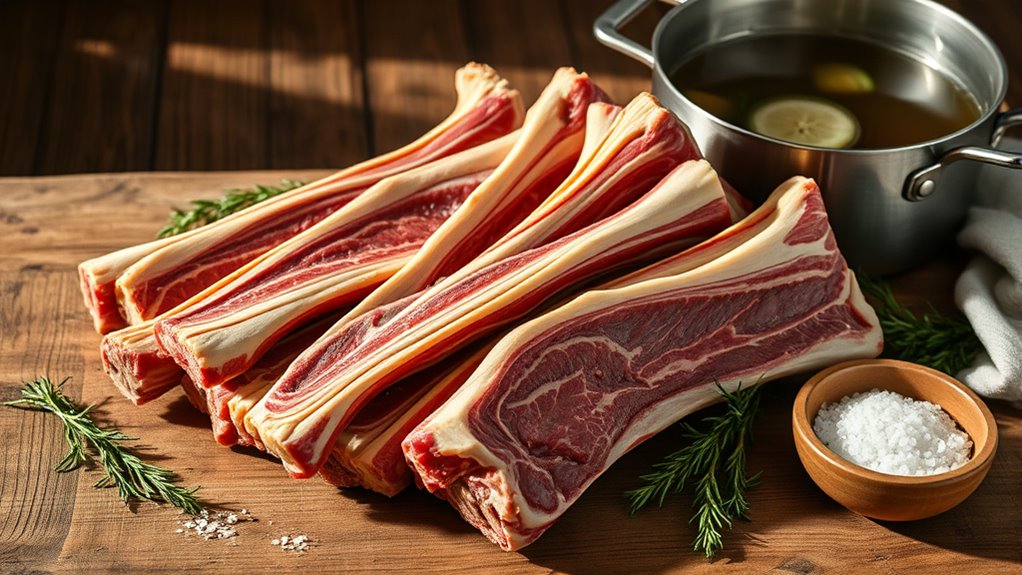
Although you might not have thought much about them before, beef soup bones are essential for adding rich flavor and nutrients to your broths and soups. These bones come from the cow’s shank or upper leg, typically 4-6 inches long and oval-shaped. Packed with marrow, collagen, and minerals, beef soup bones enrich your broth or beef stock with deep, savory taste and valuable nutrients.
Whether they have some meat attached or are mostly marrow, these bones release gelatin and vitamins as they simmer, boosting both flavor and nutrition. Using beef soup bones in your cooking means you get a hearty, nutrient-dense broth perfect for stews, pho, or any dish needing a robust beef stock base. They’re a simple way to elevate your meals naturally.
How To Prepare Beef Soup Bones For Cooking
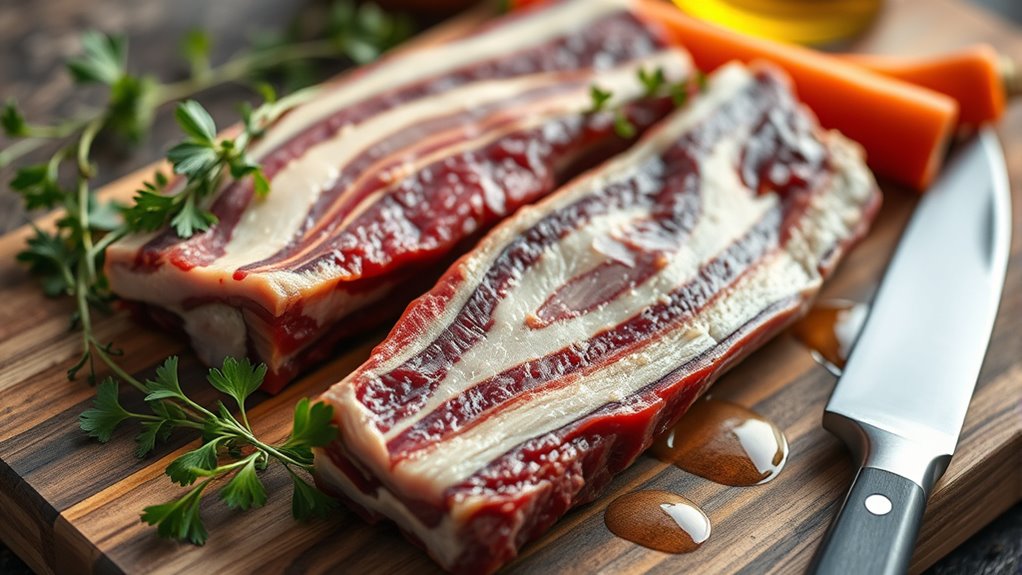
Now that you understand the value beef soup bones bring to your broth, it’s time to prepare them properly to reveal their full flavor and nutrients. Start by rinsing the beef soup bones under cold water to clear blood and debris. For richer taste, roast the bones at 450°F for 40 minutes, turning once.
Then place them in a pot, cover with cold water, and add apple cider vinegar to draw out minerals. Include aromatics like onions and garlic to enhance flavor.
| Step | Action |
|---|---|
| Rinse | Clean bones under cold water |
| Roast | 450°F for 40 minutes, turn halfway |
| Place in Pot | Use large stockpot or slow cooker |
| Add Liquid & Vinegar | Cover bones, add apple cider vinegar |
| Add Aromatics | Onions, carrots, garlic, herbs |
This method sets the stage for a nutrient-rich beef bone broth.
Slow Cooking Methods For Beef Soup Bones
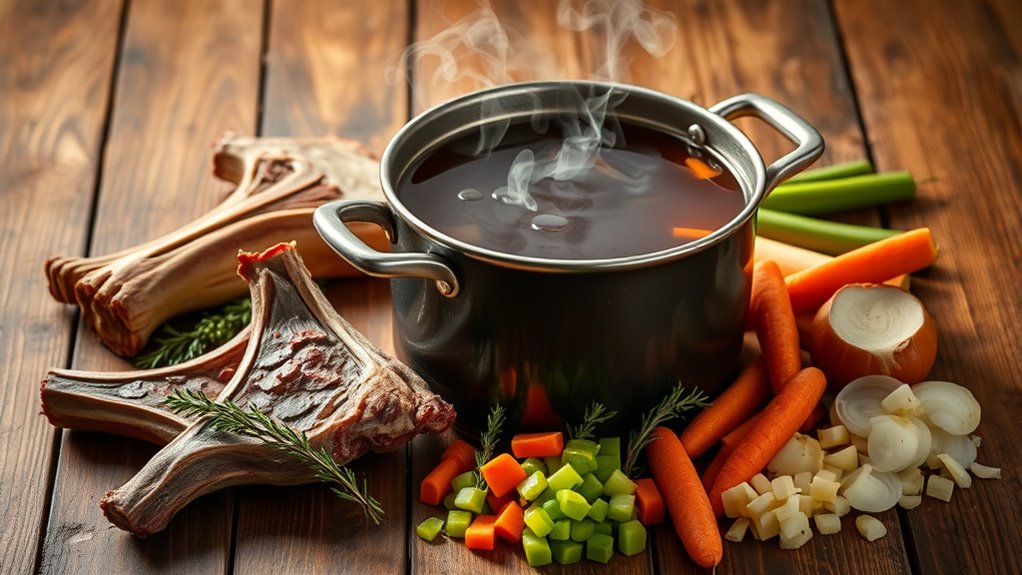
When you slow cook beef soup bones in a crockpot or Dutch oven, you gently draw out marrow, collagen, and nutrients over 8 to 12 hours, enhancing both flavor and richness. Start by browning the bones to deepen the taste, then place them in your slow cooker with water, a splash of apple cider vinegar, and optional vegetable stock for added complexity.
Keep the heat low to avoid boiling, which keeps your beef broth clear and flavorful. Alternatively, you can simmer bones at 200°F in the oven or on the stovetop for 2 to 3 hours for a quicker method.
This slow cooking approach ensures you extract maximum nutrition and create a rich base perfect for soups and stews.
Making Nutrient-Rich Bone Broth From Beef Soup Bones
Slow cooking beef soup bones not only brings out rich flavors but also unearths a wealth of nutrients that make bone broth a powerful addition to your diet. Start by roasting the beef bones to deepen flavor and boost nutrient extraction.
Then, simmer them gently for 8 to 24 hours to draw out collagen, marrow, minerals, and amino acids. This slow process transforms the bones into a nourishing bone broth packed with nutrition that supports gut, immune, and joint health.
After cooking, strain the broth to remove solids, leaving you with a clear, nutrient-dense liquid. You can enjoy this broth on its own or use it as a flavorful base for your favorite soups and stews, maximizing the benefits of beef bones in every cup.
Using Meatless Beef Soup Bones To Enhance Broth Flavor
You can use meatless beef soup bones to create a rich, flavorful broth packed with nutrients like collagen and marrow. Roasting these bones before simmering brings out a deep, savory taste that enhances any soup or stew.
Plus, it’s a cost-effective way to make a nourishing broth without relying on meat.
Benefits Of Meatless Bones
Although meatless beef soup bones contain little to no meat, they still release rich marrow, collagen, and essential minerals during simmering, giving your broth a deep, nourishing flavor. Using meatless bones for bone broth offers several benefits you’ll appreciate:
- Nutrient-Rich: Extract collagen and minerals that support joint, skin, and gut health.
- Cost-Effective: Meatless bones are economical, letting you make nutrient-dense broth without pricey meat cuts.
- Clear Broth: Slow simmering of meatless bones yields a rich, gelatinous broth without cloudiness.
These bones provide a lighter, versatile base for soups and stews, making your broth both healthy and flavorful.
Enhancing Broth Flavor
Meatless beef soup bones don’t just build a nutritious base—they bring a surprising depth of flavor to your broth. Even without meat, these beef bones contain marrow and collagen that release rich flavors during a long simmer.
For flavor enhancement, try roasting the bones before boiling; this caramelizes their surface and deepens the broth’s savory notes. Adding aromatics like onions, garlic, and herbs during simmering boosts the broth’s complexity.
A splash of apple cider vinegar helps extract minerals and gelatin, enriching both taste and nutrition. Using meatless beef bones lets you craft a versatile broth that’s nutrient-dense and flavorful, perfect whether you’re aiming for vegetarian options or simply want to intensify your soup’s essence.
Adding Vegetables And Herbs To Beef Soup Bone Broth
When simmering beef soup bones, adding vegetables like carrots, onions, celery, and leeks enhances both flavor and nutrition. You can boost your broth’s depth by including fresh herbs such as bay leaves, thyme, and parsley, which also bring immune-boosting benefits.
Consider these tips to get the most out of your vegetables and herbs:
- Add vegetables at the start for a rich, integrated flavor or near the end for a fresher, crisper texture.
- Use herbs like rosemary or oregano to complement the broth’s savory richness.
- Combining vegetables and herbs not only enriches taste but also increases vitamins and minerals in your broth.
Incorporating these elements makes your beef soup bone broth more nourishing and flavorful.
Creative Recipes Using Beef Soup Bones And Broth
You can turn your beef soup bone broth into a rich foundation for countless flavorful dishes. Try using it to create hearty soups like Pho or beef stew that warm you from the inside out.
Don’t forget to incorporate the marrow into spreads or sauces to add a deep, savory boost to your meals.
Flavorful Broth Foundations
Although beef soup bones may seem simple, they pack a powerful punch of flavor and nutrients that transform any broth into a rich foundation for your recipes. When you use beef broth made from these bones, slow cooking extracts marrow, collagen, and essential vitamins, creating a nutrient-dense base.
To maximize flavor, follow these steps:
- Roast the bones first to deepen the umami taste.
- Simmer the bones slowly for several hours to release marrow and gelatin.
- Strain the broth carefully to get a clear, rich liquid perfect for your dishes.
This flavorful broth foundation elevates everything from sauces to stews, giving your meals a hearty, satisfying depth that only marrow-rich beef broth can provide.
Hearty Soup Creations
Since beef soup bones create a rich and nutrient-dense broth, they serve as the perfect base for crafting hearty soups that warm both body and soul. You can slow-cook beef bones to extract marrow and collagen, which enrich your broth with a silky, gelatinous texture.
Use this flavorful foundation to whip up a hearty soup like classic vegetable beef or a robust Guinness stew. Even bones with little meat yield deep flavor, allowing you to add fresh vegetables, herbs, and grains for a satisfying homemade meal.
Whether you prefer a traditional beef vegetable soup or an adventurous pho, beef bones provide versatility and nourishment, turning simple ingredients into comforting, delicious dishes that bring out the best in your broth and elevate your soup creations.
Marrow-Infused Dish Ideas
When you roast and slow-cook beef soup bones, the rich marrow that melts out can transform your dishes in surprising ways. This marrow is a powerhouse for flavor infusion, adding depth and richness to many recipes. Here are three creative ways to use it:
- Spread roasted marrow on toasted bread, seasoned with herbs and a pinch of salt, for an indulgent appetizer.
- Blend marrow into homemade pâtés or creamy dips, enhancing texture and imparting savory notes.
- Stir simmered marrow into sauces or gravies to boost both flavor and nutritional value, especially collagen content.
Using marrow from beef bones not only elevates taste but also enriches your meals with nourishing goodness. Try these marrow-infused ideas to make the most of your beef bones.
Tips For Storing And Freezing Beef Soup Bones And Broth
To keep your beef soup bones and broth fresh and flavorful, you’ll want to store them properly right from the start. Store raw beef bones in the freezer for 6-12 months to maintain quality. When freezing broth, cool it fully and use airtight containers or freezer bags to prevent spills and save space.
Label everything with dates for easy rotation. Remember, chilled broth gels due to collagen, signaling it’s perfect for storage.
| Item | Storage Tip |
|---|---|
| Beef Bones | Freeze up to 12 months, keep airtight |
| Broth | Cool completely, freeze in silicone bags |
| Labeling | Date all packages for freshness tracking |
These storage tips help you enjoy rich broth anytime without waste.
Where To Buy Quality Beef Soup Bones
You can find quality beef soup bones at local butcher shops where you’ll get fresh, well-sourced options. Online farm suppliers also offer convenient delivery of organic, hormone-free bones straight to your door. Choosing either source guarantees you’re using bones packed with flavor and nutrients for your soup.
Local Butcher Shops
Although grocery stores offer beef soup bones, local butcher shops give you the advantage of selecting high-quality options like shank, osso buco, or marrow bones. When you buy from a butcher, you can pick butcher bones from grass-fed beef, which enhances your broth’s flavor and nutrition.
Plus, many shops sell bones in bulk, making it easier to prepare large batches of rich, hearty broth.
Here’s why local butcher shops stand out:
- They offer fresher, ethically sourced bones.
- You can find bones with attached meat or organ meats for extra flavor.
- Supporting local butchers helps small businesses thrive.
Choosing your beef soup bones locally ensures quality and a better broth experience.
Online Farm Suppliers
Local butcher shops provide excellent options for beef soup bones, but online farm suppliers expand your choices even further. When you buy from online farm suppliers like Seven Sons Farms, you gain access to high-quality, grass-fed beef soup bones directly from local farms. These platforms offer detailed descriptions of bone cuts—like marrow bones, knuckles, and neck bones—so you get exactly what you need for rich broth.
Plus, purchasing online often guarantees organic, hormone-free, and antibiotic-free bones, ensuring purity and better flavor. Many suppliers let you order in bulk, perfect for stocking up. Customer reviews and farm certifications also help you trust the quality and sustainable sourcing.
If you want premium beef soup bones delivered to your door, online farm suppliers are a smart choice.
Common Mistakes To Avoid When Cooking Beef Soup Bones
When cooking beef soup bones, paying attention to key details can make all the difference in the quality of your broth. Avoid these common mistakes to guarantee rich flavor and broth clarity.
First, don’t boil your beef bones vigorously; instead, keep a gentle simmering to prevent emulsifying impurities that cloud the broth. Second, always roast or brown the bones before simmering to develop deeper flavor.
Third, avoid overcrowding the pot—too many bones with insufficient water stops proper extraction of marrow and nutrients. Also, remember to add an acid like apple cider vinegar to break down collagen for a gelatin-rich broth.
Finally, strain your broth thoroughly to remove bone fragments and guarantee smooth texture and clarity. Following these steps guarantees a superior broth every time.
Frequently Asked Questions
What Are Beef Soup Bones Good For?
Beef soup bones are great for making rich, flavorful broths packed with collagen and minerals. You can simmer or pressure-cook them to create soups, stews, or nourishing bone broth that supports your skin and joints.
Can You Eat the Meat From Beef Soup Bones?
You can eat the meat from beef soup bones; for example, after slow-cooking, Sarah shredded the tender meat into her stew, adding rich flavor and texture.
Just make sure it’s fully cooked and tender before enjoying it.
What to Do With Leftover Soup Bones?
You can freeze leftover soup bones, roast them again for added flavor, then simmer for 8-12 hours to make nutrient-rich broth.
Break cooled bones into pieces for storage or pressure canning, reducing waste and saving money.
How to Reuse Bones for Broth?
You can reuse bones by simmering them slowly with vegetables and herbs for 8-24 hours, extracting more nutrients.
Freeze unused bones, then cook in a slow cooker or pressure cooker to maximize collagen and flavor.
Conclusion
Now that you know how to open the rich flavors and nutrients hidden in beef soup bones, you might think you’ve seen it all. But here’s the secret: the real magic happens when you let time and patience work their wonders in your pot. Don’t rush it.
Trust the process, and you’ll discover a depth of taste that’ll transform simple meals into unforgettable experiences. Ready to taste what you’ve been missing? Using beef soup bones in your cooking is the key to unlocking rich, hearty flavors that elevate any dish.