5 Types of Salt Safe for Concrete Surfaces
When looking for safe salt options for concrete surfaces, it’s important to choose products that prevent damage while effectively melting ice. You’ll want to avoid rock salt since it can cause cracking and surface damage. Instead, try calcium chloride—it melts ice fast and is gentler on concrete.
Calcium magnesium acetate is eco-friendly and safe for your driveway. Potassium acetate also protects concrete while being environmentally conscious. These options help keep your surfaces intact and safe during winter.
Stick around, and you’ll find out how to pick and apply the best ice melt without harming your concrete.
Why Rock Salt Damages Your Concrete
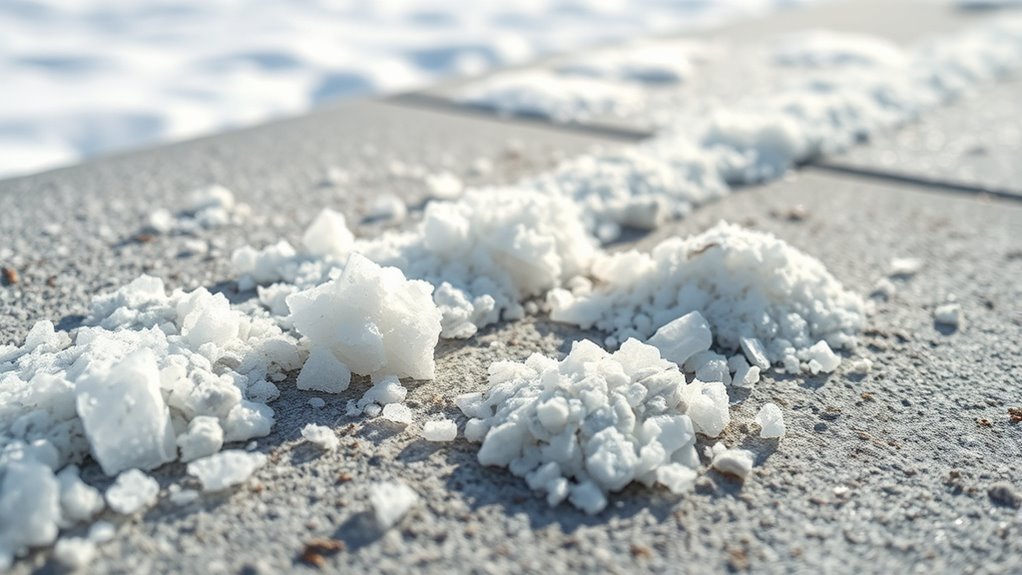
Although rock salt is commonly used to melt ice, it actually damages your concrete by triggering harmful chemical reactions. When rock salt penetrates the porous concrete, it reacts with calcium compounds to form calcium oxychloride, causing internal expansion and concrete damage. This leads to surface deterioration like scaling and cracking.
Additionally, salt lowers water’s freezing point, increasing freeze-thaw cycles that further weaken the surface. Over time, repeated salt penetration creates a corrosive environment that harms embedded rebar, resulting in rebar corrosion and structural issues.
Applying rock salt on new or unsealed concrete traps moisture inside, worsening scaling and cracking risks. To protect your concrete, it’s essential to understand how rock salt accelerates damage through chemical and physical processes.
Calcium Chloride Ice Melt: Fast and Concrete-Safe
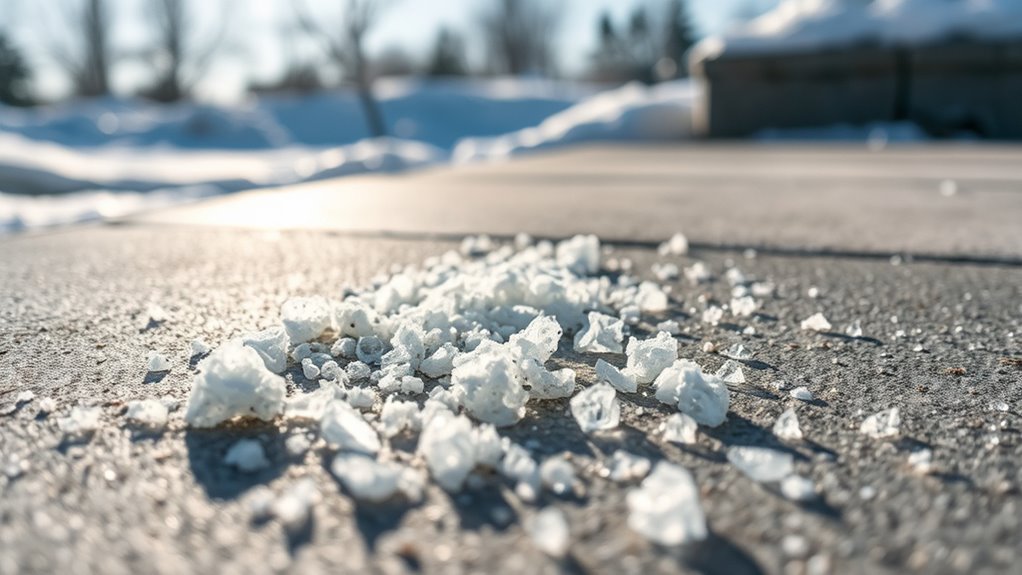
When you need ice to melt quickly without damaging your concrete, calcium chloride is an excellent choice. This ice melt works effectively at low temperatures, lowering the freezing point of water to as low as -25°F, making it perfect for tough snow removal and de-icing jobs.
Calcium chloride generates heat when it contacts moisture, speeding up fast melting and helping prevent ice from re-freezing.
Unlike harsher salts, calcium chloride is safe for concrete surfaces, minimizing surface damage and reducing scaling when used properly.
Its granular form spreads evenly, ensuring thorough coverage on walkways and driveways.
Calcium Magnesium Acetate: Eco-Friendly Ice Melt Option
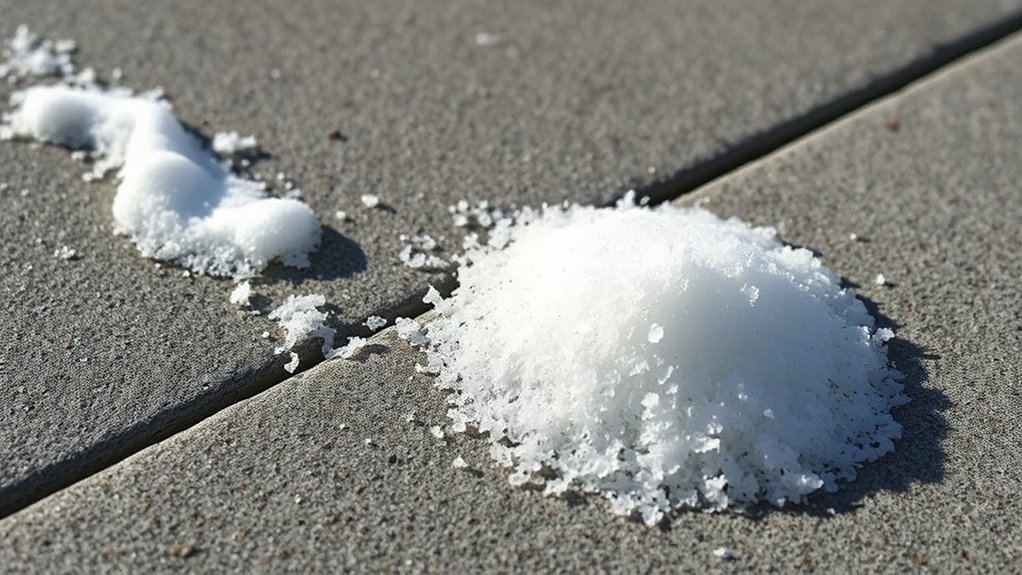
Because you want an ice melt that’s gentle on both the environment and your concrete, Calcium Magnesium Acetate (CMA) stands out as a smart choice. This eco-friendly ice melt works effectively on ice and snow while safeguarding your concrete surfaces during winter maintenance.
Here’s why calcium magnesium acetate is worth considering:
- Environmentally safe deicer that’s corrosion-resistant
- Melting power enhanced by an exothermic reaction
- Non-toxic and safe for pets and vegetation
- Tinted flakes improve visibility and ensure even coverage
- Reduces risk of concrete and rebar deterioration
Using CMA means you get a reliable, non-toxic solution that protects both your property and the environment. It’s ideal for anyone seeking a safe, effective, and eco-friendly ice melt option this winter.
Potassium Acetate and Additional Eco-Friendly Ice Melts
How can you guarantee effective ice melting without harming your concrete or the environment? Potassium acetate offers a reliable solution. This biodegradable, non-corrosive de-icing product melts ice efficiently down to -20°F and is gentle on concrete surfaces, preventing damage common with traditional salts.
Alongside potassium acetate, other eco-friendly ice melts like calcium magnesium acetate (CMA) serve as great salt alternatives. These environmentally safe options reduce water pollution and protect nearby vegetation during the winter season.
Using such de-icing products not only safeguards your concrete but also minimizes risks to pets and plants.
Choosing and Applying Ice Melt Without Damaging Concrete
Selecting the right ice melt is just the beginning of protecting your concrete surfaces during winter. To avoid surface damage and chemical damage, you need to apply ice melt products properly:
- Choose calcium chloride for effective melting at low temperatures, reducing excessive use.
- Opt for potassium acetate as an environmentally friendly, less corrosive alternative.
- Avoid rock salt to prevent surface deterioration and corrosion.
- Apply ice melt evenly, following manufacturer application rates closely.
- Pre-treat concrete surfaces to minimize chemical damage and prolong durability.
Frequently Asked Questions
What Kind of Salt Is Safe for Concrete?
You should use calcium magnesium acetate or potassium acetate since they’re gentle on concrete and eco-friendly.
Avoid sodium chloride and excessive calcium chloride, as they damage surfaces. Sand also works well without causing chemical harm.
What Is the Safest Salt to Use on a Driveway?
You’ll want to use calcium magnesium acetate—it reduces concrete damage by up to 90% compared to rock salt.
It’s gentle, effective, and protects your driveway, saving you costly repairs while keeping surfaces safe in icy weather.
Which Ice Melt Is Not Safe for Concrete?
You shouldn’t use ice melts with calcium chloride, magnesium chloride, or rock salt on concrete. These can cause surface scaling, cracking, and corrosion.
Always avoid high-chloride products to keep your concrete driveway safe and intact.
What Is a Good Alternative to Rock Salt for Concrete?
You can use calcium magnesium acetate or potassium acetate as good alternatives to rock salt. They’re gentler on concrete, eco-friendly, and effective.
Plus, using sand or organic de-icers helps avoid damage while improving traction.
Conclusion
Think of your concrete like a sturdy bridge between you and winter’s challenges. Choosing the right salt—like calcium chloride or calcium magnesium acetate—is like handing it a gentle shield, protecting it from harsh damage.
When you pick eco-friendly ice melts, you’re not just melting ice; you’re nurturing the path beneath your feet.
So, treat your concrete with care, and it’ll stand strong, a silent guardian through every icy storm you face. Using the right types of salt safe for concrete surfaces ensures durability and long-lasting protection.