What Is the Difference Between Kosher Salt and Canning Salt
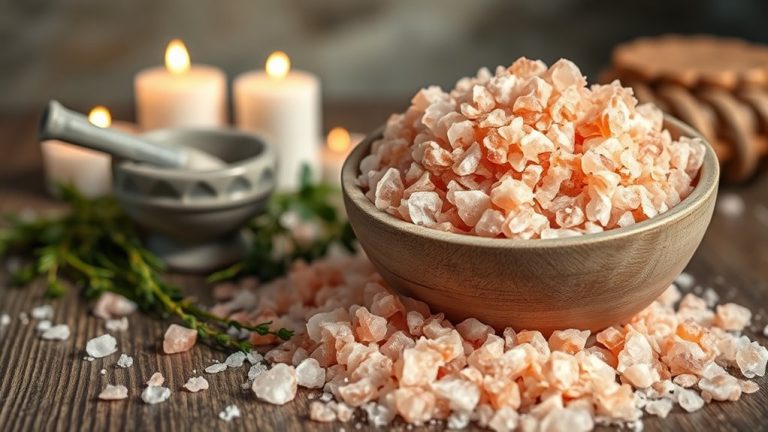
When you use kosher salt, you’ll notice its large, flaky crystals dissolve slower and take up more volume, making it great for seasoning and dry brining. Kosher salt is known for its coarse texture, which helps it cling well to food surfaces. This texture is ideal for cooking where you want a more controlled salt distribution.
Canning salt, on the other hand, has fine, uniform grains that dissolve quickly. It is perfect for pickling and preservation where clarity matters, as it doesn’t contain additives that can cloud the brine. The fine grains ensure even seasoning and a clean finish in canned goods.
Because grain size affects flavor and texture, you’ll want to adjust quantities carefully when swapping them. Keep these differences in mind, and you’ll understand how salt choice impacts your cooking and canning results. Choosing the right salt can make a notable difference in both taste and appearance.
Physical Differences Between Kosher Salt and Canning Salt
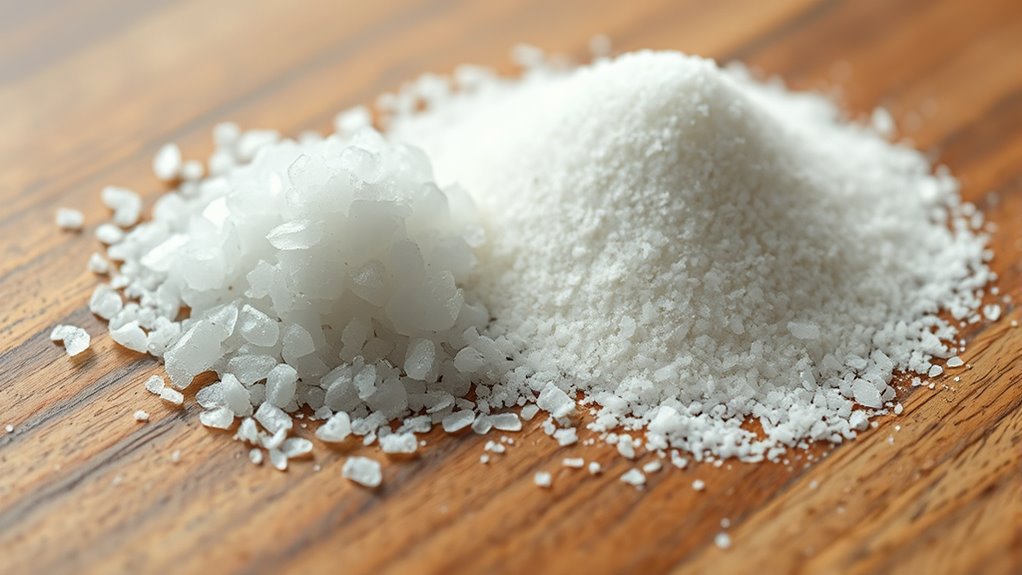
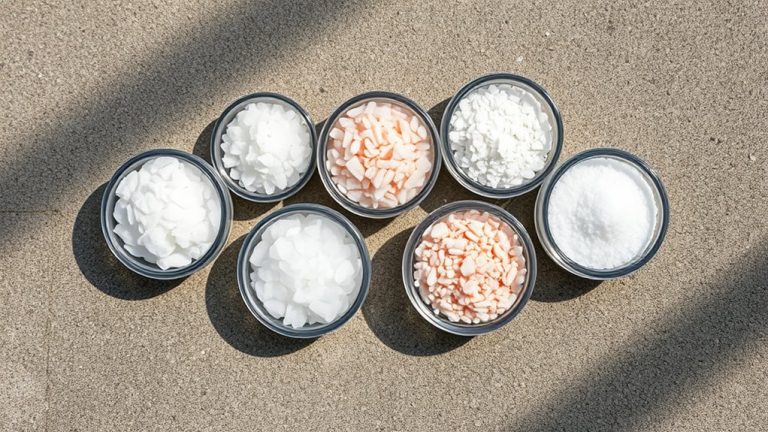
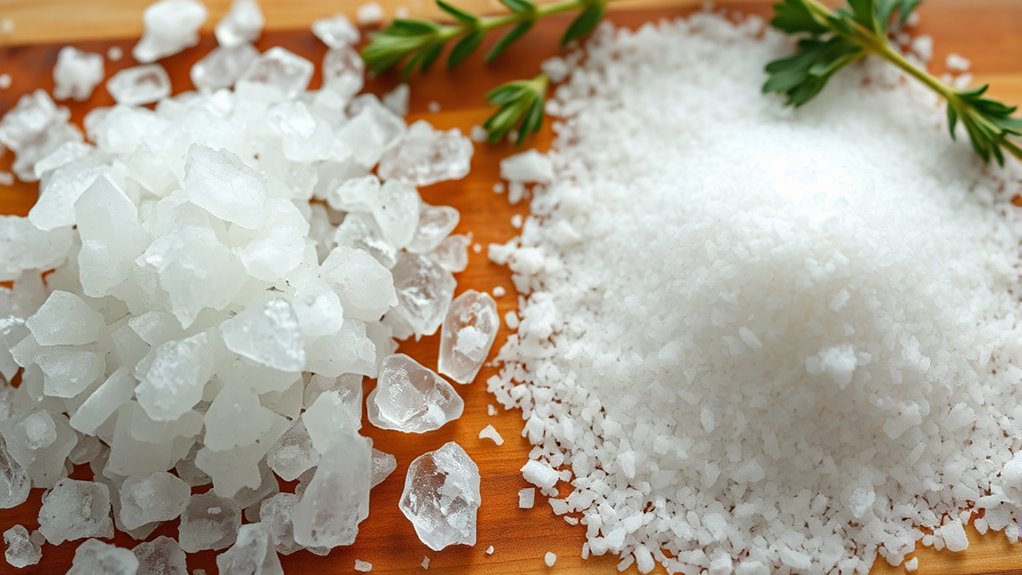
Although both kosher salt and canning salt are used for seasoning and preserving, they differ noticeably in their physical characteristics. You’ll notice that kosher salt has a larger grain size with flaky, irregular crystal shapes, giving it a coarse texture.
In contrast, canning salt features a much finer particle size with smaller, more uniform crystals, resulting in a smooth texture. These differences in crystal structure affect volume measurement since kosher salt’s larger grains take up more space, while the compact fine grains of canning salt pack more densely.
Additionally, canning salt’s fine texture improves solubility, allowing it to dissolve faster and more evenly in liquids. Understanding these physical differences helps you choose the right salt for your cooking and preserving needs.
How Salt Grain Size Affects Dissolving and Brining
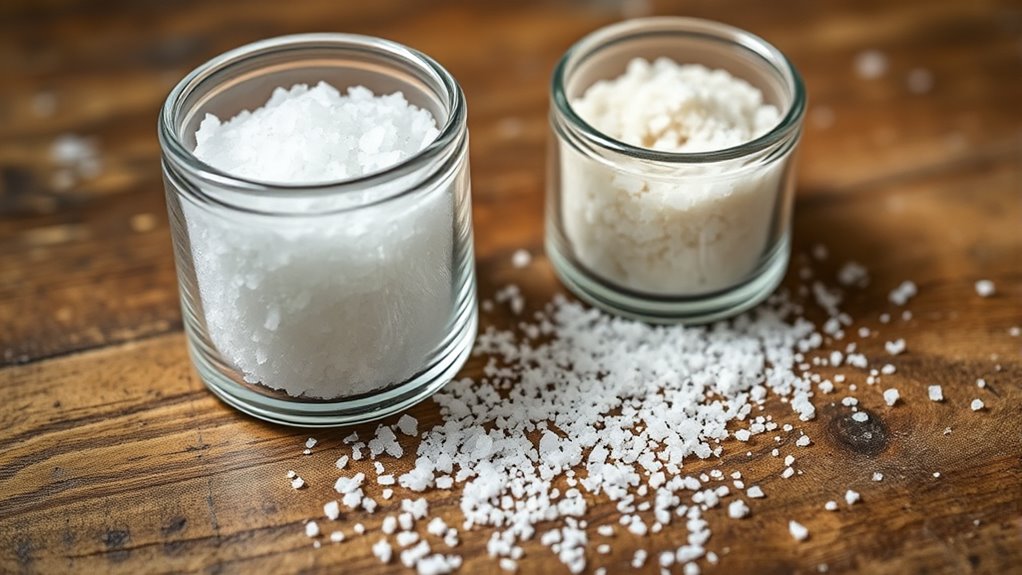
When you choose salt for brining, the grain size plays a crucial role in how quickly it dissolves and penetrates the food. Smaller salt crystals, like those in canning salt, have a larger surface area relative to their volume, which boosts their dissolving rate.
This means the salt dissolves faster and forms a more consistent brine, improving brine penetration and flavor absorption during brining or pickling.
In contrast, larger grains such as kosher salt take longer to dissolve, potentially causing uneven salt distribution and slower brining results.
Understanding how grain size affects dissolving and brining helps you pick the right salt to achieve efficient curing or pickling. The grain size directly impacts how quickly salt interacts with water and food, making it essential for effective brining.
When to Use Kosher Salt vs. Canning Salt
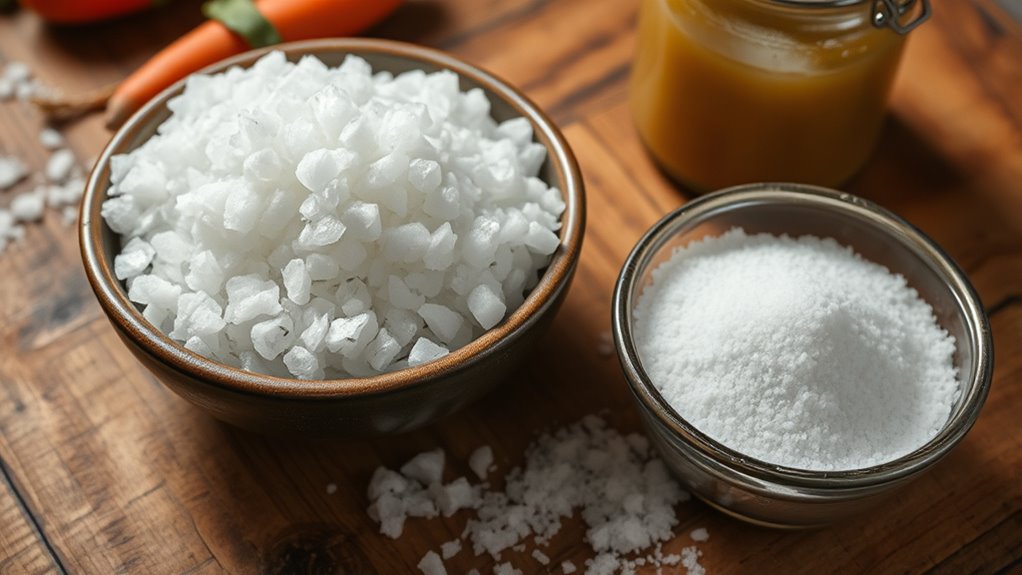
Because each type of salt behaves differently, choosing between kosher salt and canning salt depends on your cooking method.
Use canning salt for pickling and preserving since it dissolves quickly, creating a clear pickling brine without additives. Its fine texture ensures even distribution and fast dissolution, making it ideal as salt for pickling.
On the other hand, kosher salt’s coarse grains make it perfect for dry brining meats or seasoning, as it offers better control and absorption.
Keep in mind that salt measurement matters; due to their differing crystal sizes, you should measure by weight rather than volume to get accurate results.
Avoid swapping them without consideration to maintain flavor and texture in your recipes.
How to Substitute Kosher Salt for Canning Salt Safely
Switching from canning salt to kosher salt requires careful adjustments to keep your recipe balanced. Since kosher salt crystals are larger, you can’t substitute by volume directly. Use about 1¼ teaspoons of kosher salt for every teaspoon of canning salt or, better yet, weigh both salts for accurate salt measurement.
Always confirm your kosher salt has no anti-caking agents, as these additives can cause cloudiness in your brine or canned goods. Because kosher salt dissolves more slowly, dissolve it in water before adding it to your pickling or preserving brine to ensure even distribution.
Understanding the difference between pickling salt vs. kosher salt helps you substitute safely without compromising flavor or preservation.
Why Additive-Free Kosher and Canning Salt Matter in Pickling
Although it might seem minor, choosing additive-free kosher or canning salt plays an essential role in achieving clear, flavorful pickling brine.
When you use preservative-free kosher salt or canning salt, you avoid anti-caking agents and iodide that can cause cloudiness, off-flavors, and discoloration in your pickled foods.
These additives in regular table salt often compromise both the flavor and safety of your preserved products.
By opting for pure, additive-free salts, you guarantee consistent salt concentration, which is indispensable for proper preservation and taste.
This way, your pickling brine stays clear, and the final result maintains the intended crispness and flavor.
For reliable, high-quality pickling, additive-free kosher and canning salts are simply the best choice.
Frequently Asked Questions
Can I Substitute Canning Salt for Kosher Salt?
Yes, you can substitute canning salt for kosher salt, but you’ll want to measure by weight, not volume, because canning salt is finer and denser.
Adjust amounts carefully to maintain proper flavor and recipe balance.
What Is the Best Salt for Pickling?
If you want your pickles to shine, you’ll want canning salt. It’s pure and dissolves quickly, giving you a crystal-clear brine and consistent results.
Kosher salt’s charm lies elsewhere, but not in pickling precision.
Can Morton Kosher Salt Be Used for Canning?
Yes, you can use Morton kosher salt for canning if you weigh it instead of measuring by volume.
Just make sure it has no additives that could cloud your brine or affect your canned goods’ safety.
Is Canning the Same as Kosher Salt?
No, canning salt isn’t the same as kosher salt. You’ll find canning salt has finer crystals and no additives, making it perfect for preserving, while kosher salt’s larger flakes and possible additives affect measurements and use.
Conclusion
Choosing between kosher salt and canning salt is like picking the right key for a lock—each fits a specific purpose. Kosher salt’s larger grains dissolve slower, making it perfect for seasoning. On the other hand, canning salt’s fine texture works best for pickling and brining.
When substituting, measure carefully to keep flavors balanced. Remember, using additive-free salts ensures your preserves stay pure and tasty.
With the right salt, you open the full potential of your recipes every time. Understanding the difference between kosher salt and canning salt helps you choose correctly and achieve the best results in your cooking and preserving.