
Does Epsom Salt Help Bee Stings?
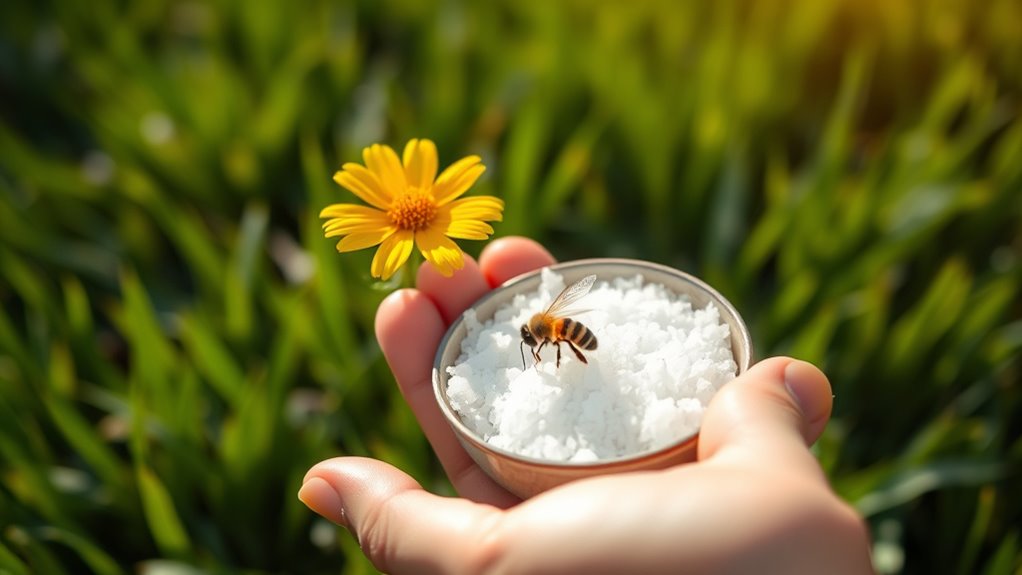
Yes, Epsom salt can help soothe bee stings by reducing inflammation and drawing out venom from your skin, thanks to its magnesium content. Using Epsom salt for bee stings is a natural remedy that can ease pain, swelling, and itching effectively. It offers a chemical-free way to provide relief and promote healing.
You can use Epsom salt as a warm soak, compress, or paste to target the affected area. Applying it carefully encourages faster healing and comfort by calming irritated skin. If you want to know how to prepare and use Epsom salt safely and compare it to other remedies, there’s plenty more to explore.
How Epsom Salt Helps Soothe Bee Stings
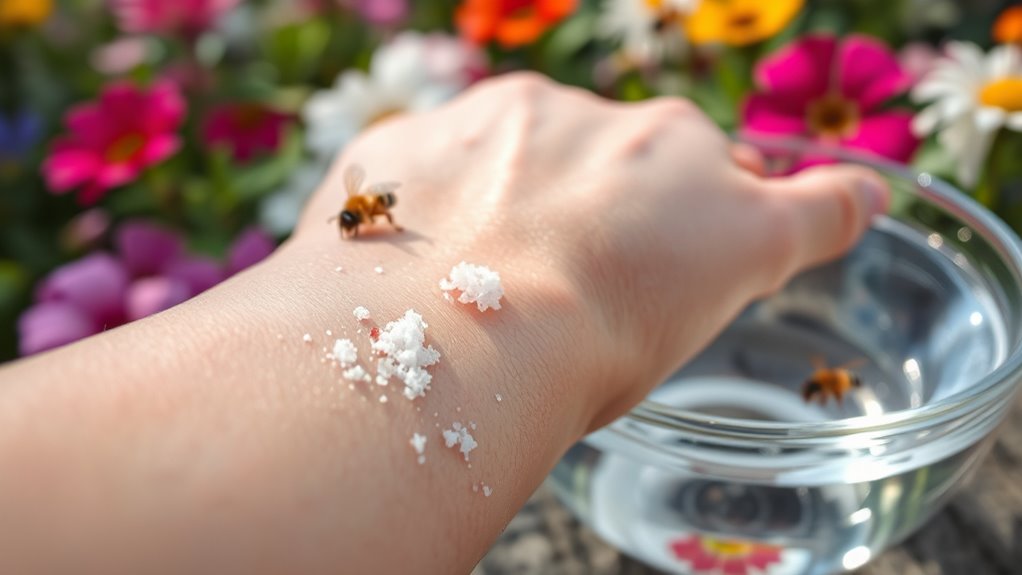
Although bee stings can cause painful swelling and itching, you can ease these symptoms by using Epsom salt. When dissolved in water and applied to the sting, Epsom salt helps draw out venom and toxins from your skin.
Thanks to its magnesium content, it works to reduce inflammation and swelling effectively. This natural remedy soothes the affected area, calming irritated skin and promoting faster healing.
Magnesium-rich Epsom salt reduces inflammation, soothes irritation, and speeds healing of bee sting wounds.
By soaking or applying an Epsom salt compress, you encourage your skin to contract, which alleviates discomfort and reduces itching.
Using Epsom salt regularly on insect bites provides reliable relief by calming inflammation and soothing pain, making it a simple, effective way to manage the aftermath of bee stings without harsh chemicals or medications.
Step-by-Step Guide to Using Epsom Salt for Bee Stings
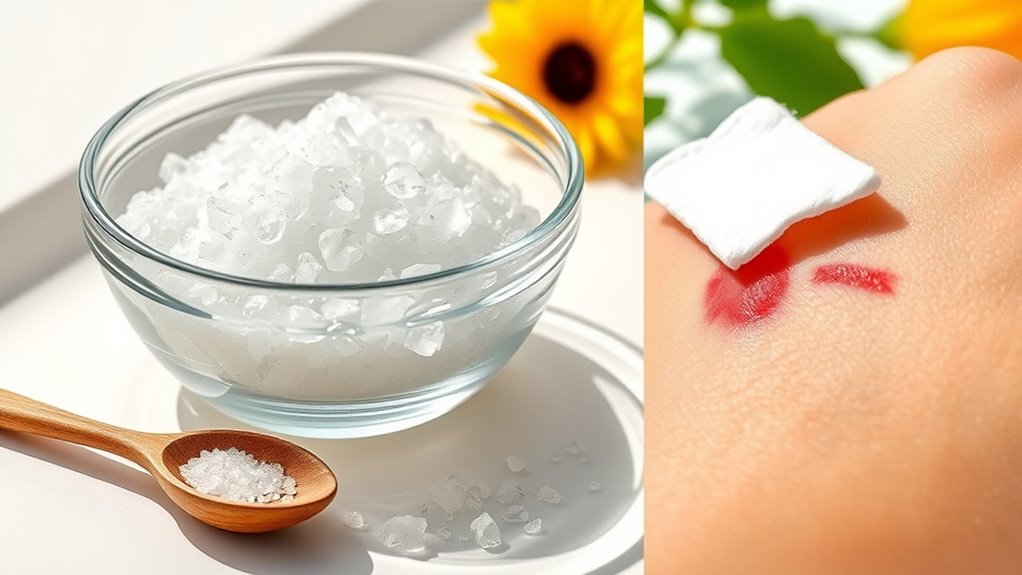
When you get stung by a bee, using Epsom salt can quickly ease your discomfort. Start by dissolving 2 tablespoons of Epsom salt in a cup of warm water to create a soothing solution. Soak a clean cotton cloth or gauze in it, then apply the compress to the affected area for 10-15 minutes.
This helps reduce swelling and relieve pain. If you prefer, mix a teaspoon of Epsom salt with a little water to form a paste and apply it directly to the sting.
For multiple stings or widespread irritation, add two cups of Epsom salt to a warm bath and soak for 10-20 minutes.
Repeat these steps as needed to maintain relief and promote healing.
Epsom Salt vs. Other Home Remedies for Bee Stings
You might be wondering how Epsom salt stacks up against other home remedies like baking soda, honey, or vinegar. Epsom salt works by reducing inflammation and drawing out toxins, which can feel more soothing than the neutralizing effects of baking soda or the antibacterial properties of honey and vinegar.
Let’s compare how each option can ease your bee sting symptoms.
Epsom Salt Benefits
How does Epsom salt stand out among home remedies for bee stings? Epsom salts contain magnesium sulfate, which effectively reduces inflammation and swelling caused by bee venom. When you apply an Epsom salt paste or soak, it helps draw out the venom while soothing irritated skin, offering relief that many other home remedies can’t match.
Unlike treatments like baking soda or vinegar, Epsom salt delivers magnesium directly through your skin, enhancing natural anti-inflammatory effects.
Plus, Epsom salt baths provide whole-body relief if you’re dealing with multiple stings or widespread irritation.
Scientific evidence supports Epsom salt’s ability to decrease pain and inflammation, making it a reliable, preferred choice when treating bee stings at home.
Baking Soda Comparison
Epsom salt offers notable anti-inflammatory benefits for bee stings, but it’s not the only home remedy people turn to. Baking soda, for example, works differently by neutralizing the acidic venom at the sting site, which can lead to faster pain relief and reduced itching.
While Epsom salt primarily provides anti-inflammatory effects through magnesium absorption—usually in baths or compresses—baking soda is often applied directly as a paste. This direct application can make baking soda more effective for immediate relief.
However, both remedies have their place, with baking soda favored for quick pain relief and Epsom salt for soothing inflammation over time. Keep in mind, scientific support for Epsom salt is limited, while baking soda’s benefits for bee sting treatment are better documented.
Honey And Vinegar
When treating bee stings at home, honey and vinegar stand out as effective natural options. Unlike Epsom salt, which is mainly used in baths or compresses, honey and vinegar directly soothe the sting by neutralizing venom and reducing itching.
Honey’s antibacterial properties also help prevent infection, making it a valuable home remedy.
You can try these simple treatments to soothe bee stings:
- Dab honey on the sting site to calm irritation
- Apply vinegar with a cotton ball to neutralize venom
- Use honey to cover the sting, reducing swelling
- Combine vinegar and water for a gentle rinse
- Repeat applications as needed for relief
These home remedies work quickly and are often recommended over Epsom salt for immediate bee sting care.
What to Expect When Using Epsom Salt on Bee Stings
Although bee stings can cause immediate pain and swelling, soaking the area in a warm Epsom salt bath or applying a compress can quickly ease discomfort.
You’ll notice the soothing warmth helps reduce swelling and pain by promoting skin contraction and flushing out venom fragments.
This natural remedy’s anti-inflammatory properties, thanks to its magnesium content, work to calm irritation and lessen itching.
Soaking for 10-20 minutes offers relief and supports faster healing.
With consistent use, you can expect the sting’s severity to diminish more rapidly, making recovery smoother. Keep in mind, Epsom salt provides a gentle yet effective way to manage sting symptoms, helping you feel better without harsh chemicals or medications.
Epsom Salt Precautions and Side Effects to Know
Since your skin can react differently, it’s important to be cautious when using Epsom salt on bee stings. While generally safe for topical application, Epsom salt may cause allergic reactions or skin irritation in some people.
To avoid adverse reactions, consider these safety precautions:
- Test on a small skin area before full use
- Avoid applying on broken or severely irritated skin
- Limit frequency to prevent dryness or redness
Discontinue use if you notice swelling or itching. Consult a healthcare professional if symptoms worsen.
Making an Epsom Salt Compress at Home
If you want to soothe a bee sting quickly, making an Epsom salt compress at home is simple and effective. Start by dissolving 2 tablespoons of Epsom salt in one cup of warm water until fully dissolved.
Soak a clean cotton cloth or gauze in the solution, making sure it’s saturated but not dripping. Gently wring out any excess liquid, then place the compress directly on the sting or affected area.
Keep it there for 10-15 minutes, re-soaking the cloth if it cools or dries out. Applying this Epsom salt compress can help reduce swelling and pain caused by bee stings, easing inflammation and promoting faster relief.
This quick remedy is a handy way to manage discomfort right at home.
Tips for Preventing and Managing Bee Stings
To minimize your chances of getting stung by bees, you should take a few proactive steps when spending time outdoors. Avoid wearing bright colors or strong scents that attract bees. Stay calm and move slowly if a bee approaches to reduce the risk of provoking it.
Stay calm, move slowly, and avoid bright colors or strong scents to reduce bee sting risks outdoors.
If you do get stung, quickly remove the stinger to prevent more venom from entering your skin. Then, use water to clean the sting site and apply an Epsom salt paste to reduce swelling and pain.
- Wear light-colored, smooth clothing
- Avoid floral perfumes or scented lotions
- Keep food and sugary drinks covered
- Stay away from blooming flowers and trash bins
- Use Epsom salt compresses to soothe the sting site
These tips help you manage and prevent bee stings effectively.
Frequently Asked Questions
What Draws Venom Out of a Bee Sting?
You draw venom out of a bee sting by applying cold compresses or soaking the area in Epsom salt, which reduces swelling and pulls venom through skin contraction.
Sticky substances can also help remove the stinger and venom.
Does Soaking in Epsom Salts Help Bug Bites?
You might think soaking won’t ease bug bites, but it does. Epsom salts reduce swelling, relieve itching, and draw out toxins.
Is Epsom Salt Bath Safe During Pregnancy?
Yes, you can safely use Epsom salt baths during pregnancy if you keep the water warm, not hot.
Always consult your healthcare provider first, especially if you have any complications or concerns about your pregnancy.
What Helps a Bee Sting Heal Faster?
You can heal a bee sting faster by applying an Epsom salt paste or soak to reduce swelling and pain. Combining it with ice and keeping the area clean helps soothe and speed up recovery effectively.
Conclusion
So, next time a bee decides you’re its new best friend, grab some Epsom salt instead of freaking out. Sure, it won’t turn you into a superhero overnight, but it’ll help soothe that sting better than staring at it and hoping it magically disappears.
Just don’t expect it to work miracles—Epsom salt’s more like the chill friend who brings ice packs, not the avenger who fights off the pain. Stay calm, salt up, and sting smarter!
When it comes to bee stings, Epsom salt can be a helpful natural remedy to reduce swelling and ease discomfort. Using Epsom salt for bee stings is a simple, effective way to help soothe the affected area.