

Does Salt Cause Your Migraine Headaches?
Salt doesn’t directly cause your migraine headaches, but it can affect how often and how badly you get them. Too little salt or suddenly cutting back might trigger headaches.
On the other hand, some studies show that higher salt intake could actually lower migraine attacks.
Your brain’s sodium levels play a big role too, independent of your diet. They influence nerve activity linked to migraines, which adds another layer to this complex connection.
So, it’s not just about how much salt you eat, but also how your brain handles sodium.
Keep exploring this connection to better understand how salt impacts your migraine risk. Understanding these details can help you manage your migraines more effectively.
Key Takeaways
- Higher salt intake may actually reduce how often migraines happen. So, salt doesn’t directly cause migraines in every case.
- Interestingly, brain sodium levels go up during migraines, and this happens regardless of how much salt you eat. This change plays a role in triggering migraines.
- When people crave salt during a migraine, it might be a sign of an electrolyte imbalance. This imbalance can make symptoms worse, but it’s not the cause of the migraine itself.
- Eating too much salt or suddenly cutting salt out of your diet can both set off or worsen headaches.
- Overall, migraine risk seems tied to how sodium is regulated in the brain, not just how much salt you consume through food.
How Dietary Salt Intake Affects Migraine Risk and Symptoms

Although it might seem counterintuitive, higher salt intake has been linked to fewer migraine attacks in some studies, suggesting the relationship between dietary sodium and migraines is complex. When you monitor your salt intake, you might notice it influences migraine risk differently than expected.
Higher salt intake may reduce migraine frequency, revealing a complex link between sodium and migraines.
During migraine episodes, cerebrospinal fluid sodium rises even though blood sodium levels stay steady, hinting that brain sodium regulation plays a role beyond just what you eat. If you experience salt cravings during migraines, it could signal an electrolyte imbalance, especially sodium deficiency, which may worsen migraine symptoms.
Conversely, following a low salt diet or experiencing salt withdrawal can trigger headaches or increase their severity, particularly if your body is sensitive to sodium changes. Balancing dietary sodium is key since both too much and too little salt can act as headache triggers.
Understanding your individual response to salt intake can help manage migraine risk and symptoms more effectively. So, pay attention to how your body reacts—it might just be the key to feeling better.
How Brain Sodium Levels Influence Migraines Beyond Dietary Salt
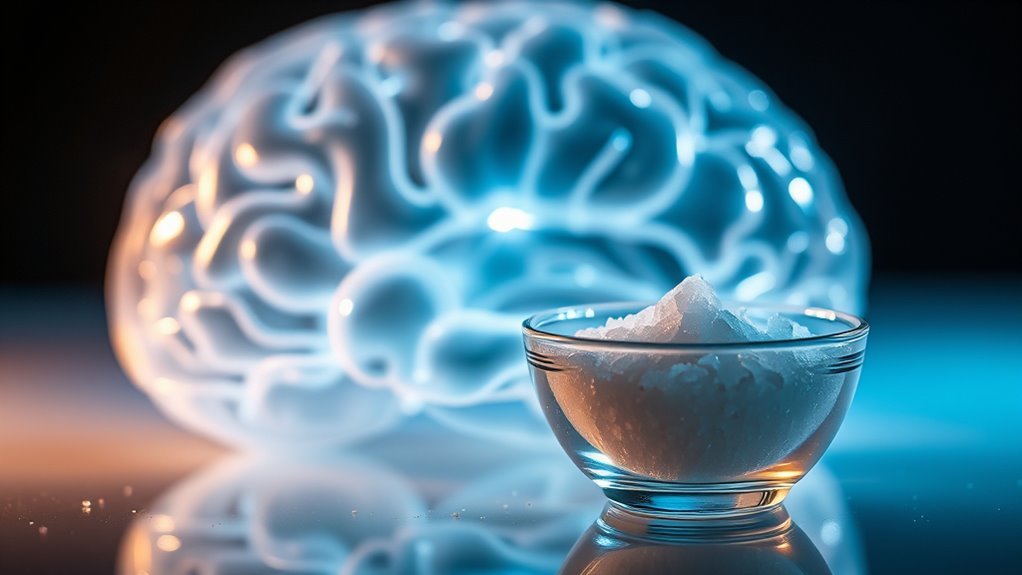
You might think that controlling your salt intake directly manages migraine risk, but brain sodium levels tell a different story. Elevated brain sodium in the cerebrospinal fluid often spikes during migraine episodes, independent of dietary salt or blood plasma changes.
This shows that sodium regulation within the brain, not just your salt intake, plays a vital role in migraine pathophysiology. Neural sodium dynamics influence how excitable your neurons become, with increased extracellular sodium potentially triggering cortical spreading depression—a key migraine trigger.
Your brain maintains sodium homeostasis through specialized neurons that monitor cerebrospinal fluid sodium levels and affect salt appetite, linking sodium sensitivity to migraine susceptibility. Disruptions in this delicate sodium balance can promote migraine episodes even if you don’t consume excess salt.
Understanding these internal sodium processes helps explain why lowering dietary salt alone might not prevent migraines. It really emphasizes the significance of brain sodium regulation beyond just what you eat.
Frequently Asked Questions
How to Get Rid of Sodium Migraine?
To get rid of a sodium migraine, you should balance your sodium levels by drinking electrolyte-rich fluids. Avoid excessive salt and try to eat a low-salt diet.
Also, it’s a good idea to consult your healthcare provider for personalized advice and treatment options. They can help you figure out what works best for you.
What Does a Salt Headache Feel Like?
About 30% of people report salt headaches as a dull, throbbing pain with tightness around the forehead or temples. You’ll likely feel pressure, dizziness, and nausea, especially if dehydration or high sodium causes it.
It’s kind of like a constant ache that just won’t quit. Sometimes, the discomfort feels like a heavy band squeezing your head. If you’ve ever been really thirsty or eaten something super salty, you might recognize the feeling.
What Is the Biggest Trigger for Migraines?
The biggest trigger for your migraines is often stress, but it varies. Hormonal changes, certain foods like caffeine or alcohol, sleep disturbances, and environmental factors like bright lights can all set off your migraine attacks.
Everyone’s different though, so it’s good to pay attention to what might be causing yours. Sometimes it’s a mix of things rather than just one trigger.
Why Does Coke Help a Migraine?
Coke’s caffeine acts like a tiny traffic cop, narrowing blood vessels and easing your pain.
Combined with sugar’s quick energy boost, it can swiftly calm your migraine storm.
That said, it’s not a foolproof or recommended remedy. Just something that might help sometimes.
Conclusion
You might think salt is just a simple seasoning, but it can quietly tip the scales when it comes to your migraines. While cutting back on salty snacks could ease your symptoms, remember that your brain’s sodium balance plays a behind-the-scenes role too.
So, keeping an eye on both what you eat and how your body handles sodium might just help you find a smoother path through those stormy headache days. Managing salt intake and understanding your body’s response to sodium can be key in reducing migraine frequency and severity.
Taking control of your diet and sodium levels may not only ease your current headaches but also prevent future migraine episodes. After all, being mindful about salt could be a simple yet effective step toward better migraine management and overall brain health.