
How Is Fine Sea Salt Made? Step-by-Step Process Explained
You get fine sea salt by harvesting seawater rich in natural minerals like magnesium and calcium through a solar evaporation process. This method relies on sunlight to gently evaporate the water in shallow salt pans, allowing tiny crystals to form slowly.
Skilled harvesters then rake these crystals by hand, selecting only the best for cleaning and milling into uniform grains. The unique crystal structure of fine sea salt helps it dissolve quickly, enhancing flavor and texture in cooking.
Keep exploring to uncover how each step shapes the quality and taste of fine sea salt, from mineral content to the careful harvesting techniques used.
What Makes Fine Sea Salt’s Natural Minerals Special
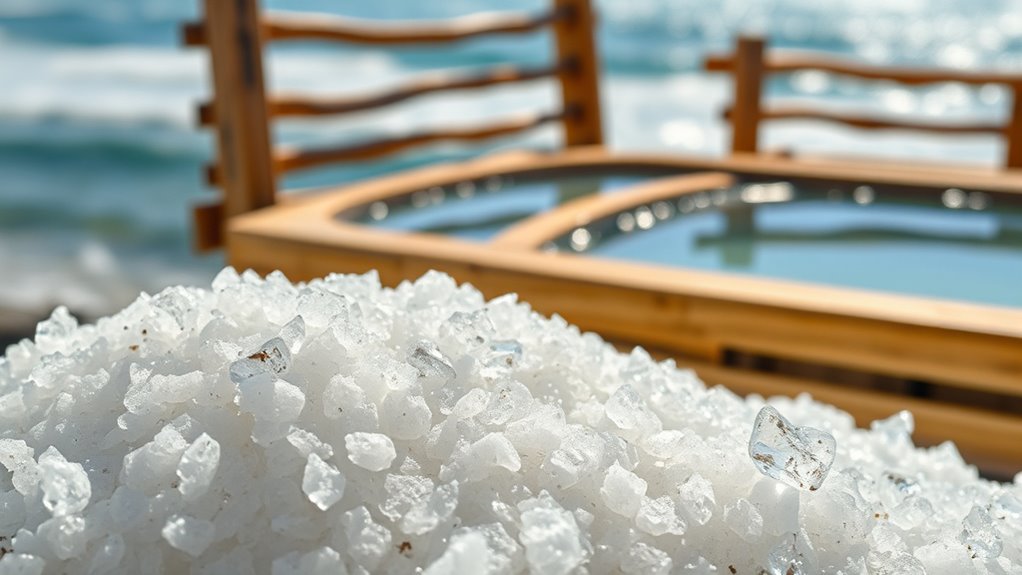
Because fine sea salt undergoes minimal processing, it retains many natural minerals like magnesium, potassium, and calcium that you won’t find in regular table salt. These natural minerals come from the unique seawater composition at the source of seawater used.
During the evaporation process, water naturally evaporates, leaving behind salt crystals rich in mineral content and trace minerals. This natural preservation helps maintain the salt’s nutritional value and contributes to subtle flavor enhancement that refined salts lack.
The trace minerals vary depending on where the seawater is harvested, making each batch slightly different. So, when you use fine sea salt, you’re not just adding saltiness—you’re also benefiting from a complex mix of minerals that support hydration and mineral balance naturally.
How Solar Evaporation Creates Fine Sea Salt Crystals
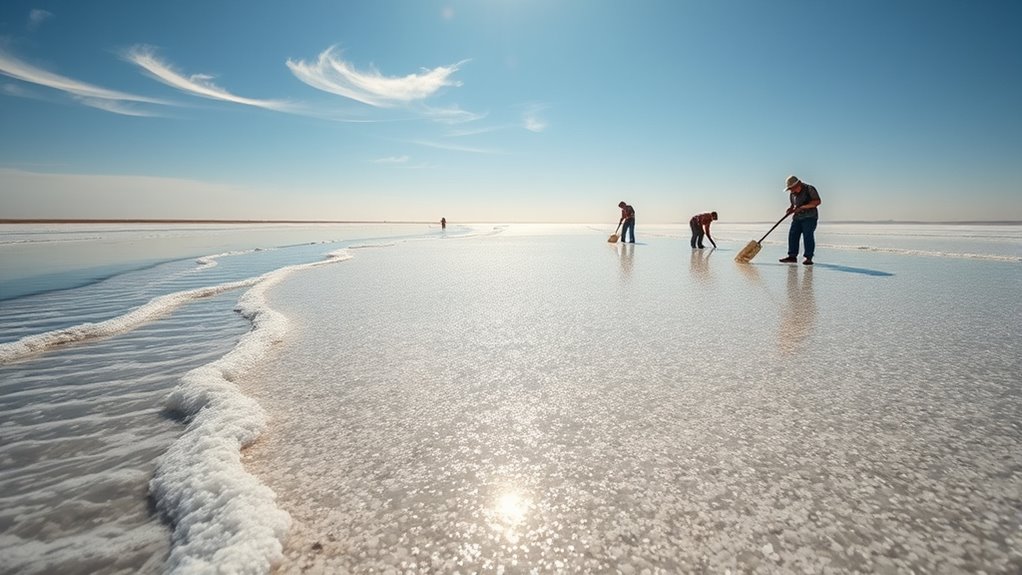
When seawater flows into shallow salt pans, the sun’s heat slowly evaporates the water, concentrating the brine and causing salt crystals to form. This solar evaporation process relies on natural evaporation, where temperature, humidity, and sunlight intensity affect the rate at which water disappears.
As the brine concentration increases, mineral crystallization begins, producing fine, uniform salt crystals. The slow evaporation process allows these tiny crystals to grow evenly, resulting in the ideal crystal size for fine sea salt.
You’ll notice that salt pans create the perfect environment for this delicate balance, ensuring high-quality salt crystals form naturally. Once the crystals reach the desired concentration, salt harvesting can begin, capturing the fine sea salt created through this traditional, solar-powered method.
How Fine Sea Salt Is Hand-Harvested the Traditional Way
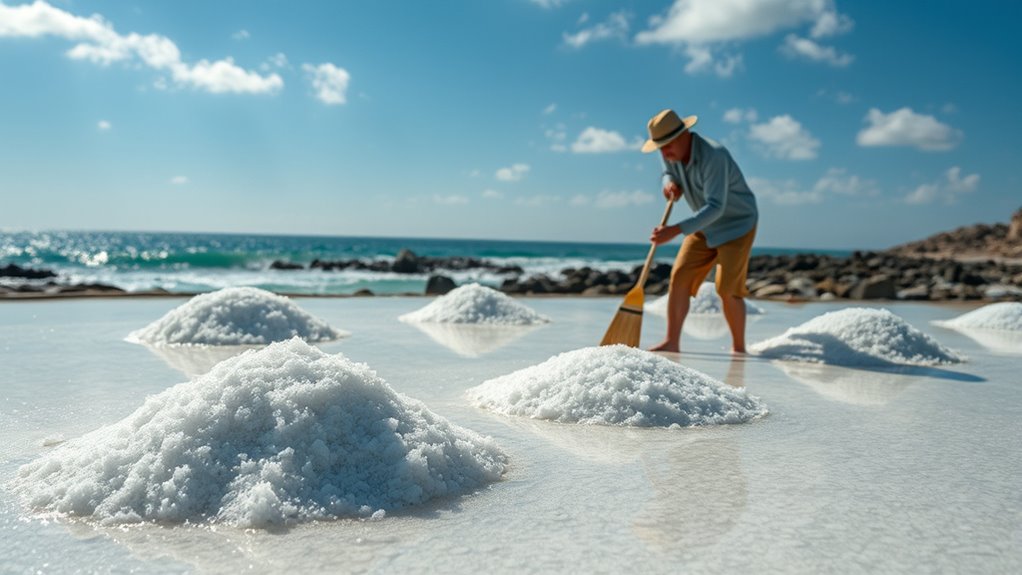
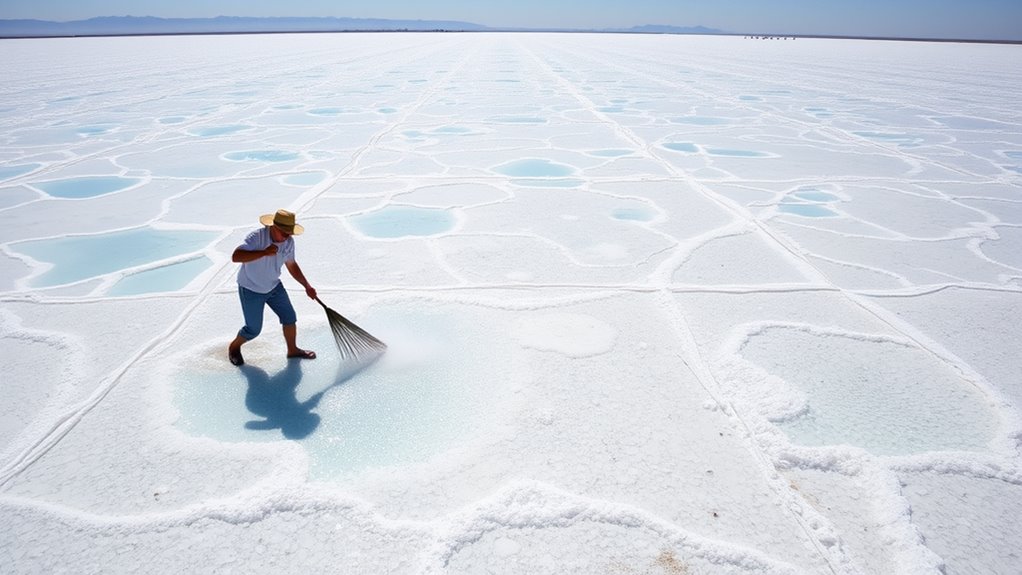
Although modern machinery exists, skilled harvesters still hand-rake fine sea salt crystals from salt pans using wooden tools. You’ll find these harvesters carefully monitoring salt ponds, waiting for pyramid-shaped salt crystals to form. They selectively gather only the finest, most uniform crystals, ensuring the highest quality sea salt.
The salt crystals are gently scraped from the surface of salt pans during ideal weather, usually early morning or late afternoon, to preserve their delicate texture. This artisan process demands patience and skill, as the salt is hand-harvested with care.
After collection, the crystals undergo natural drying, which helps maintain their purity and flavor. By engaging in this traditional method, you can appreciate the craftsmanship behind every grain of fine sea salt.
Cleaning and Preparing Fine Sea Salt for Use
After harvest, fine sea salt undergoes thorough cleaning and preparation to guarantee its purity and texture. You’ll find the salt is first washed or rinsed to remove impurities like dirt and excess minerals. This cleaning step ensures the salt is free from unwanted particles before grinding.
Then, the salt crystals are milled to achieve a uniform particle size. To perfect this, the salt is sieved or filtered, separating any larger fragments and ensuring consistency.
This precise preparing process results in the fine, even texture you expect.
Finally, the salt is carefully packaged in airtight containers to preserve its quality and prevent moisture absorption. This detailed cleaning and preparing sequence ensures the fine sea salt you use is pure and ready for your culinary needs.
Why Fine Sea Salt’s Crystal Structure Enhances Flavor and Texture
Because fine sea salt features a carefully milled, uniform crystal structure, it dissolves quickly and evenly, giving your dishes an immediate and well-balanced burst of flavor. The small grain size of its uniform crystals ensures that salt disperses smoothly, enhancing both flavor and texture without overpowering your food.
The crystalline shape plays a key role in how the salt interacts with moisture, creating an ideal balance that improves mouthfeel. Thoughtful processing preserves the mineral content, which adds subtle complexity to taste.
It also prevents clumping, so you get consistent seasoning every time.
Frequently Asked Questions
Where Does Fine Sea Salt Come From?
You get fine sea salt from seawater in coastal regions like the Mediterranean or Atlantic. It’s harvested after natural evaporation concentrates the salt, then processed to create that fine, flavorful texture you use in cooking.
Will We One Day Run Out of Salt?
You won’t run out of salt anytime soon since Earth’s reserves are vast, lasting millions of years.
However, localized shortages might happen due to climate, extraction limits, or geopolitical issues, so stay mindful of sustainable use.
Is There a Difference Between Sea Salt and Fine Sea Salt?
You might think sea salt and fine sea salt are the same, but they’re not. Fine sea salt’s texture is much smoother and powder-like, letting you season dishes evenly and dissolve flavors quickly in your cooking.
How Is Sea Salt Made Step by Step?
You start by evaporating seawater in shallow pans, then harvest the salt crystals. You wash, dry, crush, and sift them.
Finally, you remove moisture to prevent clumping and package the fine sea salt for use.
Conclusion
When you use fine sea salt, you’re tapping into a treasure chest of natural minerals shaped by the sun and sea. Its delicate crystals, formed through solar evaporation and hand-harvested with care, bring more than just seasoning—they add texture and depth like a subtle brushstroke on a canvas.
So next time you sprinkle fine sea salt, you’re not just enhancing flavor; you’re savoring nature’s artistry in every grain. This fine sea salt, made through traditional methods, captures the essence of the ocean, making it a perfect addition to your culinary creations.