
How You Can Put Tin Foil Pans Safely in the Oven
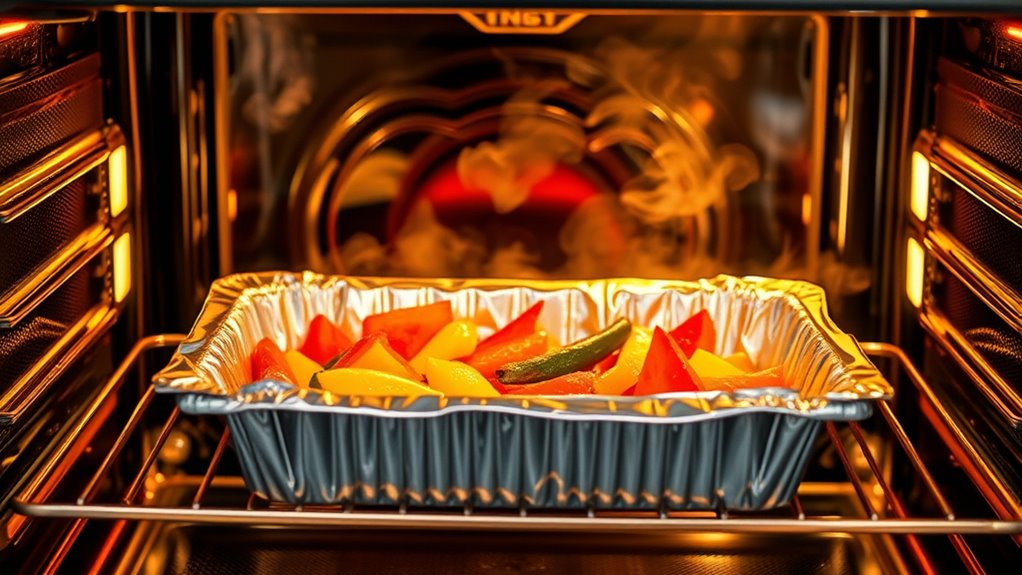
To safely put tin foil pans in the oven, choose heavy-duty pans and always support them on a sturdy baking sheet to prevent warping and spills. Place the pan fully on the middle oven rack, away from heating elements, and avoid temperatures above 450°F unless the pan states otherwise.
Don’t overload the pan, and handle it with oven mitts to avoid burns. Following these tips helps guarantee safe baking and better results, with more useful advice just ahead.
Choose the Best Tin Foil Pan for Baking
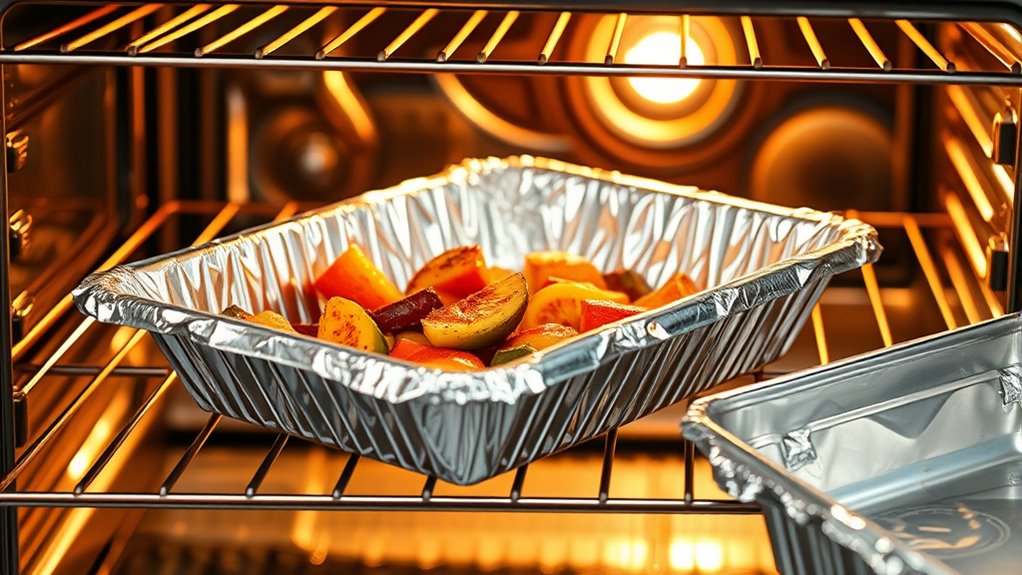
When you’re choosing a tin foil pan for baking, pick heavy-duty aluminum ones that resist heat and won’t easily bend. Heavy-duty aluminum foil pans offer excellent heat resistance, ensuring your food cooks evenly without warping. Look for pans with flat bottoms to promote uniform heat distribution and avoid hot spots.
Sturdy edges are essential—they help the pan maintain its shape during handling and prevent bending when you place it in or take it out of the oven. Also, consider the size and shape to match your recipe and fit your oven comfortably.
To add stability and make transferring easier, place your tin foil pan on a baking sheet. This support prevents spills and keeps your dish steady during cooking.
Prepare Tin Foil Pans for Safe Oven Use
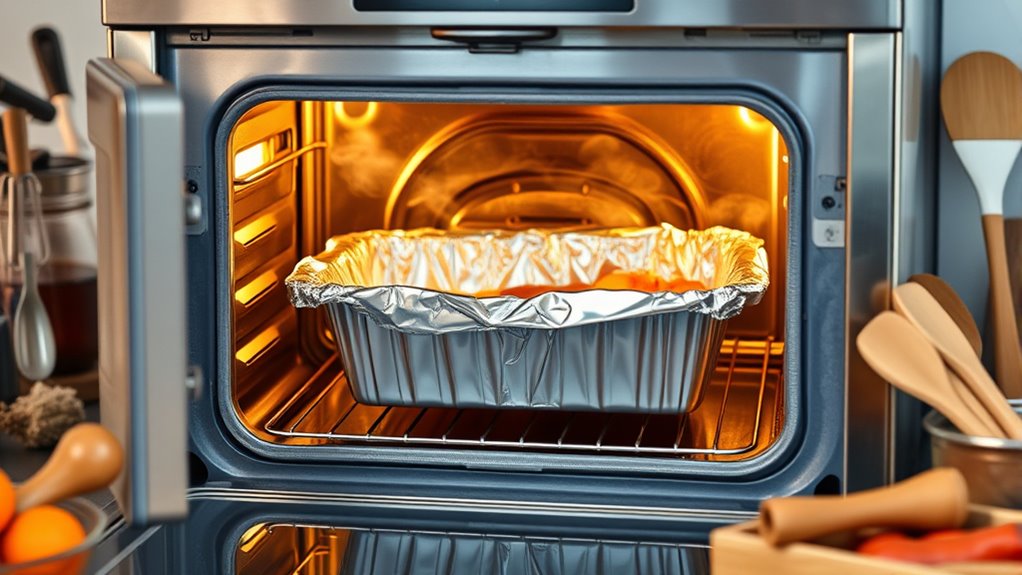
Make sure you pick heavy-duty or reinforced tin foil pans to handle the oven’s heat without warping. Always place your foil pan on a sturdy baking sheet to keep it stable and avoid spills.
And remember, never put foil pans directly on flames or the oven floor to prevent melting or damage.
Choose Appropriate Pan Type
Choosing the right type of tin foil pan is essential for safe and effective oven use. Opt for heavy-duty aluminum pans because they offer better heat resistance and hold their shape well during baking. Avoid lightweight or thin disposable foil pans when cooking heavy or dense foods, as they can bend or collapse, risking spills and uneven cooking.
Always check the manufacturer guidelines to confirm the pan’s maximum safe oven temperature, usually up to 500°F, to ensure oven safety. Make sure your pan fits comfortably on a sturdy surface to provide proper pan support; this prevents warping and helps distribute heat evenly.
Use Oven-Safe Support
Although tin foil pans are convenient, you should always place them on a sturdy baking sheet before putting them in the oven. Using proper oven-safe support like a sturdy baking sheet guarantees your foil pan stays stable, preventing warping or spills during cooking.
Avoid placing the foil pan directly on the oven rack; without oven rack support, it can bend or tip easily. Make sure your foil pan fits entirely on the baking sheet without extending over the edges—this foil pan placement promotes even heat distribution and prevents contact with heating elements.
For heavier foods, opt for heavy-duty pans to maintain shape under heat. Preheat your oven to avoid sudden temperature changes that might warp your foil pan.
Avoid Direct Flame Contact
When you place tin foil pans directly over open flames or heating elements, they can quickly melt or catch fire, creating serious safety hazards. To guarantee oven safety, avoid any direct flame contact with your foil pans.
Instead, always place them on sturdy baking sheets to improve heat resistance and prevent warping. Proper foil pan handling protects you from fire hazards and spills during oven use. Remember, never use foil pans under a broiler or above 500°F.
| Tip | Reason | Safety Benefit |
|---|---|---|
| Use baking sheet support | Prevents warping & melting | Reduces fire hazard |
| Avoid direct flame contact | Foil melts with direct heat | Prevents fire hazard |
| Preheat oven | Ensures even heat distribution | Protects pan integrity |
| Use oven mitts | Safe foil pan handling | Prevents burns |
Place Tin Foil Pans Correctly in the Oven
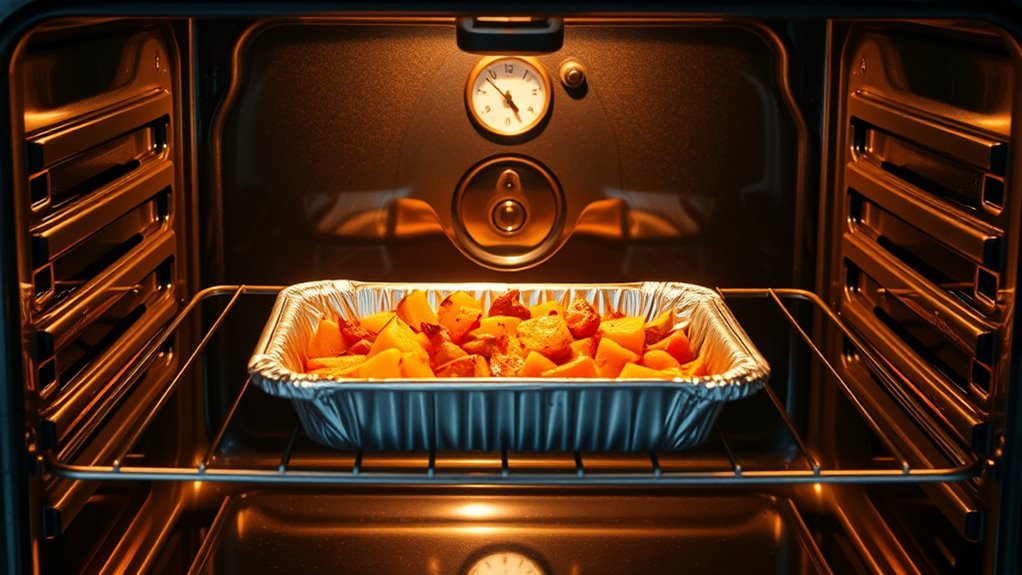
Make sure you place your tin foil pan directly on the oven rack, fitting it fully inside without any edges hanging over. To keep the pan stable and prevent warping or spills, always set it on a sturdy baking sheet.
This setup helps your food cook evenly and keeps the oven safe.
Direct Oven Rack Placement
If you want to place tin foil pans directly on the oven rack, make sure they sit securely to prevent spills. Here’s how to do it safely:
- Use disposable foil pans that fit the oven rack without blocking airflow, ensuring even cooking.
- Avoid placing foil pans on the bottom oven rack to prevent contact with heating elements, which can damage the pan.
- Support heavy foil pans with a sturdy baking sheet underneath to enhance stability and prevent warping.
- Always handle foil pans with oven mitts to avoid burns and accidental spills when placing or removing them.
Using Cookie Sheet Support
Although tin foil pans can sit directly on oven racks, placing them on a sturdy cookie sheet offers better support and stability. Using a cookie sheet under your foil pan improves oven safety by preventing spills and warping. It also makes transferring hot pans easier and safer.
Plus, the cookie sheet enhances heat distribution, ensuring even cooking.
| Benefit | Description | Result |
|---|---|---|
| Stability | Prevents tipping or warping | Safer handling |
| Support | Holds foil pan securely | Avoids spills |
| Heat Distribution | Spreads heat evenly under pan | Uniform cooking |
Make sure both the foil pan and cookie sheet fit comfortably in your oven to avoid contact with heating elements or walls.
Prevent Warping and Spills When Baking With Tin Foil Pans
When you bake with tin foil pans, supporting them on a sturdy baking sheet helps prevent warping and spills during handling. To maintain oven safety and guarantee even heat, follow these tips:
- Avoid overfilling foil pans to reduce spills and uneven cooking that cause warping.
- Place pans on the center oven rack for consistent heat distribution and minimal warping.
- Never use foil pans under the broiler or directly over open flames to prevent damage.
- Let pans cool completely before handling or stacking to avoid warping from temperature shock.
Safe Temperature Limits for Tin Foil Pans
Because tin foil pans have temperature limits, you should never exceed 450°F (232°C) unless the manufacturer specifies otherwise. This safe temperature threshold helps prevent warping, melting, or weakening of the pans. If you push beyond their melting point, foil pans can deform or even release harmful fumes, posing serious oven safety risks.
Heavy-duty foil pans might tolerate temperatures close to 500°F, but it’s essential to check the manufacturer guidelines before doing so. To maintain oven safety, always support lightweight pans on a baking sheet and avoid direct contact with heating elements. Following these temperature limits ensures your foil pans stay intact and your cooking remains safe, preventing spills and accidents caused by warped or damaged pans.
Use Tin Foil Pans Safely in Air Fryers and Other Appliances
If you want to use tin foil pans in your air fryer or other appliances, make sure they fit properly without blocking airflow or vents. To guarantee cooking safety and ideal heat distribution, follow these steps:
- Use oven-safe foil pans that support your food’s weight to prevent tipping or melting.
- Choose disposable aluminum pans sized for your appliance, like foil muffin cups for cupcakes or egg bites.
- Avoid placing foil pans directly over open flames or high heat sources, especially in grills or campfires.
- Always check your air fryer’s manufacturer guidelines for maximum pan size and temperature limits.
Clean and Reuse Tin Foil Pans Properly
Although tin foil pans are often disposable, you can clean and reuse them safely by following proper care steps. Start by washing foil pans with warm, soapy water and a non-abrasive sponge to remove food residue. Avoid the dishwasher to maintain oven safety and prevent damage.
Dry pans thoroughly to stop rust and inspect them for tears or warping before reusing. Store pans in a dry, cool place to preserve their integrity.
| Cleaning Tips | Reusing Tips |
|---|---|
| Use mild soap and sponge | Check for damage before use |
| Avoid dishwasher | Store in dry, cool spots |
| Dry completely | Discard if warped or torn |
Frequently Asked Questions
Can You Put Tin Foil Pans in the Oven?
Yes, you can put tin foil pans in the oven, but don’t place them over open flames or broilers. Always set them on a sturdy baking sheet to avoid spills and keep the oven bottom clear for proper heat circulation.
Can I Put Aluminum Foil in the Oven at 350?
You can definitely put aluminum foil in the oven at 350°F—it’s as tough as a superhero’s shield!
Just avoid direct contact with heating elements and support foil pans properly to prevent spills or warping during baking.
How to Know if an Aluminum Pan Is Oven Safe?
You can tell if an aluminum pan is oven safe by checking the manufacturer’s label or markings. If unsure, support lightweight pans with a baking sheet and avoid broiling.
Always follow specific temperature guidelines provided.
Can I Put Aluminum Foil in the Oven at 450?
You can toss aluminum foil in the oven at 450°F, but don’t let it dance directly on racks or the oven floor.
Use sturdy foil pans instead, or it might warp or spark an unwanted heat tango.
Conclusion
You can choose the best tin foil pan, prepare it properly, place it correctly, and prevent spills to bake safely. You can follow temperature limits, use pans wisely in air fryers, and clean them thoroughly for reuse. By doing these things, you guarantee safety, maintain your cookware, and get the best baking results.
Remember, handling tin foil pans with care protects your food, your oven, and your peace of mind every time. Proper use of tin foil pans in the oven ensures safe cooking and extends the life of your bakeware. Always follow safety tips for tin foil pans to enjoy hassle-free baking experiences.