
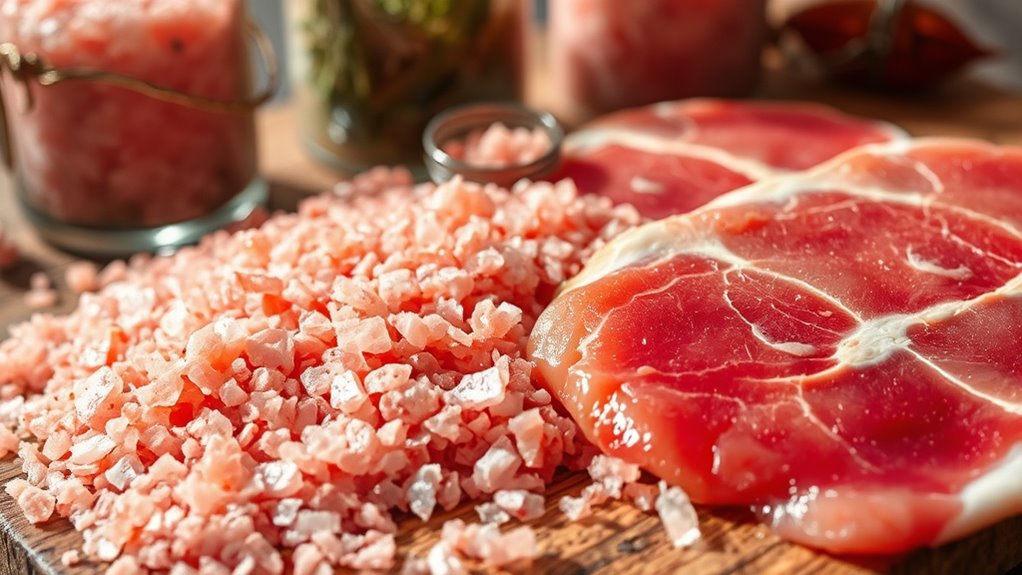
What Is Pink Salt Curing?
Pink salt curing uses a special salt mix containing sodium nitrite or nitrate to preserve your meat safely while giving it a unique pink color and savory flavor. This method is popular because it not only enhances the look of your cured meats but also their taste.
Plus, it’s a reliable way to keep your meat safe from harmful bacteria. It stops harmful bacteria like those causing botulism, helping your cured meats last longer.
Using the right amount—typically one teaspoon per five pounds—is key to keeping your food safe and tasty. So, if you’re thinking about trying pink salt curing, it’s important to get the measurements right.
If you want to protect your meat and enhance its appeal, there’s more useful info to explore. Understanding how pink salt works can really make a difference in your curing process.
Key Takeaways
- Pink salt curing uses a salt blend containing sodium nitrite or nitrate to preserve and color meats during curing. It inhibits harmful bacteria, including those causing botulism, ensuring food safety.
- The process creates a distinctive pink color and enhances flavor in cured meats. It really makes the meat stand out both in look and taste.
- Pink salt curing also extends the shelf life of cured meat products. So, your meats stay good for longer.
- Just remember, proper measurement and handling of pink salt are super important for safe and effective curing. You don’t want to mess that part up!
What Is Pink Salt Curing and Why Use It?
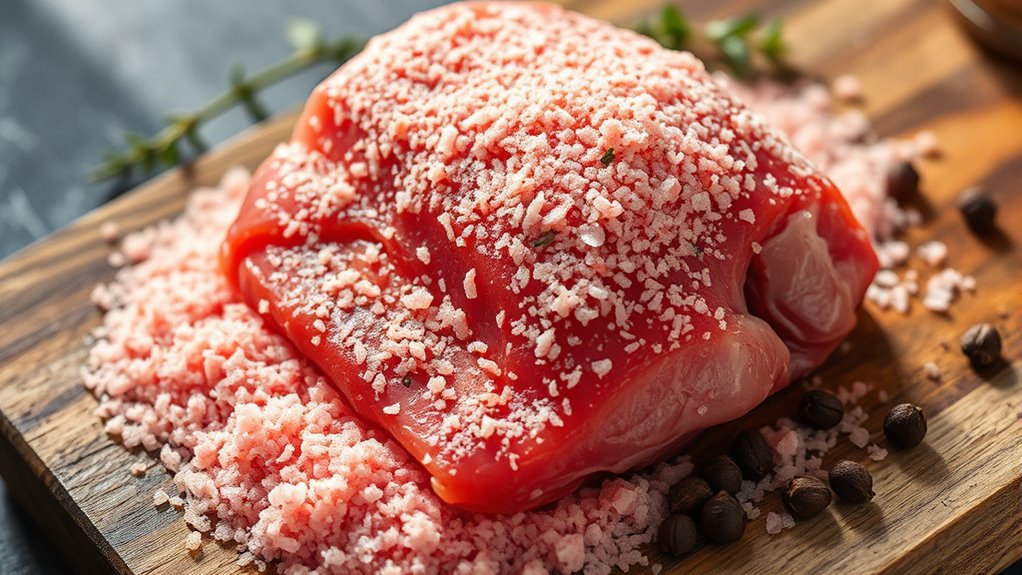
Pink salt curing uses a special salt blend containing sodium nitrite or nitrate to preserve and color meats. When you apply this curing process, sodium nitrite or sodium nitrate works to inhibit microbial activity, which is essential for food safety.
Pink salt curing uses sodium nitrite or nitrate to preserve meats and prevent harmful microbial growth.
This stops harmful bacteria, especially those causing botulism, from growing during curing. You’ll notice that cured meats get their distinctive pink color from the interaction of sodium nitrite with meat proteins, giving them that familiar meat coloring.
Besides enhancing the appearance, pink salt curing also improves flavor and extends shelf life, making it ideal for products like bacon, ham, and sausages. Using pink salt curing guarantees your cured meats not only look appealing but stay safe to eat.
With its role in food preservation and microbial control, pink salt curing is a vital step in producing quality, safe, and flavorful cured meats.
How to Use Pink Salt Curing Safely: Dosage and Best Practices
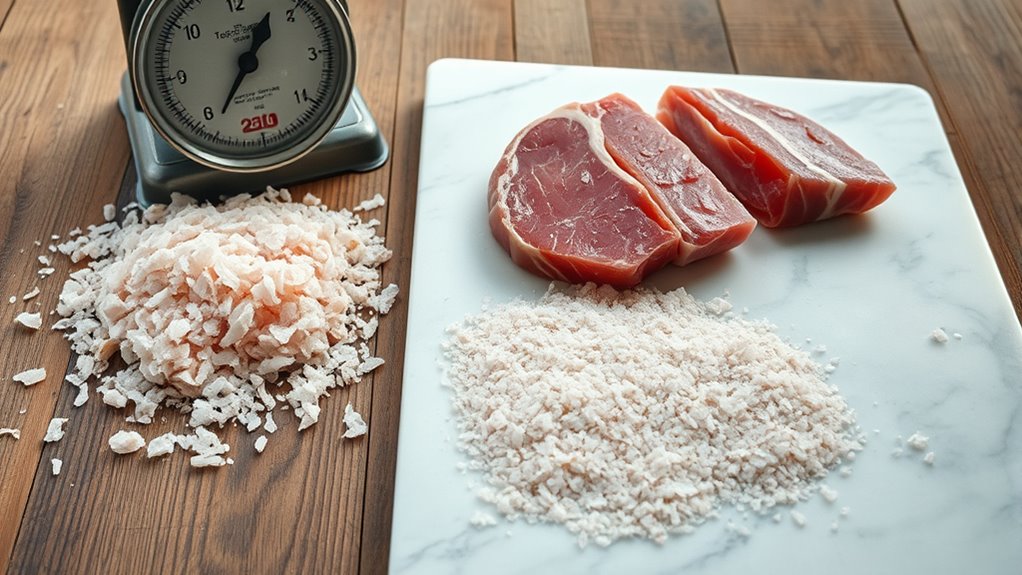
When curing meats with pink salt, using the right amount is key to keeping your food safe and tasty. Pink curing salt contains nitrates/nitrites essential for the curing process, so accurate dosage and measurement are vital to guarantee meat safety and avoid health risks.
Always follow recommended guidelines to prevent overuse, which can be harmful.
To use pink curing salt safely:
- Measure precisely—use 1 teaspoon per 5 pounds of meat for short cures.
- Mix the salt evenly with water or other ingredients before applying to ensure uniform curing.
Make sure to store pink curing salt properly in a cool, dry place. Keep it out of children’s reach to maintain its effectiveness and safety.
Never substitute pink curing salt for regular salt in recipes. Its unique composition supports safe curing, so stick to these best practices to protect your health and enjoy perfectly cured meats every time.
Frequently Asked Questions
Is Himalayan Salt the Same as Pink Curing Salt?
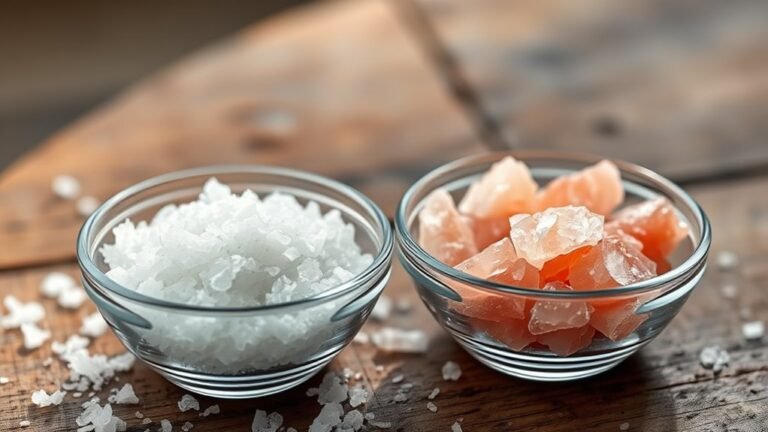
No, Himalayan salt isn’t the same as pink curing salt. You can’t use it to cure meat safely because it lacks the nitrates and nitrites found in pink curing salt, which prevent bacterial growth and preserve color.
Basically, pink curing salt has special ingredients that help keep your meat safe and looking good. Himalayan salt just doesn’t have those, so it’s not a suitable substitute.
What Can I Substitute for Pink Curing Salt?
For flawless flavor and food safety, you can’t just swap pink curing salt with Himalayan or sea salt alone. Instead, you’ll need a nitrite-nitrate mix or specially formulated curing salts to preserve properly and prevent bacterial growth.
It’s super important to use the right stuff here. Otherwise, your meat might not cure correctly, and that’s a risk you don’t want to take. So, stick with curing salts made for the job!
Do Grocery Stores Carry Curing Salt?
Most grocery stores don’t carry curing salt, but you can find it at butcher supply shops or online.
If they do, it’s often behind the counter or in a specialty section, not on regular shelves.
Can I Make My Own Curing Salt?
You can make your own curing salt, but don’t play with fire—precision matters. Mix 93.75% salt with 6.25% sodium nitrite carefully.
Make sure to use food-grade ingredients, and store it safely away from kids and pets. It’s important to handle it with care to avoid any risks.
Conclusion
Using pink salt curing is like planting a seed that transforms your meat into a flavorful masterpiece. Just as a gardener knows the right amount of water helps a plant thrive, you need to use pink salt carefully—too much can spoil the flavor or be unsafe.
Remember, a little goes a long way. By following proper dosage and best practices, you’ll guarantee your cured meats are delicious, safe, and perfectly preserved every time.
Pink salt curing is essential for achieving that classic taste and texture in cured meats. It not only enhances flavor but also helps prevent bacterial growth, ensuring food safety. So, when you use pink salt curing thoughtfully, you’re creating not just tasty but also safe and well-preserved meat. That’s the secret to turning ordinary cuts into savory delights every time!