
How Many Eggs Do Quail Lay in a Day
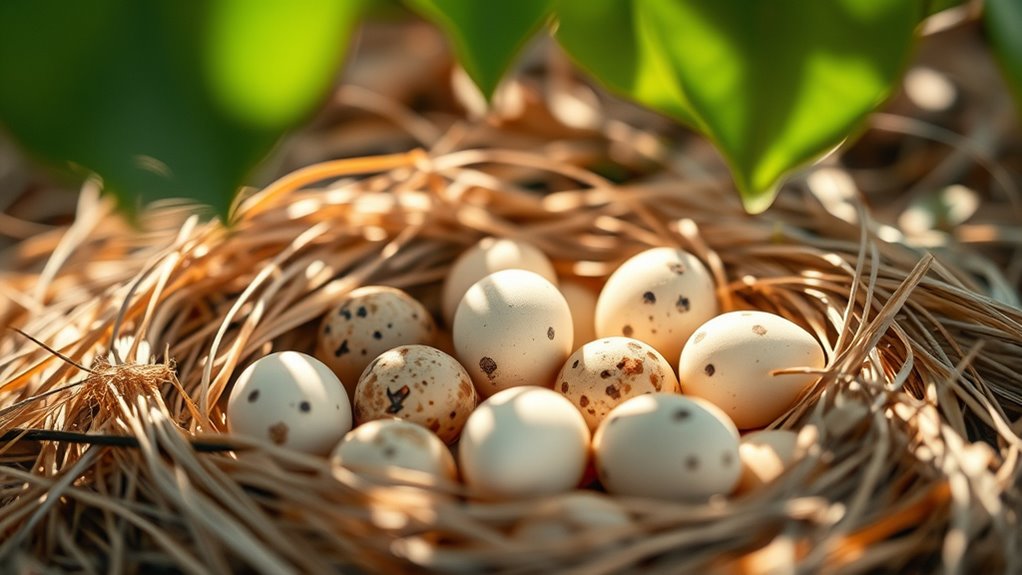
You can expect your quail to lay about one egg per day under ideal conditions. Quail egg production varies depending on factors like diet, lighting, and age.
Sometimes, they may lay two eggs in a day due to their natural reproductive cycle or if they missed laying on previous days.
Younger, well-fed quail with proper lighting and care typically produce eggs steadily. Understanding why some quail lay multiple eggs in a day involves looking at their environment and nutrition.
If you want to learn more about how diet and environment affect quail egg production, keep exploring these insights. Proper care can significantly impact how many eggs your quail lay daily.
How Many Eggs Does a Quail Lay Per Day?
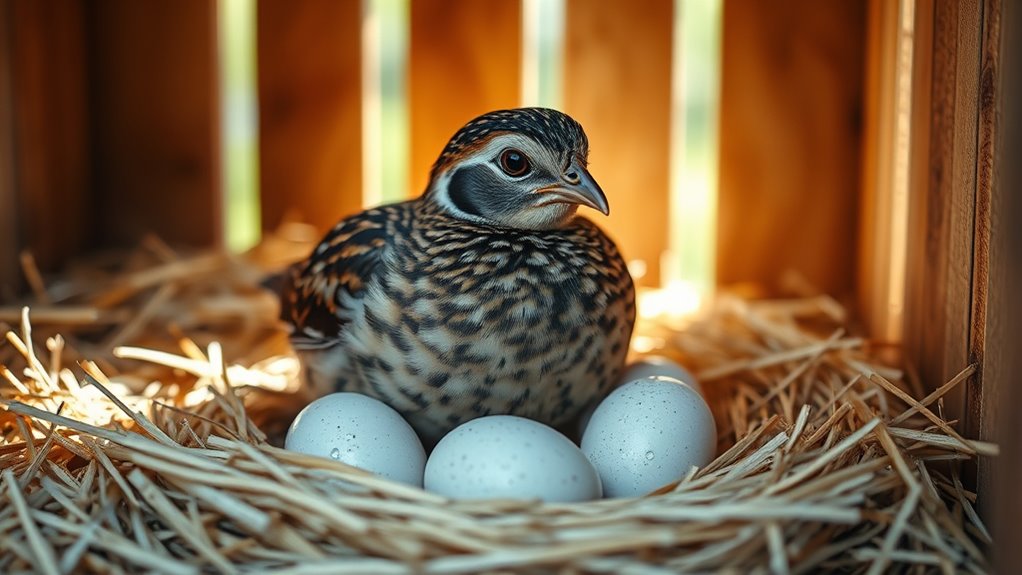
A quail typically lays about one egg per day when conditions are ideal. You’ll find that quail hens maintain steady egg production by laying quail eggs consistently, especially when they’re young and in good health.
While some quail can lay up to two eggs per day, this isn’t common over the long term. Factors like age, diet, and environment influence how many eggs a quail lays daily.
It’s important to remember that if you see more than one egg per quail in a day, it’s often because a hen missed laying on previous days, not because she laid multiple eggs all at once. Understanding these patterns helps you better manage and predict your quail’s egg production.
Why Do Some Quail Lay Multiple Eggs in One Day?
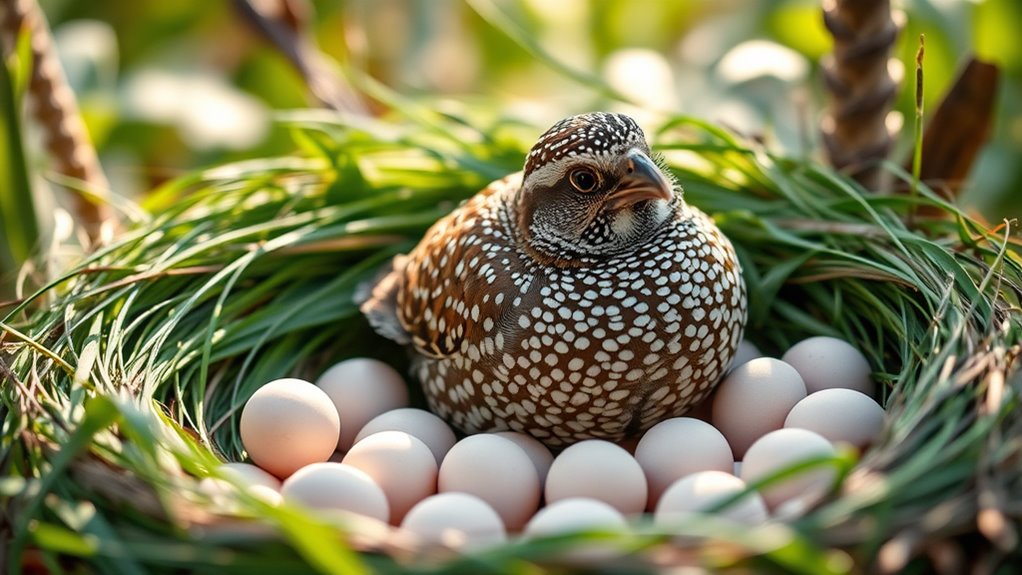
You might wonder why some quail lay more than one egg in a day. Factors like age, health, and environment play a big role in this occasional overproduction.
Understanding the biological limits helps you see why multiple eggs in a day are rare but possible.
Factors Influencing Overproduction
Although it’s uncommon, some quail lay multiple eggs in a single day due to factors like their age, health, and environment. Overproduction often results from a combination of laying frequency, breed characteristics, and environmental factors. Here’s what influences this phenomenon:
- Age and Health: Younger quail in peak laying age with proper nutrition, especially high-protein diets, tend to lay more frequently.
- Breed: Some breeds genetically predisposed to high productivity naturally lay multiple eggs in a day.
- Environmental Factors: Ideal lighting, temperature, and reduced stress encourage consistent laying, sometimes causing overproduction.
- Laying Gaps: When a quail misses laying a day, it may compensate by laying multiple eggs once conditions normalize.
Understanding these factors helps you manage egg production effectively without stressing your quail.
Biological Limits Explained
Understanding what drives quail to lay multiple eggs in a single day requires looking closely at their biological limits. Typically, a quail lays one egg daily, but some may lay two, especially when young or in peak health. This happens because their reproductive systems can hold several eggs at different development stages.
Rapid ovulation cycles and a high reproductive rate push these biological limits, allowing more than one egg to appear in a day. Environmental factors, diet, and overall health also influence laying frequency. Sometimes, quail lay multiple eggs in 24 hours because eggs from previous days are missed or accumulate.
While it’s rare, understanding these biological limits explains why some quail manage to lay multiple eggs in a single day.
Which Quail Breeds Produce the Most Eggs?
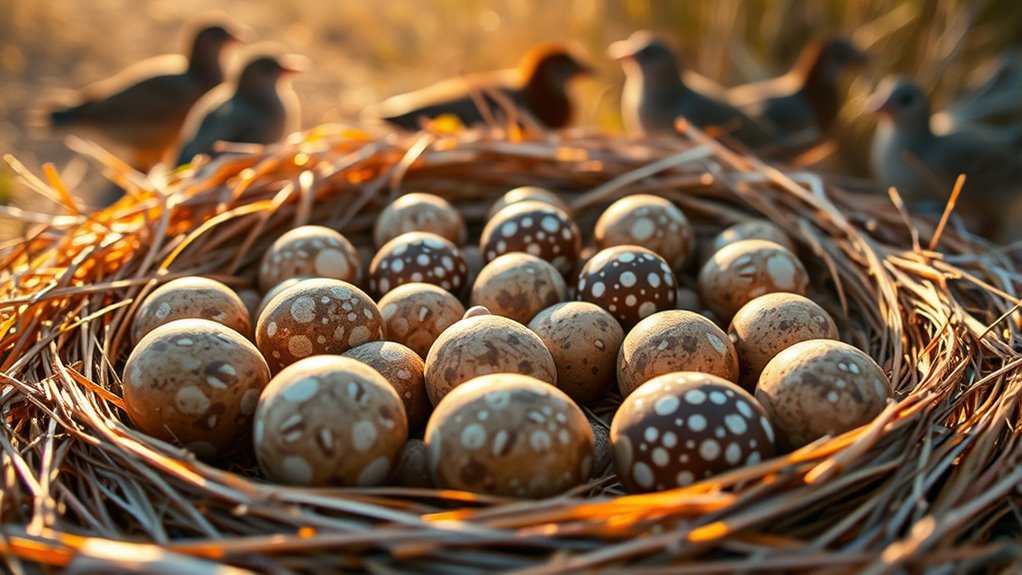
If you want the most eggs, Coturnix quail, especially the Japanese variety, are your best bet, laying up to 350 eggs a year. Other top layers include the Texas A&M White and tuxedo Coturnix breeds, which offer similar production rates.
Understanding these breeds’ egg output helps you choose the right quail for your needs.
Top Egg-Laying Breeds
When you’re looking for quail that lay the most eggs, Coturnix quail, also known as Japanese quail, stand out by producing around 300-350 eggs per year. This breed is popular for consistent egg-laying and early maturity. Here are the top egg-laying breeds to contemplate:
- Coturnix Quail – Lays about one egg daily, starting at 6-8 weeks, making it ideal for steady quail egg production.
- Jumbo Coturnix – Larger eggs but similar laying rate to standard Coturnix quail.
- Crossbred Coturnix – Selectively bred for high productivity, often exceeding 250 eggs annually.
- Northern Bobwhite – Lays seasonally, averaging 150-200 eggs per year, less prolific than Coturnix breeds.
Choosing the right breed can maximize your egg-laying success.
Breed Egg Production Rates
Although quail breeds vary in egg production, Coturnix quail consistently top the list, laying between 250 to 300 eggs annually. If you’re raising quail for quail eggs, this breed is your best bet due to its impressive egg production rates. The Japanese quail, a popular Coturnix variety, can lay about one egg per day during peak seasons.
The Texas A&M White Coturnix stands out even more, sometimes exceeding 300 eggs yearly under ideal conditions. Crossbred Coturnix varieties like golden or tuxedo quail also maintain high laying capacity, close to purebred levels. In contrast, Northern Bobwhite quail produce fewer eggs—around 80 to 100 annually—and are better suited for meat.
Choosing the right breed can greatly impact your success in raising quail for eggs.
Signs of a Healthy Egg-Laying Quail Hen
Because a healthy egg-laying quail hen usually produces about one egg per day, you can use her behavior and appearance to gauge her well-being. Bright, clear eyes and smooth, shiny feathers signal a healthy bird. Active behavior also shows she’s thriving and ready to lay eggs consistently.
Watch for these signs to assure your hen stays in top shape:
- Bright, alert eyes without discharge
- Smooth, glossy feathers indicating good health
- Active, curious behavior reflecting vitality
- Clean vent area free of swelling or discharge
Maintaining these signs means your quail hen is likely producing eggs regularly, benefiting from a stress-free environment and proper care.
How Diet Affects Quail Egg Production
To maximize your quail’s egg production, you need to provide a diet rich in protein and calcium. Aim for a protein level between 24-30% to support consistent laying. Calcium is crucial for strong eggshells, so include crushed eggshells or oyster shells in their feeding routine.
Nutritional deficiencies, especially in protein and calcium, will reduce how often your quail lay. Allowing them to forage outdoors adds insects, grains, and seeds that boost their overall nutrition and egg yield. By balancing their feeding with these essential nutrients, you maintain steady egg production throughout their laying cycle.
Proper nutrition isn’t just about quantity—it also guarantees the quality and health of both the eggs and your quail.
How Lighting Affects Quail Egg Production
When you provide quail with 14 to 16 hours of light daily, you stimulate their hormones to keep egg production steady. Proper lighting plays a pivotal role in ensuring your quail lay eggs consistently throughout the day, especially during shorter winter days.
Providing 14 to 16 hours of light daily keeps quail hormones active for steady egg production.
Here’s how lighting affects quail egg production:
- Natural daylight alone often falls short in winter, reducing egg production.
- Supplemental lighting, like LED or fluorescent, extends daylight hours.
- Maintaining 16 hours of light daily encourages quail to lay eggs almost every day.
- Inconsistent or reduced lighting can cause quail to molt or stop laying temporarily.
Daily Quail Egg Collection and Care
Although quail typically lay about one egg per day, collecting eggs daily is essential to prevent damage or loss. Since quail prefer laying on the ground, their eggs often scatter, so you need to carefully check the entire enclosure.
Daily care involves gentle handling to avoid cracking the delicate quail eggs and monitoring egg production to spot any issues early.
| Task | Frequency | Reason |
|---|---|---|
| Collect eggs | Daily | Prevent crushing or ingestion |
| Check enclosure | Daily | Find scattered eggs |
| Inspect eggs | Every collection | Ensure quality and freshness |
Tips to Keep Your Quail Laying Every Day
Since quail respond well to consistent conditions, you’ll want to provide 14-15 hours of light daily to keep them laying regularly. This helps maintain their natural laying cycle and boosts quail egg production.
To support daily laying, focus on feeding and environment as well. Here are four tips to keep your quail laying every day:
- Provide a high-protein diet (24-30%) with sufficient calcium to promote egg formation.
- Maintain a calm environment with good ventilation and minimal stressors.
- Avoid overcrowding by keeping quail in appropriate group sizes.
- Collect eggs daily and offer clean, quiet nesting spots to encourage laying.
Following these steps creates an ideal environment that supports consistent quail egg laying and overall flock health.
Common Challenges in Quail Egg Production and How to Fix Them
If your quail aren’t laying consistently, various challenges could be at play, ranging from inadequate lighting and stress to nutritional gaps and health issues. Lighting is vital; less than 14 hours of daylight can reduce egg production, so consider supplemental light if needed. Stress from predators, loud noises, or overcrowding also lowers laying frequency, so keep their environment calm and secure.
Nutritional deficiencies, especially low calcium, weaken shell quality and cut egg output. Make certain your quail get a balanced diet rich in calcium and protein. Additionally, molting or illness may temporarily halt laying, so monitor their health closely.
Good ventilation and humidity control help prevent disease, keeping your flock healthy and maintaining consistent egg production. Address these factors to boost your quail’s daily egg yield.
Frequently Asked Questions
Can Quail Lay Two Eggs a Day?
Yes, quail can lay two eggs a day, but it’s rare. You’ll mostly see this in young, healthy birds with great nutrition and environment.
Usually, they lay one egg daily under normal conditions.
How Many Days Does Quail Lay Eggs?
Quail consistently continue clutching countless clutches for close to two years. You’ll find they frequently flourish, forming fresh eggs daily, though factors like fatigue or food fluctuations can force a few frustratingly few fallow days.
Will Quail Lay Eggs Without a Male?
Yes, you’ll find quail lay eggs without a male since fertilization isn’t needed for egg production. You’ll get unfertilized eggs, which won’t hatch, but your quail will keep laying regularly, driven by hormones and environment.
How Many Hours of Daylight Do Quail Need to Lay Eggs?
You need to give your quail about 14 to 15 hours of daylight daily to keep them laying consistently.
Without enough light, their egg production drops, so don’t underestimate the power of proper lighting!
Conclusion
You might wonder if quail can lay more than one egg a day, but the truth is they usually lay just one egg daily. While occasional multiple eggs can happen, it’s rare and often linked to specific breeds or conditions.
Understanding this helps you set realistic expectations and focus on providing the right care—like proper diet and lighting—to keep your quail healthy and consistently laying.
Remember, quality over quantity guarantees long-term success when it comes to quail egg production. Proper care and management are key to maximizing how many eggs quail lay in a day.