
Does Salt Help Hydration?
Yes, salt helps hydration by replenishing essential electrolytes like sodium, which you lose through sweat. When you sweat, your body loses not just water but also these important minerals.
Adding a small amount of salt to your water improves fluid absorption and maintains balance in your cells and blood vessels.
This balance supports nerve and muscle function, keeps you hydrated longer, and prevents dehydration during exercise or heat.
Using salt wisely boosts hydration beyond just drinking water. So, it’s not just about gulping down water, but also about replacing what you lose.
Keep exploring to understand when and how to use salt for the best results.
Key Takeaways
- Salt provides sodium, an essential electrolyte that helps regulate and maintain proper fluid balance in the body.
- Sodium in salt attracts water into cells and blood vessels, enhancing hydration efficiency.
- Adding salt to water promotes better absorption by supporting osmotic movement across cell membranes.
- Salt replenishes electrolytes lost through sweating, preventing dehydration during exercise or hot weather.
- Small amounts of salt improve hydration but should be used moderately to avoid health risks.
How Salt Supports Hydration and Electrolyte Balance

Although many people focus on drinking water alone, salt plays a critical role in hydration by providing sodium, an indispensable electrolyte that regulates fluid balance and helps your body absorb water effectively. Sodium attracts water into your cells and blood vessels, supporting proper hydration and circulation.
When you consume salt, you replenish lost electrolytes, which are essential for maintaining electrolyte balance during exercise or hot weather. This balance ensures your body fluids stay stable, preventing dehydration.
Salt also enhances hydration by facilitating water absorption through osmotic processes, allowing water to move efficiently across cell membranes. Proper salt intake maintains nerve and muscle function, which are indispensable for your overall hydration and physical performance.
Whether through salt in your diet or electrolyte drinks, sodium helps your body manage fluid balance, ensuring you stay hydrated and your cells function at their best. Understanding how salt supports hydration clarifies why it’s indispensable beyond just drinking water.
When to Add Salt to Water for Better Hydration
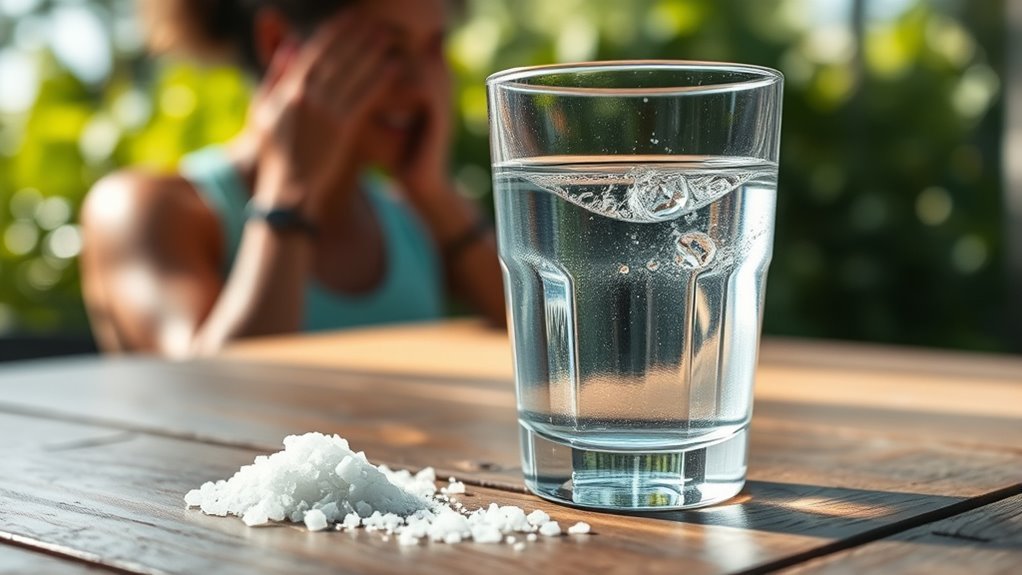
If you’ve been sweating heavily or fasting for a while, adding salt to your water can markedly improve your hydration. When sodium levels drop due to prolonged sweating or lack of food, your body struggles to maintain fluid balance.
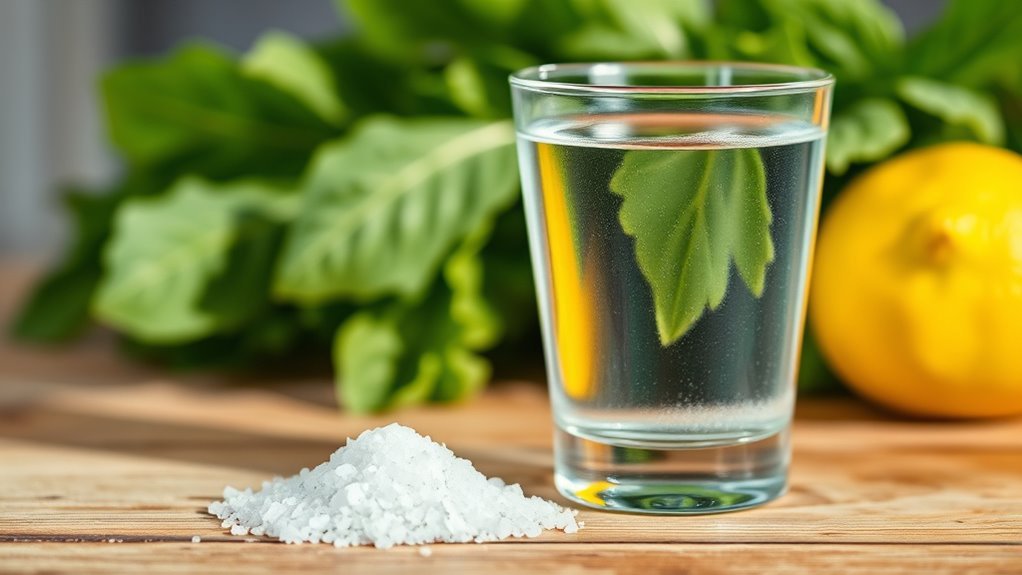
Adding salt—about 1/4 teaspoon per liter—helps replenish sodium, an essential electrolyte that promotes water absorption and prevents dehydration. You’ll hydrate more effectively by mixing a small pinch of salt into hot or room temperature water, allowing it to dissolve quickly and restore electrolyte balance.
This practice is especially useful after intense exercise or exposure to hot weather when sodium loss is significant. However, keep an eye on your overall salt intake to avoid overconsumption, which can lead to health problems like high blood pressure.
Frequently Asked Questions
Does Putting Salt in Your Water Help You Hydrate?
Yes, putting salt in your water helps you hydrate better by restoring electrolytes and improving water absorption.
Just don’t add too much—about a pinch per liter works best.
This is especially helpful after sweating or intense exercise.
Is Dehydration a Lack of Salt?
Dehydration isn’t a lack of salt; it’s mostly water loss. Your body regulates sodium well, so even when dehydrated, salt levels stay normal.
Focus on drinking water to rehydrate effectively, not just adding salt. That’s the key to feeling better quickly.
Can I Just Take Salt Instead of Electrolytes?
You can’t just take salt instead of electrolytes because your body needs a balance of sodium, potassium, and magnesium to stay properly hydrated and function well.
Salt alone won’t keep you fully hydrated or healthy.
Think of electrolytes like a team—they all work together to keep things running smoothly. So, relying on just salt isn’t enough for your body’s needs.
Does Salt Water Hydrate You More Than Water?
Don’t count your chickens before they hatch—salt water won’t hydrate you more than plain water alone. You need balanced electrolytes for that.
Too much salt can backfire, causing dehydration instead of quenching your thirst properly. So, plain water usually does the job better.
Conclusion
You might think salt is just an old-fashioned seasoning, but it’s actually key to staying hydrated. When you add salt to your water, it helps balance electrolytes and keeps fluids where they belong—inside your cells.
So, whether you’re sweating through a workout or just want to feel your best, a pinch of salt can be your hydration sidekick. Don’t wait for a telegram; start sipping smarter today!
In fact, salt plays a crucial role in hydration because it helps your body retain water and maintain the right fluid balance. Electrolytes like sodium are essential for proper hydration, especially during intense exercise or hot weather. Adding a little salt to your water can improve how well your body absorbs and holds onto fluids, helping you stay energized and refreshed. So, if you’re looking to boost hydration, remember that salt isn’t just a flavor enhancer—it’s a hydration helper. Start incorporating this simple trick and enjoy better hydration every day!