How to Know When Sea Salt Does Close for the Season
You’ll know sea salt harvesting is ending when prolonged rains and storms increase moisture, slowing evaporation and halting collection. These weather changes directly impact how salt forms in the ponds, making it harder to keep up with the harvest.
Look for thick salt crystals covering the ponds and brine reaching peak salinity—it means full crystallization and ideal harvest timing. When you see this, it’s a clear sign the season is at its peak.
Dropping temperatures or overcast skies also signal you should pause to protect salt quality. These conditions aren’t great for salt production and can affect the final product.
If you want to understand how these weather changes and crystal growth mark the perfect season closure, keep exploring the details. It’s all about reading nature’s signals to know when to wrap up the harvest.
Key Takeaways
– Prolonged rains or storms increasing moisture signal the end of the salt harvesting season.
When the weather gets wetter, it’s usually a sign that the season is wrapping up.
– Significant drops in evaporation due to reduced sunlight and breezes indicate season closure.
Less sun and weaker breezes mean less drying, so it’s time to start thinking about closing up.
– Full crystallization, with thick salt layers and low water levels, marks peak harvest readiness.
When you see thick layers of salt and barely any water left, that’s when the harvest is at its best.
– Temperature drops or freezing conditions require pausing harvest and closing the season.
Cold weather or frost means you need to stop harvesting and shut things down for the season.
– Recognizing weather changes and crystallization prevents over-drying and maintains salt quality at season end.
Keeping an eye on these signs helps avoid over-drying and keeps your salt tasting great right up to the finish.
How Weather Patterns Signal the End of Sea Salt Harvesting
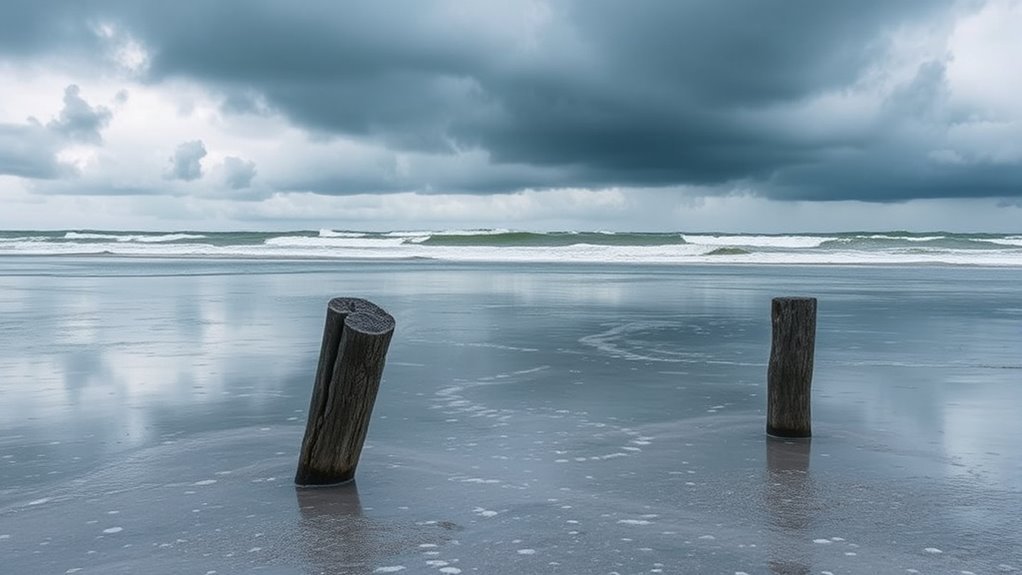
When prolonged rains or storms increase moisture levels, sea salt harvesting comes to a halt because evaporation slows down considerably. You’ll notice that changes in weather patterns directly affect evaporation rates, which are vital for salt crystallization.
During the harvesting season, steady dry weather and strong wind patterns work together to maintain ideal moisture levels, allowing salt crystals to form efficiently. However, storm disruption and overcast skies reduce sunlight and breezes, causing evaporation to drop and signaling that the season is ending.
Seasonal changes like temperature drops or freezing conditions also force you to pause harvesting to protect the salt ponds. As these shifts occur, you can tell the harvesting season is coming to a close because consistent dry weather becomes scarce.
Watching these weather patterns carefully helps you know when to stop, ensuring the quality of your sea salt isn’t compromised by unfavorable environmental conditions.
What Happens When Sea Salt Ponds Reach Full Crystallization
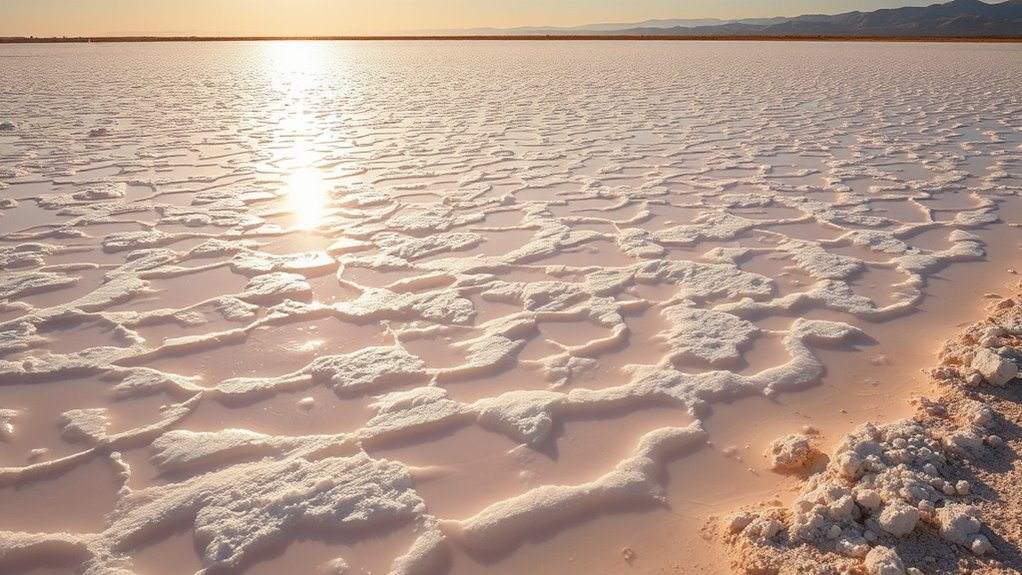
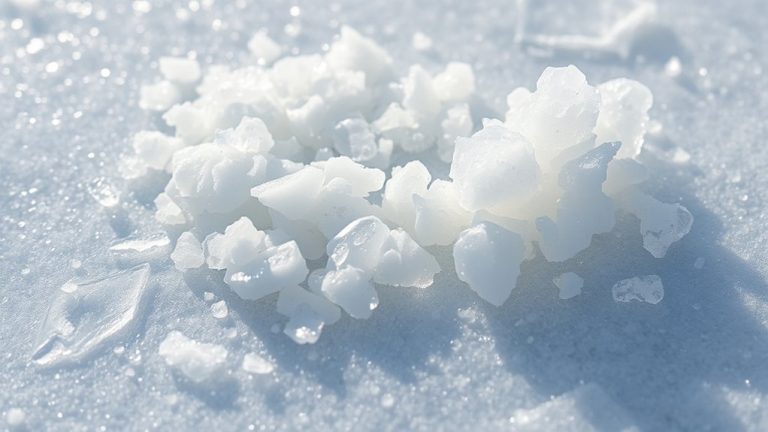
As the brine in sea salt ponds reaches its peak concentration, you’ll see thick layers of salt crystals forming on the surface, signaling that full crystallization has been achieved. This crystallization stage marks the point where salt deposits solidify into a dense layer, ready for harvesting.
During the evaporation process, seawater evaporation increases brine concentration, typically around 25-30% salinity, allowing these salt crystals to develop fully. At this stage, the pond’s water level hits its lowest, ensuring the salt yield won’t dissolve back into the brine.
Seawater evaporation boosts brine to 25-30% salinity, enabling full salt crystal development at the pond’s lowest water level.
You can then collect the salt deposits efficiently, either by mechanical means or manual raking, without risking damage to the crystals. Recognizing full crystallization is essential because it tells you the evaporation process has progressed enough to maximize your harvest.
Once you start harvesting, you prevent over-drying and maintain the quality of your sea salt, wrapping up the season’s production effectively.
Frequently Asked Questions
How to Tell if Sea Salt Has Gone Bad?
You’ll know sea salt’s gone bad if it clumps from moisture, smells off, or tastes strange. It might also change color or show mold.
If it looks unusual or has foreign particles, toss it to keep your food safe and tasty. Better safe than sorry, right?
Should You Refrigerate Sea Salt?
You shouldn’t refrigerate sea salt because it can absorb moisture and clump.
Instead, keep it in a cool, dry place in an airtight container.
Only refrigerate if it has added herbs or flavorings to preserve freshness.
Does Sea Salt Expire or Go Bad?
You wouldn’t expect it, but sea salt can last indefinitely if stored right. It doesn’t expire or go bad.
But watch for clumps, off-odors, or mold—those mean it’s time to replace it.
Is 10 Year Old Salt Still Good?
Yes, your 10-year-old sea salt is still good if it’s dry and free from clumps or contamination. Just make sure it hasn’t changed color or texture.
Also, store it airtight away from moisture to keep it safe. That way, it’ll last even longer without any issues.
Conclusion
You might notice the weather shifting just as the salt ponds reach full crystallization—that sudden cool breeze or unexpected rain isn’t a coincidence; it’s nature’s way of signaling the season’s end.
When you see these signs together, you’ll know the sea salt harvest is wrapping up. It’s like the sea and sky are quietly agreeing it’s time to pause, giving you a clear, natural cue to close the season too.
Understanding how to know when sea salt does close for the season is all about paying attention to these subtle changes. The weather shifts, the salt ponds tell their story, and before you know it, the season naturally draws to a close. So, keep an eye on the skies and the salt—nature’s seasonal signals are the best guide for wrapping up your sea salt harvest.