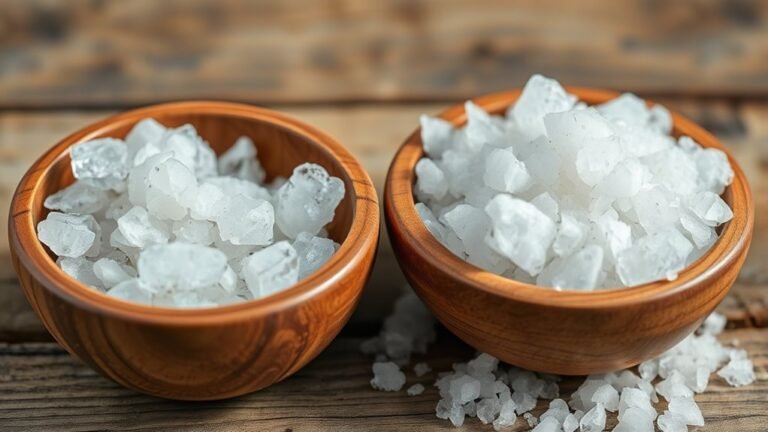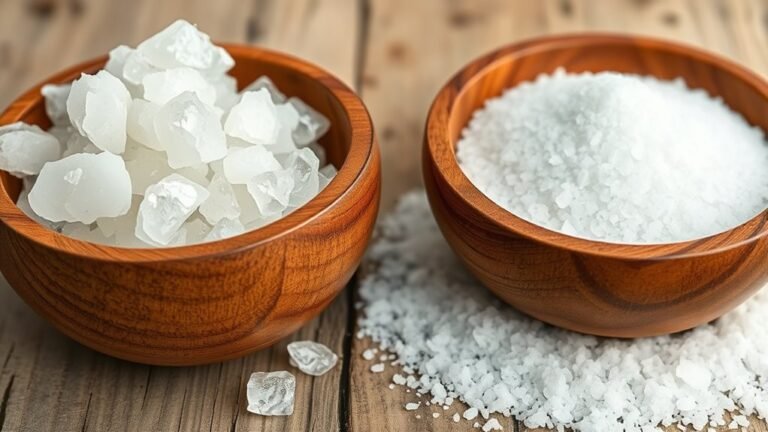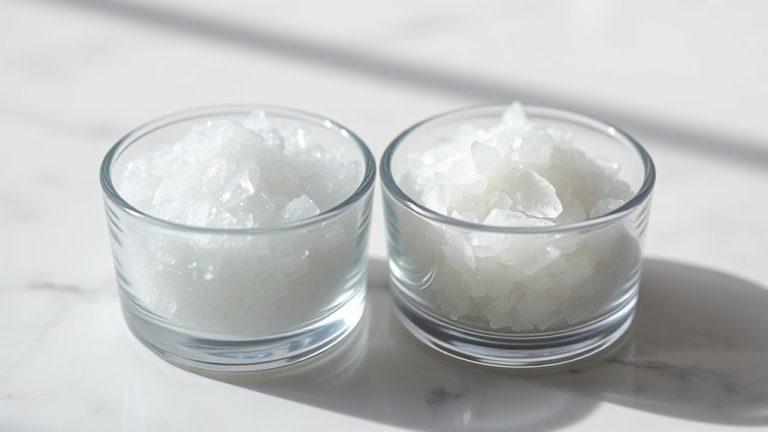

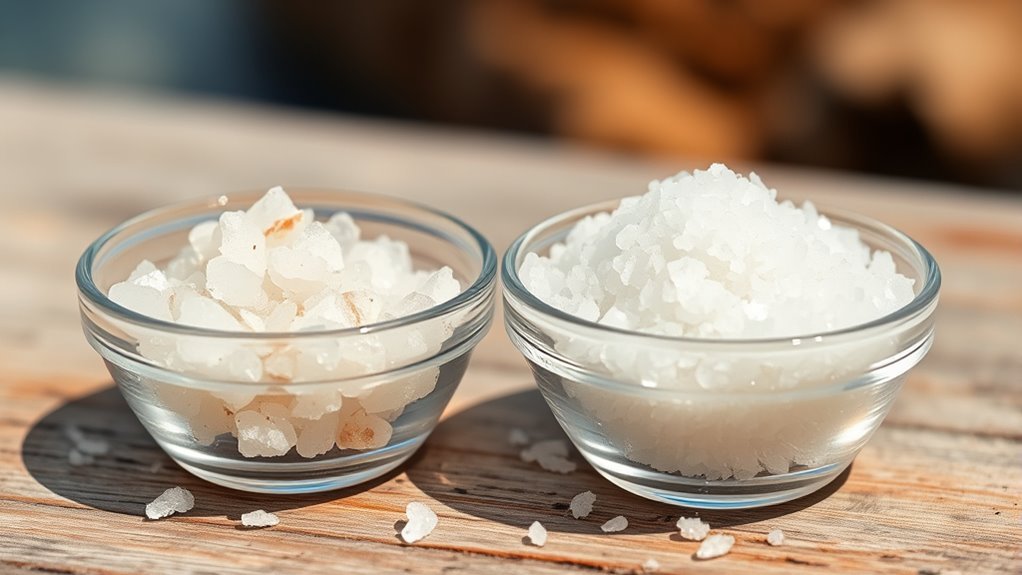
Is Iodized Sea Salt the Same as Sea Salt?
Iodized sea salt and regular sea salt both come from the ocean, but they’re not exactly the same. When you look at sea salt versus iodized sea salt, the main difference lies in their processing and iodine content.
Regular sea salt keeps its natural minerals and iodine, giving it a more varied mineral profile.
On the other hand, iodized salt is refined to remove minerals and has synthetic iodine added to ensure consistent nutrition.
So, if you want steady iodine for thyroid support, iodized salt’s a smart pick. But if you prefer mineral variety and less processing, regular sea salt might suit you better.
There’s more to weigh when choosing between them, like taste, texture, and nutritional needs. It really depends on what you’re looking for in your salt.
Key Takeaways
- Iodized sea salt is refined sea salt with added synthetic iodine for consistent iodine levels. This means the iodine content is controlled and predictable.
- Regular sea salt, on the other hand, is minimally processed. It keeps its natural minerals and has varying amounts of natural iodine.
- Because iodized sea salt is refined, it has fewer natural minerals than regular sea salt. So, you get less of those trace minerals.
- Both types come from ocean salt, but the main differences are in how they’re processed and their iodine content.
- When choosing between them, it really depends on whether you want a steady iodine intake or prefer the natural mineral variety.
What’s the Difference Between Iodized and Regular Sea Salt?
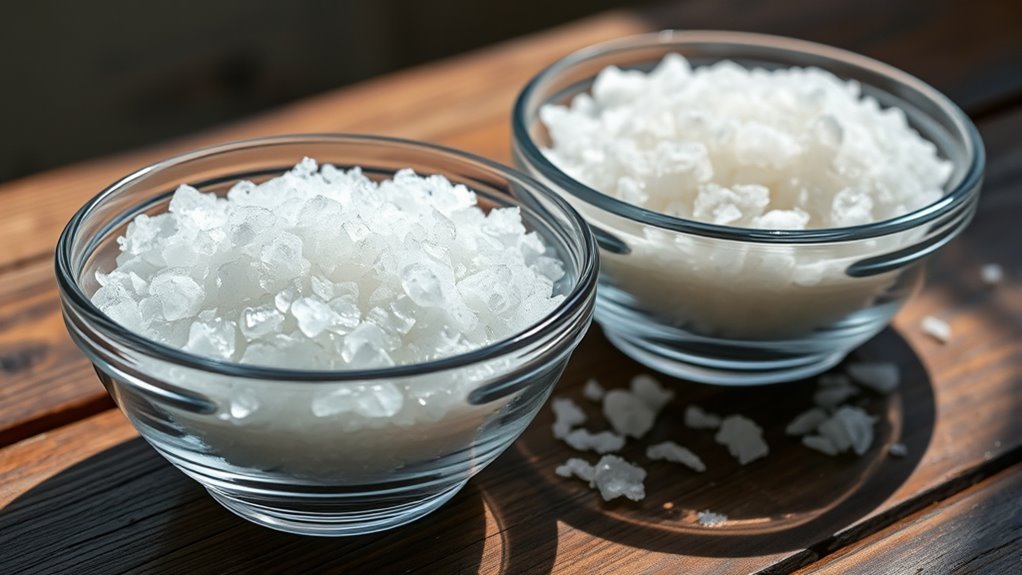
While both iodized and regular sea salt come from the ocean, they differ considerably in processing and iodine content. Iodized sea salt is regular sea salt that has undergone a refining process to remove natural minerals, making it a more uniform, white processed salt.
Iodized sea salt is refined to remove minerals and enriched with synthetic iodine, unlike natural sea salt.
After this refining, synthetic iodine compounds like potassium or sodium iodide are added to boost iodine content for nutritional purposes. In contrast, natural sea salt retains its full spectrum of trace minerals and naturally occurring iodine found in the ocean.
This mineral retention means regular sea salt offers nutritional differences compared to iodized sea salt, which primarily contains added synthetic iodine rather than natural minerals. When you choose natural sea salt, you get the benefits of trace minerals alongside its inherent iodine content.
Understanding these distinctions helps you appreciate how iodized sea salt and natural sea salt vary in both processing and nutritional profile. It’s pretty interesting once you see what goes into each type!
How to Choose Iodized or Regular Sea Salt for Your Health
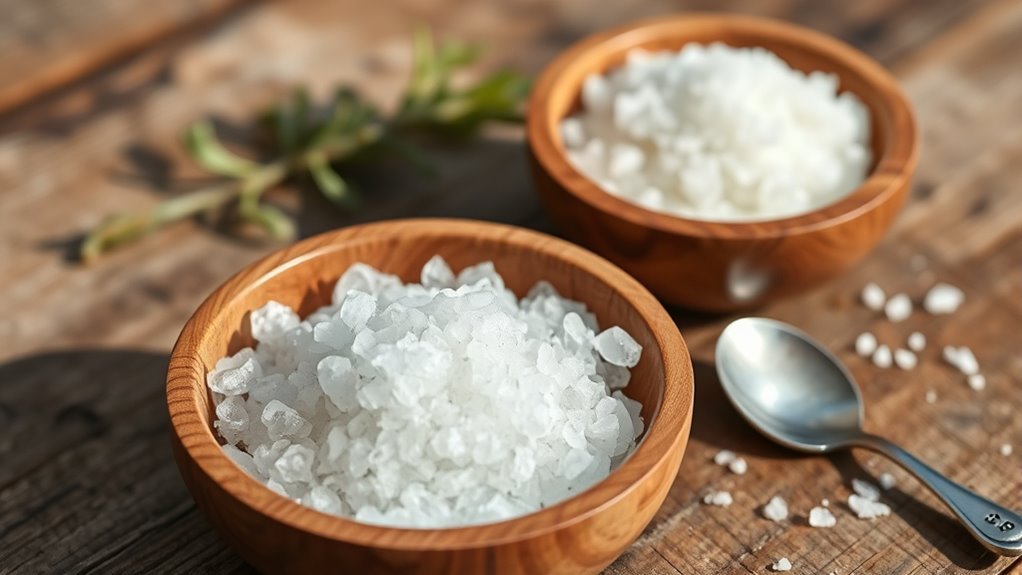
If you want to support your thyroid health reliably, choosing iodized sea salt is a smart move because it provides a consistent source of iodine. Iodized sea salt contains synthetic iodine added through processing methods, ensuring steady iodine content essential for thyroid health.
On the other hand, natural sea salt undergoes minimal processing, preserving its natural minerals and mineral profile, but its iodine content can vary widely depending on the source. When deciding between iodized sea salt and regular sea salt, consider your health considerations carefully.
If you need a guaranteed iodine intake to prevent deficiency, iodized sea salt is the better choice. However, if you prefer a salt with a broader natural mineral profile and minimal processing, natural sea salt offers that benefit.
Ultimately, your choice depends on whether consistent iodine supplementation or retaining natural minerals aligns better with your dietary needs and health goals. So, think about what matters most to you before making your pick.
Frequently Asked Questions
Which Is Better, Sea Salt or Iodized Sea Salt?
You’d choose iodized sea salt if you want a consistent iodine boost for thyroid health.
But if you prefer natural minerals and less processing, regular sea salt is better.
It really depends on your health needs and taste.
Can I Use Iodized Salt as Sea Salt?
You can use iodized salt as sea salt, but keep in mind 70% of sea salt’s flavor comes from minerals it lacks.
What Is the Healthiest Type of Sea Salt?
The healthiest sea salt you can use is unrefined, natural sea salt. It keeps all its trace minerals and natural iodine, supporting your electrolyte balance and overall health better than processed, iodized salts with synthetic additives.
You see, processed salts often lose those important minerals during refining. Plus, they sometimes have added chemicals you don’t really need. So, sticking with natural sea salt is a smarter choice for your well-being.
Is Seasalt the Same as Iodized Salt?
No, sea salt isn’t the same as iodized salt. You’ll find iodized salt has added iodine to prevent deficiency, while sea salt keeps natural minerals and only trace iodine without that extra fortification.
Conclusion
So, you want the natural crunch of sea salt but wonder if adding iodine ruins the vibe? Ironically, that tiny sprinkle of iodine might be the superhero your diet didn’t know it needed—especially if you’re not getting enough elsewhere.
Choosing between iodized and regular sea salt isn’t about flavor drama; it’s about whether you want a pinch of health insurance in your shaker.
Either way, you’re still just salting your food. When it comes down to iodized sea salt vs sea salt, the main difference is that iodine boost. If your diet lacks iodine-rich foods, iodized sea salt can help fill that gap without changing the taste much.
So, while sea salt and iodized sea salt might look similar, the added iodine makes a big difference for your health. It’s a simple swap that offers extra nutritional benefits without sacrificing the natural crunch you love.