How Does Salt Water in Pools Cause Skin Irritation?
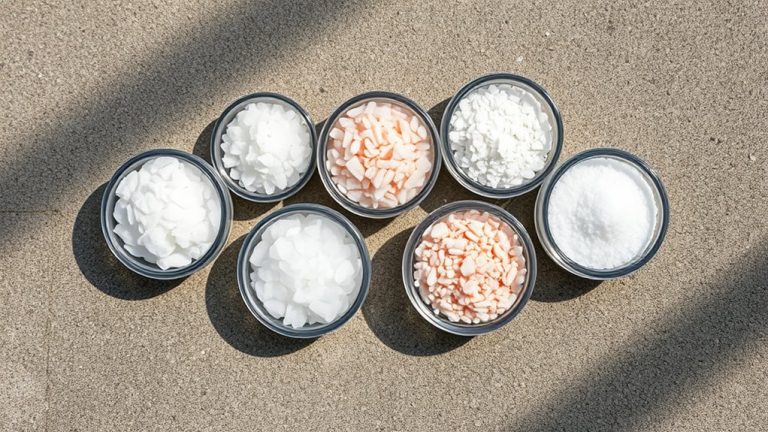
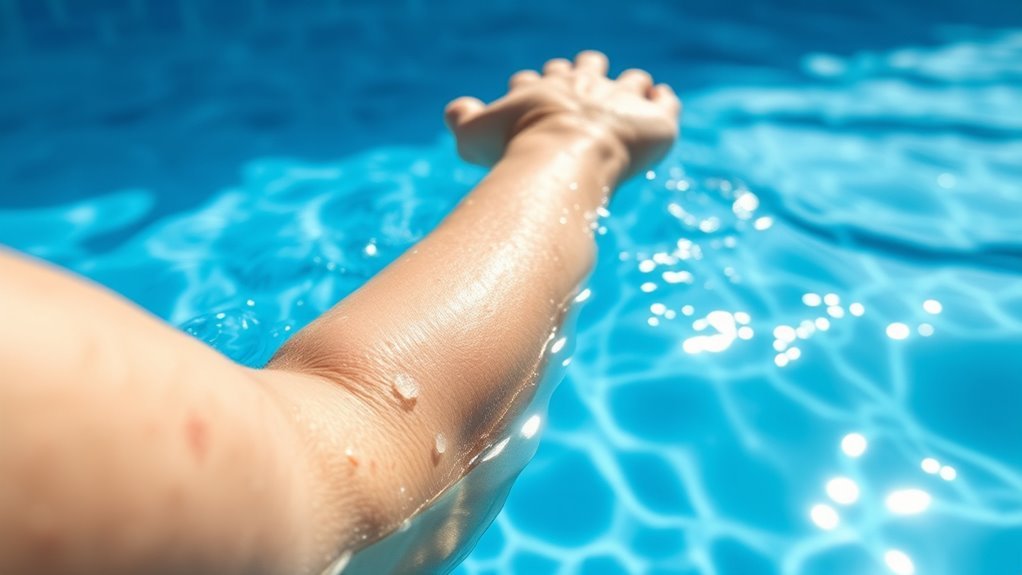
Saltwater pools can cause skin irritation by drawing moisture right out of your skin, leaving it feeling dry and tight. The salt actually penetrates the outer layer of your skin, messing with its natural hydration and protective barrier.
On top of that, saltwater pools often have higher alkaline pH levels. This can disturb your skin’s acid mantle, which normally helps protect your skin.
When that happens, irritation and sensitivity tend to increase.
If you have sensitive skin, these effects might hit you even harder, causing discomfort and redness. But don’t worry—keep reading to find out how you can protect and restore your skin after swimming in saltwater pools.
Key Takeaways
- Saltwater draws moisture from the skin, causing dehydration and a tight, rough feeling. It’s like your skin is thirsty but can’t get a drink.
- Salt also penetrates the skin’s outer layer, which messes with your skin’s natural hydration balance. That can leave your skin feeling off.
- When the pool’s pH goes up because of electrolysis, it throws off your skin’s acid mantle. This makes your skin more prone to irritation.
- Being exposed to saltwater weakens your skin barrier. That means your skin gets more sensitive to other irritants around you.
- Plus, if you don’t rinse off the salt after swimming, it sticks around. This leftover salt keeps your skin dry and irritated for longer.
How Saltwater Pools Cause Skin Dryness and Irritation
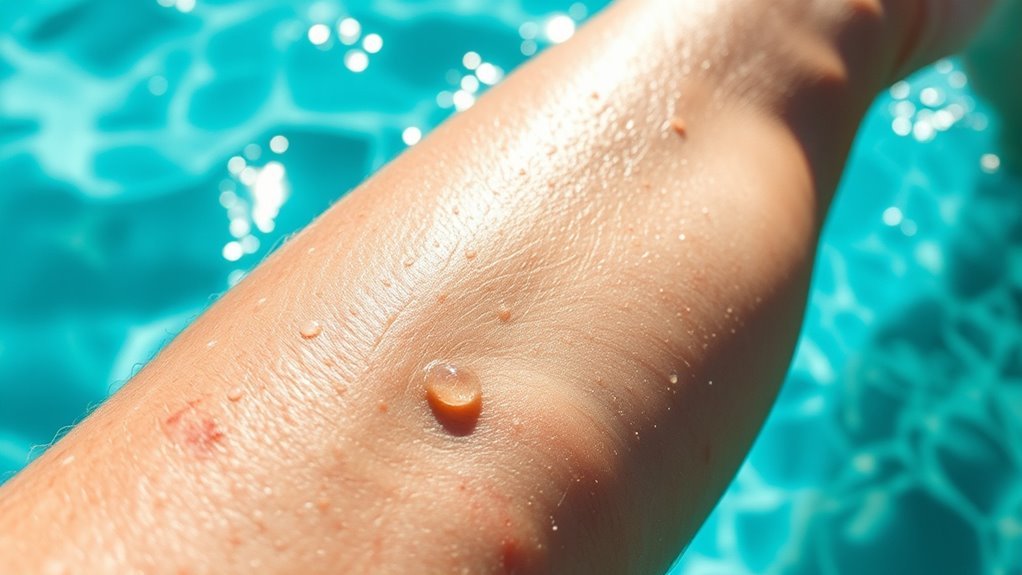
Although saltwater pools offer a gentler alternative to traditional chlorinated pools, their higher salinity levels can actually draw moisture out of your skin, leaving it dry and irritated. The salt in water penetrates your skin’s outer layer, causing dehydration and that tight, rough feeling after swimming.
Saltwater pools may feel gentler but their higher salinity can dry out and irritate your skin.
This salt penetration disrupts your skin barrier, making it less effective at protecting you from irritants. Plus, saltwater pools maintain an alkaline pH due to the electrolysis process, which can disturb your skin’s natural acid mantle. This further contributes to skin irritation causes.
If you have sensitive skin, you’re even more prone to experiencing skin dryness and irritation from saltwater pools. Without proper care, the salt and alkaline environment can worsen these effects, leaving your skin vulnerable to microfissures and discomfort.
Understanding how saltwater pools impact your skin dryness and irritation helps you recognize why your skin might feel less comfortable after a swim. So, it’s good to be aware of what’s going on with your skin when you take a dip.
How to Protect and Restore Your Skin When Swimming in Saltwater Pools
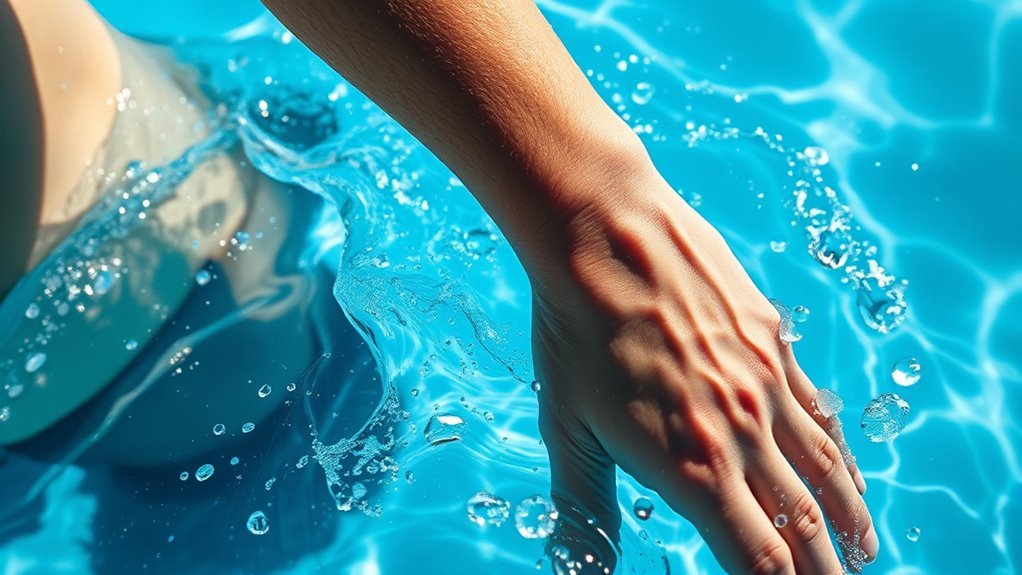
Since saltwater pools can draw moisture from your skin and disrupt its natural balance, you’ll want to take specific steps to protect and restore your skin after swimming. First, confirm the pool water is properly pH-balanced between 7.2 and 7.6 to minimize salt-induced irritation and reduce skin sensitivity.
After swimming, rinse your skin thoroughly with fresh water to remove any residual salt. This helps prevent dryness and skin irritation.
Next, apply a rich, emollient moisturizer to restore hydration and reinforce your skin’s barrier. This skin protection step is vital for skin restoration, as it replenishes moisture lost due to the high salinity of saltwater pools.
Frequently Asked Questions
Why Do I Get a Rash After Being in a Saltwater Pool?
You get a rash after swimming in a saltwater pool because the salt can dry out your skin and disrupt its natural balance.
If you don’t rinse off properly, leftover salt irritates and inflames your skin. That’s why it’s super important to shower well after a dip. Otherwise, you might end up with that uncomfortable rash.
What Is the Downside of a Salt Water Pool?
The downside of a salt water pool is that it can dry out your skin, cause irritation, and worsen existing skin conditions.
You’ll also need to maintain proper salinity levels and rinse off after swimming to avoid discomfort.
It’s not a big deal, but it’s something to keep in mind if you have sensitive skin.
Are Saltwater Pools Bad for Your Skin?
Yes, saltwater pools can be tough on your skin—they dry, they irritate, they disrupt.
But if you rinse well and balance the pool’s pH, you can protect your skin and still enjoy swimming.
How to Fix Salt Water Irritation?
To fix salt water irritation, rinse off with fresh water right after swimming. Apply a gentle moisturizer, and avoid harsh soaps.
Also, check the pool’s pH and salinity levels to keep your skin comfortable and healthy. Taking these simple steps can really help soothe your skin.
Conclusion
Saltwater pools might feel gentler, but did you know they can still dry out your skin? Studies show that nearly 60% of swimmers experience irritation from saltwater exposure.
This happens because salt strips natural oils, leaving your skin dry and itchy. It might surprise you, but even though saltwater pools are often thought to be milder than chlorine pools, they can still cause discomfort.
To protect yourself, rinse off immediately after swimming and moisturize well. These simple steps help keep your skin healthy and comfortable.
So, if you want to enjoy saltwater pools without the irritation, remember to take care of your skin. Rinsing off and applying moisturizer after your swim can make a big difference in preventing dryness and itching caused by saltwater. Keeping your skin hydrated is key to avoiding irritation and making your pool time more enjoyable!