

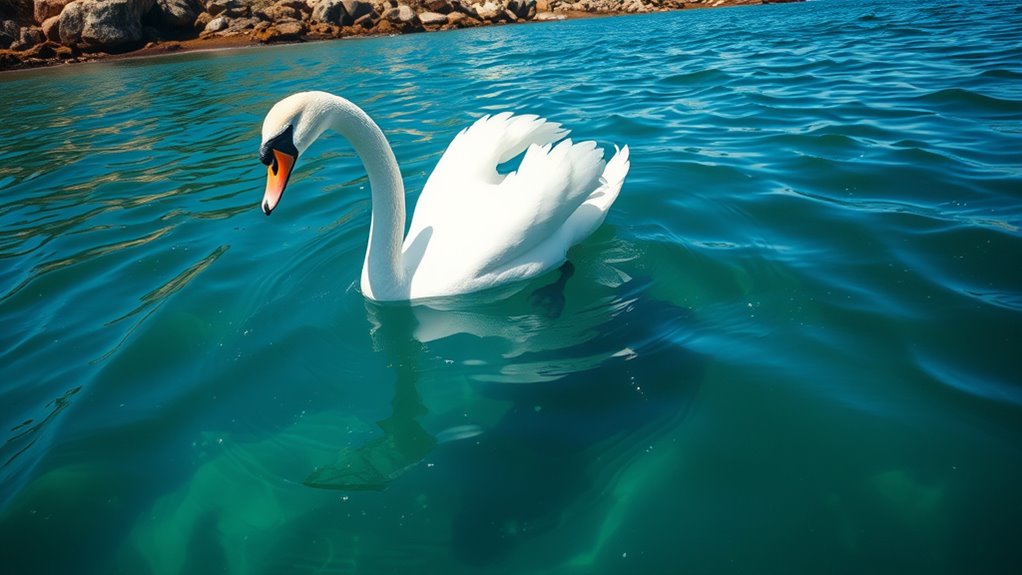
How Do Swans Swim in Salt Water?
You can swim alongside swans in salt water because they’ve got special salt glands above their eyes that help them handle the salty environment. These salt glands are key adaptations that allow swans to thrive in coastal and marine habitats.
They pull extra salt out of their bloodstream and expel it through their nostrils, keeping their salt levels balanced.
This cool feature lets swans drink saltwater safely and forage in salty areas without any harm. So, when you see swans gliding gracefully in the ocean or salt lakes, you know they’re well-equipped for the challenge.
If you want to discover how these adaptations support their survival in different habitats, there’s more to explore ahead.
Key Takeaways
- Swans use specialized salt glands above their eyes to remove excess salt from their bloodstream while swimming in salt water. These glands concentrate and expel salt through the swans’ nostrils, preventing salt overload from the environment.
- They also shake their heads to clear the salty liquid expelled from their nares, which helps avoid discomfort and salt buildup.
- Thanks to these salt glands, swans can safely drink saltwater while foraging in brackish and marine habitats.
- This clever adaptation lets swans thrive in coastal and salt marsh areas, not just in freshwater environments.
How Swans’ Salt Glands Help Them Drink Saltwater
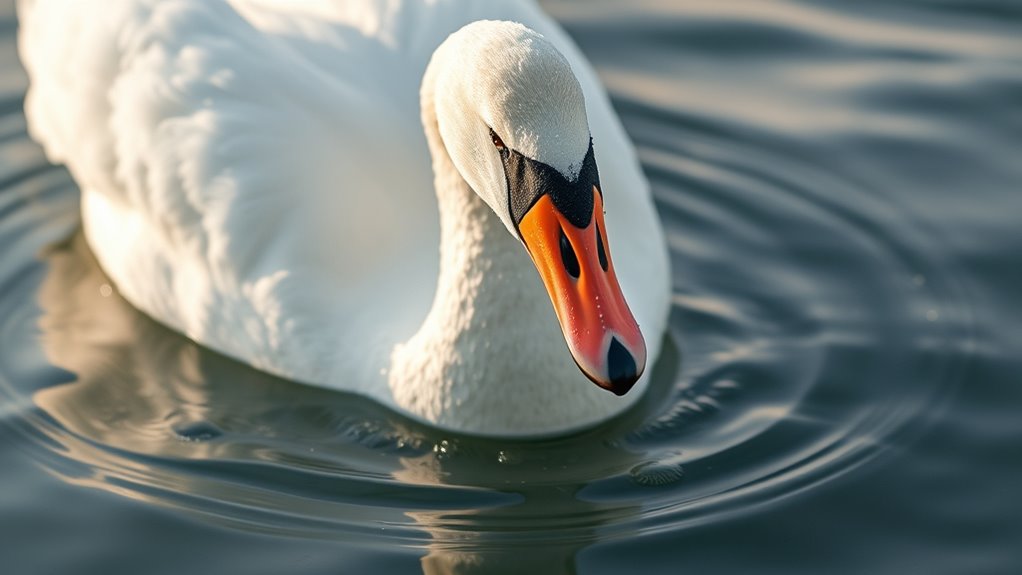
Although swans often live in salty environments, they can drink saltwater without harm because of a specialized salt gland above their eyes. These salt glands play a vital role in saline regulation by extracting excess salt from the swan’s bloodstream.
Swans thrive in salty habitats thanks to specialized glands that remove excess salt from their bloodstream.
Once the gland concentrates the salt, it expels the salty liquid through the swan’s nares. This salt excretion process helps swans regulate salt intake effectively, allowing them to thrive in both brackish habitats and saltwater habitats.
When you watch a swan, you might notice it shaking its head; this action helps clear the salt solution from its nares, preventing discomfort. Thanks to these adaptations, swans can survive and drink in saline environments that would otherwise be harmful.
Without their salt glands, managing the excess salt from their diet and water would be challenging. So, their salt glands are essential for maintaining the balance they need to live comfortably in salty surroundings.
Where Swans Use Their Salt Gland Adaptations in the Wild
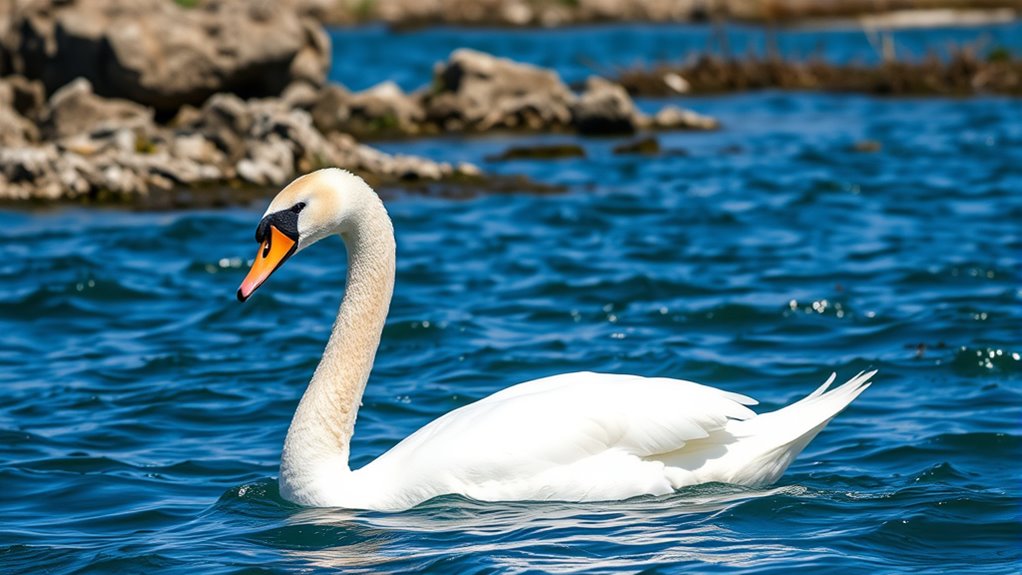
Swans rely on their salt glands not just as a biological feature but as a practical tool in their natural habitats. You’ll find these remarkable adaptations at work in coastal estuaries and saltwater lagoons, where saline environments challenge freshwater species.
When swans venture into brackish habitats, their salt glands kick in to maintain salt regulation by filtering excess salt from their bloodstream. This salt excretion happens through their bills, allowing them to drink seawater without harm.
These adaptations enable marine foraging in bays and salt marshes, broadening their food sources beyond freshwater lakes and rivers. Species like the black swan and some mute swans depend heavily on these glands to survive in salty conditions.
Frequently Asked Questions
Can Swans Survive in Salt Water?
Yes, swans can survive in salt water because their specialized salt glands remove excess salt from their bloodstream.
You’ll notice they expel concentrated salt through their nostrils, letting them thrive even in salty environments.
It’s pretty amazing how their bodies handle the salt, right? This adaptation really helps them live comfortably where other birds might struggle.
Do Swans Ever Swim in the Ocean?
Like sailors venturing beyond familiar shores, swans do swim in the ocean. You’ll find them gracefully steering salty waves, thanks to their salt glands.
They explore new feeding grounds and resting spots beyond freshwater’s gentle embrace. It’s pretty cool how they manage that, isn’t it?
Why Do Swans Swim With One Foot Out of the Water?
You’ll notice swans swim with one foot out to reduce drag and save energy. They also use this to balance better and regulate body temperature, helping them stay comfortable and efficient while floating or moving slowly.
It’s pretty clever when you think about it! By sticking one foot out, they can keep cool and stay steady without wasting extra effort.
What Is the Lifespan of a Swan?
Think of a swan’s life as a graceful dance lasting about 12 years in the wild.
Though with care, you’ll see some glide elegantly for over 50 years. They often outlive many of their feathered peers.
Conclusion
You might think swans, graceful on freshwater lakes, would struggle in salty seas. But don’t be fooled—while freshwater glides through their feathers, saltwater challenges their bodies.
Thanks to their incredible salt glands, swans can drink salty water without harm, turning a harsh environment into a livable one. These glands filter out the salt, allowing swans to thrive even near the ocean.
So next time you spot a swan near the shore, remember: beneath that elegant surface lies a remarkable adaptation. Their ability to swim in salt water shows how nature blends beauty with survival. Swans aren’t just freshwater birds—they’re perfectly equipped to handle saltwater too!