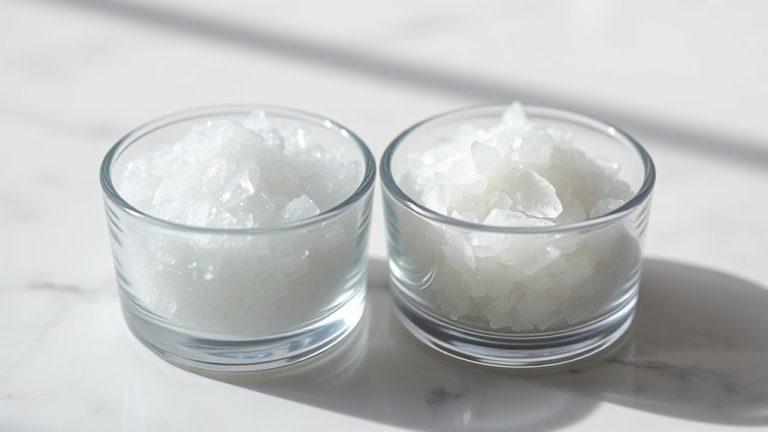
Salt Water Vs Chlorine Pool: 3 Key Differences
When you choose between saltwater and chlorine pools, you’ll notice three key differences that can really change your pool experience. Saltwater pools create chlorine automatically through salt electrolysis, giving you steady sanitation without the hassle of handling lots of chemicals. This means less time mixing and measuring chemicals, which is a big plus for many pool owners.
Maintenance for saltwater pools mainly focuses on monitoring salt levels and cleaning the electrolysis cell.
On the other hand, chlorine pools require more frequent chemical dosing to keep the water clean and safe.
Saltwater pools also offer softer water that feels gentler on your skin, with fewer odors compared to traditional chlorine pools. Many swimmers find they experience less skin irritation and a more pleasant swimming environment.
Keep exploring to understand how these differences impact your pool care routine and overall swimming comfort. It’s all about finding the right fit for you and your lifestyle!
Key Takeaways
- Saltwater pools generate chlorine automatically through electrolysis, while chlorine pools require manual chemical addition. This means you don’t have to handle chemicals as often with saltwater pools.
- Maintenance for saltwater pools centers on salt level monitoring and cell cleaning, unlike frequent chemical dosing in chlorine pools. It’s a bit less hands-on in terms of adding chemicals regularly.
- Saltwater pools produce fewer chloramines, leading to less skin irritation, eye redness, and chemical odors than chlorine pools. So, swimming feels more comfortable overall.
- Water in saltwater pools feels softer and more natural due to consistent chlorine levels and slightly lower pH. It’s easier on your skin and eyes, making for a nicer swim.
- Saltwater pools generally offer better water clarity and a more pleasant swimming experience compared to traditional chlorine pools. Many people find them more enjoyable to swim in.
How Saltwater and Chlorine Pools Sanitize Water
Although both saltwater and traditional chlorine pools rely on chlorine to sanitize water, they produce and maintain it quite differently.
In saltwater pools, chlorine generation happens automatically through electrolysis, where salt in the water converts into hypochlorous acid—the active sanitizer. This process guarantees a steady, continuous supply of chlorine, keeping sanitation consistent without frequent manual chemical addition.
You’ll need to monitor water chemistry carefully, especially salt levels and pH, to maintain effective chlorine production and water sanitation.
On the other hand, traditional chlorine pools depend on you adding chlorine chemicals like tablets or liquid manually to disinfect the water.
While both systems ultimately sanitize using chlorine, saltwater pools simplify the process by producing it on-site, reducing the need to handle chlorine directly.
Understanding these differences helps you choose the right pool system for your sanitation preferences and lifestyle.
Maintenance Differences Between Saltwater and Chlorine Pools
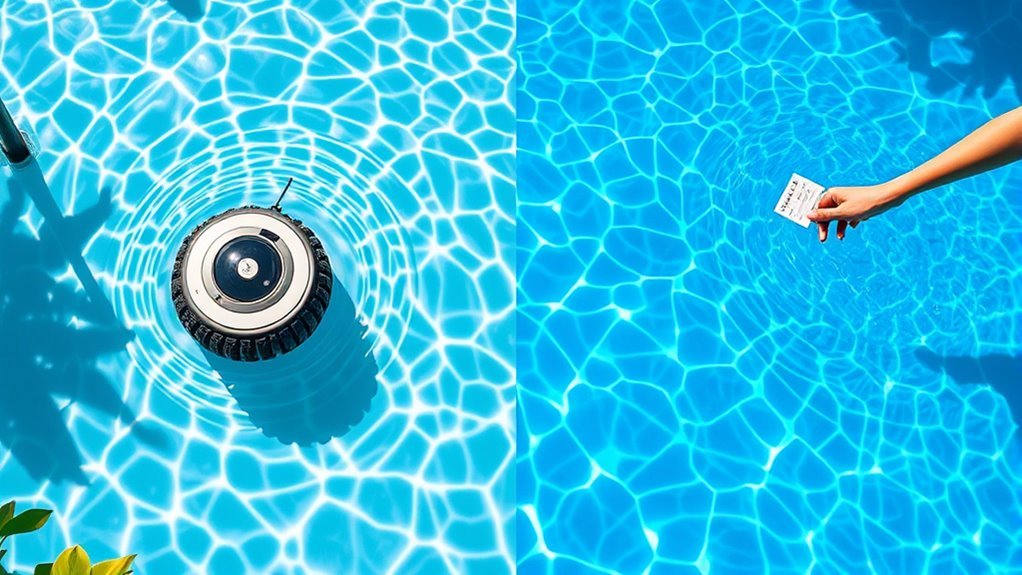
When you maintain a saltwater pool, you’ll focus on monitoring salt levels regularly and cleaning the salt cell to prevent scale buildup. Chlorine pools, on the other hand, require you to add chlorine chemicals frequently and adjust dosages after heavy use or storms.
Saltwater maintenance involves keeping salt concentrations around 3,000-4,000 ppm and performing salt cell cleaning once or twice per season to guarantee efficient operation. Both pool types demand weekly water testing for pH balancing, alkalinity, calcium hardness, and disinfectant levels to maintain proper pool chemistry.
In chlorine pools, you’ll perform more frequent chemical adjustments and manual chlorine dosing to sustain sanitizer strength. Also, preventing scale buildup and corrosion is vital in both systems, achieved through regular monitoring and adjusting water chemistry.
Water Quality and Swimming Experience in Saltwater vs Chlorine Pools
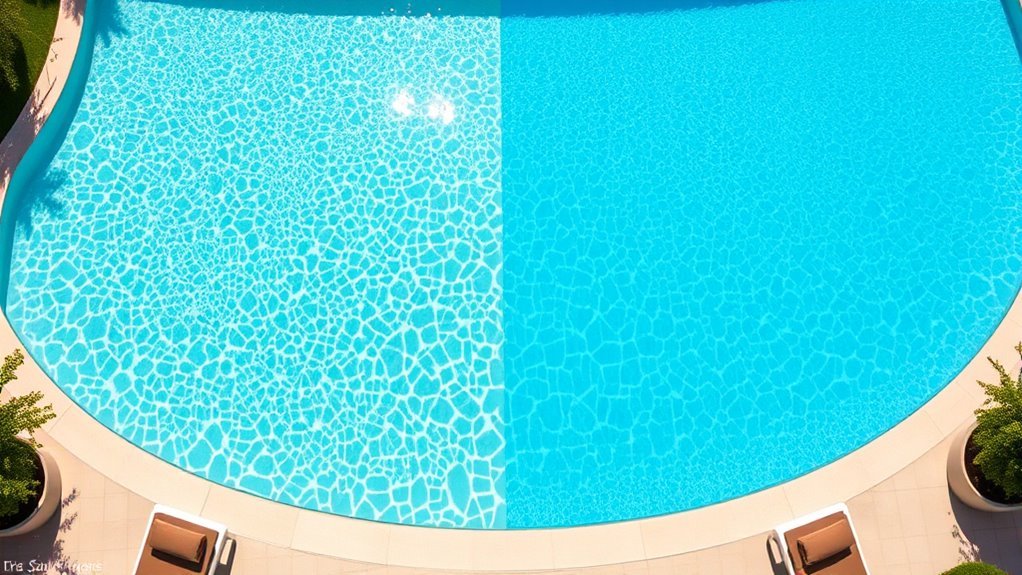
Maintaining proper water chemistry directly impacts your swimming experience, and saltwater pools often provide a softer, gentler feel on your skin and hair compared to traditional chlorine pools. Saltwater pools produce fewer chloramines, which means you’ll face less skin irritation, fewer red eyes, and minimal chemical odors.
This improves overall swimmer comfort, especially if you have sensitive skin or swim frequently.
In terms of water quality, saltwater pools maintain clearer water thanks to consistent, automatic chlorine generation that prevents algae and bacteria buildup. Their slightly lower pH levels create a more natural water feel with less harsh chlorine smell.
On the other hand, chlorine pools can sometimes cause stronger chemical odors and more skin irritation if not balanced properly.
Ultimately, choosing saltwater pools often leads to a more pleasant swimming experience, offering enhanced water clarity and comfort that many swimmers prefer over traditional chlorine pools.
Frequently Asked Questions
Are Saltwater Pools Better for You Than Chlorinated Pools?
Yes, you’ll find saltwater pools gentler on your skin and eyes since they produce chlorine more naturally. You’ll experience less irritation and a softer feel, making swimming more comfortable.
This is especially true if you’re sensitive to chemicals. So, saltwater pools can be a great option if you want a more soothing swim.
What Is the Downside of a Salt Water Pool?
Don’t count your chickens before they hatch—saltwater pools can corrode metal fixtures and irritate sensitive skin.
You’ll need to maintain salt levels diligently, or scaling and damage may sneak up, making upkeep costly and time-consuming.
What Is the Healthiest Type of Swimming Pool?
You’ll find saltwater pools healthier because they produce chlorine gradually, reducing skin and eye irritation. They have fewer harsh chemicals and chloramines, making the water gentler and more comfortable for frequent swimming sessions.
Plus, that gentle water means you can swim more often without worrying about dryness or redness. It’s just easier on your body overall.
Is It Cheaper to Do a Salt Water Pool or Chlorine Pool?
Think of saltwater pools as investing in a sturdy tree—costly upfront but rewarding over time. You’ll spend less on chemicals long-term, making saltwater pools cheaper despite their higher initial setup compared to chlorine pools.
It might feel like a bigger expense at first, but the savings add up. Over time, you’ll see why many people prefer saltwater pools for the lower ongoing costs.
Conclusion
Now that you’ve explored how saltwater and chlorine pools sanitize, maintain themselves, and affect your swimming experience, you’re better equipped to choose what suits you best. Whether you prefer the gentle embrace of salt or the classic punch of chlorine, your pool oasis awaits.
Just like a knight once chose his armor, pick the option that best protects and delights you. Saltwater pools offer a softer, more natural feel that’s easy on the skin and eyes, while chlorine pools provide a traditional, powerful sanitation method that many trust.
Choosing between a salt water vs chlorine pool comes down to your lifestyle and preferences. Whichever you decide, your pool will be a refreshing escape from the modern world’s hustle—making every swim an invigorating experience you’ll look forward to.