
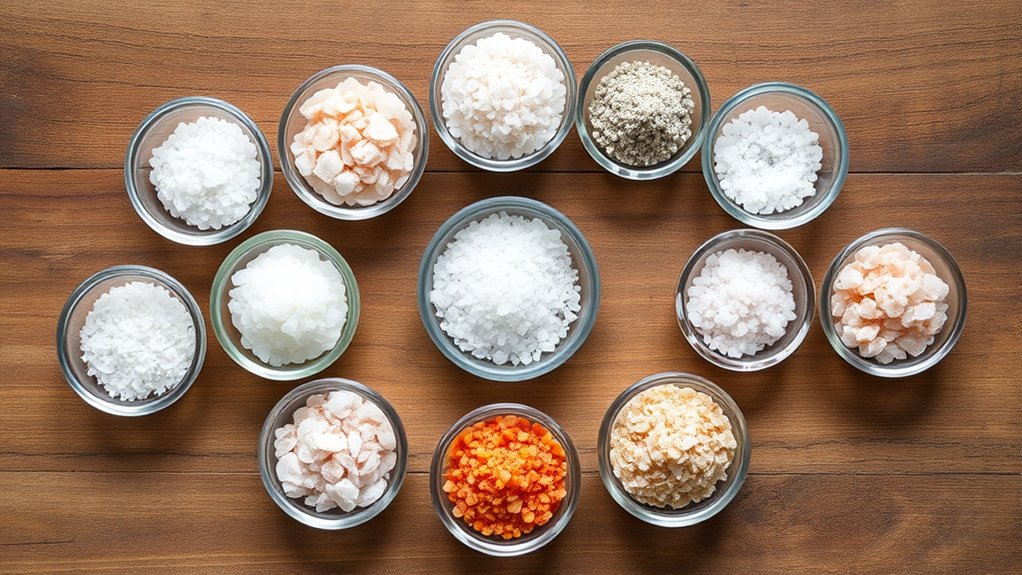
Top 10 Best Sea Salts for Every Kitchen
You’ll love versatile sea salts like Maldon, fleur de sel, and Sel de Guérande for their unique textures and rich flavors that elevate any dish. These best sea salts are kitchen staples because they bring something special to both everyday meals and gourmet recipes.
Fine grains work great in baking, while flaky salts add crunch as a finishing touch.
Specialty options like Persian Blue or Hawaiian salt not only bring visual appeal but also subtle mineral notes that make your dishes stand out. Using quality sea salt enhances flavor and presentation, making every meal special.
Keep exploring to uncover tips, health info, and sourcing secrets that will help you choose the perfect sea salt for your cooking adventures.
Key Takeaways
– Maldon Sea Salt offers a flaky texture and clean flavor, perfect for finishing dishes with a delicate crunch.
It really adds that special touch to your meals.
– Fleur de Sel is a hand-harvested, mineral-rich salt ideal for adding elegance and intense flavor to gourmet recipes.
It’s the kind of salt that makes your dishes feel extra fancy.
– Hawaiian Sea Salt contains volcanic clay minerals, providing unique earthy flavor and vibrant color for diverse culinary uses.
Plus, it brings a beautiful pop of color to your plate.
– Persian Blue Salt features rare blue crystals with a distinctive taste, enhancing both presentation and flavor complexity.
It’s not just salt; it’s a conversation starter.
– Fine sea salts dissolve quickly, making them versatile for baking, seasoning liquids, and everyday cooking needs.
They’re super handy to have around the kitchen.
How Sea Salt Differs From Other Salt Types
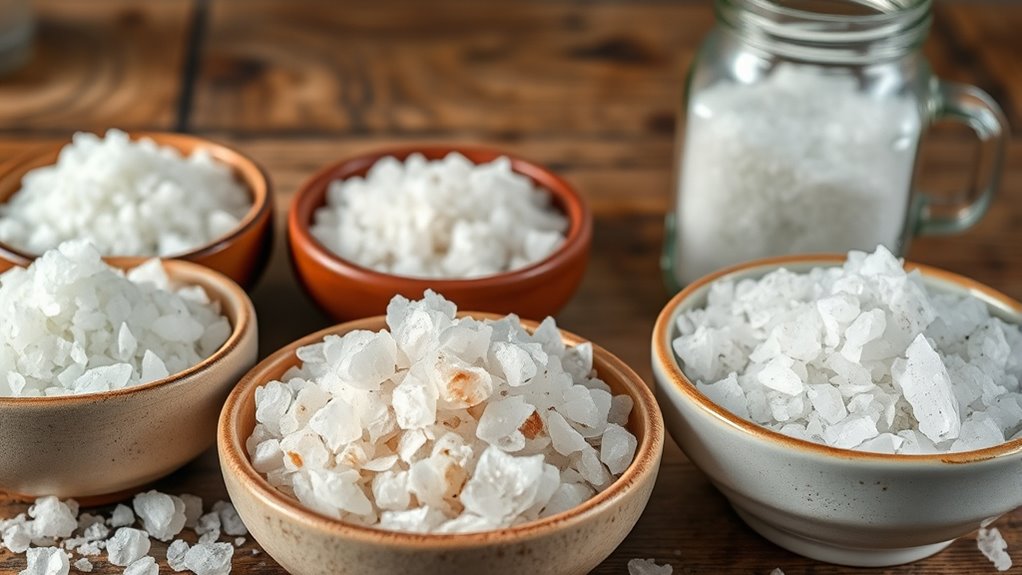
Although all salts share a basic role in seasoning, sea salt stands out because it’s made by evaporating seawater, which preserves natural minerals like magnesium and calcium. Unlike refined table salt, which undergoes heavy processing and loses most minerals, sea salt keeps these trace elements, giving it a more complex flavor and coarser texture.
Sea salt’s natural minerals create a richer flavor and texture compared to refined table salt.
When you use sea salt, even a small amount can add subtle layers of taste that table salt can’t match.
Next time you reach for salt, consider how sea salt’s mineral content might enhance your dish. Its larger grains also provide a satisfying crunch and a burst of flavor when sprinkled on finished plates.
This difference isn’t just about taste; those natural minerals might offer slight health benefits, too. So, sea salt isn’t just salt—it’s a seasoning experience shaped by nature’s elements, making your meals more flavorful and interesting with every pinch.
How Sea Salt Is Harvested and Processed
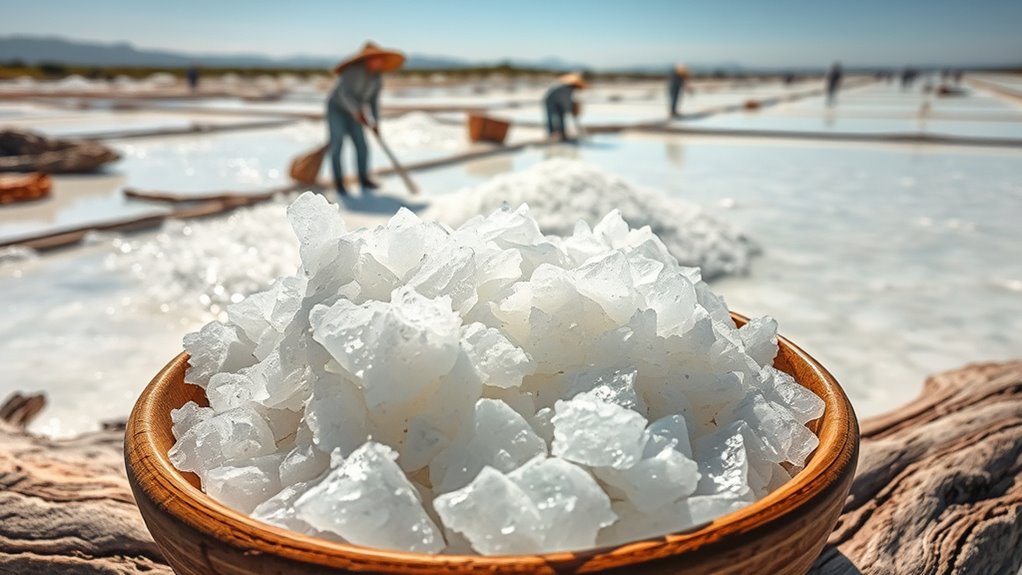
Understanding what makes sea salt unique starts with how it’s harvested and processed. You’ll find that sea salt is created by evaporating seawater, often using solar evaporation in salt flats or ponds.
As the water evaporates, salt crystals concentrate on the surface, and workers harvest them by raking or scooping from the salt pans. The local seawater’s mineral content and the evaporation method directly influence the salt’s flavor and texture.
Depending on whether the process is traditional solar evaporation or a more industrial approach, you’ll notice differences in the mineral profile and texture of the final product. After harvesting, sea salt usually undergoes minimal processing—sometimes it’s washed or dried to remove impurities before packaging.
This careful harvesting and light processing help preserve the natural minerals that give sea salt its distinct taste. That’s what makes it such a valuable addition to your kitchen.
Best Sea Salts From Around the World
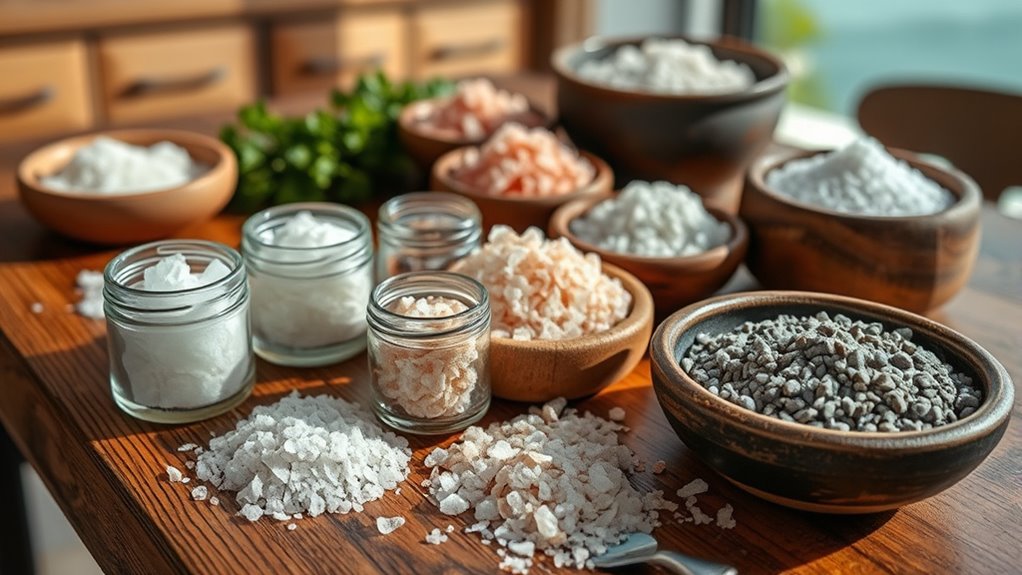
When you explore the world of sea salts, you’ll discover a variety of unique flavors and textures shaped by their origins. Maldon Sea Salt from England stands out with its flaky texture and clean, crisp flavor, perfect for finishing dishes.
From France, Sel de Guérande offers a mineral-rich, gray salt harvested traditionally, providing a moist texture and complex taste. Fleur de Sel, also French, is delicate and hand-harvested, adding both flavor and elegance to your meals.
Hawaiian Sea Salt, especially the red variety from Kauai, contains volcanic clay minerals, giving it an earthy flavor and distinctive color. For something truly striking, Persian Blue Salt from Iran features rare blue crystals rich in minerals, adding visual appeal and subtle mineral notes.
Each salt brings its own personality to your kitchen, letting you experiment with flavor, texture, and presentation in your cooking. It’s pretty amazing how such simple ingredients can change up your dishes so much!
Where to Buy Quality Sea Salt
You can find quality sea salt at specialty grocery stores, health food shops, and trusted online retailers like Amazon or dedicated salt vendors. Always check labels for the salt’s source and look for minimal processing to guarantee natural minerals are preserved.
Reading customer reviews helps you confirm the purity and authenticity before making a purchase. It’s a good way to make sure you’re getting the real deal!
Trusted Retailers
Where can you find high-quality sea salt that truly enhances your cooking? Trusted retailers like specialty grocery stores and health food shops offer premium options.
Look for brands with clear sourcing details and third-party certifications to guarantee purity. Popular choices include Himalayan pink, Celtic, and Maldon sea salts, known for natural harvesting and minimal processing.
Checking packaging and customer reviews helps you pick authentic salts that maintain essential minerals and flavor.
| Retailer Type | Popular Salts | What to Look For |
|---|---|---|
| Specialty Grocery | Maldon, Celtic Sea | Minimal processing, local sourcing |
| Health Food Stores | Himalayan Pink, Celtic | Organic certifications, purity |
| Reputable Vendors | All popular salts | Third-party testing, reviews |
Online Salt Sources
Although sourcing quality sea salt locally can be convenient, buying online opens up access to specialty stores like SaltWorks, The Meadow, and Mountain Rose Herbs that offer a wide range of premium salts. You’ll find varieties such as fleur de sel, Himalayan pink salt, and Maldon sea salt, each with unique textures and mineral profiles.
When shopping online, check product details for source location and harvesting methods to guarantee authenticity. Reading reviews and looking for certifications can help you spot reputable sellers offering pure, minimally processed salts without additives.
Keep in mind that prices vary, but buying in bulk often provides better value, especially if you use sea salt frequently for cooking or finishing dishes. Online shopping lets you explore and select quality salts tailored to your kitchen needs.
Sea Salt vs. Table and Kosher Salt
You’ll notice sea salt offers a unique texture and flavor thanks to its mineral content and harvesting methods. While kosher salt’s coarse grains work great for seasoning meat, table salt’s fine, often iodized grains suit everyday cooking.
Keep in mind, sea salt isn’t necessarily healthier—it has similar sodium levels but can enhance your dishes in different ways. So, it’s really about what kind of flavor and texture you’re going for in your cooking.
Texture And Flavor
When you choose sea salt over table or kosher salt, you get more than just saltiness; you add texture and depth to your dishes. Sea salts come with larger, coarser grains, which offer a satisfying crunch and enhance visual appeal.
In contrast, table and kosher salts have finer grains, giving you a smoother, more uniform seasoning. The mineral content in sea salt also adds complexity to flavors, unlike the neutral taste of pure sodium chloride in table salt.
Here’s what you should keep in mind:
- Sea salt’s flaky or coarse texture varies by harvesting method.
- Table and kosher salts provide consistent, fine granules.
- Sea salt enriches flavor profiles with natural minerals.
- Use sea salt as a finishing touch for crunch and contrast.
Health And Usage
Beyond texture and flavor, the health aspects and practical uses of sea salt, table salt, and kosher salt play a big role in choosing the right one for your kitchen. Sea salt is less processed and contains trace minerals that can subtly enhance flavor and texture, but its mineral content varies by source.
Table salt is finely ground and usually iodized, giving you essential iodine for health, which sea and kosher salts typically lack. Kosher salt’s larger grains make it ideal for cooking and koshering meat, offering ease of handling and even seasoning.
Both sea salt and kosher salt work well for seasoning, but their grain size and mineral differences affect how you use them. Knowing these traits helps you pick the salt that best fits your cooking and nutritional needs.
Picking the Perfect Sea Salt Texture for Cooking
Although sea salt comes in various textures, choosing the right one can really transform your cooking by boosting both flavor and presentation.
Understanding the texture helps you decide how and when to use each type for the best results.
- Coarse sea salts, like fleur de sel, add a satisfying crunch and intense flavor. They’re perfect for finishing dishes.
- Fine sea salts dissolve quickly, which is ideal for baking or seasoning liquids where even distribution matters.
- Flake sea salts offer a light, crispy texture. They’re great for garnishing salads or charcuterie boards, adding a delicate crunch.
- Adjusting the salt grain size gives you precise control over seasoning. This helps balance flavors and elevate your dish’s appearance.
How Minerals Affect Sea Salt Flavor
Choosing the right sea salt texture is just one part of enhancing your dish; the minerals locked inside the salt play a big role in shaping its flavor. Minerals like magnesium, calcium, and potassium give each sea salt its unique taste, often influenced by where and how the salt was harvested.
For example, higher magnesium levels can add a subtle bitterness or metallic edge, while trace minerals contribute earthiness that deepens flavor complexity. Different salts, such as Celtic or Hawaiian, have characteristic mineral profiles that make them stand out.
Here’s a quick look at how minerals affect flavor:
| Mineral | Flavor Impact |
|---|---|
| Magnesium | Slightly bitter, metallic |
| Calcium | Mild, smooth, slightly sweet |
| Potassium | Enhances saltiness |
Understanding these mineral effects helps you pick the perfect sea salt to complement your cooking style. It’s pretty cool how these tiny elements can change the whole taste experience!
Using Sea Salt in Baking and Desserts
When you add sea salt to baking and desserts, you reveal a deeper layer of flavor that balances sweetness and highlights other ingredients. Sea salt’s trace minerals and unique profiles create complex tastes that elevate your treats.
Here’s how you can use it effectively:
- Sprinkle coarse sea salt on cookies or brownies before baking to add crunch and bursts of salty flavor.
- Incorporate sea salt directly into caramel, chocolate, or fruit desserts to balance sweetness perfectly.
- Dissolve fine sea salt in whipped cream or custards to subtly enhance overall flavor without overpowering.
- Use specialty salts like Himalayan pink salt or fleur de sel to bring unique visual appeal and nuanced flavors to your baked goods.
Sea Salt and Your Health
Because sea salt contains trace minerals from its natural source, it offers more than just flavor; however, you should be mindful of how much you use to avoid health risks like high blood pressure. Sea salt’s mineral content varies depending on its origin and harvesting method, which can subtly enhance your dishes’ taste and texture.
Sea salt adds unique minerals and flavor but should be used carefully to prevent high blood pressure risks.
Unlike table salt, it’s less processed and usually not iodized, so relying solely on sea salt might affect your iodine intake, an essential nutrient for thyroid health. Also, keep in mind that excessive sea salt consumption raises your sodium intake, increasing risks of hypertension and related health problems.
Another consideration is the potential presence of tiny microparticles, including microplastics, due to environmental contamination, which could pose long-term health concerns. To enjoy sea salt safely, balance its use within a varied diet and monitor your overall sodium levels.
This way, you benefit from its unique qualities without compromising your health.
Tips for Using Sea Salt in Everyday Cooking
When you sprinkle sea salt from high above your dish, you guarantee an even distribution that brings out natural flavors. Choosing flaky or coarse varieties adds texture and visual appeal while enhancing taste.
Adjust the amount based on your preference to balance the intensity perfectly. It’s all about finding what works best for you!
Even Salt Distribution
Although sea salt’s larger crystals can make it tempting to add generously, you’ll want to use a light hand and sprinkle from high above your dish. This helps guarantee even distribution and avoid clumping.
To master even salt distribution, keep these tips in mind:
- Sprinkle from a height to spread salt uniformly over your food.
- Incorporate sea salt at different cooking stages for balanced seasoning and texture.
- Gently crush larger crystals if a finer texture suits your dish better.
- Keep a small, open container nearby for quick finishing touches that enhance presentation.
It’s all about getting that perfect seasoning without overdoing it. Just a little sprinkle can make a big difference!
Enhancing Flavor Naturally
If you want to bring out the best in your dishes, using high-quality sea salt can make all the difference. Sea salts like Himalayan pink salt or flaky sea salt add unique mineral flavors and textures that elevate your meals naturally.
When seasoning, sprinkle sea salt from above to guarantee even coverage and avoid overpowering your dish. A light finish of sea salt adds a pleasant crunch and subtle flavor boost without overwhelming your palate.
Choose coarse salt for grilling or fine grain for delicate dishes to match your cooking style. Don’t forget to incorporate sea salt into marinades and brines—it enhances flavor deeply without artificial additives.
With these simple tips, you’ll naturally enhance your cooking and enjoy richer, more balanced flavors every time.
Frequently Asked Questions
What’s the Best Salt for Everyday Cooking?
The best salt for everyday cooking is kosher salt because its coarse grains let you control seasoning easily and distribute flavor evenly.
You’ll find it enhances dishes without overpowering, making it a reliable kitchen staple. It’s just simple and effective.
Which Sea Salt Do Chefs Use?
Chefs often use Maldon for its flaky texture and clean taste. Fleur de sel is their go-to for delicate finishing touches.
Sel de Guérande brings a nice mineral richness to the table. You’ll see them picking salts that boost flavor without overpowering the dish.
What Is the Highest Quality Sea Salt?
You’ll find the highest quality sea salt in Fleur de Sel. Its delicate texture and complex flavor elevate dishes like no other.
Once you taste it, you’ll never settle for ordinary salt again.
Which Company’s Sea Salt Is Best?
You’ll find Maldon’s sea salt is often the best choice for its pure taste and flaky texture.
But Celtic Sea Salt’s mineral richness and sustainable harvesting might suit your preferences better, depending on your flavor and values.
Conclusion
Now that you’ve explored the world of sea salt, you’re ready to sprinkle a bit of the ocean’s magic into your kitchen. Whether you’re seasoning a savory dish or adding a crunchy touch to desserts, the minerals in sea salt will elevate your flavors like a maestro conducting a symphony.
Remember, quality matters—choose wisely. Let every pinch bring your cooking to life with natural, vibrant taste. Using the best sea salts not only enhances flavor but also adds essential minerals to your meals. So, whether you prefer flaky, coarse, or fine sea salt, picking the right one can transform your dishes from ordinary to extraordinary. Embrace the unique texture and taste of sea salt and watch your kitchen creations shine like never before!