
Best Water Softener Salt: Top 5 for Optimal Performance
You’ll get the best water softener results by choosing high-purity, fast-dissolving salts like evaporated salt pellets or potassium chloride, which reduce residue and promote system efficiency. Avoid rock salt if you want less buildup and better performance. Matching salt grain size to your system helps prevent issues like bridging.
Using the right salt not only extends your softener’s life but keeps your water softer longer. Keep exploring to see which top options fit your needs best.
What Makes Water Softener Salt Ideal?
Although choosing the right water softener salt might seem straightforward, selecting one with high purity and quick dissolution is essential for keeping your system running smoothly. You want salt with excellent solubility to guarantee efficient regeneration and prevent mineral buildup.
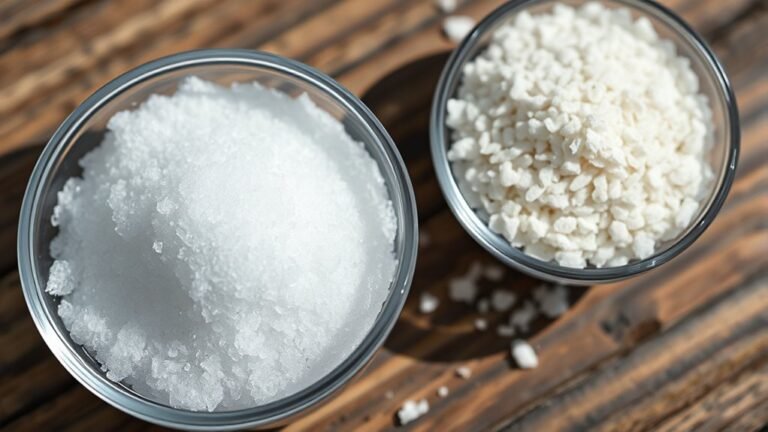
High purity levels minimize insoluble residue, which can clog your system and reduce ion exchange efficiency. Consider the grain size, too—pellets or crystals dissolve at different rates and affect how well the salt works without causing bridging or mushing in the brine tank.
Compatibility with your water’s hardness and iron content also plays a key role in performance. Ultimately, eco-friendly options like solar or potassium chloride salts offer sustainability without sacrificing efficiency, making them smart choices for your water softener system.
Top Water Softener Salt Types and Their Benefits
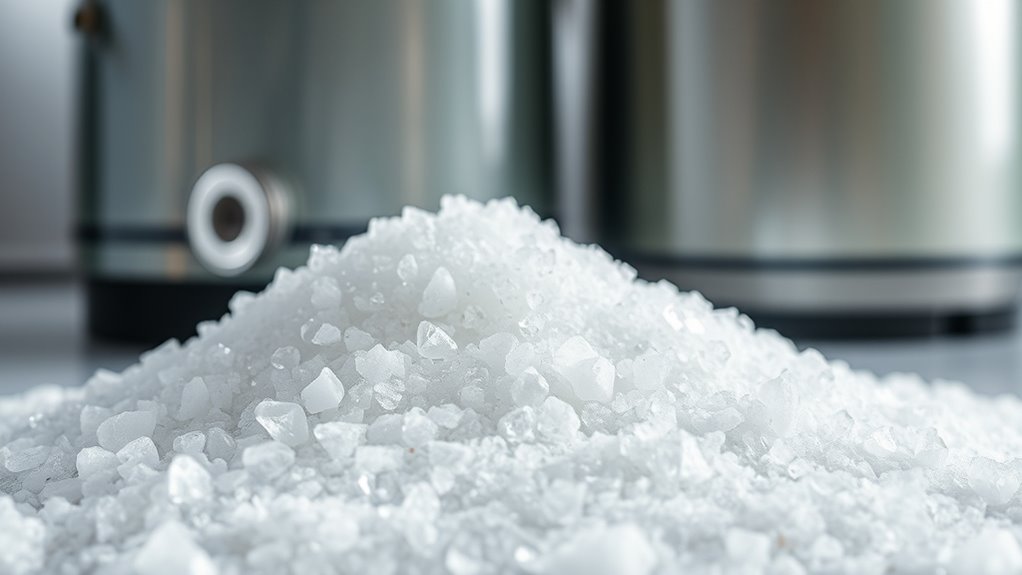
Choosing the right type of water softener salt can considerably impact your system’s efficiency and maintenance needs. You’ll find several options, each with unique benefits for water softening and system performance.
- Evaporated salt pellets are high purity salt, nearly 100% sodium chloride. They dissolve quickly and reduce residue buildup in the brine tank.
- Potassium chloride offers an eco-friendly alternative to sodium chloride. It is ideal if you want to avoid sodium but may cost more.
- Rock salt is budget-friendly but contains impurities that can cause residue buildup and increase maintenance.
Salt pellets and block salts also help prevent bridging and mushing, ensuring consistent brine tank operation.
Choosing your water softener salt wisely keeps your system running smoothly while minimizing upkeep.
How Salt Purity and Solubility Impact Softening
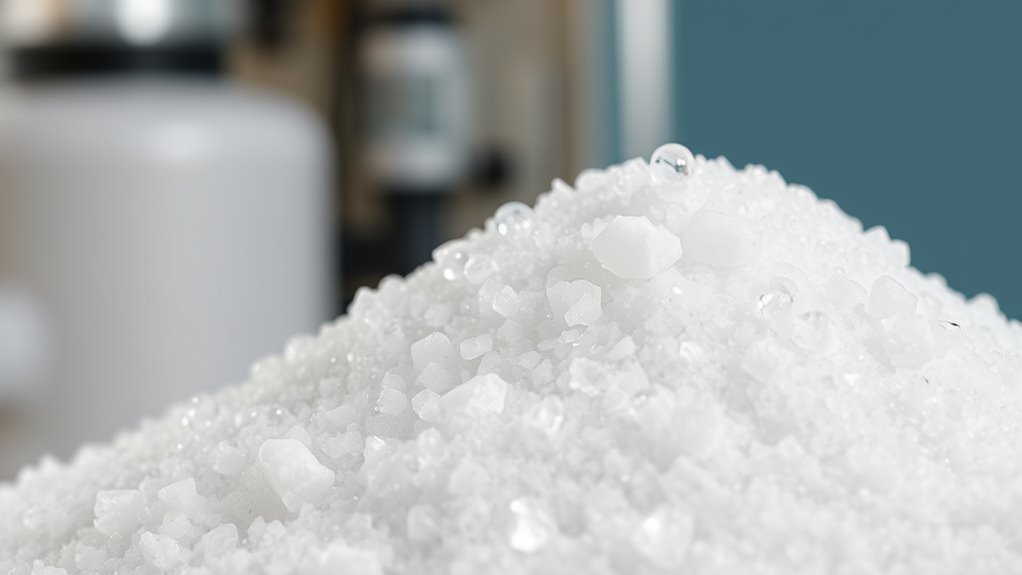
When you use salt with high purity and excellent solubility, your water softener works more efficiently and lasts longer. High salt purity reduces insoluble residue buildup on resin beads, which boosts system longevity and maintains softening efficiency.
Using high-purity, highly soluble salt enhances water softener efficiency and extends its lifespan.
Impurities in low-quality salts compete with hardness minerals for resin sites, decreasing how well your system softens water. Additionally, salts with good solubility dissolve faster and more completely, ensuring effective regeneration cycles.
Poor solubility often leads to salt bridging or mushing, which disrupts brine formation and harms system performance. By choosing high-quality salt with ideal purity and solubility, you support consistent ion exchange, minimize maintenance issues, and enhance both softening efficiency and system longevity.
This ensures your water softener runs smoothly and effectively over time.
Choosing the Best Salt for Your Water Hardness and System
To get the most from your water softener, you need salt that matches both your water hardness and your system’s design. Choosing the right water softener salt ensures peak system efficiency and effective mineral buildup prevention during the water softening process.
High-purity salts like evaporated salt offer superior salt compatibility and reduce residue, improving water quality and system longevity.
When selecting salt, consider your water hardness level—harder water benefits from evaporated salt or potassium chloride.
Also, pay attention to salt grain size and match it to your system’s regeneration cycle for proper dissolution.
Additionally, check for any contaminants and select salts with additives for iron or rust removal.
Following these steps helps maintain your system’s performance and protects your investment over time.
Maintenance Tips for Your Water Softener Salt System
Although water softeners are designed to work efficiently over long periods, you’ll need to perform regular maintenance on the salt system to keep it running smoothly.
Prioritize brine tank maintenance by checking the salt level monthly and refilling it every 4 to 6 weeks to ensure consistent salt replenishment.
Watch for salt bridges, which can block salt dissolution and reduce system efficiency—break them up promptly using a broom handle.
Salt buildup can clog your system, so cleaning the brine tank every 6 to 12 months is essential to remove residue and debris.
Always use the recommended salt type to minimize residue and promote resin longevity.
Consistent water softener upkeep like this will keep your system functioning at its best and extend its lifespan.
Frequently Asked Questions
What Brand of Water Softener Salt Is Best?
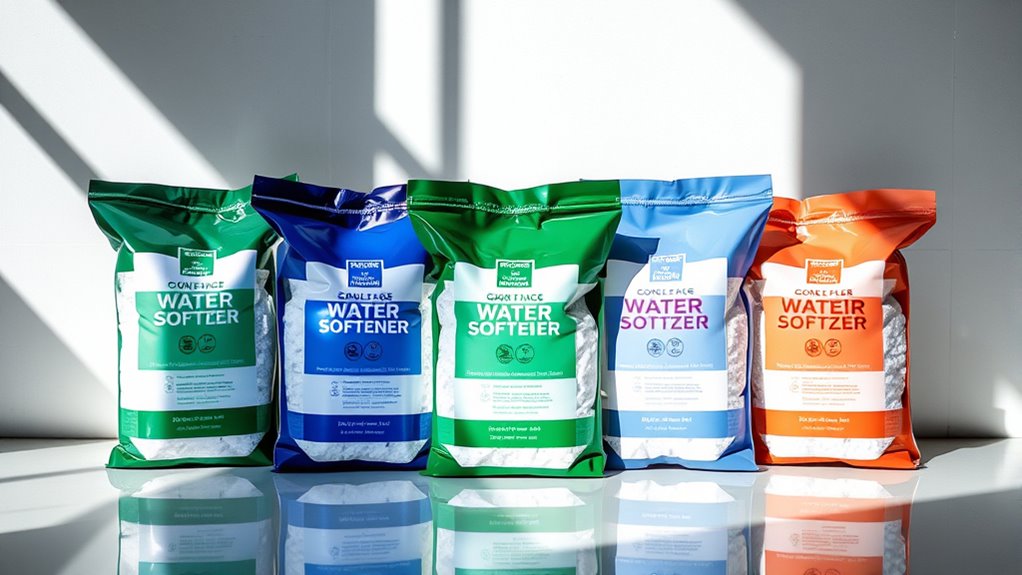
You’ll want to choose Morton Salt, Diamond Crystal, or Cargill for your water softener. They offer high-purity salts that prevent buildup, dissolve quickly, and maintain your system’s efficiency.
This ensures great water quality and longer appliance life.
What Is the Number One Rated Water Softener?
You’ll find the number one rated water softener often combines advanced ion exchange technology with smart features. It’s efficient, low-maintenance, and reliable, automatically adjusting cycles to keep your water soft and your system running smoothly.
Which Is Better Morton or Diamond Crystal Softener Salt?
You’ll find Diamond Crystal dissolves 20% faster, making it ideal if you want quick regeneration.
But if long-term corrosion prevention matters, Morton’s high purity salt has you covered.
Choose based on your system needs.
What Is the Best Salt for a Water Softener 2025?
You’ll want to use evaporated salt pellets like Morton’s Premium or Diamond Crystal Bright & Soft in 2025. They dissolve quickly, maintain your system, and handle very hard water better than other salts, ensuring peak performance.
Conclusion
Now that you know the best water softener salts and what makes them tick, you can choose the perfect one for your system and water hardness. Like a trusty pocket watch keeping time, the right salt keeps your water soft and your system running smoothly.
Remember, regular maintenance is key to avoiding any hiccups. With these tips, you’ll enjoy softer water and a happier home—no steam engines required! Choosing the best water softener salt ensures optimal performance and longevity for your water softener system.