
Which Is Worse: Sugar or Salt?
You face greater heart risks from added sugar than from salt.
While salt raises blood pressure mainly by causing water retention and modest circulatory strain, sugar triggers sharper blood pressure spikes, activates the nervous system, and promotes insulin resistance.
Sugar also causes inflammation and metabolic issues that increase cardiovascular risk beyond just pressure.
Salt’s effects are more limited to circulation, but sugar harms your heart through multiple pathways.
Keep exploring to understand why sugar demands more attention for heart health. It’s not just about blood pressure—sugar affects your body in several harmful ways that salt doesn’t.
So, if you’re watching your heart, sugar is the one to really watch out for.
Key Takeaways
- Sugar raises blood pressure more sharply (5-7 points) than salt, causing rapid heart strain and spikes. It’s like a quick jolt to your system that salt doesn’t usually cause.
- Sugar also promotes insulin resistance and systemic inflammation. This means it can increase your overall cardiovascular risk in a big way.
- Salt primarily elevates blood pressure modestly through water retention. But it doesn’t cause major metabolic disruptions like sugar does.
- Eating too much sugar significantly raises the risk of heart disease and cardiovascular death compared to salt. So sugar is really the bigger culprit here.
- Lowering salt intake offers modest benefits. However, cutting back on sugar impacts both your blood pressure and metabolism, making it way more effective.
How Sugar and Salt Affect Blood Pressure and Heart Health Differently
Although both sugar and salt can raise your blood pressure, they do so in very different ways. Salt increases blood pressure mainly through water retention, which boosts your blood volume and puts extra pressure on your vessels.
Sugar and salt both raise blood pressure but through distinctly different mechanisms.
This mechanism causes a more modest rise in blood pressure compared to sugar. On the other hand, sugar—especially fructose found in many processed foods and sugary drinks—activates your sympathetic nervous system and increases insulin resistance.
These effects lead to a sharper increase in systolic blood pressure, sometimes by 5-7 points, and cause rapid spikes that strain your heart. Beyond just raising blood pressure, sugar triggers broader metabolic disturbances that heighten your cardiovascular risk.
While excess salt harms heart health by stressing your circulatory system, sugar’s impact is more widespread, affecting both blood pressure and metabolism. Understanding these differences helps you make smarter choices to protect your heart health.
Why Sugar Poses a Bigger Risk Than Salt for Heart Disease
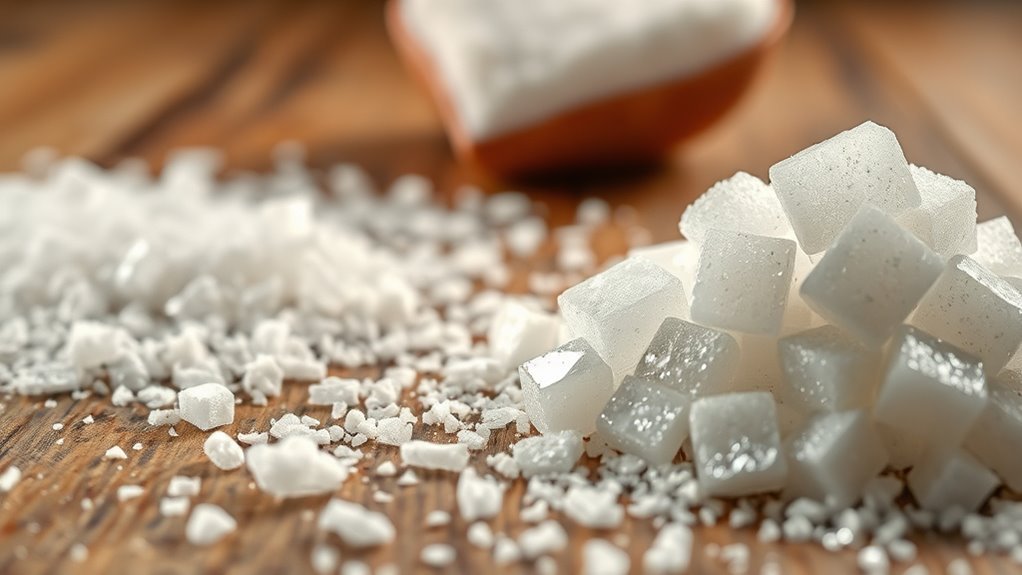
When you look beyond how sugar and salt raise blood pressure, it becomes clear that sugar poses a bigger risk for heart disease. Added sugar, especially fructose, triggers insulin resistance, inflammation, and metabolic disturbances that directly harm your heart.
While excess salt mainly affects blood pressure, high sugar consumption raises blood pressure by 5-7 points and activates the sympathetic nervous system, worsening cardiovascular risk. Studies link sugar intake over 17% of daily calories to a considerable rise in heart disease and cardiovascular mortality. Meanwhile, lowering sodium yields only modest benefits.
The widespread overconsumption of added sugar really amplifies its negative health effects.
| Factor | Added Sugar | Excess Salt |
|---|---|---|
| Blood Pressure | Raises by 5-7 points | Raises, but less impact |
| Insulin Resistance | Promotes insulin resistance | No direct effect |
| Inflammation | Causes systemic inflammation | Minimal effect |
| Metabolic Effects | Leads to metabolic disturbances | Limited metabolic impact |
| Cardiovascular Risk | Significantly increases risk | Modest increase |
Frequently Asked Questions
Is It Better to Cut Out Salt or Sugar?
You should cut out sugar first because it impacts your heart health, inflammation, and insulin resistance more than salt. Reducing sugar, especially added sugars, prevents obesity, diabetes, and other serious health problems effectively.
Honestly, cutting back on sugar can make a big difference. It’s not just about avoiding sweets; it’s about protecting your overall health in the long run. So, starting with sugar is definitely the smarter choice.
What Are the 5 Signs You’re Eating Too Much Sugar?
You’re eating too much sugar if you crave sweets constantly, feel sluggish after meals, experience frequent energy crashes.
It’s also a sign if you notice unexplained weight gain—especially around your belly—and have persistent hunger or an increased appetite for high-carb foods.
Basically, your body is telling you it’s had more sugar than it can handle!
What Three Foods Do Cardiologists Say to Avoid?
Cardiologists tell you to avoid processed meats like bacon, sugary beverages such as soda, and packaged snacks like chips. These foods raise your blood pressure and increase heart disease risk.
What Kills More Sugar or Salt?
You should know sugar kills more—it can triple your risk of death from heart disease when over 25% of your calories come from added sugars.
Cutting back on sugar saves more lives than reducing salt alone.
So, it’s really worth paying attention to how much sugar you’re consuming every day.
Small changes can make a big difference!
Conclusion
When it comes to your heart, sugar and salt aren’t equal foes. While salt is like a leaky faucet, slowly raising your blood pressure, sugar is a wildfire, sparking inflammation and clogging arteries faster.
You might think cutting salt is enough, but you’ve got to tackle sugar too—it poses a bigger risk to your heart health. So, don’t just patch the drip; put out the blaze by managing both for a stronger, healthier you.
In the end, balancing sugar and salt intake is key to protecting your heart. Excess salt can quietly increase blood pressure over time, but sugar can lead to faster damage through inflammation and artery clogging. Managing both sugar and salt will help you maintain better heart health, reduce risks, and feel your best. Don’t underestimate how important controlling these two is—they both play a big role in keeping your heart strong and healthy.