How to Tell If Epsom Salt Is the Same as Sea Salt: Key Differences
You can tell Epsom salt and sea salt apart by their texture, taste, and minerals. Epsom salt has smooth, needle-like crystals and tastes bitter, while sea salt is coarser, flakes easily, and tastes salty. Epsom salt contains magnesium sulfate, giving it unique health benefits, unlike the mostly sodium chloride in sea salt.
You can also dissolve both in water—the bitterness and quick dissolution help identify Epsom salt. Keep exploring to uncover even clearer ways to distinguish them.
How Can You Tell Epsom Salt and Sea Salt Apart?
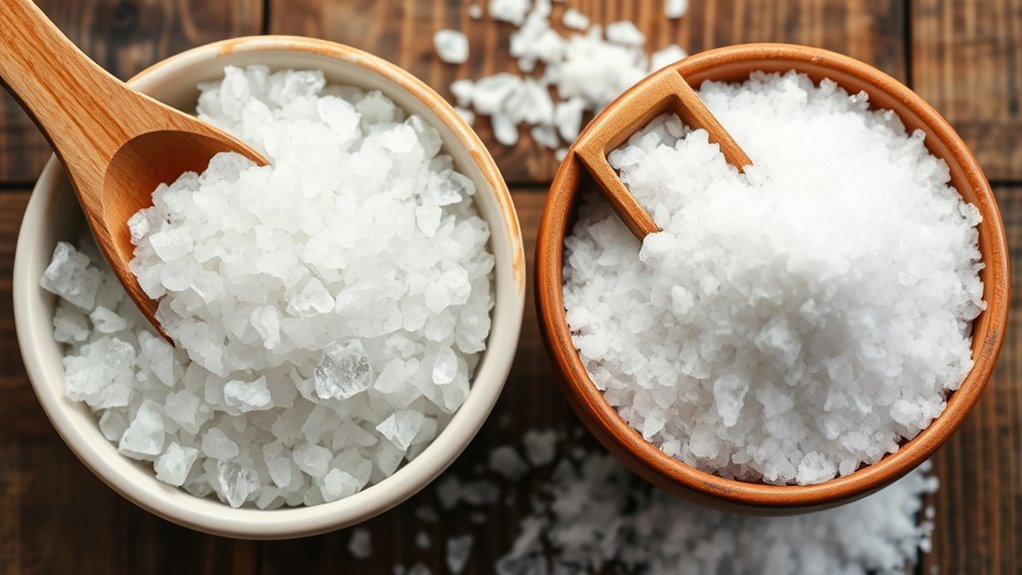
Although both salts look similar at first glance, you can tell Epsom salt and sea salt apart by their texture, taste, and how they dissolve in water.
Epsom salt and sea salt may look alike but differ in texture, taste, and how they dissolve in water.
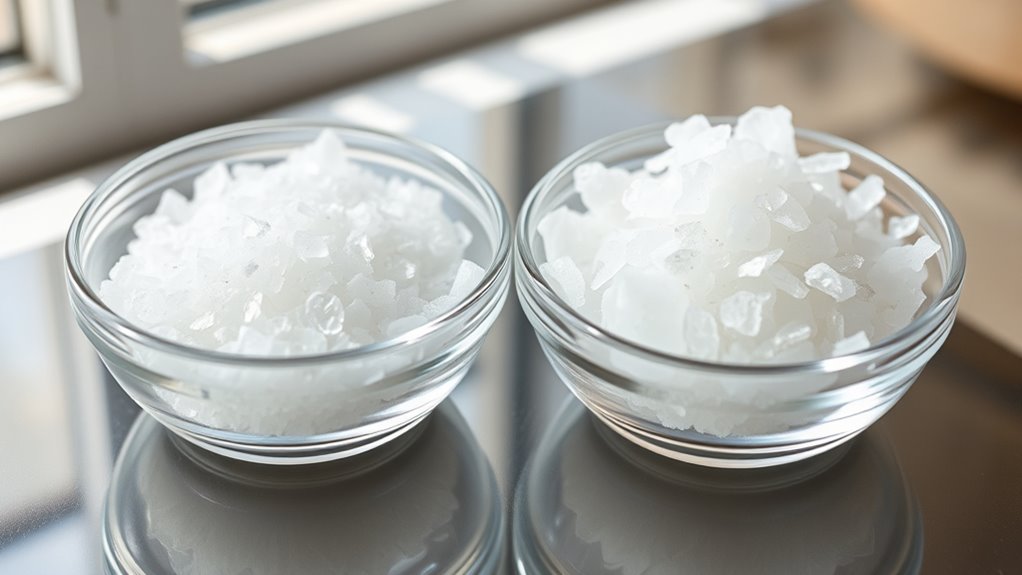
Epsom salt has a smooth, crystalline structure with colorless or white granules, while sea salt is coarser and grainier, sometimes varying in color.
Epsom salt is magnesium sulfate, so it dissolves quickly without leaving a salty taste or mineral residue.
Sea salt, primarily sodium chloride, dissolves to produce a strong salty flavor and can leave a gritty mineral residue on your skin.
Additionally, Epsom salt remains stable and doesn’t clump easily, whereas sea salt often absorbs moisture and clumps.
These differences in texture, taste, solubility, and clumping help you easily distinguish between the two.
What Are the Texture and Solubility Differences?
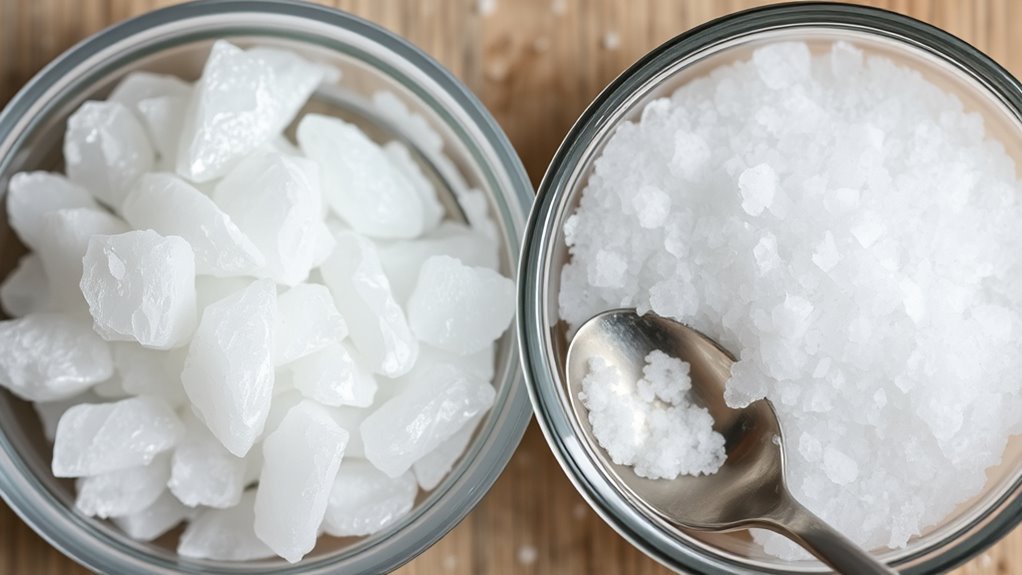
When you compare Epsom salt and sea salt, their texture and solubility reveal clear distinctions. Epsom salt has a smooth, crystalline texture with uniform, needle-like granules. In contrast, sea salt features coarse, grainy, or flaky granules of varying sizes.
This difference in grain size affects how each dissolves in water. Epsom salt’s high solubility means it quickly dissolves, forming a clear, smooth solution without residue.
In contrast, sea salt dissolves more slowly, and its solubility varies with purity and grain size. It often leaves a cloudy or gritty solution. Because of these texture and solubility differences, you can easily tell Epsom salt apart from sea salt by observing how each dissolves and feels in your hand or water.
Which Minerals Make Epsom Salt Unique?
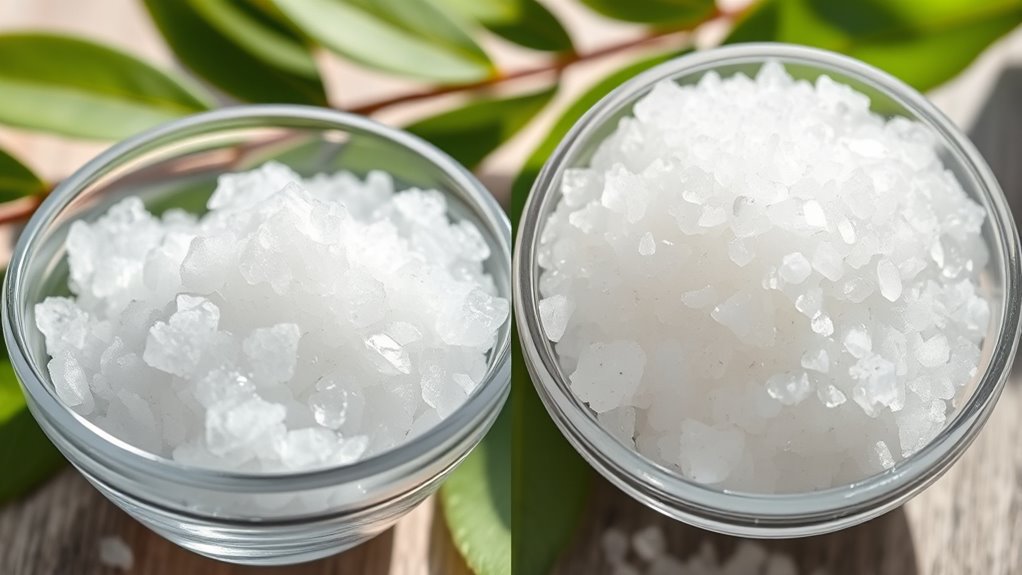
Understanding the texture and solubility differences between Epsom salt and sea salt sets the stage to explore what truly makes Epsom salt unique: its mineral content.
Epsom salt’s mineral profile centers on magnesium sulfate, unlike sea salt, which primarily contains sodium chloride.
This distinct mineral composition gives Epspsom salt a different crystalline structure and excludes the broad spectrum of trace minerals like zinc or iron found in sea salt.
The high levels of sulfates and magnesium in Epsom salt contribute to its renowned therapeutic properties.
These minerals offer specific health benefits, such as muscle relaxation and improved skin hydration, that sea salt’s mineral composition doesn’t provide.
How to Test Epsom Salt vs. Sea Salt at Home
If you want to distinguish Epsom salt from sea salt at home, there are simple tests you can try using everyday senses and basic tools. Start by observing the crystals: Epsom salt crystals are smooth, clear, and needle-like, while sea salt crystals appear coarser and vary in size and color.
Next, check moisture—sea salt often feels damp or crumbly, whereas Epsom salt stays dry and free-flowing.
For solubility, dissolve a small amount in water; Epsom salt, containing magnesium sulfate, dissolves slowly and may form crystals, while sea salt, rich in sodium chloride, dissolves quickly.
You can also perform a chemical test using a magnesium test kit to confirm magnesium sulfate in Epsom salt.
Finally, a taste test helps—sea salt tastes salty and mineral-rich, but Epsom salt is bitter and not edible. These at-home testing methods reveal key mineral content differences.
Why Does Choosing the Right Salt Matter for Your Health and Beauty?
Because each type of salt offers distinct minerals and properties, choosing the right one directly impacts your health and beauty results. Epsom salt, rich in magnesium sulfate, provides unique therapeutic benefits like muscle relaxation and improved skin health.
In contrast, sea salt’s mineral content includes sodium chloride and trace elements, but it may carry contamination risks that lead to skin irritation. Understanding mineral differences through mineral analysis helps you avoid adverse reactions and guarantees you get the intended health benefits.
Salt composition varies widely, so selecting the appropriate salt based on your needs is vital. Whether for skincare or therapeutic use, knowing these differences keeps your routines safe and effective, maximizing the positive effects each salt can deliver.
Frequently Asked Questions
Are Epsom Salts the Same as Sea Salts?
No, they aren’t the same. You’ll find Epsom salt is magnesium sulfate, mainly for baths, while sea salt is sodium chloride, used in cooking. They differ in composition, uses, and mineral content, so don’t confuse them.
How Do You Identify Epsom Salt?
Wondering how to identify Epsom salt? You’ll spot it by its larger, smooth crystals, bitter taste, and quick dissolving in water.
Check the label—it’s magnesium sulfate, not sodium chloride like sea salt.
Why Did Jessica Biel Soak in 20 Lbs of Epsom Salt?
Jessica Biel soaked in 20 pounds of Epsom salt to relax her muscles and reduce stress after intense activity. You’d use it the same way to soothe soreness, promote recovery, and enjoy a calming, therapeutic bath experience.
Are Epsom Salts Safe in Pregnancy?
Yes, you can safely use Epsom salts externally during pregnancy to ease aches, but avoid ingesting them unless your doctor approves.
Always skip versions with fragrances or chemicals to protect you and your baby.
Conclusion
Now that you know how to tell Epsom salt from sea salt, you can choose the right one for your needs. Notably, Epsom salt is about 50% magnesium, which plays an essential role in muscle relaxation and reducing inflammation.
So next time you soak in a bath, remember that picking the right salt isn’t just about taste or texture—it can seriously impact your health and beauty routine.
Choose wisely when selecting bath salts, as understanding the difference between Epsom salt and sea salt ensures you get the best benefits for your wellness.