

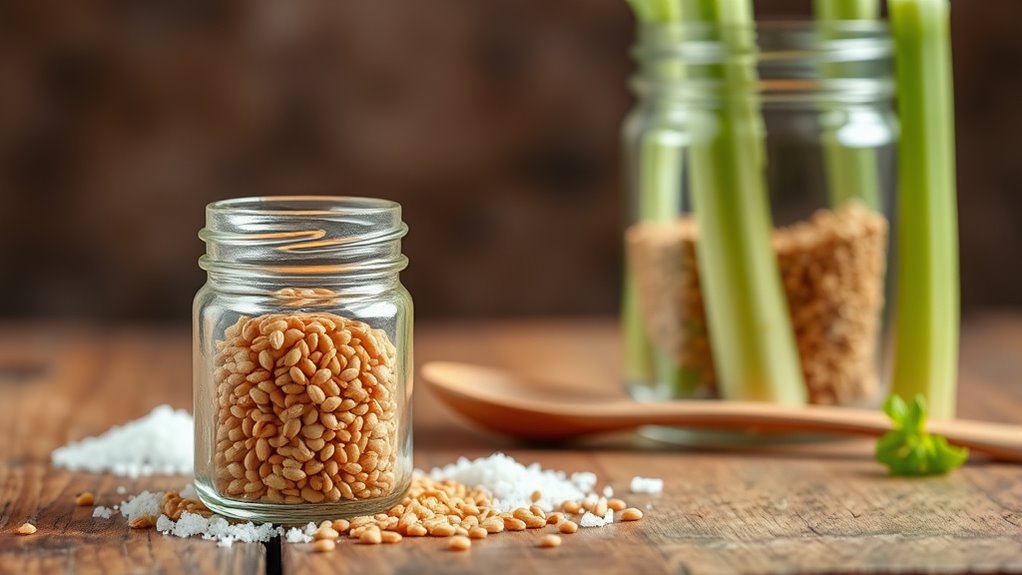
How to Use Celery Seed Instead of Celery Salt
If you want to use celery seed instead of celery salt, start by using about half the amount since celery seed has a stronger flavor and no added salt. Using celery seed in place of celery salt allows you to enjoy that classic celery taste with more control over your seasoning.
Cut back on the salt in your recipe to avoid over-seasoning. For the best aroma and even flavor, toast and grind the seeds before adding them to your dish.
This swap lets you control salt intake while still enjoying the distinctive celery flavor. Keep exploring, and you’ll discover tips to perfect your seasoning game.
What Is the Difference Between Celery Seed and Celery Salt
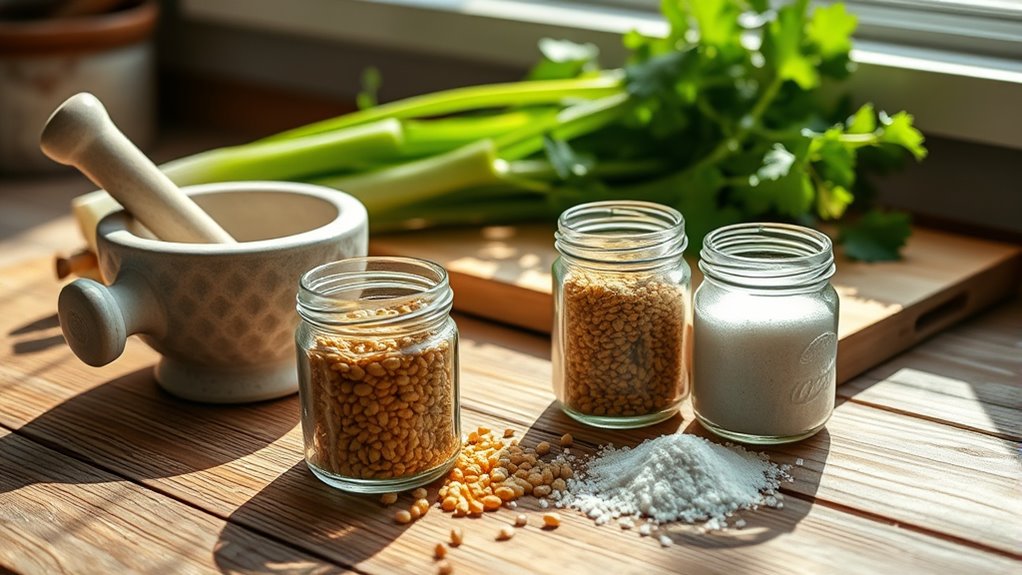
Although both celery seed and celery salt add celery flavor to dishes, they differ markedly in composition and intensity. Celery seed comes from dried celery seeds and delivers a more concentrated, pure celery taste.
Celery seed offers a concentrated, pure celery flavor, unlike celery salt which is a milder, salt-infused blend.
Celery salt, on the other hand, is a blend of ground celery seeds and table salt, which dilutes the celery flavor and adds a salty kick.
When you consider substitution, keep in mind that celery salt contains added salt, so using celery seed instead means adjusting the salt in your recipe to avoid over-seasoning.
Celery seed’s potency makes it a versatile choice if you want to control salt levels while maintaining that distinct celery flavor.
Understanding this difference helps you make smart substitutions in your cooking.
How Much Celery Seed to Use Instead of Celery Salt
Wondering how much celery seed to use when swapping it for celery salt? Since celery seed has a more intense flavor, you’ll want to use about half the amount.
For example, substitute 1/2 teaspoon of ground celery seed for every 1 teaspoon of celery salt called for in your recipe.
When cooking, start with a smaller amount and taste before adding more to avoid overpowering your dish.
If a recipe uses a tablespoon of celery salt, replace it with 1 tablespoon of celery seed—but remember, celery seed is stronger, so adjust your seasoning accordingly.
Using celery seed as a substitute keeps your dish flavorful without the added salt, letting you control the saltiness while still enjoying that classic celery taste.
Adjust Salt When Substituting Celery Seed
When you swap celery seed for celery salt, you’ll need to cut back on the extra salt in your recipe by about half.
Since celery seed itself isn’t salty, adding too much salt can throw off the balance, so adjust carefully.
Taste as you go to get the seasoning just right.
Salt Reduction Guidelines
Since celery seed lacks the saltiness of celery salt, you’ll need to reduce the additional salt in your recipe by about half when making the substitution.
For every teaspoon of celery seed you add, cut back on the added salt by roughly half a teaspoon. This salt reduction prevents your dish from becoming overly salty while ensuring the celery flavor shines through.
Since celery seed is used in small amounts, make flavor adjustments gradually—taste your dish as you go to get the seasoning just right.
Balancing Flavor And Salt
Adjusting the salt content carefully makes all the difference when swapping celery seed for celery salt. Since celery seed offers a concentrated celery flavor without the built-in saltiness, you’ll want to reduce the added salt in your recipe by about half.
For every teaspoon of celery salt called for, use one teaspoon of ground celery seed and cut back on the salt accordingly. This helps maintain the right balance between salt and flavor without overwhelming your dish.
Taste as you go, because the saltiness can vary depending on your celery seed mixture. If you’re using pure celery seed without any salt, season gradually to achieve the perfect flavor balance.
This way, you ensure your dish is flavorful, not overly salty.
Preparing Celery Seed for Maximum Flavor
To get the most flavor from celery seeds, grind them fresh using a clean mortar and pestle or spice grinder.
Be sure to measure carefully since ground seeds pack more punch than whole ones. Toasting the seeds lightly before crushing can also boost their aroma and taste in your dishes.
Grinding Celery Seeds
When you grind celery seeds just before using them, you release their freshest, most potent flavor. To get the best from your celery seed powder, follow these steps:
- Lightly toast the dried celery seeds in a dry skillet over medium heat for 1-2 minutes to enhance their aroma.
- Use a spice grinder or mortar and pestle to grind celery seeds into a fine powder.
- Sift the ground celery seeds through a fine mesh sieve to remove larger pieces for a smoother texture.
- Store your ground celery seeds in an airtight container in a cool, dark place to preserve their potency.
Grinding celery seeds fresh guarantees you capture essential oils that give your dishes a stronger, more vibrant celery flavor.
Measuring Proper Quantities
Grinding celery seeds properly uncovers their full flavor, but getting the right amount is just as important for your dish. When measuring ground celery seed as a celery salt substitute, use 1/8 teaspoon to replace 1/4 teaspoon of celery salt in recipes.
If you’re making your own celery salt substitute, combine 1 part ground celery seed with 2 parts salt for the perfect balance. After grinding, measure carefully to maintain consistent flavor intensity.
Remember, too much ground celery seed can overpower your dish, while too little won’t deliver the desired taste. Precise measuring ensures you get the best from your homemade seasoning without compromising your recipe’s flavor profile.
Enhancing Flavor Release
Although celery seeds hold a potent flavor, you’ll reveal their full aromatic potential by toasting them lightly before crushing. This simple step liberates essential oils, boosting flavor release in your dishes.
To prepare ground celery seed for maximum seasoning impact, follow these steps:
- Toast celery seeds in a dry skillet over medium heat until fragrant, about 2 minutes.
- Use a mortar and pestle or spice grinder to crush seeds into a fine powder.
- Let the ground celery seed rest for a few minutes to deepen its flavor profile.
- Add it early in cooking to allow full infusion into sauces, stews, or marinades.
This method guarantees your seasoning delivers bright, intense celery flavor without celery salt.
Best Recipes for Using Celery Seed Instead of Celery Salt
Since celery seed offers a concentrated flavor without added salt, you can easily swap it into your favorite recipes like potato salad, stuffing, or marinades by using an equal amount and cutting back on other salt sources.
Use celery seed as a substitute for celery salt in soups, stews, and spice blends to impart that signature celery flavor without the extra sodium.
It works great in barbecue rubs and dry seasonings, giving you flavor without overwhelming saltiness.
For cocktails like Bloody Marys or dressings, replace celery salt with ground celery seed to maintain the classic taste while controlling salt content.
Flavor Tips and Common Mistakes When Using Celery Seed
When you substitute celery seed for celery salt, remember to cut back on added salt by about half to keep your dish balanced. This prevents oversalting and lets the celery seed’s flavor shine.
Here are some flavor tips and common mistakes to keep in mind when using celery seed:
- Grind celery seed thoroughly to release its flavor and avoid gritty texture.
- Start with a small amount; celery seed’s concentrated taste can easily overpower dishes.
- Avoid adding extra salt unless the recipe specifically calls for it to prevent a salty finish.
- Be cautious of bitterness; too much celery seed can create an intense, unpleasant flavor. Following these tips helps you get the most from celery seed without common pitfalls.
Final Thoughts on Substituting Celery Seed for Celery Salt
Keeping your seasoning balanced is key as you swap celery seed for celery salt. Remember, celery seed lacks the saltiness found in celery salt, so reduce added salt in your recipe accordingly.
To mimic celery salt’s flavor, use about one part celery seed to two parts salt when creating your own blend.
Ground celery seed offers a concentrated celery flavor, making it an excellent substitute that enhances dishes without extra sodium if you prefer it salt-free.
Always taste and adjust your seasoning as you cook to avoid under-salting.
Frequently Asked Questions
Can Celery Seed Be Used Instead of Celery Salt?
Yes, you can use celery seed instead of celery salt, but you’ll need to add salt separately to balance the flavor.
Mix crushed celery seed with salt to mimic celery salt’s taste in your recipes.
What Is the Ratio of Celery Seed to Salt in Celery Salt?
Like mixing paint colors, celery salt usually blends two parts salt to one part celery seed.
You’ll want this 2:1 ratio to balance flavor perfectly, but feel free to tweak it to suit your taste buds.
What Spices to Use Instead of Celery Salt?
You can use dill seeds, fennel seeds, nigella seeds, dried parsley, cilantro, or chopped mustard greens mixed with salt as great alternatives to celery salt.
They’ll add unique flavors while keeping your dishes tasty and fresh.
Does Celery Seed Taste Bitter?
Yes, celery seed can taste slightly bitter, but you won’t notice if you use it sparingly. Its fresh, herbal flavor balances that bitterness, adding a subtle depth without overpowering your dish’s overall taste.
Conclusion
Switching from celery salt to celery seed is like swapping a paintbrush for a pencil—you’ll need a little more finesse to get the full flavor just right. Remember to adjust your salt levels carefully and toast the seeds to release their aroma.
With these tips, you’ll add fresh, vibrant notes to your dishes without overpowering them. Keep experimenting, and soon celery seed will become your secret ingredient in the kitchen.
Using celery seed instead of celery salt allows you to control the saltiness while still enjoying that distinctive celery flavor. Incorporate celery seed thoughtfully to enhance your recipes and create balanced, flavorful meals.