

Does Salt Help Dehydration Safely?
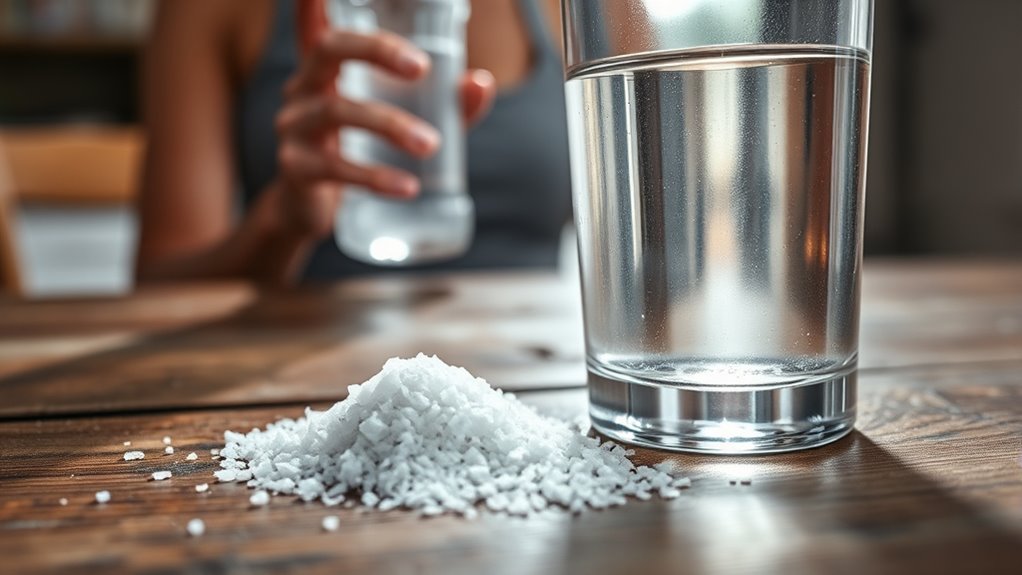
You can safely use salt to help dehydration by restoring electrolyte balance and aiding water absorption in your body. Salt plays a key role in keeping your hydration levels in check, especially after sweating.
Adding a moderate amount of salt supports hydration and boosts rehydration compared to plain water.
But here’s the catch: too much salt can raise your blood pressure and harm your heart or kidneys. So, if you have certain health conditions, you should be cautious with salt intake.
It’s all about balance. Keep exploring to understand how to balance salt for safe, effective hydration without overdoing it.
Key Takeaways
- Moderate salt intake helps maintain hydration by supporting fluid balance and electrolyte replenishment after sweating. Sodium in salt enhances water absorption in the intestines, improving rehydration efficiency compared to plain water.
- Electrolyte drinks with balanced salt levels safely restore fluid and electrolyte balance, preventing dehydration symptoms. They’re often a better choice than just drinking water when you’ve lost a lot of sweat.
- But be careful—excessive salt can actually cause dehydration symptoms, fluid retention, and increase health risks like high blood pressure and kidney strain. It’s all about finding the right amount.
- If you have hypertension, kidney, or heart conditions, it’s best to avoid added salt. Always check with your healthcare provider before making any changes to your salt intake.
How Salt Helps Hydration and Electrolyte Balance Safely
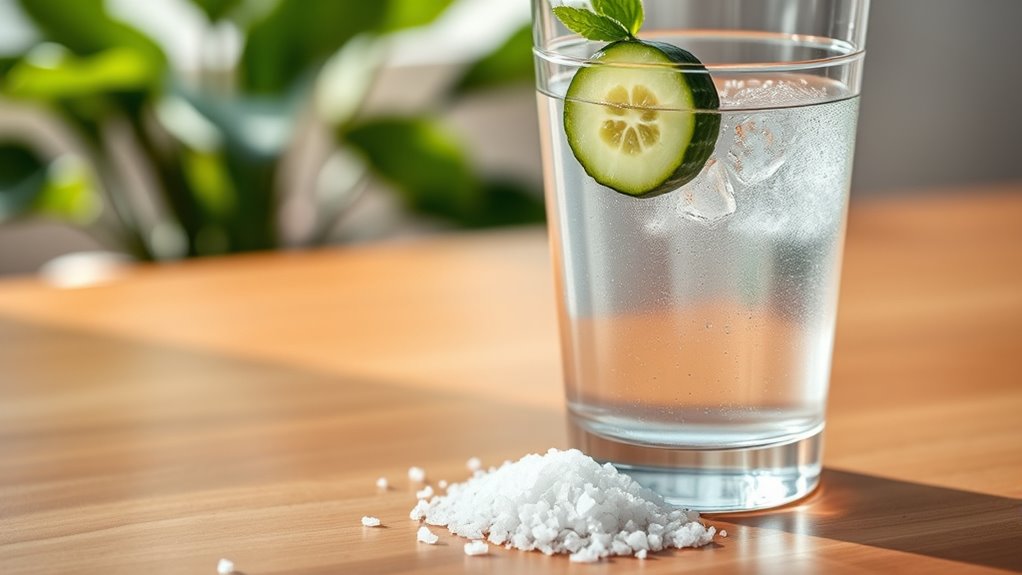
Although too much salt can harm your health, consuming it in moderation plays an essential role in keeping you hydrated. Sodium, a key electrolyte, helps maintain fluid balance by attracting water into your cells, which supports proper hydration.
When you sweat, you lose electrolytes like sodium, so a controlled salt intake replenishes these essential minerals, preventing dehydration. Sodium also enhances water absorption in your intestines, making rehydration more efficient after fluid loss.
Drinking an electrolyte drink with balanced salt levels can restore your body’s electrolyte balance and fluid more effectively than plain water alone. However, it’s important to avoid excess sodium, which can disrupt fluid balance and lead to health issues.
Health Risks of Adding Salt to Water and When to Avoid It
When you add too much salt to your water, you risk raising your blood pressure and harming your heart and kidneys. Excessive salt intake can cause high blood pressure, which increases your chances of hypertension and heart disease.
It also places extra strain on your kidneys, potentially worsening kidney disease. Overusing salt can mess with your electrolyte balance, which can ironically lead to dehydration symptoms even though you’re drinking more water.
Fluid retention and bloating are common side effects. This can make you feel uncomfortable and might even increase your risk of stroke.
You should avoid adding salt to water if you have hypertension, kidney disease, or heart issues—unless a healthcare professional tells you it’s okay. The American Heart Association recommends limiting sodium to less than 2,300 mg daily, so be careful with how much salt you add to your hydration routine.
Frequently Asked Questions
What Is the Fastest Way to Cure Dehydration?
The fastest way to cure dehydration is to drink an oral rehydration solution with water, sodium, potassium, and glucose. Sip frequently to absorb fluids quickly and restore electrolyte balance after fluid loss or intense sweating.
It’s important to take small sips often rather than gulping a lot at once. This helps your body absorb the fluids better and prevents nausea. Just keep drinking steadily until you feel better.
What Are Two Warning Signs of Dehydration?
You might not expect it, but two warning signs of dehydration are feeling dizzy when you stand up and noticing dark yellow urine.
These subtle clues mean your body’s craving water—don’t ignore them, or things could get worse fast.
Can I Just Take Salt Instead of Electrolytes?
You shouldn’t just take salt instead of electrolytes because salt alone lacks essential minerals like potassium and magnesium. Relying only on salt can cause imbalances and worsen dehydration.
Should You Drink Less Water if Your Sodium Is Low?
No, you shouldn’t drink less water if your sodium is low.
Instead, you need to balance fluids with electrolytes, including sodium, to properly hydrate. This helps avoid worsening dehydration or causing dangerous imbalances like hyponatremia.
Conclusion
You might think adding salt to water is a quick fix for dehydration, and in some cases, it is—salt helps replenish essential electrolytes and maintain fluid balance. But on the flip side, too much salt can strain your body, causing more harm than good.
So, while salt can aid hydration safely when used wisely, it’s essential to know when to avoid it. Understanding how salt affects your body helps protect your health and stay properly hydrated.
In summary, salt does help dehydration safely by restoring electrolytes, but moderation is key. Using salt wisely supports hydration and overall well-being, whereas excess salt intake can worsen dehydration and strain your body. Always listen to your body and consult healthcare guidance if you’re unsure about adding salt during dehydration. Staying informed ensures you hydrate effectively without risking your health.