3 Best 35mm SLR Film Cameras for Beginners in 2027
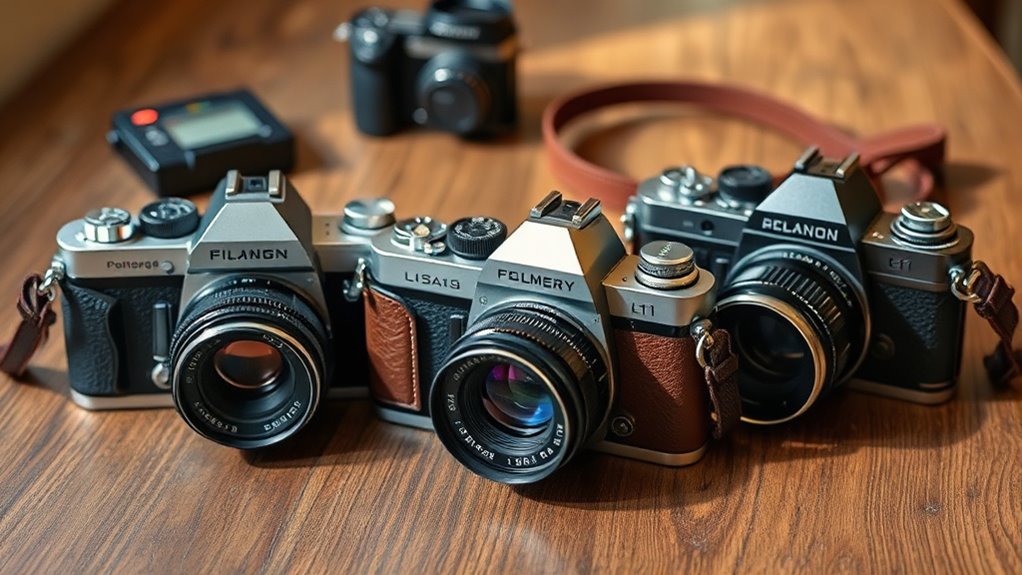
If you’re starting with 35mm film photography in 2027, picking the right camera can make all the difference. The Canon Rebel 2000 is a great option for beginners because it offers easy autofocus and automated film handling. This means you can get shooting quickly without worrying about complicated settings.
The vintage Canon AE-1 is perfect if you want precise manual control. Its durable metal body is built to last, making it great for learning the fundamentals of film photography.
On the other hand, the Canon AV-1 keeps things simple with aperture-priority mode and a lightweight design. This makes it a solid choice if you want straightforward exposure control.
All three cameras balance ease of use, control, and quality. So, keep exploring to see which one fits your style and needs best!
| Image | Name | Editor's Rating | Price |
|---|---|---|---|

|
|
||

|
|
||

|
|
Canon Rebel 2000 SLR Film Camera with Lens
- 35mm Film Format: The Rebel 2000 uses standard 35mm film, providing compatibility with a wide range of film types and...
- Autofocus System: It features a 7-point autofocus system, which helps in achieving accurate and quick focus on subjects...
- Built-In Flash: The camera includes a built-in pop-up flash, which can be used for additional lighting in low-light...
The Canon Rebel 2000 is a solid choice for anyone stepping into the world of 35mm film photography. Its intuitive design removes common barriers by automating film loading, advancing, and rewinding. This makes shooting more enjoyable and less stressful, especially for beginners.
With versatile exposure modes like Program AE, Aperture Priority, and Manual, the camera adapts to your growing skills. The 7-point autofocus system ensures your images stay sharp across different lighting and subjects, reducing the frustration of missed shots.
Maintenance is straightforward since the camera is built to be durable and reliable. Its lightweight frame encourages carrying it around, making it easy to capture moments on the go. The built-in pop-up flash helps in low-light situations without needing extra gear.
However, the ISO range of 100-400 can limit performance in extreme lighting, and the 30-second max shutter speed might not suit long-exposure needs. Also, it primarily supports Canon lenses and accessories, which may restrict customization options.
Best for: Amateur photographers seeking a user-friendly and dependable 35mm SLR film camera to learn and grow their skills.
What We Like:
- Automatic film handling simplifies the shooting process
- Multiple exposure modes accommodate different skill levels
- Reliable 7-point autofocus system for sharp images
- Lightweight and portable design encourages frequent use
Specification:
| Feature | Details |
|---|---|
| Manufacturer | Canon |
| Dimensions (W x H x D) | Approx. 5.1 x 3.4 x 2.8 in |
| Weight | Approx. 0.8 lb (360 g) |
| Film Type | 35mm |
| ISO Range | 100-400 |
| Shutter Speed Range | 30 sec to 1/2000 sec |
| Lens Mount | Canon FD mount |
Vintage Canon AE-1 35mm SLR Camera with 50mm 1:1.8 Lens (Renewed)
- Shutter Speed: The AE-1 offers a range of shutter speeds from 1/1000 to 2 seconds, along with a Bulb mode for long...
- TTL Metering: Its built-in Through-The-Lens (TTL) metering system ensures accurate exposure readings, helping you...
- Interchangeable Lenses: Compatible with Canon FD lenses, the AE-1 opens up a world of photographic possibilities, from...
Step into the world of classic photography with the Vintage Canon AE-1, featuring a sharp 50mm f/1.8 lens. This 35mm SLR camera offers precise manual control, helping you capture images exactly as you envision. Its built-in TTL metering and shutter-speed-priority mode simplify exposure, letting you focus on creativity rather than technical adjustments.
The camera’s sturdy metal body ensures durability while remaining lightweight enough for easy carrying during shoots. Designed for use with Canon FD lenses, it provides flexibility to expand your gear as your skills grow. This blend of solid construction and versatile compatibility makes it ideal for hands-on learning and artistic exploration.
Maintaining the AE-1 is straightforward, but keep in mind it requires physical 35mm film and manual development. This process offers a tactile, rewarding experience but demands patience and care. The renewed condition means it performs like new, ready to support your photographic journey.
While not water-resistant, this camera excels in controlled environments and everyday photography. Its manual features and classic design make it a dependable tool for those interested in traditional film photography.
Best for: Beginners and enthusiasts seeking a reliable, manual 35mm film camera with flexible exposure control and a timeless build.
What We Like:
- Precise exposure control with TTL metering and shutter-speed-priority mode
- Durable metal body paired with a lightweight design for comfortable use
- Compatible with a wide range of Canon FD lenses for versatile shooting
- Classic manual controls that enhance learning and creativity
Specification:
| Feature | Details |
|---|---|
| Manufacturer | Canon |
| Dimensions | Approx. 5.6 x 4.2 x 3.1 inches (14.2 x 10.7 x 7.9 cm) |
| Weight | 2 lbs (0.91 kg) |
| Material | Metal body |
| Lens | 50mm f/1.8 Canon FD |
Canon AV-1 35mm SLR Camera with FD Lens (Renewed)
- CLASSIC CANON AV-1 SLR – Enjoy the timeless experience of 35mm film photography with the Canon AV-1, a compact and...
- APERTURE-PRIORITY AUTOMATIC EXPOSURE – Select the desired aperture and let the camera automatically determine the...
- CANON FD MOUNT LENS – Includes a Canon FD-mount lens and supports a wide range of compatible FD lenses for added...
Discover the timeless appeal of the Canon AV-1 35mm SLR camera, designed to simplify film photography for beginners. Its aperture-priority mode takes the guesswork out of exposure, enabling you to focus on creative composition and depth of field without worrying about complex settings.
This renewed camera works seamlessly with Canon FD lenses, allowing precise manual focus through a clear optical viewfinder. With shutter speeds ranging from 2 to 1/1000 seconds and ISO support from 25 to 2600, it adapts well to diverse lighting conditions.
The AV-1’s TTL metering system with backlight compensation ensures your shots are consistently well-exposed, even in challenging environments. While durable and lightweight at approximately 1.7 pounds, it is not water-resistant, so handle it with care during outdoor shoots.
Maintenance is straightforward, focusing on keeping the lens and viewfinder clean for optimal performance. The camera’s classic design and reliable automatic exposure make it an excellent tool for those exploring the art of film photography.
Best for: Beginners and enthusiasts seeking a classic 35mm SLR with dependable aperture-priority exposure and manual focus control.
What We Like:
- Simplifies exposure control with aperture-priority mode
- Compatible with Canon FD lenses for versatile manual focusing
- TTL metering with backlight compensation for accurate exposure
- Lightweight and durable design
- Clear optical viewfinder for precise framing
Specification:
| Feature | Details |
|---|---|
| Manufacturer | Canon |
| Dimensions | Approx. 5.3 x 3.7 x 1.8 in (13.5 x 9.4 x 4.6 cm) |
| Weight | Approx. 1.7 lb (0.77 kg) |
| Lens Mount | Canon FD |
| Shutter Speeds | 2 to 1/1000 seconds |
| ISO Range | 25 to 2600 |
| Viewfinder Coverage | 93% |
| Water Resistance | No |
Factors to Consider When Choosing a 35MM SLR Film Camera for Beginners
When choosing a 35mm SLR film camera, you’ll want to contemplate how easy it is to use and the types of exposure controls it offers.
Think about whether you prefer autofocus or manual focus, along with the range of film compatibility.
Also, pay attention to the build quality and how much the camera weighs since these affect your shooting experience.
Ease Of Use
Although selecting a 35mm SLR film camera might seem intimidating, choosing one with user-friendly features can make your learning experience much smoother. Look for cameras with automatic film loading and rewinding to simplify shooting.
Models offering multiple exposure modes like Program AE and Aperture Priority let you experiment without feeling overwhelmed. An autofocus system with several points guarantees quicker, more accurate focusing, which is a big help when you’re starting out.
A built-in flash adds convenience for low-light shots, so you won’t need extra gear right away. Also, pick a camera with a clear, magnified optical viewfinder to help you compose your shots more effectively.
These ease-of-use features will make your change into film photography enjoyable and less stressful. Trust me, it’ll make the whole process a lot easier!
Exposure Control Options
How much control you want over your camera’s exposure settings can shape your 35mm SLR choice. You can pick cameras offering manual mode for full control or aperture- and shutter-priority modes to simplify adjustments.
Look for models with built-in TTL metering, which measures light through the lens to help you nail accurate exposures. Consider the camera’s ISO range, too—wider ranges let you work with different film types and lighting conditions.
Shutter speed variety matters as well, with faster speeds like 1/1000 second perfect for action shots, and slower speeds ideal for creative effects like motion blur. Finally, if you want to set up shots without pressing the shutter yourself, check for a self-timer feature, common in beginner-friendly cameras.
Autofocus Versus Manual
Exposure settings play a big role in capturing the perfect shot, but focusing is just as important to guarantee your subject stands out clearly. When choosing between autofocus and manual focus, consider your comfort and shooting style.
Autofocus, with features like 7-point systems, helps you quickly lock onto subjects—great for beginners and fast-paced scenes like sports or wildlife. It simplifies the process and improves accuracy.
On the other hand, manual focus gives you full control, letting you fine-tune the focal point and deepen your understanding of depth of field and composition. It shines in low-light or shallow depth of field situations where precision matters.
Ultimately, if you want speed and ease, go autofocus. But if you prefer learning and control, manual focus is your best bet.
Film Compatibility Range
When choosing a 35mm SLR film camera, you’ll want to focus on its compatibility with different types of film and lenses to maximize your creative potential. Make sure the camera supports standard 35mm film formats, as these are the most accessible and versatile for beginners.
Look for models that handle a broad ISO range, ideally from 100 to 3200, so you can shoot comfortably in various lighting conditions. It’s also important that your camera accepts both color and black-and-white film to explore different styles.
For ease of use, especially if you’re new, consider cameras with automatic film loading and advancing. Finally, check lens compatibility—having access to a variety of lenses will expand your creative options and improve your photo quality.
Build Quality And Weight
Alongside film compatibility, the build quality and weight of your 35mm SLR camera play a big role in your shooting experience. Choosing a camera with a robust metal body guarantees durability, helping it withstand daily wear better than plastic alternatives.
You’ll find lighter models easier to handle for long sessions, which makes them ideal if you’re just starting out. A well-balanced design also helps reduce camera shake, improving stability as you learn to hold your camera steadily.
While weather resistance adds protection against the elements, many vintage cameras lack this feature, so handle them with care. Finally, ergonomic design matters—it lets you access controls intuitively, making your shooting smoother and more enjoyable from the start.
Budget And Warranty
Setting a clear budget is key to finding a 35mm SLR film camera that fits your needs without overspending. Prices vary widely depending on features and brand reputation, but many beginner-friendly models with simplified controls and automatic modes remain affordable while delivering quality performance.
Don’t forget to include extra costs for accessories like lenses and film when setting your budget. It’s wise to choose a camera with at least a 90-day warranty to protect against defects and guarantee reliability as you learn.
Renewed or refurbished cameras can be a smart, cost-effective choice since they often come with warranties guaranteeing their functionality. Keeping budget and warranty in mind helps you make a confident, practical purchase that supports your photography journey.
Frequently Asked Questions
Where Can I Develop 35MM Film Locally?
You can develop 35mm film locally at camera shops, photo labs, or some drugstores.
Check your nearby photography stores or use online maps to find places offering film processing services close to you. It’s pretty easy to locate them once you start looking!
How Do I Store Undeveloped 35MM Film Properly?
You should store undeveloped 35mm film in a cool, dry place—ideally below 50°F. Humidity above 60% can ruin your shots, so keep that in mind.
Many pros keep their film in a sealed container inside the fridge to preserve quality. It’s a simple trick that really helps maintain the film’s condition.
What Are Common Mistakes Beginners Make With SLR Cameras?
You often forget to load film correctly, skip winding between shots, or misread light meters.
Don’t rush focusing or ignore checking settings.
These mistakes can ruin photos, so take your time and practice patience with your SLR.
Can I Use Digital Lenses on 35MM SLR Cameras?
You generally can’t use digital lenses on 35mm SLR cameras because their mounts and electronics differ. However, some adapters exist but might limit functionality.
It’s always a good idea to check compatibility before trying to mix lens types on your camera. That way, you avoid any surprises or issues while shooting.
How Do I Clean and Maintain My Film Camera?
You clean your film camera by gently wiping the body with a microfiber cloth, using a blower to remove dust from the lens and viewfinder, and regularly checking for battery leaks.
It’s a good idea to store it in a dry, cool place. This helps keep everything in good shape and prevents any moisture damage.
Conclusion
Choosing your first 35mm SLR film camera is like planting a seed—you want the right soil to help it grow. Whether you pick the Canon Rebel 2000, the vintage AE-1, or the AV-1, each offers unique features perfect for beginners.
Trust your instincts and consider your needs carefully. Get ready to capture memories that last a lifetime.
Your journey into film photography is just a click away. Embrace the magic of the moment and dive into the world of 35mm SLR film cameras for beginners in 2027. Whether you’re snapping your first roll or refining your skills, these cameras are great starting points to explore creativity and timeless photography.