4 Best Affordable Beginner Cameras for 2027 That Click Perfectly
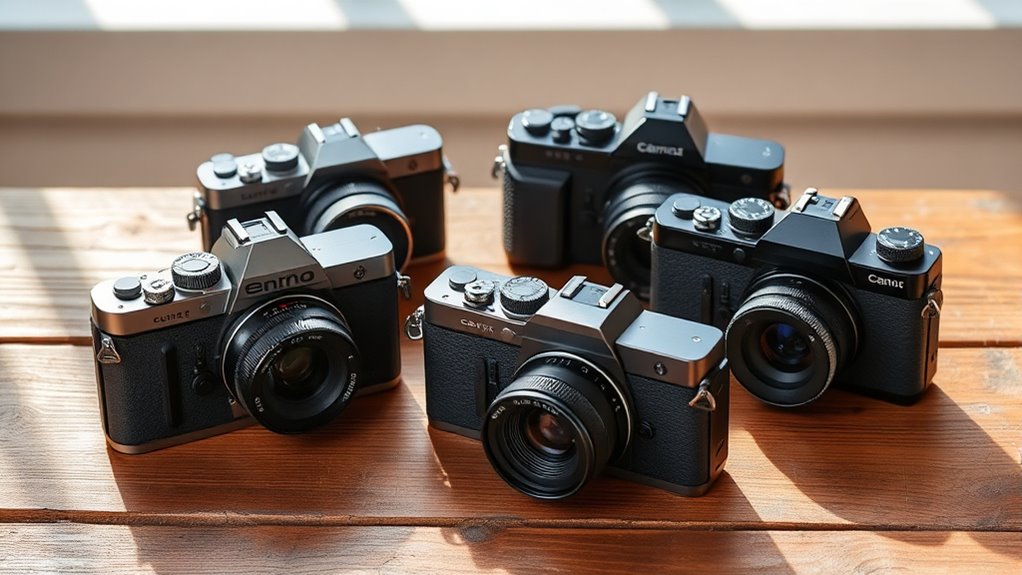
For affordable beginner cameras that deliver sharp photos and smooth videos in 2027, consider the Canon EOS Rebel T7. It features a 24.1 MP APS-C sensor and an easy-to-use 18-55mm lens, perfect for crisp Full HD shots. This combo makes it a great starter choice for photography newbies.
If you’re on a tighter budget, the Rebel T7 Renewed offers similar specs at a lower price point. It’s a smart pick without compromising quality.
Looking for more advanced video features? The Canon EOS R100 mirrorless camera shoots 4K at 24 fps and Full HD at 120 fps. This option is ideal if you want to step up your video game. Explore these options to find out what makes each camera a top pick for new photographers.
| Image | Name | Editor's Rating | Price |
|---|---|---|---|

|
|
||

|
|
||

|
|
||

|
|
Canon EOS Rebel T7 DSLR Camera EF-S 18-55mm f/3.5-5.6 is II Lens Kit
- 24.1 Megapixel CMOS (APS-C) sensor with is 100–6400 (H: 12800)
- Built-in Wi-Fi and NFC technology
- 9-Point AF system and AI Servo AF

Step into the world of photography with the Canon EOS Rebel T7 DSLR Camera paired with the EF-S 18-55mm f/3.5-5.6 IS II Lens Kit. This camera is crafted to help beginners capture clear, vibrant images without the hassle of complex settings. Its 24.1 MP APS-C sensor delivers sharp photos, making everyday moments stand out.
The included 18-55mm lens features image stabilization, reducing blur caused by hand movements. This means your shots stay crisp whether you’re capturing landscapes or portraits. The camera’s autofocus system is intuitive, allowing you to focus quickly and confidently on your subject.
Designed for easy maintenance, the Rebel T7 is lightweight and durable, perfect for carrying on your photography adventures. Its wireless connectivity lets you effortlessly share your work. While it shoots Full HD video, note that it doesn’t support 4K, and the fixed LCD screen limits flexible viewing angles.
Overall, this DSLR balances simplicity and quality, making it easier for new photographers to learn and grow their skills.
Best for: Beginner photographers seeking a reliable DSLR with versatile zoom and straightforward operation for daily use.
What We Like:
- High-resolution 24.1 MP sensor produces detailed images
- Image-stabilized 18-55mm lens adapts to various scenes
- User-friendly autofocus and wireless sharing capabilities
Specification:
| Feature | Details |
|---|---|
| Manufacturer | Canon |
| Sensor | 24.1 MP APS-C CMOS |
| Lens | EF-S 18-55mm f/3.5-5.6 IS II |
| Video Resolution | Full HD 1080p |
| LCD Screen Size | 3.0 inches (fixed) |
| Continuous Shooting | 3 frames per second |
| Connectivity | Wireless |
| Weight | Approx. 475 g (1.05 lb) |
Canon EOS Rebel T7 DSLR Camera with 18-55mm Lens (Black) (Renewed)
- High-Quality Imaging: The Canon EOS Rebel T7 DSLR Camera features a 24.1 Megapixel CMOS sensor for stunningly detailed...
- Versatile ISO Range: With an ISO range of 100 to 6400 (expandable to 12800), the Canon EOS Rebel T7 captures clear...
- Fast Autofocus System: Equipped with a 9-point AF system and AI Servo AF, the Canon EOS Rebel T7 ensures precise focus...
Capture your world with confidence using the Canon EOS Rebel T7 DSLR Camera with 18-55mm Lens (Renewed). This camera is designed to help beginners and hobbyists create sharp, vibrant images without complexity. Its 24.1 MP APS-C sensor ensures detailed photos that showcase your creativity clearly.
The camera’s simple controls and lightweight design make it easy to carry and operate on the go. With the versatile 18-55mm lens, you can shoot a variety of scenes, from landscapes to portraits, adapting without changing lenses. The built-in Wi-Fi and NFC features allow quick sharing and remote shooting, streamlining your workflow.
Maintenance is straightforward, as the camera’s solid build and compact body require minimal upkeep. While the autofocus system is basic with 9 points, it provides reliable focus for everyday photography. Note that video recording is limited to Full HD 1080p, which suits casual video use but lacks 4K detail.
Overall, this DSLR balances ease of use with dependable performance, making it a practical tool for developing photography skills.
Best for: Beginners and hobbyist photographers seeking an affordable, easy-to-use DSLR with solid image quality and versatile shooting options.
What We Like:
- High-resolution 24.1 MP sensor for sharp images
- Built-in Wi-Fi and NFC enable easy sharing and remote control
- Lightweight, compact design paired with a flexible 18-55mm lens
Specification:
| Feature | Details |
|---|---|
| Manufacturer | Canon |
| Sensor Resolution | 24.1 MP APS-C |
| Lens | 18-55mm kit lens |
| Autofocus Points | 9 |
| Video Resolution | Full HD 1080p |
| Display | 3-inch LCD |
| Connectivity | Wi-Fi, NFC |
| Weight | 2.6 lbs (1.18 kg) |
| Color | Black |
Canon EOS R100 Mirrorless Camera RF-S18-45mm F4.5-6.3 is STM Lens Kit
- Stellar Image Quality: Canon EOS R100 4K digital camera with 24.1 megapixel CMOS (APS-C) sensor for superb image clarity...
- Compact Design: Compact, lightweight EOS R series 4K camera with an affordable price; smallest and lightest camera body...
- Powerful Image Processor: DIGIC 8 image processor allows for improved shooting functionality and 4K video capability...
Capture your moments with ease and clarity using the Canon EOS R100 Mirrorless Camera RF-S18-45mm F4.5-6.3 IS STM Lens Kit. This camera is designed to help beginners create sharp, vibrant photos without hassle. Its compact body fits comfortably in your hand or bag, making it great for travel and everyday use.
The 24.1MP APS-C sensor delivers crisp images with natural background blur, enhancing your subject’s focus. Thanks to the DIGIC 8 processor, you can record smooth 4K video at 24 fps and slow-motion Full HD footage at up to 120 fps. This versatility supports a range of creative projects from family videos to artistic shoots.
Autofocus is intuitive and reliable with Dual Pixel CMOS AF covering 143 zones. It quickly locks onto faces, eyes, animals, and vehicles, reducing missed shots. Continuous shooting at 6.5 fps helps you capture fleeting moments, though it may not meet the demands of fast-paced professional sports photography.
Maintenance is straightforward due to its durable build and user-friendly controls. The lens aperture of F4.5-6.3 suits well-lit environments but might require additional lighting in darker settings. Overall, this camera balances portability, ease of use, and quality for those stepping into mirrorless photography.
Best for: Beginners and casual photographers wanting a lightweight, versatile mirrorless camera that simplifies capturing clear, creative images.
What We Like:
- Compact, lightweight design ideal for portability
- High-resolution 24.1MP sensor with smooth background blur
- Reliable autofocus with face, eye, animal, and vehicle detection
- Smooth 4K video recording and slow-motion Full HD options
Specification:
| Feature | Details |
|---|---|
| Manufacturer | Canon |
| Sensor | 24.1MP APS-C CMOS |
| Lens | RF-S18-45mm F4.5-6.3 IS STM |
| Video Resolution | 4K at 24 fps, Full HD up to 120 fps |
| Autofocus Points | 143 (Dual Pixel CMOS AF) |
| Continuous Shooting | 6.5 frames per second |
| Dimensions | Compact and lightweight |
| Weight | Lightweight (exact weight not specified) |
Canon EOS Rebel T7 DSLR Camera with 18-55mm Lens Bundle
- Items Included: Canon EOS Rebel T7 DSLR Camera with 18-55mm Lens, Canon LP-E10 Battery (860mAh), LC-E10 Battery Charger...
- Exceptional Image Quality for All Levels: Capture stunning, true-to-life photos with the Canon EOS Rebel T7's 24.1MP...
- Seamless Sharing with Built-In Wi-Fi & NFC: Enjoy effortless connectivity with the Rebel T7’s built-in Wi-Fi and NFC...
Capture stunning moments with the Canon EOS Rebel T7 DSLR Camera, designed to meet the needs of budding photographers. Its 24.1 MP APS-C sensor ensures your images are sharp and vibrant, even in challenging lighting. This camera helps you overcome common photo quality issues, delivering clear, detailed shots every time.
The included 18-55mm lens offers flexibility for everyday shooting, whether you’re capturing landscapes or portraits. Wireless connectivity through built-in Wi-Fi and NFC simplifies sharing your photos and allows remote control via the Canon Camera Connect app. This feature eliminates the hassle of transferring files manually.
Handling is comfortable thanks to the bright optical viewfinder and a clear 3-inch LCD screen. While the camera lacks touchscreen controls and 4K video, its design remains straightforward and dependable. Compatibility with Canon EF and EF-S lenses means you can expand your kit as your photography skills grow.
Maintenance is simple, with a durable body that withstands regular use. The older DIGIC 4+ processor balances performance and ease of use, making this camera a solid learning tool without overwhelming beginners.
Best for: Beginners and aspiring photographers seeking a reliable, user-friendly DSLR with room to grow their skills and gear.
What We Like:
- Sharp 24.1 MP sensor delivers vibrant images in various lighting conditions
- Easy wireless sharing and remote shooting via Wi-Fi and NFC
- Compatible with a wide range of Canon EF and EF-S lenses for future upgrades
- Comfortable ergonomic design with a bright optical viewfinder
Specification:
| Feature | Details |
|---|---|
| Manufacturer | Canon |
| Sensor Resolution | 24.1 Megapixels |
| Sensor Type | APS-C |
| Processor | DIGIC 4+ |
| Lens Included | 18-55mm |
| Display Size | 3 inches |
| Connectivity | Wi-Fi, NFC |
| Dimensions | Approx. 5.1 x 3.9 x 3 inches |
| Weight | Approximately 1.07 lb |
Factors to Consider When Choosing an Affordable Beginner Camera
When picking an affordable beginner camera, you’ll want to focus on image quality essentials and how well the lenses fit your needs.
Consider ease of use, battery life, and the connectivity features that’ll keep you sharing your shots effortlessly.
These factors will help you find a camera that grows with your skills without overwhelming you.
Image Quality Essentials
Since image quality is paramount for capturing memorable shots, you’ll want to focus on key camera features like sensor size, megapixel count, and ISO performance. Aim for an APS-C or larger sensor with around 20–24 megapixels to get sharp details and cropping flexibility without noisy images.
Check the native ISO range—cameras performing well at higher ISOs mean better low-light shots with less grain. Don’t forget to pick one that shoots RAW, preferably 14-bit, so you can fine-tune exposure and colors later.
Also, consider image stabilization and the processor’s speed; these reduce blur and noise when shooting handheld. Together, these essentials guarantee your beginner camera delivers crisp, vibrant photos in various lighting conditions.
Lens Compatibility Options
Choosing a beginner camera means paying close attention to lens compatibility, as it directly affects your creative options and budget.
Start by checking which lens mounts the camera supports—manufacturer-specific mounts and available adapters determine your range of native lenses. Confirm if the camera works with full-frame and crop-sensor lenses, since using full-frame lenses on crop bodies changes the effective focal length.
Look into third-party lens availability and the used lens market; more options usually mean lower costs. Also, make sure autofocus, aperture control, and image stabilization function properly with adapted or older lenses to avoid performance issues.
Finally, consider your future lens needs—wide, telephoto, macro, or fast primes—and verify the mount ecosystem offers affordable starter lenses and upgrade paths. That way, you won’t feel limited as your skills grow.
Ease of Use
Although technical specs matter, ease of use plays a crucial role in picking an affordable beginner camera you’ll enjoy learning with. Look for a simple mode dial offering Auto, Program, Aperture/Shutter Priority, Manual, and common Scene modes. This helps you learn exposure step-by-step without feeling overwhelmed.
A responsive menu and touchscreen with clear labels let you change settings like ISO or white balance quickly, reducing frustration. Built-in guided or intelligent scene modes explain settings or optimize exposure and focus automatically. This way, you can see cause and effect easily.
Fast, reliable autofocus with selectable points and face/eye detection simplifies composition and boosts your keeper rate. Plus, wireless connectivity with easy remote or live-view apps lets you review shots instantly on your phone. That speeds up feedback and helps you improve your skills faster.
Battery Life Expectations
When you pick an affordable beginner camera, keeping an eye on battery life can save you from unexpected downtime during shoots. Entry-level DSLRs and mirrorless cameras typically offer 300–800 shots per charge. But mirrorless models often sit at the lower end because their electronic viewfinders use more power.
Video recording drains batteries faster—expect around 45–120 minutes of Full HD footage per charge, depending on your settings. Features like continuous autofocus, image stabilization, and live view can cut battery life by 30–70%. So, it’s a good idea to always carry at least one spare battery to double your shooting time, especially for day trips.
For longer sessions or video-heavy days, bring two spares or a USB power bank. Keep in mind, battery performance drops in cold weather and as batteries age. So, watch your usage and replace batteries when you notice your runtime is getting shorter.
Connectivity Features
Connectivity features can make a big difference in how easily you share your photos and control your camera remotely. Look for built-in Wi-Fi with 802.11 standards and a reliable companion app to transfer images wirelessly and operate your camera from a distance.
NFC is a bonus—it lets you pair your camera with your phone instantly, skipping tedious setup. A USB port that supports tethered shooting or webcam use is handy for live streaming and quick file transfers; just confirm the USB version and compatibility.
HDMI output enables high-quality external monitoring or recording, but check the port type and if clean HDMI output is supported. Finally, check memory card compatibility and slot options—faster, supported cards speed up transfers and improve your overall shooting experience.
Video Recording Capabilities
Besides sharing and controlling your camera remotely, you’ll want to take into account its video recording capabilities, especially if you plan to shoot more than just still photos. Aim for at least Full HD (1080p) at 30 fps.
While 4K offers sharper detail and future-proofing, it demands more storage and processing power. Check frame rates carefully; 60 fps or higher lets you capture smooth motion or create slow-motion effects.
Don’t overlook audio: a mic input and manual audio controls dramatically improve sound quality over built-in mics. Also, verify continuous recording limits and watch for overheating during long 4K sessions.
Finally, good autofocus during video, like continuous AF and face-tracking, plus in-body or lens stabilization, helps you capture steady, professional-looking footage.
Budget and Warranty
Set a clear budget before you start shopping to streamline your choices and get the best value for your money. Aim for a range, like $300–$700, to compare features efficiently.
Don’t forget to check the warranty length and coverage—standard is usually one year, covering parts and labor. But see if accidental damage is included.
Also, find out if the seller offers return or satisfaction guarantees, such as 14–30 day returns. These help if you’re still figuring out your needs.
Factor in total ownership cost by including accessories like batteries and memory cards, plus potential repairs after warranty expires.
Finally, choose cameras with easy warranty registration and authorized service centers nearby. This keeps repairs hassle-free and helps maintain resale value.
Frequently Asked Questions
How Do Beginner Cameras Compare to Smartphone Cameras in Image Quality?
You’ll find beginner cameras generally offer better image quality than smartphones, thanks to larger sensors and optical zoom.
However, smartphones excel in convenience and software enhancements.
This makes both great depending on your photography needs and skill level.
What Accessories Are Essential for Beginner Photographers?
You’ll need a sturdy tripod, extra batteries, memory cards, a camera bag, and a basic lens cleaning kit. These essentials help you shoot steadily, store more photos, and keep your gear safe and clean.
Having a tripod means you can avoid blurry shots, especially in low light. Plus, extra batteries and memory cards make sure you don’t run out of power or space when you’re in the middle of a shoot.
A good camera bag keeps everything organized and protected. And don’t forget a lens cleaning kit to keep your photos sharp and your equipment in top shape.
Can Beginner Cameras Shoot 4K Video?
Absolutely, you can shoot 4K video with many beginner cameras now. Don’t expect all models to have it, but plenty do.
This lets you capture stunning, high-resolution footage without needing expensive gear right away. It’s a great way to get started!
How Important Is Sensor Size in Beginner Cameras?
Sensor size matters because it affects image quality and low-light performance. You’ll get better depth of field control and sharper photos with a larger sensor.
But don’t worry, beginners can still capture great shots with smaller ones. It’s all about learning how to use your camera well. So, while sensor size is important, it’s not the only thing that matters when you’re starting out.
Are Beginner Cameras Compatible With External Flashes?
Think of your beginner camera as a stage actor—yes, it can invite external flashes to join the spotlight!
Most beginner cameras support external flashes, letting you control lighting and make your photos shine brighter effortlessly.
It’s pretty cool because it gives you more creative freedom without needing super fancy gear. So go ahead, experiment with those flashes and watch your shots light up!
Conclusion
So, ready to spend a fortune on your “affordable” beginner camera? Don’t worry—you’ll get the perfect shot of your empty wallet while figuring out which Canon Rebel T7 or EOS R100 fits your style.
Ironically, these budget-friendly options prove you don’t need to break the bank to delve into photography, just maybe to keep up with all the lens jargon. Grab one, start clicking, and let the learning (and saving) begin!
When choosing one of the best affordable beginner cameras for 2027, focus on ease of use, image quality, and features that help you grow as a photographer. Whether it’s a Canon Rebel or an EOS R100, these cameras offer great value without overwhelming your budget.
So don’t hesitate—pick your camera wisely and start capturing moments perfectly. Affordable beginner cameras are designed to help you click stunning shots while keeping costs low, making your journey into photography both fun and accessible.