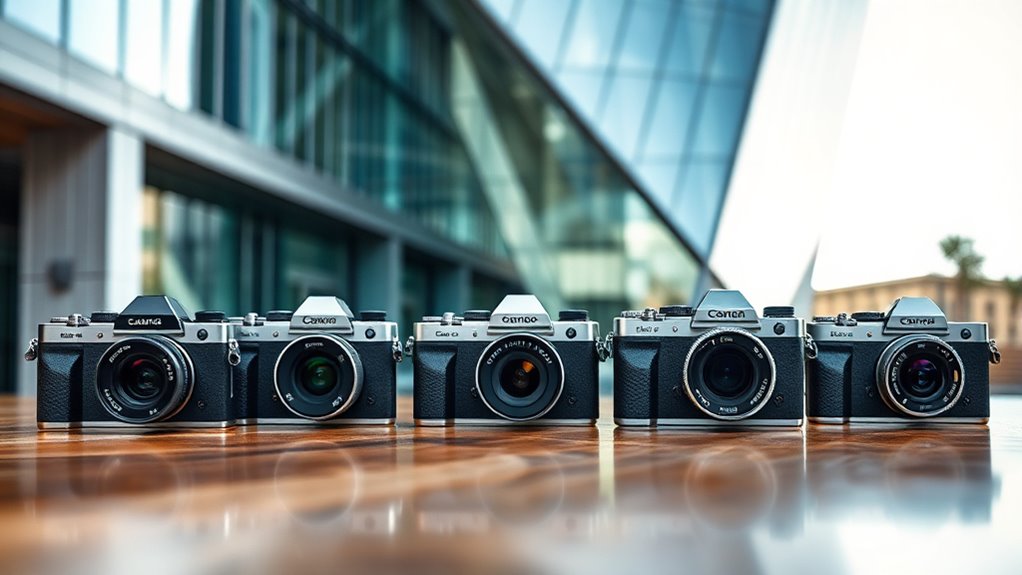
7 Best Cameras for Architecture in 2027 (Detail-Focused Picks)
For capturing architectural details with sharpness and clarity, consider the Nikon Z6 III for versatile full-frame performance, or the 134MP Matterport MC250 Pro2 for immersive 3D scans. These cameras stand out for their ability to handle intricate textures and complex structures with ease.
Sony’s a7 IV offers high-resolution and fast autofocus, making it a great choice for dynamic shooting conditions. Meanwhile, the a6400 provides compact versatility without compromising on image quality.
Ricoh Theta X and Z1 excel in ultra-high-res 360° imaging with superior low-light capture, perfect for creating immersive architectural visuals. The Leica Q2 delivers a high-res fixed lens option optimized for fine details.
Explore their strengths to find your ideal fit and elevate your architectural photography to the next level.
| Image | Name | Editor's Rating | Price |
|---|---|---|---|

|
|
||

|
|
||
|
|
||
|
|
||

|
|
Nikon Z6 III 24.5MP Mirrorless Camera + FTZ II Mount Adapter Bundle
- Bundle Includes: Nikon Z6 III Mirrorless Camera, Nikon FTZ II Mount Adapter, 64GB Memory Card, Large Camera Bag, Care...
- High-Speed Performance: Nikon Z6III mirrorless camera captures decisive moments with up to 20 fps raw continuous...
- Professional Video Recording: This Z6III body records internal 6K 60p N-RAW and 6K 30p ProRes RAW for professional color...
Capture architectural details with precision using the Nikon Z6 III mirrorless camera. Its 24.5MP full-frame sensor ensures every line and texture is sharp and vibrant, helping you showcase complex designs clearly. The camera’s in-body vibration reduction keeps shots steady, reducing blur from handheld shooting.
The included FTZ II Mount Adapter expands your lens options by supporting your existing F-mount lenses seamlessly. This flexibility is ideal for photographers who want to use their current gear while upgrading to Z-mount technology. Fast autofocus and up to 20 fps continuous shooting allow you to catch changing light and shadows effortlessly.
Designed for demanding environments, the Z6 III features dual card slots and robust weather sealing, so you can focus on your craft without worrying about storage or weather damage. The bright, vari-angle touchscreen improves usability in tight spots and awkward angles, common in architectural photography.
Maintenance is straightforward with durable build quality and accessible controls that withstand frequent use. Overall, this bundle enhances your ability to capture stunning architectural images with reliability and creative freedom.
Best for: Professional and enthusiast photographers seeking a versatile, high-resolution full-frame mirrorless camera compatible with both Z-mount and F-mount lenses.
What We Like:
- Excellent image stabilization with up to 8 stops of vibration reduction
- Fast, accurate autofocus with AI subject detection
- Flexible shooting with dual card slots and bright vari-angle touchscreen
- Compatibility with a wide range of lenses via FTZ II adapter
Specification:
| Feature | Details |
|---|---|
| Manufacturer | Nikon |
| Sensor Resolution | 24.5 megapixels |
| Weight | 4.6 lb (bundle) |
| Mount Compatibility | Z-mount and F-mount (via FTZ II) |
| Card Slots | Dual (CFexpress and UHS-II SD) |
| Screen Type | Vari-angle touchscreen |
| Weather Sealing | Yes |
Matterport MC250 Pro2 3D Camera Bundle Renewed
- Matterport MC250 Pro2 Professional 3D Camera: Capture and Map 360° Environment, Create 3D Maps, Models, and Schematics...
- IMMERSIVE, HIGH RESOLUTION, PHOTO-REALISTIC DIGITAL TWINS - With the Matterport Pro2 3D Camera you can create beautiful...
- FAST CAPTURE in under 30 SECONDS PER SCAN - Speed through your scans with the Matterport Pro2 3D Camera. Get a complete...
Capture your space with precision and speed using the Matterport MC250 Pro2 3D Camera Bundle Renewed. This advanced camera is designed to create immersive digital twins that bring architecture and real estate projects to life. It maps environments in 360° with exceptional detail, making virtual tours and 3D walkthroughs more accurate and engaging.
The camera scans quickly, capturing 1.5 million depth points per scan in under 40 seconds. Its 134-megapixel photos and 4K video ensure visuals are crisp and richly detailed. Integration with Matterport Cloud and Leica BLK360 enhances workflow, allowing seamless sharing and collaboration.
Built with autofocus, 3x optical zoom, and Wi-Fi connectivity, this camera improves efficiency on-site and off. While it doesn’t have removable storage or a built-in flash, its streamlined design focuses on precision scanning and connectivity. Most features require a subscription, so consider your workflow needs carefully.
Best for: professionals in real estate, architecture, and engineering who require detailed, high-resolution 3D digital twins and virtual tours.
What We Like:
- Ultra-high resolution 134MP photos and 4K UHD video
- Fast and detailed 360° scanning with 1.5 million depth points
- Smooth integration with Matterport Cloud and Leica BLK360
Specification:
| Feature | Details |
|---|---|
| Manufacturer | Matterport |
| Dimensions | Not specified |
| Weight | Not specified |
| Photo Resolution | 134 megapixels |
| Video Resolution | 4K UHD |
| Depth Points per Scan | 1.5 million |
| Connectivity | Wi-Fi |
| Optical Zoom | 3x |
| Storage | No removable storage |
| Warranty | Renewed condition (90 days) |
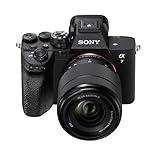
Sony Alpha a7 IV Mirrorless Camera with 28-70mm Lens Black
- 33MP1 full-frame Exmor R back-illuminated CMOS sensor
- 8x more powerful2, next generation BIONZ XR image processing engine
- Up to 4K 60p11 10-bit 4:2:2 w/ full pixel readout in all rec. formats

Discover the power to capture architectural beauty with the Sony Alpha a7 IV Mirrorless Camera paired with the versatile 28-70mm lens. This system lets you reveal fine structural details with stunning clarity. Its 33MP full-frame sensor and advanced BIONZ XR processor deliver sharp, vibrant images that highlight every element of your subject.
Designed for precision, the camera’s AI-driven Real-time Eye-AF keeps focus locked on intricate details, solving common autofocus challenges in architectural photography. The 28-70mm lens offers flexibility, covering wide-angle to moderate telephoto perspectives for diverse framing options.
Built with stability in mind, the in-body image stabilization works alongside the lens’s Optical SteadyShot to reduce blur, making handheld shooting more reliable. The articulating LCD and dual card slots enhance workflow, while 4K video capability allows capturing smooth architectural walkthroughs with ease.
Maintenance is straightforward, with robust build quality supporting regular use in various environments. However, the lens’s narrower aperture may require extra lighting in dim conditions, and the combined weight of 1.51 kg might feel substantial during long shoots.
Best for: Architects and professional photographers seeking a versatile, high-resolution camera with precise autofocus and video features for detailed architectural imagery.
What We Like:
- Sharp, vibrant images from a 33MP full-frame sensor and BIONZ XR processor
- AI-powered Real-time Eye-AF for accurate focus on complex details
- Combined in-body and lens stabilization for steady shots in varied conditions
- Versatile 28-70mm lens suitable for wide to medium telephoto framing
- Articulating LCD and dual card slots improve usability and workflow
Specification:
| Feature | Details |
|---|---|
| Manufacturer | Sony |
| Sensor Resolution | 33 Megapixels |
| Lens Included | 28-70mm |
| Image Stabilization | In-body + Optical SteadyShot |
| Video Resolution | 4K |
| Weight (camera + lens) | 1.51 kg |
| Color | Black |
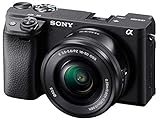
Sony Alpha a6400 Mirrorless Camera with 16-50mm Lens
- 20.1MP stacked back illuminated 1" Exmor RS CMOS sensor w/ DRAM, large aperture 24-70mm1 F1.8-2.8 ZEISS Vario-Sonnar T...
- Enhanced subject capture: wide 425 Phase/ 425 contrast detection points over 84 percent of the sensor
- Fast and accurate: Up to 11Fps continuous shooting at 24.2 MP raw with crisp, clear natural colors
Capture architectural beauty with the Sony Alpha a6400 Mirrorless Camera, designed to deliver crisp, detailed images with ease. Its 20.1 MP APS-C sensor works alongside the versatile 16-50mm lens to reveal intricate building features clearly. This combination helps architects and designers document their projects with precision.
The camera’s fast hybrid autofocus system with 425 focus points guarantees sharp results, even when shooting complex structures. A 3-inch tiltable touchscreen offers flexible framing options, making it simple to shoot from various angles on-site. Plus, 4K video recording enhances your ability to create professional-quality walkthroughs or presentations.
Compact and lightweight, the a6400 is easy to carry during long days at construction sites or design studios. Its Wi-Fi connectivity enables quick sharing and backup of images, streamlining your workflow. While the kit lens has a limited aperture range and the battery life is moderate, extra batteries and lenses can extend its use.
Maintenance is straightforward with a durable build that withstands regular handling. The single memory card slot means careful file management is necessary during critical shoots. Overall, the a6400 balances image quality and portability, making it a valuable tool for architectural photography.
Best for: Architects, designers, and photographers needing a compact, high-performance mirrorless camera tailored for detailed architectural imagery.
What We Like:
- Sharp 20.1 MP sensor with versatile 16-50mm lens for detailed capture
- Fast hybrid autofocus with 425 phase and contrast detection points
- Lightweight, compact design with tiltable touchscreen and 4K video
- Wi-Fi connectivity for easy sharing and workflow integration
Specification:
| Feature | Details |
|---|---|
| Manufacturer | Sony |
| Sensor | 20.1 MP APS-C |
| Lens | 16-50mm kit lens |
| Autofocus Points | 425 phase and contrast detection |
| Screen Size | 3-inch tiltable touchscreen |
| Video Resolution | 4K |
| Weight | Approx. 403 g (body only) |
Ricoh Theta X 360 Camera with Touchscreen & GPS
- 11K HIGH RESOLUTION & 360° 5.7K VIDEO - Equipped with a newly designed image sensor, processor, and lens system, this...
- PROFRESSIONAL SHOOTING, RAW - High Dynamic Range Digital Negative (HDR-DNG) recording, allowing you to save images in...
- EMBEDDED GPS DATA - The built-in GPS (QZSS) and A-GPS compatibility allow for accurate location information to be...
Experience professional-grade 360° imaging with the Ricoh Theta X 360 Camera, designed to deliver ultra-high-resolution visuals effortlessly. This camera captures breathtaking 11K photos and smooth 5.7K video, making it ideal for those who need detailed, immersive content without relying on external devices. Its bright 2.25-inch touchscreen lets you control settings directly, simplifying operations on the go.
Built with dual 48MP lenses, the camera ensures every architectural or site detail is precisely captured. The integrated GPS tags your location automatically, streamlining workflows, especially in construction and real estate. Its rugged magnesium alloy body, removable battery, and expandable storage offer durability and flexibility for demanding environments.
Maintenance is straightforward thanks to the removable battery and accessible microSD slot, though storage maxes out at 128GB. While the compact touchscreen keeps the device portable, some users may find the display size limiting for detailed previews. Note that it lacks a built-in flash, which means external lighting is necessary for very low-light conditions.
The Android operating system supports plug-ins for tailored functionality, allowing customization to fit specific project needs. This combination of advanced imaging, durable design, and standalone control makes it a reliable tool for professional site documentation.
Best for: Professionals in real estate, construction, and site documentation needing high-resolution 360° imaging with integrated GPS and standalone touchscreen control.
What We Like:
- Captures ultra-high-resolution 11K photos and 5.7K video with smooth stabilization.
- Built-in 2.25-inch touchscreen and Android OS enable smartphone-free operation.
- Removable battery and expandable storage enhance usability on site.
- Rugged magnesium alloy body withstands demanding work environments.
- Integrated GPS streamlines location tagging and workflow management.
Specification:
| Feature | Details |
|---|---|
| Manufacturer | Ricoh |
| Dimensions | Not specified |
| Weight | Not specified |
| Material | Magnesium alloy |
| Color Options | Not specified |
Ricoh Theta Z1 360 Camera with Dual Sensors

- With approximately 2.7 times larger capacity than the previous model. 51gb of internal memory allows for approximately...
- Two 1" type back-illuminated CMOS sensor and a newly developed lens unit suppress ghosting, flare and fringing to...
- Natural 360° images can be captured at 23MP resolution (approximately, 6720 x 3360, 7K) taking advantage of a...
Experience exceptional 360-degree imaging with the Ricoh Theta Z1, engineered to capture detailed, high-resolution photos even in low-light environments. This camera’s dual 1.0-inch back-illuminated CMOS sensors deliver stunning 7K 360 images with advanced HDR, ensuring every shot is vibrant and clear.
Designed for professionals, it offers versatile shooting modes including RAW (DNG), manual, and aperture priority. This flexibility allows you to adapt to various lighting conditions and creative demands effortlessly. The durable, compact magnesium alloy body houses 51GB of internal memory, streamlining storage while maintaining portability.
Its capability to record 4K video with 3-axis stabilization and spatial audio makes it ideal for immersive virtual tours and architectural presentations. Maintaining the device is straightforward, but users should monitor internal memory and battery life to avoid interruptions during extended outdoor use.
The Ricoh Theta Z1 is a reliable tool that enhances your workflow by providing rich, immersive imagery with professional-grade controls and robust construction.
Best for: Professionals and enthusiasts in real estate, architecture, construction, and virtual tour creation seeking high-quality 360-degree imaging with superior low-light performance.
What We Like:
- Dual large sensors capture detailed 7K 360 photos with enhanced HDR
- Supports RAW (DNG) and multiple creative shooting modes
- Compact, durable magnesium alloy body with ample internal storage
- 4K video recording with 3-axis stabilization and spatial audio
Specification:
| Feature | Details |
|---|---|
| Manufacturer | Ricoh |
| Dimensions | Compact magnesium alloy body (exact dimensions not specified) |
| Weight | Not specified |
| Sensors | Dual 1.0-inch back-illuminated CMOS |
| Resolution | Up to 23MP, 7K 360 photos |
| Storage | 51GB internal memory |
| Video | 4K with 3-axis stabilization and spatial audio |
Leica Q2 Digital Camera (19050)

- Leica Q2 digital camera (Black anodized).Sound recording format : AAC, Microphone : Stereo, Speaker : Mono.
Capture architectural beauty with precision using the Leica Q2 Digital Camera (19050). This compact yet powerful camera solves the challenge of photographing fine details with stunning clarity and sharpness. Its 47.3 MP full-frame sensor combined with the Leica Summilux 28mm f/1.7 prime lens ensures exceptional image quality, even in low-light conditions.
The camera’s 3.68 MP OLED viewfinder and 3-inch AMOLED touchscreen make composing shots intuitive and accurate. With 10 frames per second continuous shooting and 4K video recording, it adapts effortlessly to fast-paced architectural scenes or detailed creative projects. Its lightweight design at just 1.6 pounds enhances portability for professionals and enthusiasts on the move.
Maintenance is straightforward, with a robust build and reliable controls that hold up during frequent use. Though the fixed 28mm lens limits zoom flexibility, the camera’s sharp prime lens delivers unmatched detail for architectural and general photography. Wireless connectivity via Wi-Fi and Bluetooth further simplifies image transfer and remote control.
Best for: photographers and enthusiasts seeking a high-resolution, compact full-frame camera tailored for detailed architectural and low-light photography.
What We Like:
- Outstanding 47.3 MP full-frame sensor with a sharp f/1.7 28mm lens
- High-resolution OLED viewfinder and AMOLED touchscreen for precise framing
- Versatile 4K video and fast 10 fps continuous shooting
- Lightweight and portable design with wireless connectivity
Specification:
| Feature | Details |
|---|---|
| Manufacturer | Leica |
| Dimensions | Approx. 5.3 x 3.9 x 2.3 in (13.5 x 10 x 5.9 cm) |
| Weight | 1.6 lb (0.73 kg) |
| Sensor | 47.3 MP Full-frame CMOS |
| Lens | Fixed 28mm f/1.7 Summilux |
| Viewfinder | 3.68 MP OLED |
| Screen | 3-inch AMOLED touchscreen |
| Connectivity | Wi-Fi, Bluetooth |
Factors to Consider When Choosing a Camera for Architecture
When choosing a camera for architecture, you’ll want to focus on sensor resolution to capture fine details and make certain lens compatibility for versatile shooting. Image stabilization helps keep your shots sharp, while precise autofocus is key for framing complex structures.
Don’t forget to take into account dynamic range to handle bright highlights and deep shadows effectively. It really makes a difference when you’re dealing with varying lighting conditions. So, keep these factors in mind to get the best results for your architectural photography.
Sensor Resolution Importance
Although sensor resolution isn’t the only factor to keep in mind, it plays a crucial role in capturing architectural details with precision. Higher resolution sensors, typically 24 to 50+ megapixels, let you capture finer textures like brick patterns and ornamental features. These details are essential for large-format prints or detailed facade shots.
If you’re working indoors and plan on exposure bracketing or stitching, a moderate-to-high resolution between 24 and 45 MP strikes a good balance. It offers enough detail and dynamic range while keeping file sizes manageable.
Keep in mind, higher resolutions create bigger files that demand faster memory cards, ample storage, and powerful editing setups. Also, very high megapixels can increase diffraction and noise at smaller apertures or high ISOs. So, pairing resolution with good lenses and proper technique is key to maintaining sharpness.
Lens Compatibility Options
Picking the right camera means paying close attention to lens compatibility, especially for architectural photography. You’ll want a system with broad native lens support or reliable adapters to access wide-angle and tilt-shift lenses critical for perspective control.
Choose a camera that supports professional tilt-shift lenses or offers adapters to correct converging verticals and keep lines straight without heavy cropping. Make certain compatibility with high-quality wide and ultra-wide rectilinear lenses—like 16–35mm full-frame equivalents—to capture spaces without distortion.
Also, check support for fast primes and macro lenses for fine textures and details. Don’t forget to verify if adapters maintain autofocus or manual focus precision.
Finally, a robust ecosystem with third-party lenses, extension tubes, and adapter options expands your creative and technical flexibility.
Image Stabilization Benefits
You’ll often find in-body image stabilization (IBIS) invaluable for architectural photography, especially in low-light interiors where handheld shots benefit from slower shutter speeds. IBIS compensates for camera shake across multiple axes, letting you shoot several stops slower without blur.
When paired with stabilized lenses, you can reduce shake even further, enabling lower ISOs for cleaner images and better dynamic range. Sensor-shift stabilization preserves sharpness critical for capturing fine details and textures in architecture.
It also helps when using longer focal lengths or tilt-shift lenses by minimizing handshake and improving framing accuracy. However, stabilization doesn’t fix perspective distortion or motion blur from moving subjects, so tripods and leveling tools remain essential for precise geometry and long exposures.
Autofocus Precision Needs
When capturing architectural scenes, autofocus precision plays a pivotal role in guaranteeing every detail—from ornate foreground elements to distant structural lines—remains razor sharp. You need a camera with dense phase-detection coverage, offering hundreds of AF points and strong subject-tracking to maintain focus during recomposing or tilt-shift use.
Low-light autofocus performance down to -6 to -10 EV is vital for interior shots with limited ambient light, preventing noisy high-ISO images. Look for micro-adjustment features and manual-focus aids like focus peaking and magnification to fine-tune focus, especially when using legacy lenses or adapters common in architecture.
Fast AF acquisition with a large buffer ensures repeatable, rapid focus locking, reducing missed shots during handheld walkthroughs or timelapse captures. This way, you don’t lose critical sharpness when it matters most.
Dynamic Range Capability
Although architectural scenes often feature stark contrasts between bright highlights and deep shadows, choosing a camera with high dynamic range lets you capture these details without losing texture or nuance. Aim for at least 12–14 stops of dynamic range; 14–15+ stops offer even better recovery of highlight and shadow detail in challenging lighting.
Shooting in RAW preserves this range, giving you more flexibility during post-processing for exposure adjustments or HDR merges. If one exposure can’t capture the full scene, use exposure bracketing and merge bracketed RAW files for the cleanest results.
Also, consider a camera’s noise performance at low ISO and how smoothly it handles highlight roll-off. Clean shadows and gentle gradations help render building materials and window scenes more naturally, which is essential for architectural photography.
Video Functionality Relevance
Capturing architectural detail isn’t limited to still images—video plays a key role in showcasing spaces through walkthroughs, time-lapses, and dynamic presentations. You’ll want a camera with 4K or higher video, supporting at least 10-bit 4:2:2 color to maintain accurate hues and provide flexibility in post-production grading.
High frame rates like 60p or 120p and slow-motion modes help capture smooth motion of people or drones. Stabilization is essential—look for in-body sensor-shift (IBIS) paired with optical lens stabilization to reduce shake during handheld or gimbal use.
For professional work, clean HDMI output and support for ProRes or RAW recording to external devices enhance detail and dynamic range. Also, features like timecode sync, dual card recording, and efficient heat management guarantee uninterrupted multi-camera shoots and longer filming sessions on site.
Portability and Weight
Don’t overlook how portability and weight impact your architectural photography workflow. Choosing a lighter camera system, like a mirrorless or compact body, reduces fatigue during long site walks and helps you handle handheld shots or climbs with ease.
Remember, total carried weight includes lenses, tripods, and accessories—a 1–2 kg tripod plus a 500–1,000 g wide-angle lens can more than double your kit’s mass. Smaller setups let you reposition quickly to catch changing light and multiple angles per visit.
If you often work in tight or elevated spaces, prioritize gear with compact dimensions and a shorter grip to fit corners and mounting brackets. Keep in mind, lighter bodies might need extra batteries and cards, so factor in the cumulative weight of spares for your shoots.
Connectivity and Storage
When you’re shooting architectural projects, having reliable connectivity and storage options can make or break your workflow. Choose cameras with dual card slots to secure immediate backup and overflow storage, so you never risk losing critical shots.
Opt for fast media formats like UHS-II SD or CFexpress to handle large RAW files and high-speed bursts without delays. Make sure your camera supports tethering via USB-C or full-size HDMI, and offers stable Wi-Fi or wired LAN for real-time image review and delivery on-site.
Look for direct USB charging and in-camera file transfers to external drives to streamline your workflow. Ultimately, confirm the camera’s firmware and software support metadata tagging and integrate smoothly with cloud or DAM systems for organized project management.
Frequently Asked Questions
How Important Is Weather Resistance for Architectural Cameras?
You need weather resistance because architectural shoots often happen outdoors. It protects your camera from rain, dust, and moisture, ensuring your gear stays functional and delivers sharp, detailed images no matter the conditions.
Think about it—when you’re out capturing buildings, the weather can change unexpectedly. Having a weather-resistant camera means you won’t have to worry about your equipment getting damaged or your shots being ruined.
Can Drones Be Used Effectively for Architectural Photography?
Yes, you can use drones effectively for architectural photography—they’ve increased aerial shots by 70%!
You’ll capture unique perspectives and intricate details, making your architectural images stand out like never before.
Plus, drones help you maintain precision and creativity throughout your shoot.
What Software Is Best for Editing Architectural Photos?
You’ll want Adobe Lightroom and Photoshop for editing architectural photos—they let you enhance details, correct perspective, and adjust lighting precisely.
Capture One is also great for color accuracy, giving your images a professional, polished look.
These tools really help bring out the best in your architectural shots. Plus, they allow for a lot of creative control depending on what you need.
Are Full-Frame Sensors Necessary for Architectural Details?
You don’t necessarily need full-frame sensors for architectural details; APS-C or medium format can also deliver sharp images.
Focus more on lens quality, resolution, and shooting technique to capture intricate architectural features effectively.
It’s really about how you use your gear rather than the size of the sensor. So, don’t stress too much about going full-frame if you’re happy with what you have.
How Do Lens Choices Impact Architectural Photography Quality?
Lens choices directly impact architectural photography quality by affecting sharpness, distortion, and perspective. You’ll want wide-angle, tilt-shift, or prime lenses to capture details accurately and control lines.
This way, you ensure your images look professional and precise. Choosing the right lens really makes a big difference in how your photos turn out.
Conclusion
When choosing a camera for architecture, remember that 85% of professionals say image detail is their top priority. With options like the Nikon Z6 III’s sharp 24.5MP sensor or the immersive Ricoh Theta X 360, you’ve got plenty of tools to capture every angle perfectly.
Whether you want crisp stills or dynamic 3D shots, picking the right gear will let you showcase architectural beauty like never before.
Your next masterpiece deserves the best camera for architecture. Investing in cameras that focus on detail and versatility ensures your images stand out. So, choose a camera that captures every intricate line and angle with precision, making your architectural photography truly exceptional.