3 Best Camera Lenses for Real Estate Photography in 2027
For real estate photography in 2027, you’ll want camera lenses that capture ultra-wide views with sharp, detailed images. These lenses are essential for showcasing interiors and architectural features beautifully. Choosing the right lens can make all the difference when it comes to highlighting property spaces effectively.
The Canon EF-S 10-22mm f/3.5-4.5 USM is perfect for Canon APS-C DSLRs. It offers excellent coverage for interior shots and architectural details, making it a favorite among many photographers. If you’re using a Canon EOS R mirrorless camera, the RF 14-35mm F4 L is a great choice. It delivers stabilized, versatile wide-angle shots that adapt well to different real estate scenes.
For top-tier full-frame results, the Canon EF 11-24mm f/4L lens stands out. It provides edge-to-edge sharpness and superb image quality. Remember, choosing the right lens involves more than just focal length—consider factors like stabilization, aperture, and build quality to get the best real estate photography results.
| Image | Name | Editor's Rating | Price |
|---|---|---|---|
|
|
||

|
|
||
|
|
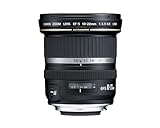
Canon EF-S 10-22mm f/3.5-4.5 USM SLR Lens for EOS Digital SLRs
- 10-22mm wide-angle zoom lens with f/3.5-4.5 maximum aperture for EOS digital SLR cameras
- Superior AF performance and speed, with full-time manual focus with the turn of a ring
- Close focusing to 9.5 inches; fills the frame with subjects as small as 3.6 x 5.4 inches

Experience the freedom to capture expansive interiors and tight architectural spaces with the Canon EF-S 10-22mm f/3.5-4.5 USM lens. Designed specifically for Canon EOS Digital SLR cameras, this ultra wide-angle zoom lens solves the challenge of fitting large rooms or buildings into a single stunning frame.
Its versatile zoom range, equivalent to 16-35mm on full-frame cameras, lets you explore creative perspectives without stepping back. You’ll benefit from fast and quiet autofocus thanks to the ring-type Ultrasonic Motor, which also offers full-time manual focus for precise adjustments on the fly.
Weighing just 16 ounces, this lens is easy to handle during extended shoots. Its advanced optical design, featuring three aspherical elements and a Super-UD element, minimizes distortion and delivers sharp, clear images. Close focusing at 9.5 inches lets you highlight intricate details with precision.
Maintenance is straightforward; just keep the lens clean and protected, as it is not water resistant. While it lacks image stabilization and has a variable aperture, it excels in well-lit environments where wide-angle shots are essential.
Best for: photographers using Canon EOS Digital SLRs who need an ultra wide-angle zoom lens ideal for real estate, architecture, and interior photography.
What We Like:
- Ultra wide-angle zoom range (10-22mm) for capturing expansive scenes
- Fast, silent autofocus with ring-type USM and full-time manual focus
- High-quality optics with aspherical and Super-UD elements for sharp images
- Lightweight design supports easy handling during long shoots
Specification:
| Feature | Details |
|---|---|
| Manufacturer | Canon |
| Lens Mount | Canon EF-S |
| Focal Length | 10-22mm |
| Maximum Aperture | f/3.5-4.5 |
| Minimum Focus Distance | 9.5 inches (24 cm) |
| Weight | 16 ounces (0.45 kg) |
| Optical Elements | 3 aspherical, 1 Super-UD |
| Focus Motor | Ring-type Ultrasonic Motor |
| Weather Resistance | No |
Canon RF14-35mm F4 L is USM Lens Black
- Dramatic, creative possibilities with 14mm ultra wide-angle coverage.
- Covers entire wide-angle zoom range, from exceptionally wide 14mm through 35mm.
- Bright, constant f/4 zoom lens with L-series optical construction; includes Canon’s SWC and ASC lens coating...
Capture stunning wide-angle shots effortlessly with the Canon RF14-35mm F4 L IS USM Lens. Designed specifically for Canon EOS R mirrorless cameras, this lens tackles the challenge of sharp, handheld photography in tight interior spaces. Its constant f/4 aperture combined with up to 5.5 stops of optical image stabilization helps you achieve clear images even in low light.
This lens is compact and lightweight at just 544g, making it easy to carry and handle during long shoots. The durable, water-resistant L-series construction ensures reliable performance in varying conditions. Advanced coatings reduce flare and ghosting, so your photos maintain crispness and clarity.
With a minimum focus distance of 0.2m and a convenient 77mm filter thread, this lens adapts to different shooting needs while remaining easy to maintain. Its moderate zoom range covers wide to standard focal lengths, ideal for real estate interiors and architectural photography.
While the f/4 aperture may limit performance in very dim environments and the zoom ratio is moderate, this lens balances portability, durability, and image quality effectively.
Best for: Real estate professionals and photographers needing a versatile wide-angle zoom lens with image stabilization for sharp, handheld interior and architectural shots.
What We Like:
- Lightweight 544g design enhances portability and ease of use.
- Constant f/4 aperture with 5.5 stops image stabilization for clear handheld images.
- Water-resistant L-series build with coatings that minimize flare and ghosting.
- Close focusing down to 0.2m for detailed interior shots.
- Compatible 77mm filter thread allows easy accessory use.
Specification:
| Feature | Details |
|---|---|
| Manufacturer | Canon |
| Lens Type | Wide-angle Zoom |
| Mount | Canon RF (for EOS R series) |
| Aperture | Constant f/4 |
| Image Stabilization | Up to 5.5 stops |
| Minimum Focus Distance | 0.2 meters |
| Filter Thread | 77 mm |
| Weight | 544 grams |
| Color | Black |
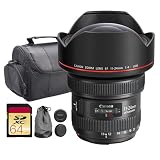
Canon EF 11-24mm f/4L Ultra-Wide Zoom Lens
- Canon USA Authorized. Items Include: Canon EF 11-24mm f/4L USM Lens, Shoulder Bag, 64GB Memory Card
- Ultra-wide zoom covering 11–24mm on full-frame EF-mount DSLRs (17.6–38.4mm on APS-C), ideal for landscapes...
- Advanced optical design includes one Super UD, one UD, and four aspherical elements to minimize chromatic aberrations...
The Canon EF 11-24mm f/4L Ultra-Wide Zoom Lens captures breathtaking wide-angle shots that bring interiors and architectural spaces to life. Its design solves common challenges like distortion and edge softness, delivering sharp images across the entire frame. This lens lets photographers showcase every detail without compromising clarity.
Its advanced optical elements reduce chromatic aberration while maintaining consistent sharpness, making it easier to produce professional-quality photos. The fast, quiet autofocus with ring-type USM allows smooth, precise focusing, ideal for dynamic shooting environments. The constant f/4 aperture ensures even exposure when working with varying light.
Built for durability, this L-series lens features weather sealing and a smudge-resistant fluorine coating to protect against dust and moisture. Regular cleaning is straightforward, helping maintain image quality and lens longevity. While it’s relatively heavy and lacks image stabilization, pairing it with a tripod or stable support solves stability concerns.
Best for: Professional photographers and advanced enthusiasts specializing in real estate, architecture, and landscape photography who require ultra-wide, high-quality images with minimal distortion.
What We Like:
- Exceptional edge-to-edge sharpness with minimal chromatic aberration
- Fast, quiet autofocus with full-time manual focus override
- Weather-sealed, durable construction with smudge-resistant coatings
Specification:
| Specification | Details |
|---|---|
| Manufacturer | Canon |
| Focal Length | 11-24mm |
| Maximum Aperture | f/4 |
| Weight | 3 lb (1.36 kg) |
| Lens Mount | Canon EF |
| Weather Sealing | Yes |
Factors to Consider When Choosing Camera Lenses for Real Estate Photography
When choosing lenses for real estate photography, you’ll want to take into account factors like focal length range and aperture to capture sharp, well-lit images. Don’t forget to check if the lens offers image stabilization and is compatible with your camera body.
Also, prioritize build quality and durability since you’ll be using the lens in various shooting environments. It really makes a difference to have gear that can handle different conditions without a hitch.
Focal Length Range
Although choosing the right focal length depends on your camera’s sensor size, you’ll generally want wide angles between 10–24mm on an APS-C sensor or 14–35mm on full-frame to showcase spacious interiors without heavy distortion.
Using wider focal lengths helps you capture entire rooms and emphasize space, but avoid ultra-wide extremes that stretch edges unnaturally.
For exterior shots and detailed room compositions, mid-wide to standard focal lengths—around 24–50mm full-frame equivalent—offer a more natural perspective with less distortion.
Always consider your sensor’s crop factor to understand effective focal lengths.
Planning for a zoom lens or a small set of primes covering wide, moderate-wide, and short telephoto ranges guarantees you’re ready for varied real estate scenarios, from full-room views to facade compression and detail shots.
Aperture and Light
Choosing the right focal length sets the stage, but managing aperture and light lets you control how your images look in varying interior conditions.
For real estate photography, opt for lenses with wide maximum apertures around f/2.8 to f/4. These let you shoot in low light with lower ISO and faster shutter speeds, reducing noise and blur—crucial when shooting handheld or without flash.
However, very wide apertures create shallow depth of field, so you’ll usually stop down to f/5.6–f/11 to keep both foreground and background details sharp.
When using HDR or bracketed shots on a tripod, smaller apertures help maximize sharpness and dynamic range. But avoid going beyond f/11–f/16 to prevent diffraction.
Test your lens’s sharpness at various apertures to guarantee edge-to-edge clarity in your architectural shots. It’s worth spending a little time here to get the best results.
Image Stabilization Benefits
Image stabilization can make a big difference in real estate photography by cutting down on blur caused by camera shake during slower shutter speeds. While wide-angle lenses are less affected, stabilization still helps when shooting handheld in low-light or twilight interiors where tripods aren’t practical.
It lets you use slower shutter speeds—up to 2–5 stops slower—resulting in cleaner images with lower ISO settings. This means less noise and better detail in shadows, preserving your photo’s dynamic range.
If you shoot stitched panoramas or bracketed HDR sequences, stabilization reduces frame-to-frame motion, easing alignment. Though a tripod is still ideal for precision.
Just remember, some cameras disable stabilization on tripods. So, check your gear’s behavior to avoid unnecessary battery drain or blur during tripod-mounted shoots.
Lens Compatibility
Stabilization can improve your shots, but it won’t help if the lens isn’t fully compatible with your camera. First, confirm your camera’s mount type—EF, RF, or others—since incompatible mounts may require adapters, which can hinder autofocus and image quality.
Next, check sensor format compatibility; a lens designed for full-frame behaves differently on crop sensors, altering your field of view. Make sure the lens supports your camera’s autofocus system, electronic aperture control, and EXIF data transfer for seamless operation.
Also, consider physical fit factors like rear element clearance and flange distance to avoid vignetting or loss of infinity focus. Finally, verify that features like image stabilization and weather sealing are fully supported by your camera body to maximize performance on your real estate shoots.
Build Quality and Durability
Focus on lenses built to endure the demands of real estate photography. You’re moving around a lot, shooting outdoors, and your gear gets exposed to dust and wear.
Choose lenses with weather- and dust-sealing, plus robust metal mounts to handle tripod use and rough handling. Durable exteriors made from metal or high-grade polycarbonate are a smart pick, too. Solid zoom and focus mechanisms help resist wear from constant adjustments.
Look for scratch- and fingerprint-resistant coatings, like fluorine-coated elements. Recessed front elements also make cleaning easier, which is a nice bonus.
Balance durability with ergonomics—heavier lenses often last longer but can tire you out during handheld sessions. And don’t forget to check manufacturer service options and warranty terms. That way, if accidents happen, you can reduce downtime and repair costs.
Your lens should work hard and keep up with your pace in every shoot.
Frequently Asked Questions
How Do Lens Coatings Affect Real Estate Photo Quality?
Lens coatings reduce glare and lens flare, improving contrast and color accuracy. You’ll get clearer, sharper images with richer details.
This is essential for showcasing real estate interiors and exteriors in their best light. It really helps make spaces look inviting and true to life.
Can Prime Lenses Be Better Than Zoom Lenses for Interiors?
Like choosing a classic novel over a series, prime lenses can be better for interiors—they offer sharper images and wider apertures. This lets you capture crisp, vibrant rooms with beautiful depth.
That said, zoom lenses bring flexible framing, which can be super handy. So, it really depends on what you need for your shot!
What Camera Settings Optimize Lens Performance for Real Estate Shots?
You’ll want to use a low ISO (100-400) to reduce noise, a narrow aperture (f/8–f/11) for sharpness, and a moderate shutter speed to avoid blur.
Shoot in RAW and use manual focus for precision. This way, you get the most detail and control over your shots.
Are Third-Party Lenses Reliable for Professional Real Estate Photography?
Yes, third-party lenses can be reliable if you choose reputable brands with good reviews.
You’ll want to test them thoroughly to guarantee sharpness and minimal distortion before relying on them for professional real estate shoots.
It’s a good idea to try them out in different lighting conditions too, just to be sure they perform well consistently. That way, you won’t be caught off guard during an important shoot.
How Does Lens Weight Impact Handheld Real Estate Photography Sessions?
Lens weight directly affects your comfort and stability during handheld shoots. Heavier lenses can tire your arms quickly, causing shaky shots, while lighter ones help you move freely and capture steady, sharp images throughout long real estate sessions.
It’s all about how long you can hold the camera without getting worn out. When you’re shooting real estate, you want to stay steady and focused, not battling fatigue from a bulky lens. So, picking a lighter lens can really make a difference in how smoothly your shoot goes.
Conclusion
Choosing the right lens is like picking the perfect key to release your real estate’s story. Whether you go wide with the Canon EF-S 10-22mm, embrace versatility with the RF14-35mm, or capture grandeur through the EF 11-24mm, each lens shapes your vision.
Remember, your lens isn’t just glass—it’s the bridge between empty rooms and inviting homes, turning spaces into dreams waiting to be discovered. Choose wisely, and watch your photos open doors.
In real estate photography, the lens you pick can make all the difference. The Canon EF-S 10-22mm is great for wide, expansive shots, while the RF14-35mm offers flexibility for different scenes. The EF 11-24mm excels at capturing dramatic, sweeping views that highlight a property’s best features.
Selecting the best camera lenses for real estate photography in 2027 means understanding how each lens transforms your photos. With the right lens, you don’t just take pictures—you create compelling stories that attract buyers and showcase homes in their best light. So pick your lens carefully, and let your images open the door to new opportunities.