15 Best Camera Modules for Raspberry Pi in 2027 Reviewed
You’ll want to take into account your project needs when choosing from the best Raspberry Pi camera modules in 2027. Whether you’re aiming for sharp images, autofocus, or special features, there’s a camera module that fits your goals perfectly.
For sharp images and autofocus, the 12MP Arducam Camera Module 3 stands out as a great choice. If HDR or wide-angle shots are key for your project, check out Arducam’s HDR or Wide IMX708 options—they really deliver on those features.
For pro-level quality, the 12.3MP IMX477 HQ module offers interchangeable lenses, giving you flexibility and top-notch image results. On the other hand, compact 5MP and 8MP modules are ideal if you need something small and versatile for tight spaces or general use.
Keep exploring to find the perfect fit for your Raspberry Pi setup and capture exactly what you envision.
| Image | Name | Editor's Rating | Price |
|---|---|---|---|

|
|
||
|
|
||

|
|
||

|
|
||

|
|
Arducam Raspberry Pi Camera Module 3, 12MP Autofocus
No products found.
Capture stunning, high-resolution images with the Arducam Raspberry Pi Camera Module 3, designed to bring precision autofocus to your Raspberry Pi projects. Its 12MP Sony IMX708 sensor ensures every detail is crisp and clear, while the hybrid PDAF and CDAF autofocus system quickly adjusts focus for sharp photos and videos.
This camera module solves common focusing challenges, delivering smooth and accurate results even in dynamic environments. With a 4608 x 2592 resolution and a 75° diagonal field of view, it’s ideal for applications requiring detailed and wide-angle imaging.
Built to work seamlessly with various Raspberry Pi models, including Raspberry Pi 5, 4B, 3B, Zero W, and Zero 2 W, it supports Bullseye OS and integrates well with libcamera and Picamera2 software. Users should prepare for some setup configuration, as it differs from the official Raspberry Pi Camera V3.
Maintenance is straightforward, but those new to Raspberry Pi camera modules might need to consult the user guide and additional resources to ensure proper installation and optimal performance.
Best for: Raspberry Pi enthusiasts and developers needing a high-resolution camera with fast, reliable autofocus for detailed imaging projects.
What We Like:
- Crisp 12MP resolution with detailed 4608 x 2592 pixel output
- Hybrid PDAF + CDAF autofocus for rapid, precise focusing
- Wide compatibility with multiple Raspberry Pi models and software
- Supports Bullseye OS and popular camera libraries like libcamera
Specification:
| Feature | Details |
|---|---|
| Manufacturer | Arducam |
| Sensor | Sony IMX708 |
| Resolution | 12MP (4608 x 2592 pixels) |
| Autofocus | Hybrid PDAF + CDAF |
| Field of View | 75° diagonal |
| Compatible Models | Raspberry Pi 5, 4B, 3B, Zero W, Zero 2 W |
| Supported OS | Bullseye OS |
Arducam 5MP OV5647 Camera for Raspberry Pi
- High-Definition video camera for Raspberry Pi Model A or B, B+, model 2, Raspberry Pi 3,3 B+, Pi 4, Pi 5(NOT for Pi...
- 5MPixel sensor with Omnivision OV5647 sensor in a fixed-focus lens. Software auto focus lens: B07SN8GYGD
- Integral IR filter
Discover the Arducam 5MP OV5647 Camera tailored for Raspberry Pi projects that demand clear visuals and reliable imaging. This module solves the challenge of capturing sharp photos and smooth 1080p video, enhancing your project’s visual capabilities with ease.
Designed for seamless integration, it supports most Raspberry Pi models except the Pi Zero. The sensor’s ability to capture detailed 5-megapixel photos and stable 1080p footage at 30 fps ensures your content looks professional. Its automatic white balance and exposure control adapt to varying lighting conditions, reducing the need for manual adjustments.
The compact, lightweight design fits snugly into tight spaces, making it ideal for small or portable builds. Maintenance is straightforward, with optional protective cases that help safeguard the lens and circuitry from dust and damage, extending the camera’s lifespan.
While it offers excellent image quality, the fixed-focus lens means close-up shots require careful positioning. Additionally, its 30 fps limit suits most applications but may not meet high-speed video needs.
Best for: Developers and hobbyists who need a dependable, high-quality camera module for Raspberry Pi projects excluding the Pi Zero.
What We Like:
- Produces crisp 5MP images and smooth 1080p video with automatic exposure and white balance.
- Compatible with a broad range of Raspberry Pi models and runs on Raspberry Pi OS.
- Compact and lightweight, fitting well in tight spaces.
- Optional cases provide added protection and durability.
Specification:
| Feature | Details |
|---|---|
| Manufacturer | Arducam |
| Sensor Model | OV5647 |
| Resolution | 5 Megapixels (2592×1944) |
| Video Capability | 1080p @ 30 fps |
| Compatible Models | Most Raspberry Pi models (except Pi Zero) |
| Dimensions | Compact (approx. 25×24 mm) |
| Weight | Lightweight (~3g) |
Arducam Raspberry Pi Camera Module 3, 12MP HDR
- Superior Sensor: This Raspberry Pi camera module 3 adopts IMX708 back-illuminated stacked CMOS with 3MP HDR output...
- Wide Angle: This is a wide angle camera that is equipped with a 102°(HFOV)Lens.
- Fixed Focus: As an IMX708 camera, different from the official one, this V3 camera has a Fixed focus lens, which can be a...
Capture stunning, high-resolution images effortlessly with the Arducam Raspberry Pi Camera Module 3. Its 12MP IMX708 sensor offers sharp, clear photos even in challenging lighting thanks to built-in HDR support. This makes it easy to get professional-quality shots whether you’re shooting landscapes or portraits.
Designed with a wide 102° field of view and a fixed-focus 2.75mm f/2.2 lens, this camera module covers a broad scene while maintaining clarity. You can switch between night, HDR, portrait, and landscape modes to suit different environments. The ability to save images in multiple formats like DNG, JPEG, BMP, and RGB provides flexible options for post-processing.
Compatibility is seamless with Raspberry Pi models 5, 4, 3, 2, and Zero W via the CSI interface. The camera offers both automatic and manual exposure controls, giving you creative freedom to adjust settings precisely. However, its fixed-focus lens limits close-up photography, and it lacks water resistance, so extra care is needed for outdoor use in wet conditions.
Best for: Hobbyists, educators, and developers seeking a versatile, high-resolution camera module for diverse Raspberry Pi photography and video projects.
What We Like:
- Sharp 12MP sensor with HDR for improved image quality
- Wide-angle lens ideal for expansive scenes
- Flexible exposure controls for creative shooting
- Supports multiple image formats for editing ease
- Broad Raspberry Pi compatibility for versatile use
Specification:
| Feature | Details |
|---|---|
| Manufacturer | Arducam |
| Sensor | 12MP IMX708 |
| Lens | Fixed-focus 2.75mm f/2.2 |
| Field of View | 102° |
| Compatible Models | Raspberry Pi 5, 4, 3, 2, Zero W |
| Image Formats | DNG, JPEG, BMP, RGB |
Arducam Raspberry Pi HQ Camera Module IMX477
- How to use: Before using this hq camera, please modify the config.txt file by adding dtoverlay=IMX477 (If connect to...
- For all Raspberry Pi: This Arducam for Raspberry Pi camera is compatible with all Raspberry Pi;
- What you will get: 1 x Pi hq camera(with a 1/4" tripod adapter), 1 x dust cover, 1 x C-CS adapter, 1 x 15-22pin Pi...
The Arducam Raspberry Pi HQ Camera Module IMX477 offers high-resolution imaging that elevates Raspberry Pi projects with stunning clarity. Its 12.3MP Sony sensor captures sharp photos at 4056 × 3040 pixels and records smooth 4K video. This makes it ideal for users needing detailed visuals and precise image capture.
Designed with versatility in mind, the camera supports interchangeable C- and CS-mount lenses. This allows you to manually adjust focus and back focus for fine-tuned control. While manual focus requires some attention, it enables tailored results in various shooting conditions.
The module works seamlessly with all Raspberry Pi models and supports multiple shooting modes, including RAW image formats. Its robust sensor performs well in low-light environments, making it suitable for applications like security monitoring and AI projects.
Maintenance is straightforward, but keep in mind the camera is not water resistant. Using it outdoors or in harsh conditions will require additional protection. Also, the lack of image stabilization means handheld shots may need extra care to avoid blur.
Best for: professionals and hobbyists who need precise, high-quality imaging with manual lens control for advanced Raspberry Pi applications.
What We Like:
- Sharp 12.3MP images and 4K video capture
- Compatible with all Raspberry Pi models
- Interchangeable lenses with manual focus and adjustable back focus
- Supports RAW image formats and multiple shooting modes
Specification:
| Feature | Details |
|---|---|
| Manufacturer | Arducam |
| Sensor | 12.3MP Sony IMX477 |
| Max Resolution | 4056 × 3040 pixels |
| Video Resolution | 4K |
| Lens Mount | C- and CS-mount |
| Compatibility | All Raspberry Pi models |
| Weight | Approx. 40 g |
| Dimensions | Approx. 38 × 38 × 30 mm |
Raspberry Pi Camera Module V2-8 Megapixel,1080p (RPI-CAM-V2)
- Second Generation Raspberry Pi Camera Module with Fixed Focus Lens
- Sony Exmor IMX219 Sensor Capable of 4K30 1080P60 720P180 8MP Still
- 3280 (H) x 2464 (V) Active Pixel Count
Capture stunning images and smooth videos effortlessly with the Raspberry Pi Camera Module V2, designed to enhance your Raspberry Pi projects. Its 8-megapixel Sony Exmor IMX219 sensor delivers sharp, high-quality photos, making it ideal for detailed photography and video applications.
The camera connects easily through the CSI interface, ensuring a compact and lightweight setup that draws power efficiently. It records video up to 1080p at 60fps, with support for 4K at 30fps on compatible systems, although most Raspberry Pi models typically max out at 1080p30.
This module’s fixed-focus lens provides clear images without the need for manual adjustments, simplifying use for both beginners and professionals. Maintenance is straightforward due to its durable build and standard connection, making it easy to integrate and keep running smoothly.
While it lacks a built-in flash, its performance in well-lit environments is excellent. The compact design fits seamlessly into various projects, from robotics to surveillance, improving your creative possibilities.
Best for: Raspberry Pi developers and hobbyists seeking a reliable, high-resolution camera module for photography and video recording.
What We Like:
- Sharp 8 MP images with Sony Exmor IMX219 sensor
- Supports smooth video up to 1080p60 and 4K30
- Compact, lightweight design with efficient CSI connectivity
- Fixed-focus lens for simple, hassle-free operation
Specification:
| Feature | Details |
|---|---|
| Manufacturer | Raspberry Pi Foundation |
| Sensor | Sony Exmor IMX219 |
| Image Resolution | 3280 x 2464 pixels |
| Video Resolution | Up to 1080p60, 4K30 supported |
| Interface | CSI (Camera Serial Interface) |
| Dimensions | Approx. 25mm x 24mm |
| Weight | Approx. 3 grams |
Arducam 5MP Camera Module with Case for Raspberry Pi
- 5MP camera natively compatible with the official Raspberry Pi camera modules and motherboards
- Work on raspicam commands and python scripts as you would expect for a new project or drop-in replacement
- Used on Raspbian, MotionEye, OctoPi for your 3D printer, a surveillance camera or other Pi cam projects
Discover the convenience of the Arducam 5MP Camera Module with Case, designed to enhance your Raspberry Pi projects with sharp imaging and easy integration. This compact camera module features a 5MP OV5647 sensor that captures clear 1080p video with a 54-degree field of view, making it ideal for detailed surveillance and monitoring applications.
The module supports various Raspberry Pi models, including the latest Raspberry Pi 5, and works seamlessly with common tools like raspicam commands and Python scripts. Its MIPI CSI interface ensures a straightforward connection, while the included acrylic case provides reliable protection during regular use.
Maintenance is simple thanks to the durable case, although users should note that the camera is not water-resistant, so it’s best suited for indoor environments. The module’s automatic white balance and fixed focus lens reduce the need for manual adjustments, streamlining operation but limiting advanced control.
This camera module is perfect for hobbyists and makers who want a versatile imaging solution that integrates smoothly with Raspberry Pi setups, supporting tasks like 3D printer monitoring and general-purpose photography with minimal hassle.
Best for: Hobbyists and makers needing a compact, dependable camera module for Raspberry Pi-based surveillance, monitoring, and imaging projects.
What We Like:
- Clear 5MP sensor delivering detailed 1080p video with a wide 54-degree angle
- Compatible with multiple Raspberry Pi models and supports popular programming interfaces
- Protective acrylic case ensures durability during daily use
- Easy MIPI CSI connection for quick and secure installation
Specification:
| Feature | Details |
|---|---|
| Manufacturer | Arducam |
| Sensor | 5MP OV5647 |
| Video Resolution | 1080p |
| Viewing Angle | 54 degrees |
| Compatible Models | Raspberry Pi 5, 4, 3/3B+, Pi Zero (ribbon cable separate) |
| Connection | MIPI CSI |
| Case Material | Acrylic |
| Color | Transparent |
Arducam 5MP Camera Module for Raspberry Pi Zero

- Pi compatible - Work natively with all Raspberry Pi models for your new project or drop-in replacement
- Both cables - 2 cables included so you can switch between the camera connectors for the Pi Zero and Model A&B series
- Specs - 5MP 1080P OV5647, crisp photos, and sharp videos with a decent frame rate
Capture sharp, clear images with the Arducam 5MP Camera Module for Raspberry Pi Zero, designed for seamless integration with all Raspberry Pi models. This compact camera solves the challenge of fitting high-quality imaging into tight spaces, making it ideal for projects where space is limited.
The module’s 5MP OV5647 sensor delivers crisp 1080P video, perfect for monitoring tasks like home security or 3D printer observation. Its lightweight design and under 2.5-inch size ensure easy installation without adding bulk.
Setup is user-friendly thanks to included cables and straightforward paper instructions. Maintenance is simple, with native support from Raspbian and responsive customer service to assist with any technical issues.
While the 1080P resolution meets most everyday needs, users requiring higher video quality might find it limiting. Additionally, the single USB port may restrict some connectivity options, so plan accordingly.
Best for: Hobbyists and developers seeking a compact, reliable camera module compatible with all Raspberry Pi models for practical monitoring and imaging projects.
What We Like:
- Crisp 1080P video from a high-resolution 5MP sensor
- Compact, lightweight design fits tight spaces easily
- Includes multiple cables and clear setup instructions
- Native Raspbian support for smooth integration
Specification:
| Feature | Details |
|---|---|
| Manufacturer | Arducam |
| Dimensions | Under 2.5 inches |
| Weight | 18 grams |
| Sensor | 5MP OV5647 |
| Compatible Models | All Raspberry Pi versions |
Arducam 8MP Raspberry Pi Camera Module V2

- What Will You Get: An 8mp Arducam for Raspberry Pi camera V2 with a 15cm original FFC cable for model A and B and a 15cm...
- Sensor: 8 megapixel IMX219, Max. resolution: 3280 (H) x 2464 (V)
- Frame Rates: 1080p47, 1640 × 1232p41 and 640 × 480p206
Experience crisp images and clear videos with the Arducam 8MP Raspberry Pi Camera Module V2. Its Sony IMX219 sensor captures detailed photos at 3280 × 2464 resolution, making it ideal for projects requiring sharp visual output. Whether you’re monitoring a space or documenting 3D prints, this camera delivers dependable performance.
Designed specifically for Raspberry Pi and Pi Zero, the module comes with two flex cables for smooth installation. Its lightweight build and low power draw ensure it integrates effortlessly into your setup without adding bulk or complexity. Maintenance is simple—just handle the flex cables carefully and keep the sensor clean for optimal results.
The bare camera board design offers flexibility but requires you to provide your own housing or mounting solution. While it excels in standard video capture at 1080p and 47 fps, it may not meet needs demanding ultra-high-speed frame rates. Nonetheless, it’s a versatile tool for a wide range of applications.
Best for: Makers and hobbyists looking for a reliable, high-resolution camera module tailored to Raspberry Pi projects like home monitoring, 3D printing documentation, and security.
What We Like:
- High-resolution 8MP sensor with sharp image and smooth video quality
- Includes two flex cables for easy connection to Raspberry Pi and Pi Zero
- Lightweight design with low power consumption
- Flexible bareboard design allows custom housing or mounts
Specification:
| Feature | Details |
|---|---|
| Manufacturer | Arducam |
| Sensor | Sony IMX219 |
| Resolution | 3280 × 2464 pixels |
| Video Output | 1080p at 47 frames per second |
| Compatibility | Raspberry Pi, Pi Zero |
| Weight | 0.03 kg |
| Power | 5V |
Arducam Raspberry Pi Camera Module 3, 12MP Wide Angle
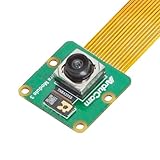
- High-Quality Image Sensor: This Raspberry Pi camera incorporates a back-illuminated and stacked 12-megapixel CMOS IMX...
- Wide-Angle Autofocus Lens: This imx708 Raspberry Pi V3 camera is equipped with a 120° diagonal field of view (DFOV...
- Enhanced HDR Mode: This Pi camera module supports High Dynamic Range (HDR) imaging with up to 3-megapixel output. HDR...
Capture every moment with clarity using the Arducam Raspberry Pi Camera Module 3. Equipped with a 12MP IMX708 sensor and a 120° wide-angle lens, it expands your Raspberry Pi projects by delivering sharp, vibrant images even in challenging light conditions. Its NoIR design removes the infrared cut filter, enhancing low-light and infrared photography.
The camera’s fast phase detection autofocus ensures crisp focus quickly, reducing motion blur in both photos and MP4 videos. Its enhanced HDR mode improves dynamic range for richer detail, though HDR images are output at a lower 3MP resolution. This module connects seamlessly via FPC cable to Raspberry Pi 5, 4, 3, and Zero 2 W models.
Maintenance is straightforward thanks to its compact, solid design. However, it is not water resistant, so extra care or protection is needed for outdoor or harsh environments. The module runs on Linux operating systems, which may require some technical familiarity.
Whether you’re developing surveillance, robotics, or creative imaging projects, this camera brings high-resolution and wide-angle versatility to your Raspberry Pi setup.
Best for: Raspberry Pi developers and hobbyists needing a versatile, high-quality camera module with wide-angle and low-light capabilities.
What We Like:
- Sharp 12MP images with speedy phase detection autofocus
- Wide 120° lens ideal for large scene capture
- No infrared cut filter enhances night and IR imaging
- Easy connection to multiple Raspberry Pi models
- Compact design simplifies installation and maintenance
Specification:
| Feature | Details |
|---|---|
| Manufacturer | Arducam |
| Sensor | 12MP Sony IMX708 CMOS |
| Lens Field of View | 120° diagonal |
| Compatibility | Raspberry Pi 5, 4, 3, Zero 2 W |
| Connection | FPC cable |
| Dimensions | Compact, fits standard Pi cams |
| Special Feature | NoIR (no infrared cut filter) |
Raspberry Pi Camera Module 3 (Camera Module 3)

- Back-illuminated, stacked CMOS 12-megapixel Sony IMX708 image sensor
- Phase Detection Autofocus (PDAF) for rapid autofocus
- HDR mode (up to 3 megapixel output)
The Raspberry Pi Camera Module 3 offers a powerful imaging solution for those needing precise, high-quality visuals. It tackles common challenges in Raspberry Pi projects by delivering sharp, clear images with reliable autofocus, ideal for detailed photography and video capture.
Its 12MP Sony IMX708 sensor with phase detection autofocus ensures your photos stay crisp and focused automatically. The camera captures smooth 1080p video at 50fps, making it suitable for real-time applications and high-definition recordings.
Designed with a compact build, it features a 75° field of view and an f/1.8 aperture that enhances performance in low-light environments. The inclusion of HDR mode helps balance exposure for clearer images in varying lighting conditions.
Connecting via a 200mm ribbon cable, this module integrates seamlessly with Raspberry Pi devices, though the wired connection may require careful setup in some projects. While it lacks water resistance and has a fixed aperture, its overall design supports straightforward maintenance and consistent performance.
Best for: Hobbyists and developers seeking a high-resolution, autofocus camera module for Raspberry Pi projects with excellent low-light and video capabilities.
What We Like:
- Sharp images with 12MP Sony IMX708 sensor and phase detection autofocus
- Smooth 1080p video capture at 50fps with HDR mode
- Compact design improves low-light shooting with a wide aperture and field of view
- Seamless integration with Raspberry Pi devices via ribbon cable
Specification:
| Feature | Details |
|---|---|
| Manufacturer | Raspberry Pi Foundation |
| Sensor | 12MP Sony IMX708 |
| Autofocus | Phase detection autofocus |
| Video Resolution | 1080p at 50fps |
| Field of View | 75° |
| Aperture | f/1.8 |
| Connection | 200mm ribbon cable |
| Dimensions | Compact (exact size not specified) |
| Weight | Not specified |
Arducam Raspberry Pi Camera Module 3 Wide IMX708
No products found.
The Arducam Raspberry Pi Camera Module 3 Wide IMX708 brings fast and accurate autofocus to your Raspberry Pi projects. Its hybrid PDAF and CDAF system solves focus challenges by locking onto subjects swiftly, ensuring clear images without delay. This makes it perfect for capturing moving objects or adjusting focus in changing scenes.
With a broad 120° field of view, this camera captures more of the environment in every shot. The high resolution of 4608 x 2592 pixels delivers sharp, detailed images, enhancing the visual quality of your projects. Its wide-angle perspective is ideal for surveillance, robotics, or creative imaging applications.
Designed for compatibility, it works seamlessly with several Raspberry Pi models including the latest Pi 5 and Pi Zero 2 W. The module supports HDR imaging to handle varied lighting conditions, improving image clarity and contrast in challenging environments. Setup is straightforward, aided by an online tutorial to simplify installation and configuration.
Maintenance is minimal but requires some initial configuration to optimize performance. The included 15 cm FFC cable is compact, which may limit placement options but keeps installations tidy and manageable. Overall, this camera module balances advanced imaging features with user-friendly design.
Best for: Raspberry Pi enthusiasts and developers who need a wide-angle, high-resolution camera with reliable autofocus for diverse imaging projects.
What We Like:
- Hybrid PDAF + CDAF system for rapid, precise focus
- Wide 120° field of view captures expansive scenes
- High resolution (4608 x 2592 pixels) enhances image detail
- Compatible with multiple Raspberry Pi models, including Pi 5
- Supports HDR for improved image quality in varied lighting
Specification:
| Feature | Details |
|---|---|
| Manufacturer | Arducam |
| Sensor Model | IMX708 |
| Field of View | 120° |
| Resolution | 4608 x 2592 pixels |
| Autofocus System | Hybrid PDAF + CDAF |
| Cable Length | 15 cm FFC |
| Compatible Raspberry Pi Models | Pi 5, Pi Zero 2 W, others |
Arducam IMX477 Pi HQ Camera with 6mm Lens

- Clear Images: This Arducam for Raspberry Pi HQ camera can reach up to 12.3MP and the max still resolution is 4056(H) x...
- CS Lens: This Pi camera comes with a 6mm focal length CS lens, there is no necessary to look for a CS camera for your HQ...
- Easy to Set Up: This camera comes with 2 cables, a 300mm 22-22pin cable for Raspberry Pi5/Zero, and a 300mm 15-22pin...
Capture stunning, detailed images with the Arducam IMX477 Pi HQ Camera, designed to elevate your Raspberry Pi projects. Its high-resolution 12.3 MP Sony sensor delivers crisp photos and smooth 1080p video, ideal for applications where clarity matters.
The camera’s manual focus and adjustable aperture up to f/1.2 allow precise control over lighting and sharpness. This flexibility helps you tailor image quality to various environments, from low-light robotics to detailed home security monitoring.
Designed to fit seamlessly with Raspberry Pi models including the latest Pi 5, it comes with essential cables and a 6mm CS-mount lens. Its compact, lightweight design makes it easy to integrate without adding bulk to your setup.
Maintenance is straightforward—just keep the lens clean and handle the camera gently, as it’s not water resistant. For outdoor use, additional protection is recommended to ensure durability.
Best for: Raspberry Pi enthusiasts and developers needing high-resolution imaging for robotics, security, or computer vision projects.
What We Like:
- Sharp 12.3 MP sensor delivering high-quality images
- Adjustable aperture and manual focus for precise image control
- Broad compatibility with Raspberry Pi models including Pi 5
- Compact and lightweight for easy integration
Specification:
| Feature | Details |
|---|---|
| Manufacturer | Arducam |
| Sensor | Sony IMX477, 12.3 MP |
| Resolution | 4056 x 3040 pixels |
| Video | 1080p |
| Lens | 6mm, CS-mount |
| Aperture | Adjustable up to f/1.2 |
| Compatibility | Raspberry Pi 5, 4B, earlier |
| Weight | Lightweight (exact weight not specified) |
| Dimensions | Compact (exact dimensions not specified) |
Arducam 4K IMX415 Low Light Raspberry Pi Camera Module

- Note1: Before Using: -Please use the Raspberry Pi system image released on or after May 6, 2025 -Please use kernel...
- 8.3MP Ultra HD Clarity: This Pi Camera features 8.3MP IMX415 sensor, which delivers detailed and sharp images with a...
- Low Light Performance: This Raspberry Pi camera benefits from its STARVIS IMX415 sensor, performs well in dim or...
Experience crystal-clear imaging even in the darkest settings with the Arducam 4K IMX415 Low Light Raspberry Pi Camera Module. This specialized camera is engineered to dramatically enhance image quality in low-light environments, ensuring your Raspberry Pi projects deliver sharp, vibrant visuals without compromise. Its powerful sensor captures both high-resolution stills and smooth 4K video, making it ideal for detailed photography and video applications.
Designed for seamless integration, the module works effortlessly with various Raspberry Pi models, including the latest Pi 5 and Zero. The factory-calibrated M12 wide-angle lens provides a broad field of view, although it is fixed and cannot be swapped out for customization. The camera supports the latest upstreamed libcamera drivers and requires a system image dated May 6, 2025, or later to function optimally.
Maintenance is straightforward thanks to internal flash memory that streamlines firmware updates. This reduces setup complexity and enhances long-term reliability. While the module offers advanced capabilities, users should note the limited six-month warranty and specific software prerequisites to ensure compatibility.
Best for: Developers and Raspberry Pi enthusiasts seeking high-resolution imaging with exceptional low-light performance for photography and 4K video projects.
What We Like:
- Superior low-light imaging with the Sony IMX415 STARVIS sensor
- Captures 8.3 MP stills and 4K video at up to 60fps
- Easy setup via upstreamed libcamera drivers and internal flash memory
- Compatible with Raspberry Pi Pi 5 and Zero models
- Compact design with a factory-calibrated wide-angle lens
Specification:
| Feature | Details |
|---|---|
| Manufacturer | Arducam |
| Sensor | Sony IMX415 STARVIS |
| Resolution | 8.3 Megapixels |
| Video Capability | 4K at 60fps |
| Lens | Fixed M12 wide-angle |
| Compatibility | Raspberry Pi (Pi 5, Zero) |
| Driver Support | Upstreamed libcamera |
| Software Requirement | Raspberry Pi system image May 6, 2025+ |
Arducam Raspberry Pi Camera Module 3 Wide IMX708

- Wide Compatibility: Compatible with all Raspberry Pi boards, including Raspberry Pi 5, Raspberry Pi 4B, Raspberry Pi 3B...
- HDR Image Sensor: This Arducam for Raspberry camera is based on a back-illuminated stacked CMOS 12-megapixel...
- Wide-angle M12 Lens: The V3 camera is equipped with a 120° (HFOV) wide-angle M12 lens, allowing for deeper depth of...
The Arducam Raspberry Pi Camera Module 3 Wide IMX708 is designed to provide creators with a versatile imaging solution that elevates Raspberry Pi projects. Its 12 MP back-illuminated CMOS sensor captures crisp, detailed images at 4608 × 2592 resolution, making it ideal for applications demanding high clarity.
This camera’s wide 120° field of view combined with a manual-focus M12 lens allows users to control focus precisely, reducing background blur and enhancing depth of field. This feature is particularly useful for developers seeking sharp, detailed shots without the distraction of bokeh.
Compatibility is seamless with all Raspberry Pi models via the CSI-2 interface, supporting popular software like Libcamera and Picamera2. The included 15 cm cable and manual-focus lens simplify setup, though users may need to fine-tune focus manually for optimal results.
Maintenance is straightforward, with a robust sensor and lens design that ensures consistent performance. However, the HDR mode outputs images at a reduced 3 MP resolution, which may limit use cases needing higher HDR detail.
Best for: Developers and creators who need a high-resolution, wide-angle camera with manual focus control for diverse Raspberry Pi projects.
What We Like:
- Sharp 12 MP sensor delivering high-resolution images.
- Wide 120° field of view with precise manual focus.
- Full compatibility with Raspberry Pi boards and software.
- Compact design with easy setup accessories.
Specification:
| Feature | Detail |
|---|---|
| Manufacturer | Arducam |
| Sensor Resolution | 12 MP (4608 × 2592 pixels) |
| Sensor Type | Back-illuminated CMOS |
| Lens | Manual-focus M12 |
| Field of View | 120° horizontal |
| HDR Mode Resolution | Up to 3 MP |
| Interface | CSI-2 |
| Cable Length | 15 cm |
| Compatibility | All Raspberry Pi boards |
Arducam Raspberry Pi Camera Module 3 Wide IMX708

- Compatible with all Raspberry Pi boards, Pi 4B/3B, Pi Zero W/2 W.
- Based on the IMX708 sensor with HDR, 4608 x 2592 is the highest resolution you can get for still images.
- The autofocus of pi cam v3 is achieved by a mixture of PDAF and CDAF, ensuring crisp and clear images.
Experience sharp, high-resolution imaging with the Arducam Raspberry Pi Camera Module 3 Wide IMX708. This camera enhances your Raspberry Pi projects by offering a wide 120° field of view, capturing more detail in every frame. It addresses the challenge of focusing delays with its fast PDAF autofocus, ensuring crisp and clear images for computer vision and image recognition tasks.
Designed to deliver stunning 12.06 MP still photos at 4608 x 2592 resolution, this compact module also records smooth 1080p videos in MP4 format. The sensor automatically adjusts exposure and white balance, reducing the need for manual tweaks. Its autofocus system combines PDAF and CDAF technologies for precise focus across varying distances.
Maintenance is straightforward thanks to its compatibility with all Raspberry Pi models and support for popular operating systems like Raspbian, Ubuntu, and Retropie. While it lacks image stabilization and water resistance, it’s ideal for controlled indoor environments and prototyping.
Best for: Developers and hobbyists who need a high-resolution, wide-angle camera with rapid autofocus for Raspberry Pi-based computer vision and video applications.
What We Like:
- Wide 120° field of view captures expansive scenes clearly
- Fast and accurate autofocus combining PDAF and CDAF
- High-quality 12.06 MP images and smooth 1080p video recording
- Broad compatibility with Raspberry Pi models and popular OS
- Automatic exposure and white balance for ease of use
Specification:
| Feature | Details |
|---|---|
| Manufacturer | Arducam |
| Sensor | Sony IMX708 |
| Resolution | 12.06 MP (4608 x 2592) |
| Video Format | 1080p MP4 |
| Field of View | 120° |
| Autofocus | PDAF + CDAF |
| Compatibility | All Raspberry Pi models |
| Supported OS | Raspbian, Ubuntu, Retropie |
| Dimensions | Compact module (exact size N/A) |
| Water Resistance | No |
Factors to Consider When Choosing a Camera Module for Raspberry Pi
When choosing a camera module for your Raspberry Pi, you’ll want to contemplate sensor resolution and whether autofocus or fixed focus suits your needs. Pay attention to the lens’s field of view and make sure the module is compatible with your specific Pi model.
Also, ponder the video capture capabilities to match your project requirements. It’s all about picking what fits best for what you want to do with your Pi. Don’t rush it—taking these factors into account will really pay off in the end.
Sensor Resolution Importance
Choosing the right sensor resolution plays a crucial role in getting the most out of your Raspberry Pi camera module. Higher megapixels mean more detail and larger printable or croppable areas, but they don’t inherently improve low-light performance.
Keep in mind that video output resolution often differs from sensor megapixels; many high-res sensors still output standard 1080p or 4K video at fixed frame rates. Increasing resolution on a fixed sensor size shrinks pixel size, which can reduce image quality in low light.
Match resolution to your needs: machine vision and OCR benefit from higher resolution, while streaming favors lower resolution for smoother frame rates and less bandwidth. Also, higher resolutions demand more storage and processing power, so balance quality with your system’s capabilities.
Autofocus Vs Fixed Focus
Sensor resolution sets the stage for image detail, but focus type shapes how sharp that detail appears across your scene.
If you work with moving subjects or varying distances—like robotics or wildlife—autofocus is your best bet. It actively adjusts the lens for crisp shots but adds mechanical complexity, power use, and slight focus delays.
Fixed-focus modules, set to a hyperfocal distance, keep most of the scene acceptably sharp without those drawbacks. This makes them ideal for static scenes such as timelapses or fixed surveillance.
Autofocus also lets you use larger apertures for subject isolation, improving low-light and high-res shots. Meanwhile, fixed-focus often relies on smaller apertures or wide lenses for uniform sharpness.
Lens Field of View
Because your camera’s field of view (FOV) defines how much of a scene you capture, it plays a pivotal role in selecting the right lens for your Raspberry Pi module. FOV is the angular extent your lens captures, usually measured diagonally or horizontally, like 75° diagonal or 66° horizontal.
If you want wide coverage, choose lenses with a 90–120° FOV—they’re great for surveillance or action shots but can introduce distortion and reduce detail at a distance. For sharper detail and less distortion, go with narrower FOV lenses between 30–60°, ideal for telephoto or inspection tasks.
Compatibility With Pi Models
When selecting a camera module for your Raspberry Pi, you’ll need to make sure it physically and electronically fits your specific Pi model. Start by checking the camera interface type—most use a CSI‑2 ribbon cable—but pin counts and connector sizes vary.
For example, the Pi Zero’s smaller port often requires an adapter or a different cable length. Verify that your Pi’s operating system and drivers support the camera module, since some need specific kernel updates or firmware.
Also, make certain your Pi has enough processing power and memory to handle the camera’s resolution and frame rates. If you plan to use multiple cameras or a compute module, confirm your Pi exposes multiple CSI ports or supports device tree overlays to select between cameras.
These checks help avoid compatibility headaches before you buy. It’s always better to double-check now than run into issues later!
Video Capture Capabilities
Consider your video capture needs carefully before choosing a Raspberry Pi camera module. Check the maximum video resolution and frame rates, such as 1080p at 30–60fps or 4K at 30fps, to make sure you get the quality and smoothness you want.
Don’t forget to verify supported video formats and codecs like MP4, MOV, H.264, or HEVC. These influence file size, editing ease, and playback compatibility, so they’re pretty important to consider.
Also, look for features that help with dynamic scenes: global shutter reduces motion blur, HDR preserves detail, and fast exposure control keeps images sharp.
Finally, confirm your Pi’s interface bandwidth and software can handle the module’s data output. This helps avoid dropped frames or lag during recording, which can be a real pain.
Low-Light Performance Features
If you want clear images in dim conditions, choosing a camera module with strong low-light performance is essential. Look for larger sensor formats like 1/2.3″ or bigger with pixel sizes of at least 1.4 µm, as they gather more light per pixel and reduce noise.
Opt for back-illuminated (BSI/STARVIS) or stacked CMOS sensors. These boost quantum efficiency and lower noise compared to traditional front-illuminated designs.
Fast optics with a low f-number (f/1.8 or faster) allow more light, enabling shorter exposures and less motion blur. Prioritize sensors with high native ISO, low read noise, and strong signal-to-noise ratios for better results in low light.
Additionally, features like HDR processing, hardware noise reduction, and RAW10/12 support on the sensor or ISP help maintain detail and minimize artifacts in dark scenes. These extras really make a difference when lighting is tough.
Software and Driver Support
Why does software and driver support matter so much for your Raspberry Pi camera module? Without proper support, your hardware won’t work as expected, or at all. You need to confirm native kernel and libcamera support for your sensor, ensuring drivers are upstreamed or compatible with your Linux kernel version.
Check that your preferred control libraries—like libcamera, Picamera2, MMAL, or OpenCV—explicitly support key features such as autofocus and HDR. Also, verify if firmware, device-tree overlays, or config.txt tweaks are required and well-documented.
Look for available example code, SDKs, and solid documentation matching your OS image, so integration is seamless. Finally, confirm ongoing driver maintenance and active community involvement to avoid future compatibility issues with OS updates.
Frequently Asked Questions
How Do I Connect a Raspberry Pi Camera Module to My Computer?
You connect your Raspberry Pi camera module to the Pi itself, not directly to your computer.
Then, access the Pi remotely via SSH or VNC to view or transfer images to your computer easily.
It’s pretty straightforward once you get the hang of it! Just make sure your Pi is set up and connected to the same network as your computer.
Can Raspberry Pi Camera Modules Be Used for Video Conferencing?
You can absolutely use Raspberry Pi camera modules for video conferencing—they’re like your digital eyes, streaming clear visuals.
Just connect, configure software like Zoom or Skype, and you’re ready to chat face-to-face effortlessly. It’s pretty straightforward once you get everything set up.
What Software Is Recommended for Editing Images From Raspberry Pi Cameras?
You should try software like GIMP or Darktable for editing Raspberry Pi camera images. Both are user-friendly, open-source, and powerful.
You can also use Python libraries like OpenCV if you want to automate or customize editing tasks. It’s a great way to get more control over your image processing.
Are There Any Waterproof Cases Available for Raspberry Pi Camera Modules?
You’re in luck—some camera cases offer “weather-resistant charm.”
Yes, you can find waterproof cases specially designed for Raspberry Pi camera modules. They ensure your gear stays dry and functional even under challenging outdoor conditions.
How Do I Troubleshoot a Raspberry Pi Camera Module That Won’T Start?
You should first check your connections and make sure everything is plugged in correctly. Then, enable the camera in your Raspberry Pi settings to allow it to function.
Next, update your software to the latest version to avoid any compatibility issues. After that, test the camera with a simple command to see if it starts.
If it still won’t start, try rebooting your Pi. Sometimes, a quick restart can fix minor glitches.
And if that doesn’t help, try using a different camera ribbon cable. Faulty cables can often be the culprit.
Conclusion
Choosing the right Raspberry Pi camera module is like picking the perfect lens for your adventure. Just like a hiker trusts their compass, you’ll trust your camera to capture every detail—whether it’s the crisp 12MP autofocus or the impressive low-light 4K.
Remember, even a pro photographer started with a simple snap. So, pick a module that fits your journey and watch your projects come to life in stunning clarity.
When selecting the best Raspberry Pi camera module, consider what matters most to you—resolution, autofocus, or low-light capability. With options ranging from basic to advanced 12MP sensors, there’s something for every maker and photographer.
In 2027, the camera modules available for Raspberry Pi are more versatile and powerful than ever. Choosing wisely means your Raspberry Pi projects will benefit from sharp images and reliable performance, whether for DIY photography, surveillance, or robotics.