5 Best Camera Settings for Beach Photos to Try in 2027
For stunning beach photos in 2027, getting your camera settings right is key. Start by setting your ISO low, around 100 to 200. This helps keep your highlights crisp, especially on bright sand and sparkling water. You want those details to pop without any unwanted noise.
Next, use an aperture between f/8 and f/16. This range is perfect for sharp landscapes, ensuring everything from foreground to background stays in focus. Pair this with a fast shutter speed, somewhere between 1/500 and 1/2000 seconds, to freeze motion like crashing waves or flying seabirds.
Don’t forget autofocus tracking—it’s a lifesaver for capturing moving subjects smoothly and without blur. A circular polarizer filter works wonders too; it cuts down glare and boosts the rich blues of the sky and sea.
Lastly, adjust your white balance to warmer tones during golden hours to add that magical glow to your shots.
Keep these beach photography tips handy, and you’ll find yourself creating breathtaking images every time you visit the shore. Give them a try, and watch your beach photos come to life!
| Image | Name | Editor's Rating | Price |
|---|---|---|---|

|
|
||

|
|
||
|
|
||

|
|
||

|
|
Photography Cheat Sheet for DSLR Camera Beginners
- Comprehensive Guide for Nikon, Canon, and Sony DSLRs:This 30-page photography guide is specifically designed for DSLR...
- Easy-to-Use Reference for Every Shooting Situation:Covering exposure, shooting modes, composition, and lighting, this...
- Compact and Portable Design – Ideal for On-the-Go Use:Measuring just 4×3 inches, this durable cheat sheet fits...
Master your DSLR camera settings effortlessly with the Photography Cheat Sheet for DSLR Camera Beginners. This compact guide is designed to simplify complex photography concepts, helping you capture stunning images with confidence. It breaks down exposure, shooting modes, composition, and lighting into easy-to-follow steps, making manual mode accessible even for novices.
Its durable, pocket-sized design fits conveniently into your camera bag. The included metal carabiner allows quick attachment to your gear, so you always have handy guidance at your fingertips. This cheat sheet is especially useful for beach photography, where lighting and conditions can change rapidly.
Maintaining the guide is simple—its sturdy construction resists wear and tear during outdoor shoots. While tailored for DSLR users, it works across Canon, Nikon, and Sony models, ensuring broad compatibility. Keep this resource close to improve your skills and achieve consistent, professional-quality shots.
Best for: Beginner DSLR photographers seeking a practical, on-the-go reference to master manual settings and improve their photography skills.
What We Like:
- Compact, durable design with metal carabiner for easy portability.
- Clear, color-coded cheat sheets that simplify key photography concepts.
- Versatile use for beach, portrait, landscape, and action photography.
- Compatible with Canon, Nikon, and Sony DSLR cameras.
Specification:
| Feature | Details |
|---|---|
| Manufacturer | Not specified |
| Dimensions | 4 × 3 inches |
| Weight | Not specified |
| Material | Durable laminated cardstock |
| Color Options | Multicolor (16 color-coded sheets) |
DSLR/Mirrorless Photography Cheat Sheets Credit Card Size
- 📷 QUICK PHOTOGRAPHY REFERENCE CARDS - Printed on PVC plastic making them waterproof and durable.
- 📷 EASY TO UNDERSTAND – Quick, easy reference for aperture, shutter speed, ISO, white balance, ND filters, and flash...
- 📷 BEGINNING, INTERMEDIATE & ADVANCED PHOTOGRAPHERS – these cheat sheets are appropriate for all levels of...
Unlock the full potential of your DSLR or mirrorless camera with this compact Photography Cheat Sheet. Designed to provide quick, reliable guidance, it helps you master manual settings like aperture, shutter speed, ISO, and white balance without slowing your shoot.
Its credit card size makes it easy to carry in your wallet or camera bag, ensuring you have instant access to essential exposure tips whenever you need them. The durable, waterproof PVC material means it withstands beach trips and outdoor shoots without damage.
This cheat sheet supports all camera brands and models, including Nikon, Canon, Sony, and film cameras. It even includes ND filter calculations, simplifying complex adjustments so you can capture stunning images with confidence.
Maintenance is simple: just wipe clean with a damp cloth to keep it clear and readable. While it’s a helpful quick-reference tool, it’s best paired with in-depth learning resources for a complete photography education.
Best for: photographers at any skill level who want a straightforward, portable guide to manual camera settings on the go.
What We Like:
- Compact, durable, and waterproof for use anywhere
- Covers key settings and ND filter calculations
- Compatible with all major camera brands
- Easy to clean and maintain
- Ideal for quick reference during shoots
Specification:
| Feature | Details |
|---|---|
| Manufacturer | Not specified |
| Dimensions | Credit card size |
| Weight | Lightweight |
| Material | Waterproof PVC |
| Color Options | Not specified |
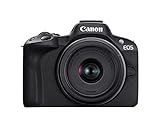
Canon EOS R50 Mirrorless Camera RF-S18-45mm F4.5-6.3 is STM Lens Kit
- High Image Quality: Canon EOS R50 4K digital camera features a 24.2 Megapixel CMOS (APS-C) sensor and DIGIC X processor...
- High-Speed Continuous Shooting: Capture fast action with up to 12 fps with Electronic First Curtain shutter and up tp...
- Advanced Auto Focus: Dual Pixel CMOS AF II covers up to 100% x 100% area with 651 AF zones; features auto subject...

Experience effortless beach photography with the Canon EOS R50 Mirrorless Camera paired with the RF-S 18-45mm F4.5-6.3 IS STM lens kit. This setup helps you capture sharp, vibrant images without bulk, making it ideal for spontaneous moments by the sea. Its compact design means you can carry it all day without fatigue.
The camera’s 24.2 MP APS-C sensor combined with the DIGIC X processor ensures stunning image quality, even in challenging light. The versatile 18-45mm zoom lens covers a range from wide-angle landscapes to close-up portraits, solving the problem of switching lenses during active shoots. Built-in image stabilization keeps your shots steady, while the articulating touchscreen offers flexible framing from any angle.
Fast continuous shooting up to 15 frames per second and Dual Pixel CMOS AF II autofocus let you track moving subjects like crashing waves or playful kids with ease. Maintenance is straightforward, with a single memory card slot and manageable battery life suited for typical day outings. However, the lens’s narrower aperture limits low-light performance, and 60-minute video recording may require breaks during extended sessions.
Best for: Enthusiasts and content creators who want a lightweight, versatile mirrorless camera for travel, vlogging, and vibrant beach photography.
What We Like:
- Sharp 24.2 MP sensor with powerful DIGIC X processing
- Smooth autofocus and fast burst shooting for action shots
- Lightweight design with flexible zoom and image stabilization
- Articulating touchscreen enhances creative composition
Specification:
| Feature | Details |
|---|---|
| Manufacturer | Canon |
| Dimensions | Compact, lightweight |
| Weight | Lightweight (exact weight not specified) |
| Sensor | 24.2 MP APS-C |
| Lens | RF-S 18-45mm F4.5-6.3 IS STM |
| Video Recording | Up to 4K, max 60 minutes |
| Memory Card Slot | Single slot |
| Image Stabilization | Built-in |
| Screen | Articulating touchscreen |
Canon EOS RP Mirrorless Camera RF24-105mm Lens F4-7.1 is STM Lens Kit
- Compact, Lightweight and High-Quality RF Lens with a Versatile Zoom Range of 24-105 millimeter
- Optical Image Stabilization at up to 5 stops of shake correction
- Maximum Magnification of 0.4x and Minimum Focusing Distance of 0.66 feet in Auto Focus.
Capture your beach adventures with the Canon EOS RP Mirrorless Camera paired with the RF24-105mm STM Lens Kit. This setup delivers sharp, vibrant images without the bulk of traditional cameras. Its full-frame 26.2 MP sensor and DIGIC 8 processor ensure every detail is crisp, bringing your beachscapes and close-ups to life.
The versatile 24-105mm lens adapts smoothly from wide views to detailed shots. Optical image stabilization helps reduce blur, making your photos steady even in windy or uneven conditions. Fast and quiet autofocus with 4779 AF points lets you catch waves, wildlife, or fleeting moments with ease.
Designed for portability, the camera is compact and lightweight, perfect for travel and outdoor use. While the variable aperture (F4-7.1) may challenge low-light shooting at longer zooms, the lens stabilization compensates well. Maintenance is straightforward, but note that only one SD card slot supports up to 64GB, which could limit longer sessions.
This mirrorless system balances functionality and ease, ideal for those wanting quality beach photography without cumbersome gear.
Best for: Enthusiasts and travelers seeking a lightweight, full-frame mirrorless camera with flexible zoom and reliable image stabilization for outdoor photography.
What We Like:
- Compact, lightweight design enhances portability
- Versatile 24-105mm zoom with optical image stabilization
- Fast, smooth autofocus with 4779 AF points
- 4K video recording for high-quality motion capture
Specification:
| Feature | Details |
|---|---|
| Manufacturer | Canon |
| Camera Sensor | Full-frame 26.2 MP |
| Lens | RF24-105mm F4-7.1 STM |
| Image Processor | DIGIC 8 |
| Autofocus Points | 4779 |
| Video Resolution | 4K |
| Weight | Approx. 485 g (1.07 lb) |
| Card Slot | Single SD (up to 64GB) |
Canon EOS R10 Mirrorless Camera Lens Kit
- DIGIC X IMAGE PROCESSOR: Enhances performance for sharp photos and ultra-high definition videos
- CMOS SENSOR: Canon’s 24.2 MP APS-C CMOS sensor ensures images appear crisp
- LENS COMPATIBILITY: Pair with a Canon RF-S/RF lens (or EF/EF-S lens using the Mount Adapter EF-EOS R (1) ) for stellar...
Capture stunning beach moments effortlessly with the Canon EOS R10 Mirrorless Camera Lens Kit. Designed for photographers who value portability, this kit combines a lightweight body with a versatile 18-45mm lens. It solves the hassle of carrying bulky gear while maintaining excellent image quality.
The 24.2 MP APS-C sensor paired with the DIGIC X processor delivers sharp photos and smooth 4K video. Its 651-point Dual Pixel CMOS AF II ensures quick and accurate focus, even on moving subjects. This precision helps you nail every shot at the beach or outdoors.
The camera’s compact design and tilting touchscreen allow flexible shooting angles, making it easier to frame creative shots. Lens-based image stabilization keeps your photos steady, though low-light shooting might require care due to the lens’s narrower aperture. Maintenance is simple: keep the lens clean and store the camera in a dry case to ensure long-term performance.
Connectivity via Wi-Fi and Bluetooth simplifies sharing your vibrant beach photos instantly. While it lacks in-body stabilization and has a max shutter speed of 1/4000 sec, this kit remains a practical solution for enthusiasts prioritizing mobility and quality.
Best for: Enthusiasts and semi-professional photographers seeking a lightweight, versatile mirrorless camera kit ideal for capturing high-quality beach and outdoor images with ease.
What We Like:
- Sharp 24.2 MP APS-C sensor with DIGIC X processor for clear photos and 4K video.
- Fast, precise 651-point Dual Pixel CMOS AF II autofocus with good subject tracking.
- Compact design with versatile 18-45mm lens and tilting touchscreen for flexible shooting.
- Lens-based image stabilization helps reduce blur in handheld shots.
- Easy Wi-Fi and Bluetooth connectivity for quick photo sharing.
Specification:
| Feature | Details |
|---|---|
| Manufacturer | Canon |
| Sensor Resolution | 24.2 MP |
| Sensor Type | APS-C |
| Lens Included | 18-45mm image-stabilized |
| Autofocus Points | 651-point Dual Pixel CMOS AF II |
| Video Resolution | 4K |
| Shutter Speed Max | 1/4000 sec |
| Image Stabilization | Lens-based |
| Screen Type | Tilting touchscreen |
| Connectivity | Wi-Fi, Bluetooth |
| Dimensions (W×H×D) | Approx. 5.0 × 3.9 × 2.6 in (12.7 × 9.9 × 6.6 cm) |
| Weight | Approx. 429 g (0.95 lb) |
Factors to Consider When Choosing Camera Settings for Beach Photos
When shooting at the beach, you’ll need to adjust your camera settings based on lighting conditions and exposure balance. Pay close attention to white balance to keep colors natural.
Choose your aperture and shutter speed to capture the scene just right. These factors will help you get sharp, well-exposed photos every time.
It might take a little experimenting, but once you find the right settings, your beach shots will look amazing!
Lighting Conditions Impact
Because beach lighting varies so much throughout the day, you’ll need to adjust your camera settings carefully to capture the best shots. Midday sun is harsh, so use a fast shutter speed (1/500s or faster) and low ISO to avoid blown highlights.
During golden hour, the warm, soft light lets you open the aperture (f/2.8–f/8) and slow the shutter for richer colors and flattering tones. Overcast skies diffuse light, allowing longer exposures or higher ISO to keep detail in shadows and highlights.
Backlighting near the horizon creates rim light but risks lens flare—expose for your subject and consider fill flash. Reflections from sand and water brighten scenes and cool colors, so set custom white balance or warm up skin tones by +0.5 to +1.0 in-camera.
Exposure Settings Balance
Although bright beach sunlight can challenge your exposure settings, you can freeze motion by choosing a faster shutter speed between 1/500 and 1/2000 seconds. Just adjust aperture or ISO to keep the brightness just right.
For landscapes, stop down to f/8–f/11 to maximize depth of field. Keep ISO low (100–200) to get the best dynamic range.
When your subject is backlit, use spot or center-weighted metering. Add +1 to +2 EV exposure compensation or use fill flash to avoid those annoying silhouettes.
To capture sunbursts or protect highlights when shooting toward the sun, pick a small aperture like f/16–f/22 and lower your ISO. Then, bump up the shutter speed accordingly.
For golden hour or low-light beach scenes, open up your aperture (f/2.8–f/5.6). Keep shutter speed above the reciprocal of your focal length and raise ISO as needed to prevent motion blur.
White Balance Adjustment
In adjusting white balance for beach photos, you’ll want to counteract the cool blue tones cast by the sky and water to keep skin tones looking natural. Set your white balance to “Cloudy” or add +200 to +600K warmth to offset those cool hues.
When sunlight is strong and reflective, use a custom white balance by metering off a neutral gray or white card in the same light for accurate color. Shooting in RAW? Start with a neutral white balance and fine-tune Kelvin between 5200K and 6500K during editing to balance warm sand and cool highlights.
Be mindful of mixed lighting—take spot measurements on your subject’s skin to avoid color casts. During golden hour, dial white balance slightly warmer (+300 to +800K) to preserve the sunset’s warm tones without overexposing highlights.
Aperture Choice Effects
Mastering aperture settings can transform your beach photos by controlling depth of field and exposure. For sweeping beach landscapes, use a narrow aperture like f/8 to f/16 to keep both the sand and horizon crisp.
If you’re shooting portraits, opt for a wider aperture between f/2.8 and f/5.6 to blur distracting backgrounds and make your subject pop, while keeping their eyes sharp.
When the midday sun is blazing, stop down to f/11 or f/16 to reduce exposure and create attractive starburst effects on water reflections. Just be cautious not to go beyond f/16–f/22, as diffraction can soften details.
Finally, balance your aperture with shutter speed and ISO—for instance, pair f/8 with 1/500s and ISO 100 for sharp handheld shots in bright conditions. It’s all about finding that perfect combo!
Shutter Speed Selection
When capturing beach scenes, choosing the right shutter speed lets you control motion and sharpness effectively. To freeze fast action like crashing waves or kids jumping, set your shutter speed between 1/1000s and 1/2000s to eliminate motion blur.
For silky smooth water effects, use long exposures from 1/4s to 2s or more, but make sure to stabilize your camera on a tripod. When shooting handheld, keep your shutter speed at least as fast as the reciprocal of your focal length—like 1/200s for a 200mm lens—to avoid camera shake.
In bright beach light, you can safely use very fast speeds (1/2000s–1/8000s) with low ISO and moderate apertures. And for golden hour portraits, aim for a shutter speed around 1/250s–1/500s to freeze subtle motion while keeping that nice shallow depth of field.
ISO Sensitivity Setting
Balancing shutter speed with ISO sensitivity helps you capture sharp, well-exposed beach photos without unwanted noise. On bright, sunny beaches, stick to the lowest ISO possible—usually 100 to 200—to maximize image quality and keep noise minimal.
When shooting during golden hour, cloudy conditions, or fast action, increase ISO modestly to 400–800 to maintain shutter speeds that freeze motion. It’s a simple way to keep your shots crisp without adding too much grain.
For sunrise or sunset long exposures with narrow apertures, keep ISO at 100 to allow longer shutter times without adding noise. This helps you get those beautiful, smooth images with great detail.
Avoid raising ISO above 1600, as it reveals noise and reduces dynamic range. If you need to recover highlights from bright sand or water, lower ISO first and adjust aperture or shutter speed instead. Higher ISO settings limit highlight retention and overall image quality, so it’s best to keep it down when possible.
Composition Techniques Tips
Although camera settings are essential, your composition plays an equally important role in creating striking beach photos. Place the horizon on the top or bottom third of the frame to add depth and avoid a flat look.
Use leading lines like shoreline curves or footprints to guide the viewer’s eye into the scene. Including a strong foreground element—like a shell or driftwood—that takes up about one-quarter to one-third of the frame adds scale and dimension.
Shooting low to the ground exaggerates foreground interest and highlights reflections or waves, especially during golden hour. Try framing your subjects against open water or sky to isolate them, which emphasizes shape and motion while keeping the background clean.
These techniques guarantee your images are dynamic and visually engaging. Give them a shot next time you’re out at the beach!
Lens and Filters
Picking the right lens and filters can make or break your beach photos. Use a wide-angle lens (16–35mm) to capture vast scenes and highlight foreground details.
If you want to isolate distant subjects like surfers or birds, switch to a 50–200mm telephoto lens. For dramatic close-ups, choose lenses with short minimum focus distances to get sharp foregrounds against a blurred background.
Attach a circular polarizing filter to cut glare from wet sand and water, deepen blues, and boost color saturation—just remember it reduces light by 1–2 stops.
When shooting long exposures in bright daylight, use a 3–6 stop neutral density filter to blur waves without overexposure.
Finally, prioritize weather-sealed lenses or protective gear to shield your gear from sand and salt. And don’t forget to clean your optics gently afterward.
Frequently Asked Questions
How to Protect My Camera From Sand and Saltwater at the Beach?
You should use a waterproof camera case or seal your camera in a plastic bag with a clear front. Keep a microfiber cloth handy to wipe off sand and saltwater quickly, and avoid changing lenses near the beach.
It’s a good idea to keep your camera in a safe spot when you’re not using it. Sand and saltwater can be super tough on your gear, so taking these small steps really helps protect it.
What Time of Day Is Best for Beach Photography Lighting?
You’ll get the best beach lighting during golden hour—just after sunrise or before sunset—when 75% of photographers say colors pop most vibrantly.
So, plan your shoot early or late to capture warm, soft, stunning images.
Trust me, those times really make a difference in your photos!
Can Drone Photography Enhance Beach Photo Compositions?
Yes, drone photography can enhance your beach compositions by capturing unique aerial perspectives. It showcases patterns in sand and water, giving you views you just can’t get from the ground.
Plus, drones provide dynamic angles that add creativity and depth to your shots. It’s a fun way to mix up your photography and really make your beach photos stand out.
How to Capture Motion Effects Like Waves and Moving Clouds?
Did you know 85% of stunning wave photos use slow shutter speeds? To capture motion like waves and clouds, set a shutter speed between 1/4 to 2 seconds.
Use a tripod to keep your camera steady. Also, try shooting during the golden hour for dramatic effects. It really brings the scene to life!
What Post-Processing Tips Improve Beach Photos’ Colors and Contrast?
You should boost vibrance and adjust contrast gently to enhance colors without overdoing it. Use graduated filters to balance skies and sand, and sharpen details slightly to make your beach photos pop beautifully.
Try not to go too heavy on the edits, though—it’s all about keeping things natural. A little tweak here and there can really bring your shots to life without making them look fake.
Conclusion
Think of your camera as a seasoned sailor piloting the vast ocean of light and color at the beach. By mastering the right settings, you’re steering your ship through waves of glare, shadows, and reflections to capture treasures hidden beneath the surface.
Just like a sailor trusts their compass, trust your camera’s settings to guide you. With practice, you’ll turn every beach photo into a vibrant voyage worth remembering.
Ready to set sail? Using the best camera settings for beach photos in 2027 will help you capture stunning images with perfect exposure, sharp focus, and vivid colors. Experiment with ISO, aperture, and shutter speed to control light and detail. Don’t forget to adjust white balance to keep your shots true to life. Whether you’re shooting sunrise, midday, or sunset, these settings will elevate your beach photography to new heights. So grab your camera, hit the shore, and start snapping photos that bring the beauty of the beach to life!