1 Best Camera Settings for Capturing Stunning Sunsets in 2027
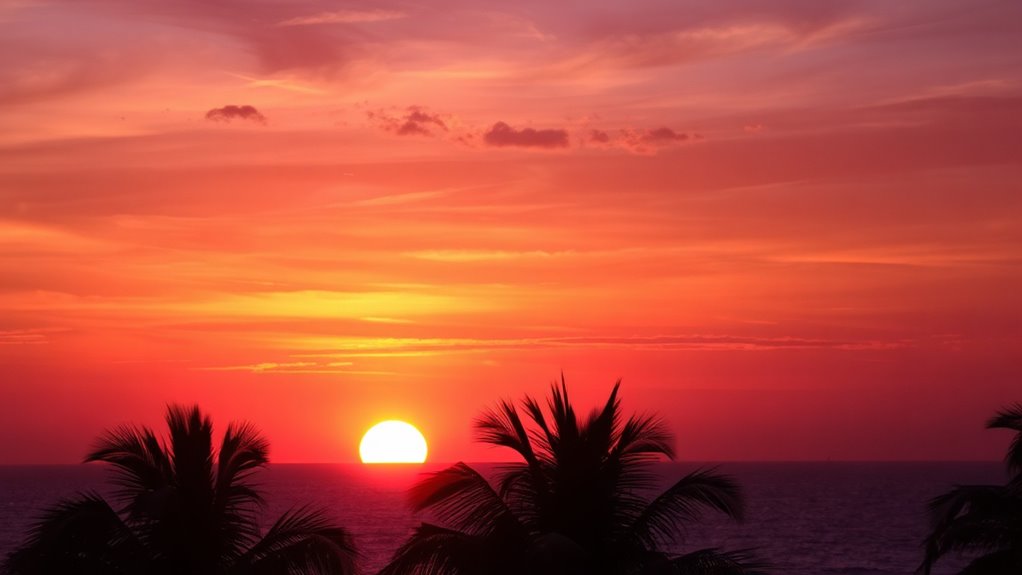
To capture stunning sunsets in 2027, start by setting your ISO low (100–200) to keep colors vivid and noise minimal. Choosing the right camera settings is key to capturing those breathtaking sunset moments that everyone loves. A low ISO helps maintain image quality and prevents unwanted graininess in your photos.
Next, pick a mid-range aperture like f/8 to f/11 for sharp detail and a balanced depth of field. This range keeps your entire scene crisp without losing that beautiful background blur.
Use a shutter speed that properly exposes the scene—around 1/30s to 1/125s depending on the light. Don’t forget to bracket ±1 EV to make sure you nail the perfect highlights.
Set your white balance to “Cloudy” or manually adjust it around 6000–7000K for warm tones. This gives your sunset photos that rich, golden glow everyone adores. Keep experimenting with these settings, and you’ll soon master capturing even more vibrant sunset shots!
| Image | Name | Editor's Rating | Price |
|---|---|---|---|

|
|
Photography Cheat Sheet for DSLR Camera Beginners
- Comprehensive Guide for Nikon, Canon, and Sony DSLRs:This 30-page photography guide is specifically designed for DSLR...
- Easy-to-Use Reference for Every Shooting Situation:Covering exposure, shooting modes, composition, and lighting, this...
- Compact and Portable Design – Ideal for On-the-Go Use:Measuring just 4×3 inches, this durable cheat sheet fits...
Capture breathtaking sunsets with ease using the OCQOTAT Photography Cheat Sheet. This compact guide helps DSLR beginners quickly master essential camera settings like exposure and manual mode. Instead of fumbling through menus, you get instant access to clear instructions that improve your shots right away.
Designed for convenience, the 30-page set features 16 double-sided, color-coded cheat cards. These durable, pocket-sized cards cover key topics including shooting modes, lighting, and composition. Whether you use Nikon, Canon, or Sony, this tool offers quick references that help you confidently adjust settings on the fly.
Maintaining the cheat sheet is effortless—its sturdy build and metal carabiner mean you can clip it to your camera bag or belt for easy access. This keeps your focus on capturing stunning images rather than recalling complex settings.
While perfect for beginners and intermediate photographers, it may not satisfy advanced users seeking deeper technical details. The small size might also challenge those with visual impairments. Still, for DSLR users wanting a portable, practical guide, this cheat sheet is a valuable companion.
Best for: DSLR beginners and intermediate photographers using Nikon, Canon, or Sony who want a handy tool to improve camera settings and photography skills.
What We Like:
- Compact and durable with metal carabiner for easy portability
- Clear, color-coded cards simplify exposure, manual mode, and composition
- Covers a broad range of topics tailored to common shooting scenarios
- Quick reference format reduces learning curve and boosts confidence
Specification:
| Feature | Description |
|---|---|
| Manufacturer | OCQOTAT |
| Dimensions | 4 × 3 inches |
| Weight | Lightweight (approx.) |
| Material | Durable laminated cardstock |
| Color Options | Multi-color (for coding) |
Factors to Consider When Choosing Camera Settings for Capturing Sunset
When capturing a sunset, you’ll want to balance your exposure settings carefully to preserve those rich colors. Choosing the right white balance and ISO sensitivity can make a big difference in how your image turns out.
Don’t forget to adjust your aperture and shutter speed to control depth of field and motion blur perfectly. It’s all about finding the right combination that suits the mood you want to create. Play around a bit, and you’ll get the hang of it quickly!
Exposure Settings Essentials
Although sunsets offer stunning colors and contrasts, choosing the right exposure settings is essential to capture their full beauty. Start with a low ISO, around 100–200, to reduce noise and keep colors vivid.
Stop down your aperture to f/8–f/16; this sharpens detail and creates attractive sunstars when the sun peeks through. Meter for the highlights using spot or center-weighted metering on the brightest sky area, or dial in -1 to -2 EV exposure compensation to avoid blown-out highlights and preserve color gradients.
If you want smooth water or motion blur, use shutter speeds from 1/30s to several seconds on a tripod. Make sure to employ a remote or timer to prevent shake.
Finally, bracket exposures by ±1 to ±2 EV, shooting 3–5 frames to capture full dynamic range for blending or HDR. This way, you won’t miss any detail in the shadows or highlights.
White Balance Choices
Adjusting exposure settings sets the foundation for capturing a sunset’s mood, but controlling the colors often comes down to your white balance choice.
For warmer tones that highlight reds and oranges, set your white balance to “Cloudy” or “Shade,” typically between 6000 and 7500K. If you want more control later, shoot in RAW and adjust white balance during post-processing to avoid quality loss.
When working on a time-lapse or sequence, use a custom Kelvin setting around 5400–7000K to keep colors consistent despite changing light. Avoid relying on auto white balance—it can shift colors abruptly during sunset, creating inconsistencies in panoramas or timelapses.
Alternatively, “Daylight” at about 5200K offers a balanced, natural look without over-saturating warm hues. This setting is great if you want a more straightforward approach without fussing over adjustments.
ISO Sensitivity Tips
A few key ISO sensitivity tips can make a big difference in capturing vibrant, noise-free sunsets. Start with a low ISO (100–200) to minimize noise and preserve rich color gradients, especially if you’re using a tripod.
When shooting handheld in low light, gradually increase ISO (400–800) to keep shutter speeds at or above 1/(focal length) and avoid motion blur. For long exposures that smooth water or clouds, keep ISO at its base to allow longer shutter times without amplifying noise.
Always use the lowest ISO that lets you achieve your desired aperture and shutter speed for proper exposure. Check your histogram to monitor highlights and shadows, increasing ISO only as needed to prevent underexposure.
Aperture Selection Guide
Choose your aperture carefully to capture the full beauty of a sunset scene. For vibrant colors and sharpness, stick to mid-range apertures between f/5.6 and f/11.
If you want both the foreground silhouettes and distant horizon sharp, go smaller, around f/11 to f/16. Just watch out for a slight sharpness loss due to diffraction.
Open wider at f/2.8 to f/4 if you need a shallow depth of field or faster shutter speeds to freeze motion like waves or people in low light.
When aiming for starburst effects near the sun, stop down to f/11–f/16 and use a tripod to avoid blur.
And hey, if you’re bracketing for HDR, keep your aperture constant. That way, you’ll maintain consistent depth of field across your shots.
Shutter Speed Considerations
When capturing sunsets, shutter speed plays a crucial role in controlling motion and exposure. For handheld shots, start with speeds between 1/60 and 1/250 seconds to avoid camera shake. Use faster speeds for telephoto lenses by following the reciprocal rule.
If you use a tripod, slow down the shutter speed to 1/30 seconds or longer. This helps smooth water, blur clouds, or create light trails while keeping ISO low and aperture small.
Balance shutter speed with aperture and ISO to maintain proper exposure. Long exposures (1 second or more) work best with ISO 100–200 to reduce noise.
To freeze action like birds or waves, choose faster speeds between 1/250 and 1/2000 seconds. Or slow it down to 1/15–1/60 seconds for some creative motion blur.
Also, consider exposure bracketing with varied shutter speeds to capture the dynamic range at sunset. It’s a great way to get the perfect shot in tricky lighting.
Frequently Asked Questions
What Are the Best Smartphone Apps for Editing Sunset Photos?
You’ll love using Lightroom Mobile, Snapseed, and VSCO for editing sunset photos. They let you adjust colors, contrast, and warmth easily.
Don’t forget to experiment with filters and fine-tune exposure to make your sunsets pop! Give it a try and see how your photos transform.
How Can I Protect My Camera From Lens Flare During Sunsets?
Think of your lens as a castle gate—shield it with a lens hood or your hand to block the sun’s arrows.
Clean the glass, angle wisely, and you’ll guard your camera from unwanted flare’s siege.
What Time of Year Produces the Most Vibrant Sunset Colors?
You’ll find the most vibrant sunset colors during autumn and spring because the air is clearer and humidity is lower.
These seasons enhance warm tones, making your sunset photos burst with rich reds, oranges, and purples.
Can Drones Capture Better Sunset Photos Than Handheld Cameras?
You’ll capture sweeping skies and glowing horizons with a drone, soaring high and moving freely; handheld cameras, however, offer control and intimacy.
Both have strengths, but drones often reveal breathtaking perspectives you can’t match on foot.
How Do Weather Conditions Affect Sunset Photography Quality?
Weather conditions impact your sunset photos by affecting light, colors, and clarity. Clear skies create vibrant hues, while clouds add drama and texture.
Humidity or haze can soften details, so pick days with balanced conditions for the best shots. It really pays off to keep an eye on the weather forecast before you head out.
Conclusion
Capturing a stunning sunset is like painting with light—you hold the brush. By mastering your exposure, white balance, ISO, aperture, and shutter speed, you’ll turn fleeting moments into lasting memories.
Don’t be afraid to experiment and trust your instincts; each setting shapes your story. Remember, every sunset is unique, so let your camera be your guide as you chase those golden hues.
With the best camera settings for capturing stunning sunsets in 2027, you can create breathtaking images that glow long after the sun has set. Play around with these settings, find what works for your style, and watch your sunset photos come alive with vibrant colors and beautiful details. The key is to keep practicing and enjoy the magic of those golden hours.