5 Best Exposure Settings for Cameras to Master in 2027
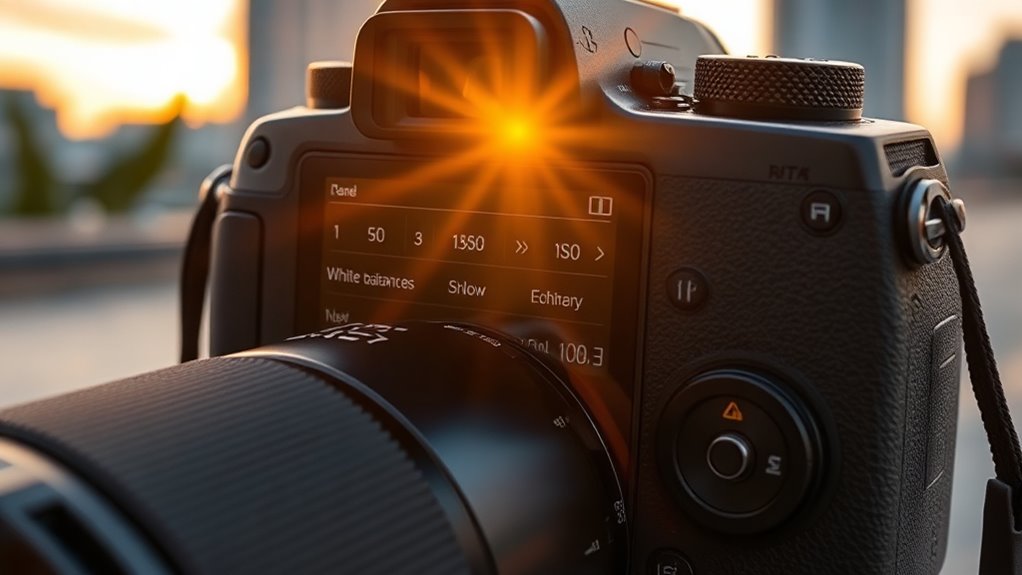
To master exposure in 2027, focus on five key camera settings: aperture, shutter speed, ISO, manual mode, and exposure priority. These settings are your best tools for controlling how light hits your sensor and crafting the perfect shot. Understanding these will help you handle any lighting situation like a pro.
Aperture controls the depth of field, letting you decide what’s sharp or blurred in your photo. Shutter speed either freezes action or creates motion blur, adding drama or clarity. ISO adjusts your camera’s sensor sensitivity, but be careful—higher ISO can introduce noise.
Manual mode puts you in full control, letting you tweak every setting to fit your vision. Meanwhile, aperture or shutter priority modes let you balance exposure creatively without going fully manual. Mastering these settings means you can confidently tackle diverse lighting and movement challenges. Dive deeper into these basics, and watch your photography skills soar!
| Image | Name | Editor's Rating | Price |
|---|---|---|---|

|
|
||

|
|
||
|
|
||

|
|
||
|
|
Photography Cheat Sheet for DSLR Camera Accessories
- Comprehensive Guide for Nikon, Canon, and Sony DSLRs:This 30-page photography guide is specifically designed for DSLR...
- Easy-to-Use Reference for Every Shooting Situation:Covering exposure, shooting modes, composition, and lighting, this...
- Compact and Portable Design – Ideal for On-the-Go Use:Measuring just 4×3 inches, this durable cheat sheet fits...
Master your DSLR’s manual settings with ease using the Photography Cheat Sheet for DSLR Camera Accessories. This handy guide helps you quickly understand exposure, shooting modes, and composition without fumbling through menus or manuals. It’s designed to simplify your workflow, so you can focus more on capturing great shots and less on technical details.
Compact and lightweight, this 4×3 inch, 30-page guide fits easily in your camera bag and clips on with a sturdy metal carabiner. The color-coded, double-sided cheat sheets are tailored for Canon, Nikon, and Sony cameras, offering quick access to essential settings for various photography styles, from portraits to landscapes and action.
Maintaining the cheat sheet is simple—its durable construction withstands outdoor use and frequent handling. This tool is especially useful for beginners and intermediate photographers who want to improve their skills without relying on digital devices, making it a practical companion on every shoot.
While it covers fundamental techniques effectively, it may not delve into advanced professional methods. Also, its physical format means it’s less portable than apps but offers a distraction-free reference.
Best for: DSLR owners seeking a portable, easy-to-use guide to mastering manual camera settings and composition across popular camera brands.
What We Like:
- Durable, compact design with metal carabiner for easy attachment
- Color-coded, double-sided cheat sheets tailored to Canon, Nikon, and Sony
- Covers essential settings for portraits, landscapes, and action photography
- Lightweight and weather-resistant for outdoor use
- Simplifies complex exposure and lighting scenarios for faster learning
Specification:
| Feature | Details |
|---|---|
| Manufacturer | Not specified |
| Dimensions | 4 × 3 inches (10.2 × 7.6 cm) |
| Weight | Lightweight |
| Material | Durable laminated paper |
| Color Options | Color-coded sheets (multiple colors) |
DSLR Camera Photography Cheat Sheet Cards
- Comprehensive - Contains 11 double-sided infassic cards featuring 19 different photography concepts. Includes info about...
- Sturdy cards - Made from thick, durable plastic that is waterproof and scratch-resistant. Perfect for beginner or...
- An essential accessory for blooming photographers - These guides and tips are compatible with all models of Canon...
Capture perfect shots every time with the DSLR Camera Photography Cheat Sheet Cards—your pocket-sized guide to mastering exposure settings. These cards provide quick, clear answers to common photography challenges, helping you adjust shutter speed, aperture, and ISO confidently. No more fumbling with complicated manuals or settings on the fly.
Designed for durability, each card is waterproof and scratch-resistant, making them ideal for outdoor shoots and all weather conditions. Their compact size fits easily in your pocket or clips to your camera bag, ensuring you have essential tips handy whenever inspiration strikes.
The set covers 19 core photography concepts over 11 double-sided cards, focusing on practical knowledge rather than overwhelming details. This makes it easier to learn and apply key techniques, especially when shooting in manual mode. The cards work seamlessly with popular DSLR cameras from Canon, Nikon, and Sony.
Maintaining these cheat sheets is simple—just wipe them clean after use. Their sturdy material guarantees long-lasting performance, so you can rely on them throughout your photography journey.
Best for: Beginner and intermediate photographers seeking a portable, easy-to-use reference to improve DSLR camera settings and shooting skills.
What We Like:
- Waterproof and scratch-resistant for outdoor durability
- Clear, concise coverage of essential photography concepts
- Compact design fits in pockets or attaches to gear easily
- Compatible with major DSLR brands for versatile use
Specification:
| Feature | Details |
|---|---|
| Manufacturer | Unspecified |
| Dimensions | Compact, pocket-sized |
| Weight | Lightweight |
| Material | Waterproof, scratch-resistant |
| Color Options | Not specified |
DSLR Cheat Sheet Photography Accessories Camera Accessories for Canon Nikon
- Must-Have Camera Accessories for Photography: Includes 30 pages of the most useful photography tips, these...
- Photography Tips at Your Fingertips: Covers all the information you need when shooting! Concise and easy to understand...
- Pocket-sized Photography Guides: Measures 3×4 in, this photography accessories for Canon is compact & highly portable...
Unlock your photography potential with the DSLR Cheat Sheet Photography Accessories. This compact tool helps you master camera settings quickly, so you spend less time guessing and more time shooting. No more fumbling through bulky manuals during critical moments.
Each cheat sheet is color-coded and double-sided, providing clear, concise tips on exposure, composition, lighting, and shooting modes. Crafted from durable metal, it withstands the rigors of outdoor shoots and fits neatly in your camera bag or clips onto your gear with the included carabiner.
Designed for Canon, Nikon, Sony, and other popular brands, this cheat sheet serves both beginners eager to learn and seasoned photographers needing a quick refresher. Its pocket size makes it convenient to carry, though the small text may challenge those with visual impairments.
Maintenance is simple: just wipe clean with a soft cloth to keep it free from dirt and smudges. Although it offers quick-reference guidance, it is not a substitute for detailed manuals when advanced technical knowledge is required.
Best for: Photographers seeking a durable, portable reference to improve camera skills on the go.
What We Like:
- Durable metal construction ideal for outdoor use
- Color-coded, double-sided sheets for quick access to key topics
- Compact size with carabiner clip for easy portability
- Compatible with major camera brands including Canon and Nikon
Specification:
| Feature | Details |
|---|---|
| Manufacturer | Not specified |
| Dimensions | 3 × 4 inches (7.6 × 10.2 cm) |
| Weight | Not specified |
| Material | Metal |
| Color Options | Color-coded sheets |
DSLR Cheat Sheet Cards for Canon, Nikon, Sony
- QUICK REFERENCE CARDS - These cheat sheets include 20 pages of helpful photography tips, printed on 11 double-sided...
- POCKET-SIZED GUIDE - At 3x4 inches, they are easy to fit in your pocket and clip to your purse or camera bag for...
- DURABLE PLASTIC - Professionally printed on glossy plastic to withstand years of use! They're rip-proof, weather-proof...
Mastering photography concepts can be challenging, especially when starting out. The DSLR Cheat Sheet Cards simplify this learning curve by providing clear, concise guidance on essential topics like exposure, aperture, and shutter speed. Designed for Canon, Nikon, and Sony users, these cards help you confidently move beyond automatic modes.
Each card is made from durable, weather-proof plastic, ensuring they withstand regular use and outdoor conditions. Their compact, pocket-sized design means you can carry them anywhere, making on-the-go learning practical and convenient. Whether you shoot with DSLR, SLR, or mirrorless cameras, these brand-neutral cards adapt to your gear.
Created by educator Meg Calton, the cards break down complex concepts into plain English, addressing common beginner questions. This approach enables faster understanding and more control over manual settings. While they focus on foundational photography skills, they provide a solid base for improving photo quality.
Regular maintenance is minimal—just keep the cards clean and dry to preserve their longevity. These cards serve as a handy, physical reference that complements digital tutorials without overwhelming you with technical jargon.
Best for: Beginners and hobbyist photographers using Canon, Nikon, or Sony DSLR, SLR, or mirrorless cameras seeking a durable, easy-to-understand photography guide.
What We Like:
- Sturdy, weather-resistant plastic cards for lasting use outdoors.
- Simple, jargon-free explanations tailored to beginner needs.
- Covers key topics like exposure triangle and manual mode basics.
- Compact size fits easily in pockets or clips on bags.
- Brand-agnostic design suits various camera types.
Specification:
| Feature | Details |
|---|---|
| Manufacturer | N/A |
| Dimensions | Pocket-sized (approx. 3×5 in) |
| Weight | Lightweight |
| Material | Durable, weather-proof plastic |
| Color Options | Standard printed cards |
DSLR/Mirrorless Photography Cheat Sheet Reference Card
- 📷 QUICK PHOTOGRAPHY REFERENCE CARDS - Printed on PVC plastic making them waterproof and durable.
- 📷 EASY TO UNDERSTAND – Quick, easy reference for aperture, shutter speed, ISO, white balance, ND filters, and flash...
- 📷 BEGINNING, INTERMEDIATE & ADVANCED PHOTOGRAPHERS – these cheat sheets are appropriate for all levels of...
Capture perfect shots every time with the DSLR/Mirrorless Photography Cheat Sheet Reference Card. This compact guide simplifies complex camera settings, helping photographers quickly adjust aperture, shutter speed, ISO, and white balance on the fly. It eliminates guesswork, so you can focus on creativity instead of fumbling through menus.
Designed for convenience, the credit card-sized PVC card slips easily into your wallet or camera bag. Its durable, waterproof material withstands outdoor conditions, ensuring it’s always ready when you need it. This makes it an ideal companion for photographers working in unpredictable environments.
The cheat sheet also includes advanced ND filter calculations, allowing smooth exposure adjustments without complicated math. It works universally with popular camera brands like Nikon, Canon, and Sony, making it a versatile tool for any DSLR or mirrorless user.
Maintaining the card is simple—just wipe it clean with a damp cloth. Its compact design and clear layout make it a practical reference for both beginners and seasoned photographers aiming to master exposure quickly.
Best for: Photographers of all levels who want a durable, portable, and straightforward camera settings guide for outdoor and on-the-go shooting.
What We Like:
- Compact and wallet-friendly size for easy access
- Waterproof, sturdy PVC material built to last
- Covers essential camera settings and advanced ND filter use
- Compatible with multiple camera brands and models
Specification:
| Feature | Details |
|---|---|
| Manufacturer | Not specified |
| Dimensions | Credit card size (approx.) |
| Weight | Lightweight |
| Material | Durable, waterproof PVC |
| Color Options | Not specified |
Factors to Consider When Choosing Exposure Setting for Camera
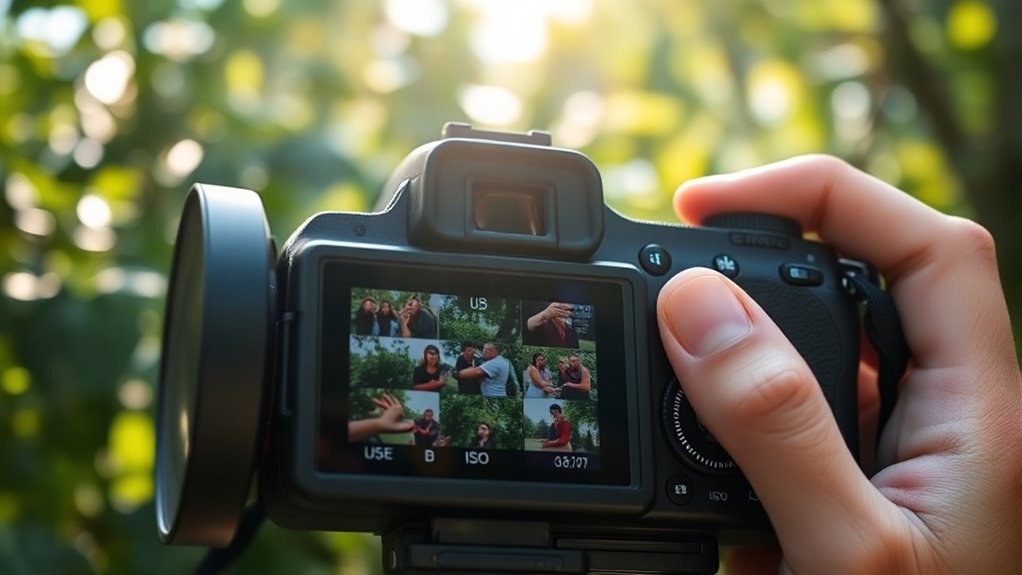
When choosing your camera’s exposure settings, you’ll need to contemplate lighting conditions and how fast your subject is moving. Think about the depth of field you want and how your camera’s sensor sensitivity affects the shot.
Don’t forget to factor in your lens aperture choices to get the perfect balance. It’s all about finding that sweet spot so your photo turns out just right.
Lighting Conditions Impact
Although lighting conditions vary greatly, you can control your camera’s exposure settings to capture the best possible image. In bright midday sun, choose a low ISO (100–200), fast shutter speed (1/500–1/2000s), and small aperture (f/8–f/16) to prevent overexposure and keep details sharp.
During golden hour or overcast skies, boost ISO moderately (200–800), open the aperture (f/2.8–f/5.6), and slow shutter speed (1/60–1/250s) to balance exposure and reduce noise. This helps you get a nice, well-lit shot without too much grain.
For low-light scenes, increase ISO markedly (800–6400+), use wide apertures (f/1.4–f/2.8), and slow shutter speeds (1/30s or slower, tripod recommended) to gather light without blur. It’s a bit tricky, but with practice, you’ll nail those darker shots.
In high-contrast settings, expose for highlights or bracket exposures to preserve detail. Just tailor your settings thoughtfully to your lighting for prime results. It makes all the difference!
Subject Movement Speed
Capture sharp images by adjusting your shutter speed according to your subject’s movement. For fast action like sports or wildlife, use shutter speeds between 1/500s and 1/2000s to freeze motion and avoid blur.
If your subject moves moderately, such as walking people or casual cycling, 1/125s to 1/250s usually works well. This range balances sharpness and light nicely.
Slow-moving or stationary subjects allow for slower speeds, like 1/60s or less, especially if you use a tripod or stabilization. This helps keep your shots steady without sacrificing clarity.
When aiming for creative motion blur effects, try slower speeds—1/30s to 1/60s for panning or several seconds for flowing water. Just match your shutter speed with how your subject moves.
Desired Depth Field
Depth of field plays a crucial role in shaping your image’s overall look and feel, so you’ll want to choose your aperture carefully to control how much of the scene appears sharp.
A larger aperture (smaller f-number like f/1.8–f/2.8) creates a shallow depth of field, isolating your subject by blurring the background. Conversely, a smaller aperture (f/8–f/16) increases depth of field, keeping more of the scene in focus—ideal for landscapes or group shots.
Remember, focal length and subject distance also affect depth of field; longer lenses and closer subjects reduce it.
For landscapes, use hyperfocal distance to maximize sharpness from half that distance to infinity.
When you need sharpness throughout, stop down until diffraction reduces resolution, typically beyond f/11–f/16 on many sensors.
Camera Sensor Sensitivity
You’ll often adjust your camera’s sensor sensitivity, or ISO, to control how much the sensor amplifies incoming light. Doubling ISO, like going from 100 to 200, effectively doubles sensitivity, letting you use faster shutter speeds or smaller apertures by one stop.
Keep in mind, higher ISO values introduce more noise or grain, especially on smaller or older sensors. Starting at base ISO—usually 100 or 200—gives you the best dynamic range and lowest noise, preserving detail in highlights and shadows.
When shooting in low light, you’ll balance increasing ISO to freeze motion or avoid blur against the noise level acceptable for your final image. Some cameras offer extended ISO settings that boost sensitivity further but often at the cost of heavy noise and reduced color accuracy.
Lens Aperture Choices
After adjusting your ISO to control sensor sensitivity, the next key setting to take into account is your lens aperture. A wider aperture (like f/1.4 to f/2.8) lets in more light, allowing faster shutter speeds or lower ISO, and creates a shallow depth of field to isolate your subject.
Conversely, a narrower aperture (f/8 to f/22) reduces light, increases depth of field for landscapes or group shots, but often requires slower shutter speeds or higher ISO. Most lenses perform best two to three stops down from their maximum aperture—commonly around f/5.6 to f/8—where sharpness peaks and aberrations minimize.
Shooting Mode Selection
When choosing a shooting mode, think about how much control you want over aperture, shutter speed, and ISO. If you want full creative control, go for Manual (M) mode so you can set each parameter exactly how you like.
Use Aperture Priority (A/Av) when you want to control depth of field. The camera takes care of shutter speed, which is perfect for portraits or landscapes.
Shutter Priority (S/Tv) lets you capture motion by choosing the shutter speed while the camera adjusts the aperture. It’s great for freezing action or creating motion blur.
Program (P) mode offers a nice balance between automation and control. It’s handy for quick shooting when you want some flexibility but don’t want to fiddle with every setting.
If you’re shooting fast-changing scenes or tough lighting—like sports or night photography—switch to Auto or Scene modes. These prioritize speed and reliable exposure over manual tweaks.
Basically, pick the mode that matches your style and the demands of your scene. Easy, right?
Frequently Asked Questions
How Do Exposure Settings Affect Video Recording Quality?
Exposure settings control how much light hits your camera sensor, directly affecting brightness, contrast, and motion blur.
If you adjust aperture, shutter speed, and ISO well, your video will look sharp, well-lit, and professional. It’s all about finding the right balance to match your scene and style.
Can AI Assist in Automatic Exposure Adjustments?
AI actively adjusts exposure automatically, adapting to ambient light and accelerating accurate aperture, ISO, and shutter speed settings.
You’ll find it simplifies shooting, ensuring stunning, sharp scenes without manual struggles or second-guessing.
It’s like having a smart assistant that knows exactly how to get the best shot every time. Makes capturing those perfect moments way easier, right?
What Are the Best Exposure Settings for Astrophotography?
You’ll want a wide aperture (f/2.8 or lower), a high ISO (1600-3200), and a shutter speed between 15-30 seconds to capture stars sharply without trails.
Use a tripod and manual focus for best results. Trust me, it makes a huge difference when you’re shooting the night sky.
How Do Exposure Settings Vary in Different Weather Conditions?
Bright sunlight demands a faster shutter, while foggy gloom calls for slower speeds and wider apertures. You’ll adjust ISO to balance clarity and noise, adapting exposure settings to weather’s unpredictable mood swings.
It’s all about finding the right balance. When the weather changes, your camera settings need to shift too, so your photos turn out just right.
Does Sensor Size Influence Optimal Exposure Settings?
Yes, sensor size influences ideal exposure settings. You’ll need to adjust ISO, aperture, and shutter speed based on your sensor’s light sensitivity and noise performance.
This helps you get the best image quality in different lighting conditions. So, knowing your sensor size can really guide your exposure choices.
Conclusion
Mastering the five best exposure settings is like learning to paint with light—you control the brushstrokes that shape every image. With your DSLR or mirrorless camera, these settings become your palette, helping you capture moments exactly as you envision them.
By understanding and adjusting exposure thoughtfully, you’ll transform ordinary shots into stunning photographs. Keep this cheat sheet handy, and you’ll confidently create pictures that truly shine in 2027 and beyond.
Remember, exposure settings aren’t just technical details—they’re your creative tools. Getting comfortable with aperture, shutter speed, ISO, white balance, and exposure compensation lets you take full control of your camera. This mastery ensures your photos look vibrant and professional every time.
So dive in, experiment, and watch your photography skills grow. With these exposure settings in your toolkit, you’ll be ready to capture breathtaking images no matter the lighting conditions or subject. Here’s to mastering your camera and making every shot count in 2027!