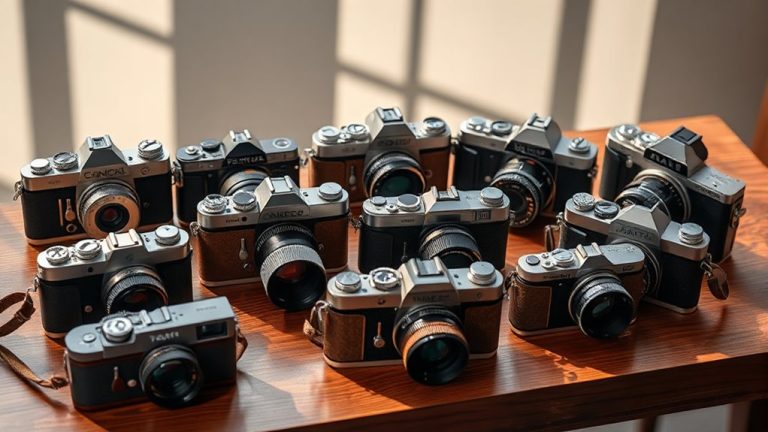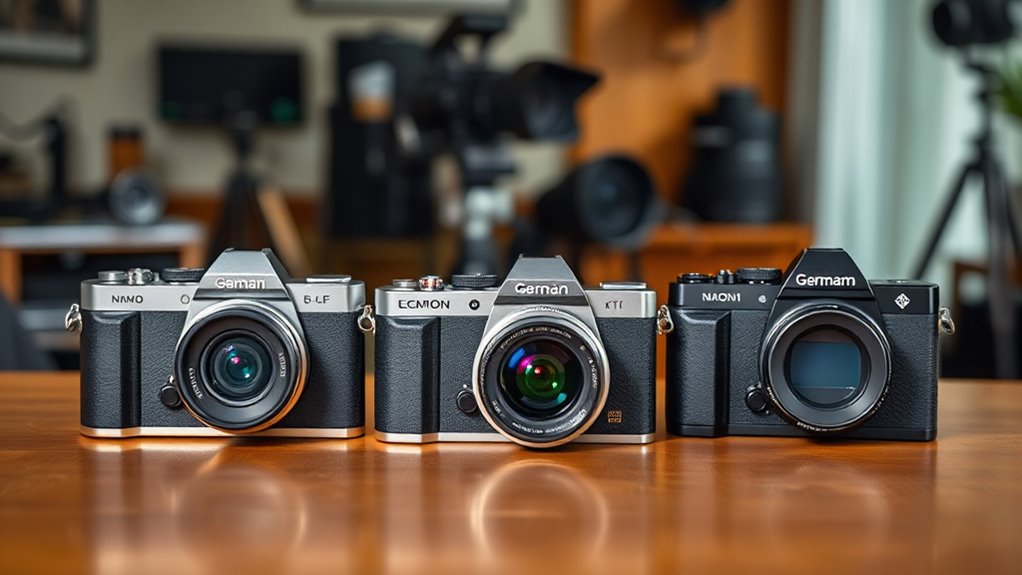
3 Best German Camera Brands for 2027 Every Photographer Trusts
You want precision, innovation, and reliability in your gear, so trust top German camera brands like Leica. Their standout models—the D-LUX5 with a sharp 10.1MP sensor, the powerful full-frame Leica Q3 featuring 60MP and advanced autofocus, and the versatile D-Lux 8 bundle with excellent optics—offer crisp image quality and solid durability.
These cameras balance stunning imagery with professional features, perfect for any photographer’s needs. Explore further to see which suits your style best.
| Image | Name | Editor's Rating | Price |
|---|---|---|---|

|
|
||

|
|
||

|
|
Leica D-LUX5 10.1MP Compact Digital Camera Black
- 1/1.63" CCD image sensor with a resolution of 10.1 megapixels
- Low image noise, more precise details and natural color rendition
- Intuitive handling concept with automatic and manual setting options
Experience crisp, professional-quality photography with the Leica D-LUX5, a compact digital camera designed for photographers who demand excellence on the go. Its 10.1MP sensor and Leica DC Vario-Summicro lens provide sharp images with a versatile 24–90mm focal range and a bright f/2.0 aperture. This combination allows clear, detailed shots even in low-light settings.
The camera’s built-in optical image stabilization helps reduce blur, ensuring your photos remain sharp without the need for a tripod. With ISO sensitivity reaching 25,600, capturing scenes in dim environments becomes effortless. Framing your shot is simple using the 3-inch LCD screen or the electronic viewfinder, both designed for ease of use.
Designed for versatility, the D-LUX5 supports RAW image capture, giving you extensive editing freedom. It also records HD 720p video, making it a handy multimedia tool. Its sleek, black anodized body offers durability and a comfortable grip, ideal for photographers who want quality and portability.
Best for: photographers seeking a high-quality, compact camera with professional optics and versatile shooting capabilities in a portable design.
What We Like:
- Bright Leica lens with fast f/2.0 aperture and 3.8× optical zoom for sharp images
- Optical image stabilization and high ISO performance for clear low-light shots
- RAW image support and HD 720p video recording for creative flexibility
Specification:
| Feature | Details |
|---|---|
| Manufacturer | Leica |
| Sensor Resolution | 10.1 Megapixels |
| Lens | Leica DC Vario-Summicro 24–90mm, f/2.0 |
| Optical Zoom | 3.8× |
| ISO Range | Up to 25,600 |
| Display | 3-inch LCD (460,000 dots) |
| Viewfinder | Electronic |
| Video Resolution | HD 720p |
| Body Finish | Black anodized |
| Weight | Approx. 0.33 lb (150 g) |
Leica Q3 Compact Digital Camera (19080) (Black)
- Leica Q3: A groundbreaking digital camera renowned for its innovative features and performance, making it a top choice...
- Triple Resolution Sensor: Featuring a first-ever 60MP BSI CMOS sensor with Triple Resolution Technology, delivering...
- Versatile Framing: Offers digital zoom options up to 90mm, providing unmatched flexibility in composing shots
The Leica Q3 Compact Digital Camera in black is designed to elevate your photography with stunning clarity and color. Its 60MP full-frame sensor with Triple Resolution Technology captures incredible detail, helping professionals and enthusiasts create sharp, vibrant images without bulky equipment.
This camera’s fixed Summilux 28mm f/1.7 lens features optical image stabilization and a digital zoom extending to 90mm. It solves common challenges like camera shake and limited framing options, making it easier to shoot in varied conditions. The tilting LCD touchscreen enhances usability, giving you clear views from different angles.
Maintaining the Leica Q3 is straightforward, with wireless charging simplifying power management. Its hybrid autofocus system, tracking eyes, faces, and animals with 256 points, ensures your subjects stay perfectly focused. Shooting at 15 frames per second and recording 8K video brings versatility to both stills and motion capture.
While the fixed lens offers exceptional quality, it limits zoom flexibility. The camera’s weight is heavier than typical compacts, which may affect portability for some users. Some shutter speed details still require confirmation from Leica.
Best for: Professional photographers and advanced users seeking a high-resolution, full-frame compact camera with precise autofocus and versatile video features.
What We Like:
- High-resolution 60MP sensor for detailed images
- Summilux 28mm f/1.7 lens with optical stabilization
- Hybrid autofocus with 256 tracking points
- Wireless charging for easy power management
- 8K video and 15 fps continuous shooting
Specification:
| Feature | Details |
|---|---|
| Manufacturer | Leica |
| Dimensions | Compact size (exact size not specified) |
| Weight | Approximately 5 pounds |
| Lens | Fixed Summilux 28mm f/1.7 ASPH. |
| Color Options | Black |
Leica D-Lux 8 Compact Digital Camera Bundle
- Compact Powerhouse with a 17MP Four Thirds CMOS Sensor: The Leica D-Lux 8 packs professional-grade image quality into a...
- Versatile Leica 10.9-34mm f/1.7-2.8 Lens for Any Scene: From wide-angle landscapes to portraits with beautifully blurred...
- Advanced OLED Viewfinder & High-Resolution LCD Display: Compose your shots with precision using the 2.36MP OLED...
Discover the power of the Leica D-Lux 8 Compact Digital Camera Bundle, designed to elevate your photography with ease. Its 17MP Four Thirds CMOS sensor ensures you capture sharp, detailed images, even in challenging low-light conditions. This camera helps you solve the common problem of blurry or dull photos when shooting indoors or at dusk.
The versatile Leica 10.9–34mm f/1.7–2.8 lens with optical image stabilization enhances your shots by maintaining clarity and allowing beautiful shallow depth of field effects. Its thoughtful design supports various shooting styles, from wide-angle landscapes to close-up portraits, making it suitable for everyday use and travel.
Maintaining your camera’s performance is straightforward with the included cleaning kit. The bundle’s accessories, such as the 64GB SD card and travel bag, ensure your gear stays protected and ready wherever you go. Lightweight controls on the 3.0″ touch TFT screen and the bright OLED viewfinder offer intuitive framing and easy adjustments.
While the camera is slightly heavier than some compact models and has a maximum shutter speed of 1/500 s, it balances portability with professional-grade features. This makes it ideal for photographers who want quality and convenience in one package.
Best for: Photographers and enthusiasts seeking a compact, high-quality camera with excellent low-light capabilities and useful travel accessories.
What We Like:
- Sharp, vibrant images from the 17MP Four Thirds CMOS sensor.
- Versatile Leica lens with optical image stabilization for clear shots.
- Includes 64GB SD card, travel bag, cleaning kit, and memory card wallet.
- Intuitive 3.0″ touch TFT screen and bright OLED viewfinder for easy control.
Specification:
| Feature | Details |
|---|---|
| Manufacturer | Leica |
| Sensor Resolution | 17MP Four Thirds CMOS |
| Lens | Leica 10.9–34mm f/1.7–2.8 |
| Image Stabilization | Optical |
| Viewfinder | 2.36MP OLED |
| Screen | 3.0″ Touch TFT |
| Weight | 2.9 lb (1.31 kg) |
Factors to Consider When Choosing German Camera Brands
When choosing a German camera brand, you’ll want to focus on image quality essentials like lens and sensor specs. Don’t forget to take into account build and durability, especially if you shoot in tough conditions.
Also, keep an eye on autofocus speed and video capabilities to match your shooting style. It’s all about finding what works best for you.
Image Quality Essentials
Since image quality is paramount for any photographer, understanding key factors like sensor size, lens aperture, and stabilization will help you choose the best German camera brand for your needs.
Larger sensors, such as full-frame, capture more detail and excel in low-light situations by reducing noise. A lens with a wide maximum aperture (around f/1.7 to f/2.0) lets in more light and creates beautiful background blur, enhancing subject isolation.
Image stabilization—whether optical or sensor-shift—helps prevent blur caused by camera shake, letting you shoot at slower shutter speeds without compromising sharpness. Also, consider a camera’s dynamic range and noise performance, which affect how well it handles high-contrast scenes and shadow detail.
These essentials guarantee your images are sharp, vibrant, and versatile for any shooting condition. So, keeping these in mind will definitely up your photography game!
Lens and Sensor Specs
Consider sensor size and lens specifications carefully to get the most from your German camera. Larger sensors, like full-frame models, offer superior low-light performance, greater dynamic range, and more pronounced background blur compared to APS-C or Micro Four Thirds sensors.
While higher megapixel counts boost resolution and cropping options, they can increase noise unless paired with advanced sensor tech or bigger sensors. Pay attention to lens aperture too—a faster lens (f/1.7–f/2.8) lets in more light and helps isolate your subject beautifully.
Optical image stabilization, whether in the lens or camera body, counters motion blur and improves sharpness at slower shutter speeds. Finally, choose native focal lengths and zoom ranges that match your shooting style, whether you favor wide landscapes, portraits, or telephoto shots.
Build and Durability
Although many factors influence your choice of a German camera, build quality and durability should top your list. You want a camera with a metal body, like magnesium alloy or aluminum, and sealed joints to resist impacts and wear.
Weather sealing is vital if you shoot outdoors—look for dust and moisture resistance ratings. Pay attention to mechanical controls; metal dials, buttons, and hinges with tactile detents last longer than plastic ones.
Durable coatings, such as anodized or hard-coat paint, protect against corrosion and scratches, keeping your camera looking and working well. Also, check the operating temperature range and battery compartment sealing to make certain your camera performs reliably in extreme heat, cold, or humidity.
Choosing a robustly built German camera means fewer worries about damage and longer-lasting performance. So, investing in durability really pays off in the long run.
Autofocus and Speed
Mastering autofocus and speed is essential when choosing a German camera brand, especially if you want sharp images of fast-moving subjects. Start by checking the autofocus system type; hybrid AF systems deliver faster, more reliable subject acquisition and continuous tracking compared to contrast- or phase-detection alone.
Next, compare the number and distribution of AF points—hundreds of densely placed points offer better accuracy and coverage. Don’t overlook continuous shooting frame rates paired with buffer depth; a high fps rate is only effective if the camera can sustain burst shots without slowing down.
Evaluate low-light AF performance by looking at the minimum detectable EV to make certain quicker focusing in dim scenes. And finally, advanced features like subject, eye, and animal detection plus smart AF tracking algorithms keep your subjects locked during motion.
Video Capability Features
When picking a German camera brand, you’ll want to zero in on video capability features that match your shooting style and postproduction needs. Check the maximum resolution and frame rates, like 4K at 30 or 60 fps, or 1080p at 120 fps, to guarantee your footage looks sharp and supports slow motion.
Also, confirm the codecs and file formats offered—H.264, H.265, ProRes—and whether the camera uses intra-frame or long-GOP compression for easier editing and storage. These details can make a big difference when you’re working on your videos later.
Look for log profiles, 10-bit color depth, and HDR capture. These features give you more flexibility in color grading, so your final video looks exactly how you want it.
Don’t forget about stabilization, continuous autofocus with subject tracking, and built-in ND filters. They help you get smoother, professional-quality video no matter the shooting conditions.
Connectivity and Compatibility
Since seamless connectivity and compatibility can make or break your shooting and editing experience, it’s crucial to examine the ports, wireless options, and file transfer protocols that a German camera brand supports.
Check for physical ports like USB-C, full-size HDMI, and wireless options such as Wi-Fi standards, Bluetooth LE, or NFC to connect your camera easily to computers, monitors, or mobile devices without adapters.
Verify supported file transfer and tethering protocols like MTP/PTP or proprietary apps to guarantee smooth remote shooting and fast RAW transfers. Confirm compatibility with storage media types and speeds to handle burst shooting and high-resolution video.
Also, look for industry-standard video output and audio input options if you record externally. Finally, make certain firmware updates, app ecosystems, and file formats align with your editing software for ongoing compatibility.
Price Versus Performance
Although German cameras come with a wide price range, you should focus on how much performance you truly need for your photography style. Higher-priced models offer metal bodies and weather sealing for durability and better resale value, while delivering superior optics with sharper lenses and wider apertures—ideal for low-light and high-contrast shots.
Advanced sensors and processors in mid-to-high tiers provide higher resolution, improved dynamic range, and faster shooting, which benefit demanding scenarios. Professional features like robust autofocus, high-res viewfinders, and quick write speeds speed up your workflow but come at a premium.
Balance these marginal gains against your actual needs; small improvements in dynamic range or AF speed might not justify the extra cost if they exceed your typical use. Choose a camera that fits your shooting demands and budget wisely.
Frequently Asked Questions
How Do German Camera Brands Compare in Video Recording Features?
You’ll find German camera brands offer excellent video recording features with high resolution, smooth autofocus, and robust stabilization. They keep innovating, so you get professional-quality footage that’s reliable and versatile for various shooting conditions.
Their technology really shines when it comes to capturing sharp, detailed videos. Plus, the autofocus systems are designed to track subjects seamlessly, which is great whether you’re filming fast action or subtle moments.
And let’s not forget about stabilization. Many German cameras come with advanced options that help reduce shake, making your videos look steady and polished without needing extra gear. Overall, these brands combine quality and innovation to meet the needs of both amateurs and pros alike.
Are German Cameras Compatible With Third-Party Lenses?
Like a puzzle piece fitting perfectly, German cameras generally are compatible with third-party lenses, though it depends on the mount. You’ll want to double-check compatibility to avoid any frustrating mismatches or limited functionality.
It’s always a good idea to check the lens mount type on your camera before making a purchase. That way, you can make sure everything fits and works smoothly, without any surprises.
What Is the Typical Warranty Period for German Cameras?
You’ll typically get a one- to two-year warranty on German cameras, covering defects and repairs.
Some brands may offer extended warranties or service plans, so it’s smart to check specific terms before you buy. It never hurts to know exactly what you’re covered for!
Do German Camera Brands Offer Eco-Friendly Manufacturing Practices?
Oh, absolutely! German camera brands are practically hugging trees while assembling lenses. You’ll find many adopting eco-friendly manufacturing practices, reducing waste, and using sustainable materials—
because saving the planet is just as important as capturing your perfect shot.
How Do German Cameras Perform in Extreme Weather Conditions?
You’ll find German cameras perform reliably in extreme weather, thanks to robust sealing and durable materials. They’re designed to resist dust, moisture, and temperature fluctuations.
Conclusion
When choosing a German camera brand, you can’t go wrong with Leica’s impeccable craftsmanship and innovation. Whether you pick the D-LUX5, Q3, or D-Lux 8, you’re investing in gear that feels like holding the entire history of photography in your hands.
These cameras don’t just capture moments; they immortalize them with unrivaled precision. Trust me, once you experience their quality, you’ll wonder how you ever lived without one.
Leica’s legacy in the world of photography is unmatched. Their cameras combine cutting-edge technology with a timeless design that every photographer trusts. For anyone looking to invest in a German camera brand that delivers both performance and artistry, Leica remains the top choice in 2027.