11 Best Night Sky Cameras for 2027 That Capture Stunning Stars
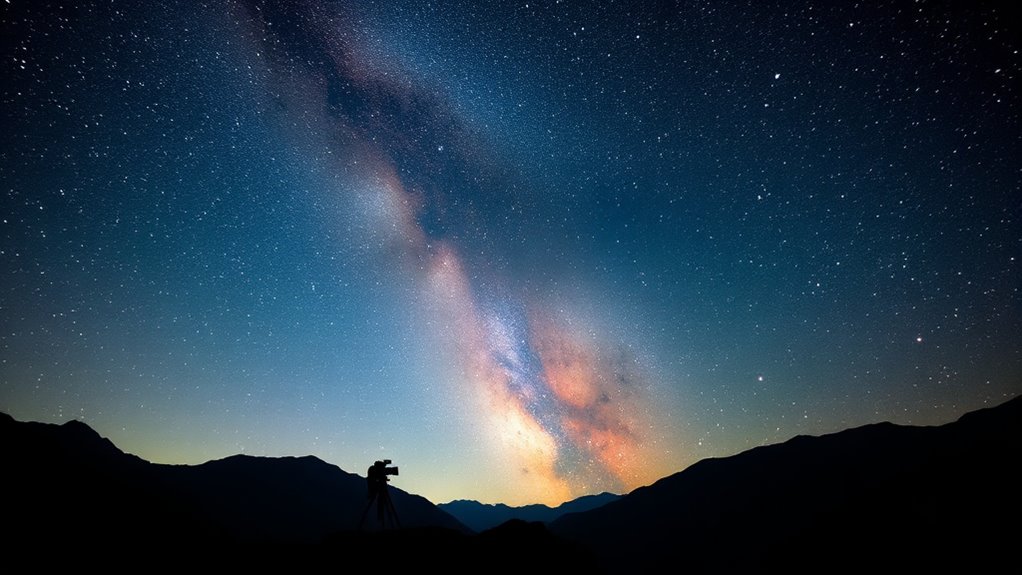
If you want to capture stunning stars in 2027, choosing the right night sky camera is key. Cameras like the ZWO Seestar S30 Pro offer smart app control and deliver sharp deep-sky images that bring the cosmos to life. Or, if you prefer detailed long exposures, the SVBONY SC571CC with its cooled APS-C sensor is a fantastic choice.
The wireless ZWO ASI2600MC Air provides high resolution and streamlined guiding for smooth astrophotography sessions. Meanwhile, the Aurora PRO is perfect for outdoor adventurers who need rugged night vision gear. Each model blends advanced sensors, cooling systems, and connectivity features designed to boost your stargazing skills.
Keep exploring these options to find the perfect match that suits your style and helps you capture the beauty of the night sky like never before. Happy shooting!
| Image | Name | Editor's Rating | Price |
|---|---|---|---|
|
|
||

|
|
||

|
|
||
|
|
||
|
|
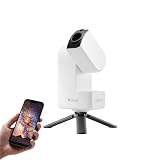
ZWO Seestar S30 Pro Smart Telescope, App-Controlled Astrophotography
- 【Effortless Smart Telescope for Beginners】 Simply power on, connect the app, and start exploring the universe. With...
- 【Urban-Friendly Telescope for Clear Night Skies】 Seestar S30 Pro reduces color distortion with apochromatic optics...
- 【Dual-Camera 4K Imaging for Stunning Detail】 Capture sharper, higher-resolution astrophotography with dual-camera...
Experience the joy of capturing the cosmos with the ZWO Seestar S30 Pro Smart Telescope. This innovative device simplifies astrophotography by integrating dual 4K cameras and app control, allowing you to take crisp, high-resolution deep-sky images effortlessly. The built-in light pollution filter ensures your photos remain clear and vibrant, even in less-than-ideal environments.
Designed for ease of use, the telescope offers one-tap capture modes for the Milky Way, star trails, and other deep-sky objects. Its apochromatic optics provide sharp, color-accurate images without the need for complex setup. You can switch between autofocus and manual focus to suit your imaging preferences.
The lightweight, portable design includes a rechargeable battery, making it ideal for travel and extended sessions away from power sources. The alt-azimuth mount supports equatorial mode, giving you flexibility in tracking celestial objects for longer exposures.
Maintenance is straightforward since the telescope’s components are built for durability and consistent performance. However, note that it is not optimized for planetary observation, and the nonstandard battery may require planning for replacements.
Best for: Amateur astronomers and astrophotography enthusiasts seeking a user-friendly, portable smart telescope for detailed deep-sky imaging.
What We Like:
- Dual 4K cameras with advanced optics and light pollution filtering
- Intuitive one-tap modes for capturing complex celestial scenes
- Portable, battery-powered with versatile focusing and mount options
- Clear image results with minimal setup and hassle
Specification:
| Feature | Details |
|---|---|
| Manufacturer | ZWO |
| Dimensions | Compact and lightweight design |
| Weight | Portable (under 5 kg approx.) |
| Optics | Apochromatic lenses |
| Camera | Dual 4K |
| Mount | Alt-azimuth with equatorial mode support |
| Power | Rechargeable battery |
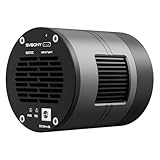
ZWO ASI662MC 2.1MP USB3 Color Astronomy Camera
- Advanced IMX662 CMOS sensor with 1920x1080 (2.1 megapixel) resolution and 2.9 micron pixels to capture fine detail...
Discover the joy of capturing stunning planetary and color images with the ZWO ASI662MC 2.1MP USB3 Color Astronomy Camera. This compact camera is designed to help beginners and amateur astronomers overcome common challenges like noise and blur while shooting celestial objects. Its efficient design ensures clean images without the distraction of amp glow.
Equipped with a Sony IMX662 CMOS sensor, the camera delivers crisp 1080p video and sharp 2.1MP stills. You can capture fast-moving objects smoothly thanks to its high frame rate of up to 102.6 fps. This makes it easier to track planets and other celestial bodies with clarity and precision.
The ASI662MC simplifies your astrophotography setup. Features like auto exposure, autofocus, and USB 3.0 connectivity reduce the complexity typically involved in imaging. Its compatibility with Micro Four Thirds mounts ensures it fits easily with many telescopes, making it a versatile choice.
Maintenance is straightforward due to its lightweight and compact design. While its resolution is on the lower side for deep-sky imaging and manual controls are limited, it excels at delivering quality planetary and color shots with minimal hassle.
Best for: Beginners and amateur astrophotographers seeking a user-friendly camera to capture detailed planetary and color images with ease.
What We Like:
- High frame rate enables smooth capture of fast-moving celestial objects
- Sony IMX662 sensor ensures clean images with low noise and zero amp glow
- Easy setup with USB 3.0 and Micro Four Thirds compatibility
- Compact, lightweight design ideal for straightforward maintenance and transport
Specification:
| Feature | Details |
|---|---|
| Manufacturer | ZWO |
| Sensor | Sony IMX662 CMOS |
| Resolution | 2.1 megapixels |
| Frame Rate | Up to 102.6 fps |
| Connectivity | USB 3.0 |
| Mount Compatibility | Micro Four Thirds |
| Dimensions | Compact, lightweight |
SVBONY SV605CC Cooled Color Astrophotography Camera, 9MP IMX533 Eyepiece
- SV605CC deep sky camera is suitable for deep space photography enthusiasts; suitable for deep space photography...
- IMX533 color 1-inch chip; square frame; 3008x3008 resolution; the quantum efficiency has reached an amazing 80%; greatly...
- The glow of CMOS will affect the signal-to-noise ratio of the glow affected area; resulting in residual glow or reduced...
Experience deep-sky imaging like never before with the SVBONY SV605CC Cooled Color Astrophotography Camera. This camera is engineered to capture crisp, vibrant celestial images with remarkable detail, making it easier to reveal faint stars and nebulae. Its advanced sensor technology solves common issues of image noise and glow, enhancing every shot’s clarity.
The heart of the camera is a 9MP Sony IMX533 color CMOS sensor with 3.76 μm pixels, which balances high resolution and sensitivity. The double-layer TEC cooling system cools the sensor up to 30°C below ambient temperature, significantly reducing noise during long exposures. This feature ensures clearer images without the distractions of thermal interference.
Designed for ease of use, the SV605CC offers USB3.0 connectivity and Wi-Fi support, allowing smooth and flexible remote operation. Its robust aluminum body with an IP54 rating withstands outdoor conditions, providing reliable performance during extended astrophotography sessions. Maintenance is straightforward, with a durable design that resists dust and moisture.
While manual focus and optical zoom require some experience to perfect, the camera’s overall design prioritizes image quality and durability. It is slightly heavier and larger than some compact models but offers functionality tailored to serious astrophotographers.
Best for: Dedicated astrophotographers seeking a high-resolution, cooled color camera for detailed deep-sky imaging and celestial photography.
What We Like:
- High-resolution 9MP Sony IMX533 sensor with excellent glow suppression and 80% quantum efficiency
- Double-layer TEC cooling reduces sensor temperature by up to 30°C, minimizing noise in long exposures
- USB3.0 and Wi-Fi connectivity for fast data transfer and convenient remote control
- Rugged aluminum body with IP54 rating suitable for outdoor astrophotography
- Compact design despite robust build, ideal for field use
Specification:
| Feature | Details |
|---|---|
| Manufacturer | SVBONY |
| Sensor | 9MP Sony IMX533 CMOS |
| Cooling System | Double-layer TEC cooling |
| Pixel Size | 3.76 μm |
| Connectivity | USB3.0, Wi-Fi |
| Body Material | Aluminum |
| Dimensions | 6.5 x 6.3 x 8.46 inches |
| Weight | 1.6 kg |
| IP Rating | IP54 |
SVBONY SC571CC Cooled Color Astronomy Camera, IMX571 CMOS APS-C Sensor
- High-resolution APS-C sensor: SC571CC CMOS Telescope Camera features the IMX571 APS-C BSI sensor with a 23.4×15.7mm...
- Heat the Glass, Clear imaging: Safeguard your imaging sessions from dew and moisture with SC571CC's front-window heater...
- Dual-stage TEC cooling: APS-C Format Camera lowers the sensor temperature by 35°C below ambient (ΔT = -35°C...
Experience the thrill of capturing deep-sky wonders with the SVBONY SC571CC cooled color astronomy camera. Designed to unveil faint nebulae and Ha regions, this camera dramatically enhances your astrophotography sessions. Its high-resolution IMX571 APS-C sensor captures stunningly detailed images, revealing celestial objects often missed by standard cameras.
This camera’s dual-stage TEC cooling system reduces sensor temperature by up to 35°C, cutting down noise and allowing for longer exposures without sacrificing image quality. An integrated dew heater keeps your lens clear during humid nights, ensuring uninterrupted viewing and shooting.
With fast USB 3.0 connectivity and a 512 MB buffer, data transfers smoothly and stably, minimizing frame drops during extended imaging. Compact and lightweight, it fits a variety of telescope mounts, making it versatile for deep-sky imaging setups.
Maintenance is straightforward thanks to its robust design and dew prevention features, helping you focus on capturing the cosmos rather than equipment care.
Best for: serious deep-sky astronomy enthusiasts seeking high-resolution, low-noise color imaging of faint nebulae and Ha regions with long-exposure capability.
What We Like:
- High-resolution 26 MP IMX571 APS-C back-illuminated sensor for exceptional faint object capture
- Dual-stage TEC cooling and built-in dew heater reduce noise and prevent lens fogging
- Fast USB 3.0 with 512 MB buffer ensures stable, uninterrupted data transfer
- Compact design compatible with medium-to-long focal length telescopes
Specification:
| Feature | Details |
|---|---|
| Manufacturer | SVBONY |
| Sensor | IMX571 CMOS APS-C, 26 MP |
| Cooling | Dual-stage TEC, -35°C |
| Connectivity | USB 3.0 |
| Buffer Size | 512 MB |
| Dimensions | Compact size (specific size not provided) |
| Compatible Telescopes | Medium-to-long focal length |
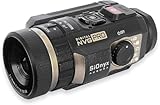
Aurora PRO
- Advanced Digital Night Vision Recording: The SIONYX Aurora PRO night vision camera is the ultimate accessory for...
- Great Accessory for Outdoor Nighttime Enthusiasts: With a stable 44° field of view, GPS, and compass, the SIONYX Aurora...
Experience clear, full-color night vision even under moonless skies with the Aurora PRO. This handheld camera excels at capturing vibrant images in near-total darkness, making it ideal for outdoor enthusiasts, hunters, and navigators who require reliable visibility at night.
The Aurora PRO’s moonless starlight sensitivity and manual exposure control allow users to adjust settings for optimal image clarity. Its 44° field of view and fast f/1.4 aperture work together with a CMOS sensor to deliver sharp 720p video and detailed 0.9 MP still photos, enhancing your ability to observe and record nighttime scenes.
Designed for rugged use, the device features a waterproof body and includes two rechargeable batteries, ensuring extended operation in challenging environments. Built-in GPS and compass functions boost your situational awareness, helping you navigate safely on nighttime adventures.
Maintenance is straightforward thanks to the durable construction and included 32 GB microSD card for ample storage. While the video resolution and battery life may not suit all users, the Aurora PRO balances portability and essential features for effective night vision performance.
Best for: Outdoor adventurers and hunters seeking a handheld color night-vision camera with advanced low-light capability and navigation aids.
What We Like:
- Delivers clear color images in starlight conditions with adjustable exposure
- Built-in GPS and compass enhance navigation and awareness
- Waterproof design and two rechargeable batteries support prolonged outdoor use
- Includes 32 GB microSD card for convenient storage
Specification:
| Feature | Details |
|---|---|
| Manufacturer | Aurora |
| Dimensions | Not specified |
| Weight | Not specified |
| Sensor | CMOS |
| Video Resolution | 720p |
| Still Image | 0.9 MP |
| Field of View | 44° |
| Aperture | f/1.4 |
| Storage | 32 GB microSD card |
| Battery | 2 rechargeable batteries |
| Special Features | GPS, compass, waterproof |
SVBONY SV405CC Astrophotography Camera, Cooled Telescope Eyepiece IMX294

- High-Sensitivity 4/3" Sensor: Back-illuminated IMX294 with 4.63μm pixels (4144x2822) for excellent light capture. The...
- Two-Stage TEC Cooling: The SV405CC Cooled Telescope camera can lower the CMOS sensor temperature to 30°C Celsius below...
- Smart HCG Mode: Automatically activates when gain is set to 120 or higher. This High Conversion Gain (HCG) mode...
Experience clearer, more detailed deep-sky images with the SVBONY SV405CC Astrophotography Camera. Designed to tackle common imaging challenges, this camera cuts down noise and enhances sharpness by using a high-quality Sony IMX294 back-illuminated CMOS sensor. Its 11.7 MP resolution captures fine details across a wide dynamic range, making faint celestial objects more visible.
The standout feature is the two-stage TEC cooling system. It lowers the sensor temperature by up to 30°C below ambient, drastically reducing dark current and noise during long exposures. This means cleaner images without the usual graininess that hampers astrophotography. The camera’s USB 3.0 interface and 256 MB buffer ensure smooth, stable data transfer at up to 19 frames per second.
Maintenance is straightforward, thanks to its robust build and compatibility with popular operating systems like Windows, Mac, Linux, and Raspberry Pi. This versatility suits both beginners and experienced astrophotographers who need reliable performance and easy integration with their existing setups.
Best for: amateur and professional astrophotographers seeking a cooled, high-resolution camera for detailed deep-sky imaging with low noise and wide compatibility.
What We Like:
- Effective two-stage TEC cooling lowers sensor noise during long exposures
- High-resolution 11.7 MP Sony IMX294 sensor preserves fine detail and dynamic range
- Wide OS compatibility including Windows, Mac, Linux, and Raspberry Pi
- Stable USB 3.0 data transfer with a large 256 MB buffer
Specification:
| Feature | Details |
|---|---|
| Manufacturer | SVBONY |
| Sensor Model | Sony IMX294 |
| Sensor Resolution | 11.7 Megapixels |
| Sensor Size | 4/3 inch |
| Cooling | Two-stage TEC (up to -30°C) |
| Data Interface | USB 3.0 |
| Frame Rate | Up to 19 fps |
| Operating Systems | Windows, Mac, Linux, Raspberry Pi |
| Weight | Over 3 pounds (approx. 1.4 kg) |
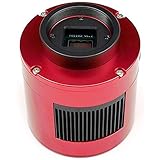
ZWO ASI183MC Pro 20.18MP Color Astronomy Camera
- ZWO ASI183MC-Pro cooled color astronomy camera for capturing high-resolution color images of deep-sky objects such as...
- Advanced CMOS sensor with 5496x3672 (20.1 megapixel) resolution and 2.4-micron pixel size to capture fine detail in...
- Fast USB3.0 transfer at up to 19 frames per second at maximum resolution; 256MB DDR3 buffer for quick and stable data...
Discover the universe in vivid color with the ZWO ASI183MC Pro, a cooled color CMOS astronomy camera designed to capture faint nebulae and distant galaxies with remarkable clarity. Its 20.18MP back-illuminated sensor features small 2.4μm pixels that improve light sensitivity, allowing you to reveal subtle celestial details often missed by other cameras.
The camera’s two-stage TEC cooling system significantly lowers the sensor temperature, reducing noise during long exposures. This means clearer, sharper images of deep-sky objects even in challenging conditions. The compact design fits easily on refractors or reflectors, making it ideal for portable setups.
Maintaining the camera involves using a separate 12V power supply for the cooling function, which helps keep the sensor stable but requires planning for power sources during your sessions. The USB 3.0 interface ensures fast data transfer and includes a built-in USB 2.0 hub to connect accessories like autoguiders or focusers.
While focusing is manual, this allows precise control over image sharpness, essential for fine-tuning your astrophotography. Keep in mind, the camera is not water-resistant, so use it in dry conditions to protect your investment.
Best for: Amateur and semi-professional astronomers seeking high-resolution, low-noise deep-sky imaging with a cooled color CMOS camera compatible with motorized equatorial mounts.
What We Like:
- High quantum efficiency sensor reveals faint celestial objects clearly.
- Two-stage TEC cooling minimizes noise in long exposures.
- USB 3.0 with built-in hub supports fast data and accessory connections.
- Compact and lightweight for easy integration with various telescope setups.
Specification:
| Feature | Details |
|---|---|
| Manufacturer | ZWO |
| Sensor Resolution | 20.18 Megapixels |
| Pixel Size | 2.4 μm |
| Cooling | Two-stage TEC |
| Connectivity | USB 3.0 + USB 2.0 Hub |
| Power Requirement | Separate 12V supply for TEC |
| Weight | Lightweight (exact weight not specified) |
Om System -3 Astro Mirrorless Camera, Silver

- SUPERIOR IMAGE QUALITY - Capture stunning detail with the 20.4 Megapixel Four Thirds BSI Stacked CMOS sensor, delivering...
- VERSATILE LENS SELECTION - Utilize the Micro Four Thirds lens mount, offering a vast array of interchangeable lenses to...
- RAPID AUTOFOCUS SPEED - Achieve precise focus instantly with advanced autofocus capabilities, ensuring you never miss a...
Capture the cosmos like never before with the OM SYSTEM OM-3 Astro Mirrorless Camera in sleek silver. Designed specifically for astrophotographers, this camera excels in revealing the subtle colors of nebulae and stars. Its 20.4 MP Four Thirds BSI Stacked sensor offers enhanced Ha sensitivity, allowing you to capture vibrant celestial details with remarkable clarity.
The camera’s 7.5-stop in-body image stabilization and fast TruePic X processor work together to deliver sharp, clear images even during long exposures. This means you can shoot handheld or in challenging conditions without sacrificing image quality. The Micro Four Thirds mount adds versatility by supporting a wide range of lenses for various astrophotography styles.
Built to endure, the OM SYSTEM OM-3 features a robust metal body with weather sealing. This ensures reliable performance under harsh outdoor conditions. Maintenance is straightforward; its durable design resists dust and moisture, reducing the need for frequent cleaning.
For added convenience, the camera includes a 3-inch articulating touchscreen, 4K 60fps video recording, and Wi-Fi/Bluetooth connectivity. These features enhance usability and make sharing your stunning night sky images effortless.
Best for: astrophotographers and advanced photographers seeking a compact, weather-sealed mirrorless camera with superior nebula color sensitivity and versatile lens compatibility.
What We Like:
- Enhanced Ha sensitivity for rich nebula and star color capture.
- 7.5-stop in-body stabilization paired with TruePic X processor ensures sharp images.
- Weather-sealed metal body built for durability in tough environments.
- Articulating touchscreen and 4K 60fps video add creative flexibility.
- Wi-Fi and Bluetooth connectivity for easy image transfer.
Specification:
| Feature | Details |
|---|---|
| Manufacturer | OM SYSTEM |
| Sensor | 20.4 MP Four Thirds BSI Stacked |
| Image Stabilization | 7.5-stop in-body |
| Processor | TruePic X |
| Lens Mount | Micro Four Thirds |
| Body Material | Metal |
| Color | Silver |
| Screen Size | 3-inch articulating touchscreen |
| Video Capability | 4K at 60fps |
| Connectivity | Wi-Fi, Bluetooth |
| Weather Sealing | Yes |
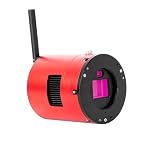
ZWO ASI2600MC Air 26MP Wireless Smart Camera
- SUPERIOR IMAGING - Featuring a Sony IMX571 APS-C color CMOS sensor, this camera captures stunning 26MP images with...
- ENHANCED CONNECTIVITY - Enjoy seamless wireless operation with IEEE 802.11a/b/g/n/ac, supporting both 2.4Ghz and 5Ghz...
- ADVANCED COOLING SYSTEM - Maintain optimal sensor temperature with a powerful cooling system, reducing thermal noise and...
The ZWO ASI2600MC Air 26MP Wireless Smart Camera is designed to elevate your astrophotography experience. Its Sony IMX571 APS-C sensor captures stunning, high-resolution images of the night sky with impressive detail and dynamic range. This camera reduces cable clutter by offering wireless control via dual-band Wi-Fi and Bluetooth, allowing you to adjust settings remotely through the ASIAIR app or compatible software.
This compact device integrates a guiding sensor and built-in storage, simplifying your setup and workflow. Fast USB-C transfers ensure quick image downloads, making it easier to manage your data during rooftop or backyard sessions. Although it requires manual focusing, this design choice supports precise control for astrophotographers who prefer hands-on adjustments.
The camera’s 2 GB of onboard RAM supports smooth operation, though very demanding imaging tasks might push its limits. Weighing 4 pounds and measuring 5.8 × 5.8 × 4.8 inches, it is sturdy but less suited for highly portable setups.
Best for: Amateur and semi-professional astrophotographers looking for a high-resolution, wireless, all-in-one imaging and guiding camera for convenient night sky photography.
What We Like:
- High-resolution 26MP Sony IMX571 sensor with excellent dynamic range
- Wireless dual-band Wi-Fi and Bluetooth for remote control
- Integrated guiding sensor and built-in storage streamline astrophotography
- Fast USB-C data transfer for efficient workflow
Specification:
| Feature | Details |
|---|---|
| Manufacturer | ZWO |
| Sensor | Sony IMX571 APS-C |
| Resolution | 26 Megapixels |
| Connectivity | Dual-band Wi-Fi, Bluetooth |
| Focus | Manual |
| RAM | 2 GB |
| Weight | 4 lb (1.81 kg) |
| Dimensions | 5.8 × 5.8 × 4.8 inches |
ZWO ASI174MM-MINI 2.1MP Monochrome Astronomy Camera

- ZWO ASI174MM-Mini monochrome astronomy camera for autoguiding during astrophotography or for monochrome imaging of...
- 2.3 megapixel CMOS sensor with 5.86-micron pixels, 1936x1216 resolution, and high QE and low noise enable detection of...
- Fast USB2.0 data transfer at up to 18.4 frames per second at maximum resolution
Enhance your astrophotography precision with the ZWO ASI174MM-MINI monochrome camera. Designed to improve autoguiding accuracy, this compact device helps you capture clear, steady images during long exposure sessions. Its ability to detect faint guide stars ensures smooth telescope tracking and reduces image blur caused by star drift.
The camera’s larger sensor size offers a wider field of view, making it easier to find suitable guide stars, especially when using off-axis guiders. Its lightweight and durable design fits seamlessly into a standard 1.25” focuser or guide scope, simplifying setup and reducing equipment bulk.
Connectivity is straightforward with USB 2.0 Type-C, compatible across multiple platforms. While the monochrome sensor delivers excellent sensitivity, note that color imaging requires external filters, adding some setup complexity. Regular maintenance involves gentle cleaning of the sensor window to ensure optimal performance.
Best for: Amateur and professional astronomers needing a reliable, compact monochrome camera for precise autoguiding and planetary imaging with an enhanced field of view.
What We Like:
- High sensitivity for detecting faint guide stars
- Larger sensor improves guide star availability
- Compact, durable design fits standard focusers
- Cross-platform USB Type-C connectivity
Specification:
| Feature | Details |
|---|---|
| Manufacturer | ZWO |
| Sensor Resolution | 2.1 Megapixels |
| Pixel Size | 5.86 µm |
| Sensor Type | Monochrome CMOS |
| Interface | USB 2.0 Type-C |
| Dimensions | Compact, fits 1.25” focuser |
| Weight | Lightweight |
Smart Telescope,Refractor Auto-focus Portable Digital Electronic Telescopes

- Exceptional Optical Performance:Equipped With A Powerful 80mm Aperture And 300mm Focal Length (F/8.89), This Telescope...
- Dual Smart Control & Shake-Free 4k Imaging: Effortlessly Command Your Stargazing Session Via The Free Mobile App Or The...
- Dual-Screen Display For Real-Time Viewing: This Scope Is Equipped With Not Only An Eyepiece With Adjustable Vision...
Discover the joy of stargazing with the Smart Telescope, designed to combine portability with advanced optics for effortless celestial observation. Its compact design makes it easy to carry, while the 80mm aperture and 300mm focal length deliver clear, sharp views of the moon and stars.
This refractor telescope features auto-focus technology, ensuring crisp images without manual adjustments. Control is simple through a dedicated mobile app or an 85-foot wireless remote, letting you explore the night sky from a comfortable distance.
With dual screens, you can preview stunning 4K videos and 30MP images in real-time. The built-in 4500mAh battery supports up to six hours of use, making it ideal for extended viewing sessions. Plus, it allows up to 512GB of external storage for instant sharing of your discoveries.
Maintenance is straightforward thanks to its durable design, but be mindful of the auto power-off feature, which may require occasional adjustment during longer observations. Some size details in the product listing may be unclear, so check measurements carefully before use.
Best for: Beginners and casual stargazers seeking a portable telescope with advanced digital imaging and versatile remote control options.
What We Like:
- Clear, detailed views with 80mm aperture and auto-focus
- Easy dual control via mobile app and wireless remote
- Real-time 4K video and high-resolution image preview
- Long battery life with support for large external storage
Specification:
| Feature | Detail |
|---|---|
| Manufacturer | Smart Telescope |
| Aperture | 80mm |
| Focal Length | 300mm |
| Magnification | Up to 350x |
| Battery Capacity | 4500mAh (6 hours usage) |
| Storage Support | Up to 512GB external |
| Control Options | Mobile app, wireless remote (85 ft) |
| Image Resolution | 30MP |
| Video Resolution | 4K |
| Dimensions | Check listing details |
Factors to Consider When Choosing a Night Sky Camera
When picking a night sky camera, you’ll want to focus on sensor type and size for capturing clear images in low light. Consider the lens and aperture to guarantee sharpness and brightness, plus image resolution options for detail.
Don’t forget portability and weight, especially if you plan to carry it to different locations. It makes a big difference when you’re out under the stars and need something easy to handle.
Sensor Type and Size
Although sensor type and size might seem technical, they directly impact how well your night sky camera captures faint stars and deep-sky objects. Larger sensors like APS-C, Four-Thirds, or full-frame collect more light and offer wider fields of view than smaller sensors, boosting sensitivity and reducing the need for long focal lengths.
Pixel size also plays a role—larger pixels gather more photons and handle bright highlights better, while smaller pixels provide higher resolution at the cost of sensitivity. Back-illuminated and stacked sensors improve light efficiency and readout speeds, enhancing faint-object capture and enabling faster frame rates.
If you plan on long exposures, consider cooled sensors to cut thermal noise. Finally, monochrome sensors paired with narrowband filters maximize sensitivity, while one-shot color sensors offer easier workflows—choose what suits your astrophotography goals best.
Low-Light Performance
Maximizing low-light performance is essential for capturing the subtle details of stars and nebulae in your night sky photography. Choose a camera with a large sensor and bigger pixels to gather more photons per shot. This enhances the signal-to-noise ratio for faint objects.
Look for high quantum efficiency (above 70–80%) to ensure the sensor converts incoming light efficiently. Low read noise and minimal dark current, often found in cooled sensors, let you use longer exposures without excessive noise.
Also, consider full well capacity and dynamic range to handle bright stars or the Moon without losing detail. And finally, a camera with a higher native frame rate and effective high-ISO performance helps you capture sharper images, whether you’re shooting bright or dim celestial targets.
Lens and Aperture
Choosing the right lens and aperture plays a crucial role in capturing stunning night sky images. You’ll want a lens with a large aperture—ideally between f/1.4 and f/4—to let in more light from faint stars and nebulae. This reduces exposure time and boosts signal-to-noise ratio.
Pair this with a wide-angle focal length (14–35mm on full-frame) to capture expansive views like the Milky Way or star trails without distortion. Keep in mind, very fast or budget lenses may introduce optical aberrations such as coma or astigmatism, especially at the edges. So, prioritize lenses with well-corrected optics for sharp stars across the frame.
Lastly, make certain your lens mount matches your camera’s sensor size to avoid vignetting or corner softness. It’s a small detail but can make a big difference in your night sky shots.
Image Resolution Options
Exploring image resolution options helps you capture the night sky with the detail and scale you want. Higher megapixels, like 20–30+, reveal finer details and wider fields but need larger sensors and longer focal lengths to work effectively.
Larger pixel sizes—around 3 to 4 micrometers—gather more light per pixel, boosting signal-to-noise for faint stars and long exposures. Your sensor format (APS-C, Four Thirds, etc.) also shapes your field of view and how resolution translates to image scale.
For planetary or lunar shots, lower-resolution sensors with smaller pixels and high frame rates may outperform high-MP models by freezing atmospheric turbulence via lucky imaging. Keep in mind, higher resolution creates big files, requiring ample storage, quick data transfer, and strong processing power for stacking and calibration.
Portability and Weight
After considering image resolution and sensor options, you’ll want to think about how easy it is to carry and set up your night sky camera. Aim for a total kit weight under 6–8 kg, including camera, lens or telescope, mount, and tripod, to stay mobile and handle everything solo.
If you plan backpacking to dark sites, pick compact cameras or cooled units with small heatsinks—large mirrorless bodies and TEC-cooled cameras add bulk. Lightweight alt-azimuth mounts (2–4 kg) offer quick setups but less accuracy, while equatorial mounts for long exposures often weigh 6 kg or more, affecting transport.
Don’t forget batteries and accessories—they can add 0.5–2+ kg. Balance portability with stability to make certain smooth tracking without overburdening yourself in the field. It’s all about finding that sweet spot between ease and performance.
Connectivity and Controls
When you set up your night sky camera, connectivity and control options can make or break your experience. Choose cameras with high-bandwidth interfaces like USB 3.0, USB-C, or GigE to guarantee fast data transfer and avoid frame drops during high-frame-rate sessions.
Wireless features such as dual-band Wi-Fi or Bluetooth let you control your camera remotely and preview shots live. But remember, their stable range is usually around 10 to 20 meters, and you might notice some latency that can affect real-time guiding.
Built-in ports or hubs simplify connecting guiders, focusers, and filter wheels without the need for extra adapters. Plus, cameras with onboard storage or memory buffers help prevent data loss during long exposures if communication drops.
Finally, make sure your camera supports compatible software or protocols like ASCOM or SDKs. That way, you get seamless control with your favorite capture and autoguiding tools.
Power Source and Battery
Choosing the right power source is essential for night sky cameras, especially since long-exposure sessions demand stable, continuous energy for hours on end. You’ll want a battery or power supply that supports your camera, cooling systems, mounts, and accessories for 4–12+ hours.
Check voltage and current needs—like 12V at 3A for coolers or 5V USB for cameras—and confirm your battery matches these specs with proper connectors. It’s important to calculate runtime by dividing battery capacity (Wh) by total power draw (W), then add a margin for inefficiencies and cold-weather drops.
Speaking of cold weather, expect 20–50% less capacity in chilly conditions. Insulated packs or warmers can help maintain voltage and keep everything running smoothly.
For unattended sessions, it’s smart to pick regulated power sources with overload protection and pass-through charging. This way, you can safely power multiple devices without daisy-chaining unreliable adapters.
Frequently Asked Questions
How Do Atmospheric Conditions Affect Night Sky Photography Quality?
You’ll find that atmospheric conditions like humidity, clouds, and light pollution blur and dim stars. Clear, dry nights with minimal pollution give you sharper, brighter images,
letting your camera capture stunning, detailed night sky photos. It really makes a big difference when the air is crisp and clear.
What Are the Best Settings for Capturing Meteor Showers?
You’ll want a wide aperture (f/2.8 or lower), a high ISO (1600-3200), and a shutter speed around 10-20 seconds.
Use manual focus set to infinity, and shoot in RAW to capture meteors sharply and vividly.
These settings help you get the best shots during a meteor shower without overexposing the sky or missing those streaks of light. Give it a try and see how your night sky photos turn out!
How Do I Maintain and Clean My Astrophotography Camera?
About 90% of sensor damage comes from improper cleaning. So, you want to be really careful with how you clean it.
Start by gently using a blower to remove any dust. Then, use a microfiber cloth with sensor cleaner to wipe it down.
Avoid touching the sensor directly at all costs. Also, make sure to store your camera in a dry, dust-free place to keep it in good shape.
Can These Cameras Be Used for Daytime Photography?
Yes, you can use these cameras for daytime photography. Just adjust the settings for brighter light, use appropriate lenses, and consider filters to manage exposure.
They’re versatile enough to capture clear, detailed shots anytime you want. So, don’t hesitate to take them out during the day and experiment a bit!
What Accessories Enhance Night Sky Image Stabilization?
You’ll want a sturdy tripod, a remote shutter release, and a lens with image stabilization. Adding a weighted bag to your tripod helps, too.
These accessories keep your camera steady for sharp, clear night sky shots. Trust me, steady gear makes a huge difference when you’re shooting stars!
Conclusion
Choosing the right night sky camera is like picking the perfect lens to reveal the universe’s secrets. With options from compact smart telescopes to high-resolution cooled cameras, you’ve got plenty to explore.
Consider your budget, sensor quality, and portability to capture those breathtaking starry nights. Whichever camera you choose, it’ll bring the cosmos closer, turning distant stars into vivid memories you can revisit anytime.
Get ready to shoot stunning skies with confidence! Whether you’re a beginner or a seasoned astrophotographer, the best night sky cameras for 2027 will help you capture crisp, clear images of stars, planets, and galaxies. Invest in one that suits your needs and watch your night sky photography reach new heights.