4 Best Pocketable Film Cameras for 2027 to Capture Every Moment
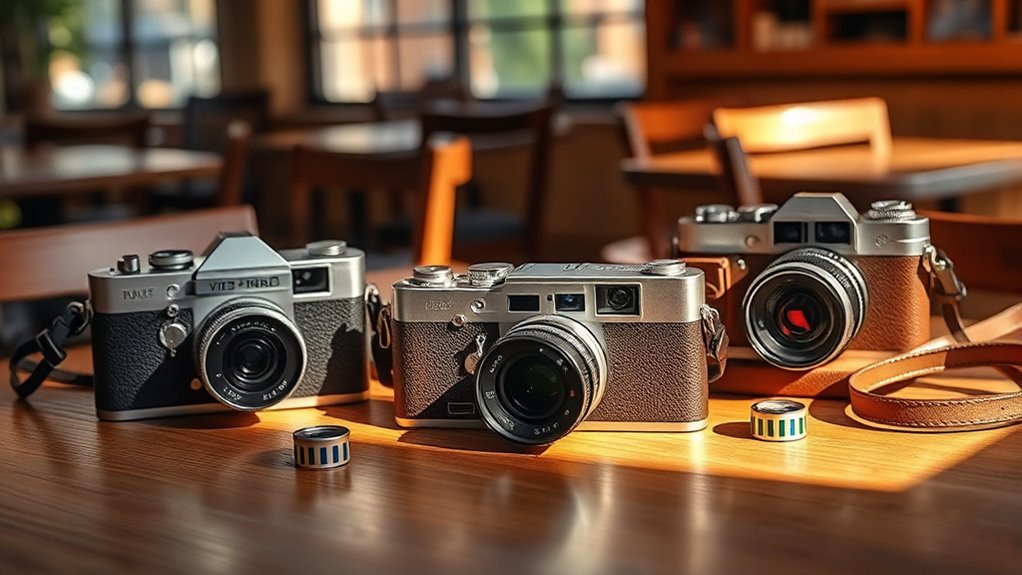
You’ll love the KODAK EKTAR H35 cameras if you want to double your exposures with half-frame format and enjoy hassle-free focus-free shooting. These pocketable film cameras are perfect for capturing every moment without the fuss.
For a sleek, wide-angle lens, the KODAK EC35 in avocado green fits pockets and captures street scenes beautifully. It’s a great companion for anyone who loves urban photography on the go.
If you want a bundle with accessories, the EKTAR H35 kit is great for travel ease. Plus, the brown EKTAR H35 adds style and night modes too. Keep exploring to find which one suits your snap style best.
| Image | Name | Editor's Rating | Price |
|---|---|---|---|
|
|
||

|
|
||

|
|
||

|
|
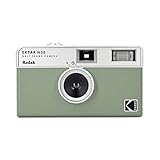
KODAK EKTAR H35 Half Frame 35mm Camera
- 📷 Film-saving: You can have twice as many images per roll. For example, a film roll with 36 exposures can yield...
- 📷 Lightweight and Easy-to-use: The pocket-size camera is light and tiny, and hence convenient for you to bring...
- 📷 Built-in Flash: Turning on the flash by adjusting the silver ring around the lens so that you can use KODAK...
Capture memories in a unique way with the KODAK EKTAR H35 Half Frame 35mm Camera. This camera solves the common issue of limited shots per roll by doubling your exposures, allowing you to take approximately 72 photos on a standard 36-exposure film. It’s perfect for those who want to get more from each roll without the hassle of focusing.
Its focus-free design means you don’t have to worry about adjusting settings—just point and shoot. The built-in flash activates simply by rotating a silver ring, helping you handle various lighting conditions easily. This makes it ideal for casual photography and quick snapshots.
Weighing only 100 grams, the camera is lightweight and portable, available in stylish colors like sage, black, or sand. Its reusable nature means you can enjoy film photography repeatedly, though you’ll need to supply your own film and AAA battery. Maintenance is minimal since it’s designed for simplicity.
Keep in mind, it’s not water-resistant and has some limitations in shutter speed, so handle with care and avoid wet environments. Overall, it brings convenience and efficiency to film photography lovers.
Best for: Casual photographers wanting a lightweight, easy-to-use film camera that maximizes shots per roll with a straightforward, no-fuss operation.
What We Like:
- Doubles photo capacity per roll, maximizing your shooting potential.
- Simple built-in flash activation via rotating ring.
- Lightweight design with multiple color options.
- Focus-free operation for effortless shooting.
- Reusable, making film photography more accessible.
Specification:
| Feature | Details |
|---|---|
| Manufacturer | Kodak |
| Camera Type | Half Frame 35mm Film Camera |
| Weight | 100 grams (0.22 lbs) |
| Dimensions | Compact (specific size not provided) |
| Color Options | Sage, Black, Sand |
| Battery Requirement | AAA Battery (not included) |
| Film Type | 35mm Film (not included) |
KODAK EC35 35mm Film Camera Avocado Green
- Slide cover - keeps your lens safe
- 25mm lens - wide-angle lens ideal for street photography and portraits
- Built-in flash - for versatile shooting environment
Capture life’s candid moments effortlessly with the KODAK EC35 35mm Film Camera in vibrant Avocado Green. This camera is designed for simplicity, removing the hassle of manual focus with its focus-free lens. Its automatic exposure feature ensures your shots are well-balanced without needing technical adjustments.
Equipped with a 25mm wide-angle lens, it excels at framing lively street scenes and intimate portraits. The built-in flash supports low-light environments, allowing you to shoot confidently day or night. Its slide cover safeguards the lens during travel, preserving image quality over time.
The compact and lightweight design makes it easy to carry anywhere, slipping comfortably into your pocket or bag. A camera strap adds convenience, so you can keep it close and ready. Maintenance is straightforward—just remember to purchase film and batteries separately, as they’re not included.
This camera is ideal for beginners and casual photographers seeking a no-fuss way to explore 35mm film photography. Its fixed focus limits creative depth control but ensures sharp results for everyday shooting.
Best for: Beginners and casual shooters wanting a reliable, easy-to-use 35mm film camera for street and portrait photography.
What We Like:
- User-friendly focus-free lens and automatic exposure
- Compact, lightweight design with protective slide cover
- Built-in flash for versatile low-light shooting
- Convenient camera strap included
Specification:
| Feature | Details |
|---|---|
| Manufacturer | KODAK |
| Dimensions | 4.69 x 1.63 x 2.56 in |
| Weight | Lightweight |
| Lens | 25mm wide-angle |
| Color Options | Avocado Green |
Kodak EKTAR H35 Half Frame 35mm Camera Bundle
- 📷 This bundle included one roll of Kodak Ultramax400 24exp film, battery not included.
- 📷 The included roll of Ultramax film will be either the Kodak Alaris packaging (pictured) or the Eastman Kodak...
- 📷 Film-saving: You can have twice as many images per roll. For example, a film roll with 24 exposures can yield...
Capture more moments effortlessly with the Kodak EKTAR H35 Half Frame 35mm Camera Bundle. This innovative camera uses a half-frame format, effectively doubling your shots per roll so you get around 48 photos from a standard 24-exposure film. It’s ideal for those who want to shoot more without frequently changing rolls.
Designed for simplicity, this camera is focus-free and automatic, making it perfect for beginners and analog photography fans. The built-in flash activates by rotating the lens ring, allowing easy use in low-light or indoor settings without fuss.
The compact, lightweight design fits comfortably in your pocket, encouraging spontaneous photography wherever you go. Maintenance is straightforward; just remember to insert a AAA battery (not included) for operation and keep your film stocked.
While it excels in ease and portability, the H35 is not water resistant and has a minimum shutter speed of 1/30 second, which might challenge sharpness in certain low-light or fast-action shots. Overall, it’s a practical choice for those wanting to stretch their film usage with a user-friendly, half-frame 35mm camera.
Best for: Analog photography enthusiasts and beginners looking to maximize film capacity in a compact, easy-to-use camera.
What We Like:
- Doubles exposures per roll with half-frame format
- Simple, focus-free automatic operation
- Built-in flash activated via lens ring rotation
- Lightweight and pocket-sized for easy portability
Specification:
| Feature | Details |
|---|---|
| Manufacturer | Kodak |
| Format | Half Frame 35mm |
| Capacity | About 48 exposures/roll |
| Battery Required | 1 x AAA (not included) |
| Dimensions | Pocket-sized (approx.) |
| Weight | Lightweight |
KODAK EKTAR H35 Half Frame 35mm Camera Brown
- 📷 Film-saving: You can have twice as many images per roll. For example, a film roll with 36 exposures can yield...
- 📷 Lightweight and Easy-to-use: The pocket-size camera is light and tiny, and hence convenient for you to bring...
- 📷 Built-in Flash: Turning on the flash by adjusting the silver ring around the lens so that you can use KODAK...
Capture twice as many memories on a single roll with the KODAK EKTAR H35 Half Frame 35mm Camera in Brown. This camera’s half-frame format effectively doubles your exposures, helping you get the most out of each film roll. It’s a practical choice for photographers who want to extend their shooting without extra costs.
Designed with simplicity in mind, the camera features automatic exposure and night modes, allowing you to focus on creating rather than adjusting settings. Its focus-free, point-and-shoot operation makes it accessible to beginners and those new to analog photography.
The built-in flash activates easily through the silver ring around the lens, providing reliable illumination for day or night shots. Compact and lightweight at just 100 grams, this camera fits comfortably in your pocket, making it ideal for everyday use and spontaneous moments.
Maintenance is straightforward since the camera uses common AAA batteries, though these and film are sold separately. While it isn’t water resistant and has a shutter speed limit of 1/100s, it remains a versatile tool for capturing crisp images with ISO 100–800 film.
Best for: Beginners and analog photography enthusiasts seeking a lightweight, easy-to-use half-frame camera that maximizes film use and adapts to varied lighting conditions.
What We Like:
- Doubles exposures per roll, reducing film expenses
- Easy-to-use built-in flash with quick activation
- Compact, pocket-friendly design for on-the-go shooting
- Focus-free operation simplifies photography for beginners
Specification:
| Feature | Details |
|---|---|
| Manufacturer | Kodak |
| Dimensions | Compact, pocket-sized |
| Weight | 100 grams (0.22 lbs) |
| Material | Durable plastic body |
| Color Options | Brown |
| Film Format | Half Frame 35mm |
| ISO Compatibility | 100–800 |
| Shutter Speed | Up to 1/100s |
Factors to Consider When Choosing a Pocketable Film Camera
When picking a pocketable film camera, you’ll want to contemplate its size and weight to make certain it fits your lifestyle. Think about the film format, lens type, and focus options that suit your shooting style.
Don’t forget to check flash capabilities and battery needs so your camera’s ready whenever inspiration strikes. It’s all about finding what feels right for you and your creative flow.
Size and Weight
Keep an eye on size and weight to make sure your pocketable film camera truly fits your daily carry needs. Aim for a camera weighing under 200 grams to enjoy comfortable all-day use without strain.
Compact dimensions around 5 x 2 x 3 inches or smaller help the camera slip easily into most pockets without bulging. Remember to factor in batteries, straps, or protective covers, as these add bulk and affect real-world portability.
Lighter, smaller cameras are easier to hold steady but might compromise on controls or ergonomics. If you plan to shoot multiple rolls in one outing, prioritize a lower weight per unit to reduce fatigue during extended use.
Balancing size and weight is key to effortless, enjoyable shooting on the go. So, keep it light and compact, and you’ll thank yourself later!
Film Format Compatibility
Although pocketable film cameras come in various formats, choosing one that matches your shooting style and needs is essential. The most common is 35mm, offering wide film stock options, easy processing, and great print quality.
If you want more shots per roll, consider half-frame 35mm. It doubles exposures but yields smaller negatives with less detail.
APS film cameras are compact and easy to load but have limited film and lab support nowadays.
For ultimate portability, 110 or 16mm formats produce tiny cameras and negatives. Though, they do sacrifice resolution and printing options.
Also, check the ISO compatibility of your chosen format to make sure you can shoot in different lighting—35mm covers a broad range, typically ISO 100–800.
Matching format to your needs keeps your workflow smooth and your images sharp.
Lens and Focus Type
Choosing the right lens and focus type can make or break your experience with a pocketable film camera. Fixed-focus lenses are lightweight and simple, keeping subjects from about 1–2 meters to infinity sharp without adjustments. They’re perfect for quick snapshots.
If you want more framing flexibility, zoom lenses help, but they add weight and can reduce low-light performance. Think about the lens focal length too: wide angles suit landscapes and street shots, standard lenses are versatile for everyday use, and telephoto lenses bring distant subjects closer.
Aperture size affects depth of field and light intake—larger apertures let in more light but narrow your focus, while smaller apertures offer greater sharpness. Prioritize optical quality with minimal distortion and consistent sharpness if you value clear, crisp images on the go.
Flash and Lighting Options
When shooting in low light or indoors, having a reliable flash can make all the difference in your photos. Check if your pocketable film camera has a built-in flash and how it activates—whether by a manual switch or rotating ring—to guarantee you can use it effortlessly when needed.
Consider the flash’s effective range, typically within 1 to 4 meters. This way, you’ll know when extra ambient or external lighting is necessary.
Look for cameras offering selectable flash modes like auto, forced, or red-eye reduction. These options give you control over fill light and help preserve the natural ambiance.
Also, evaluate recycle time to avoid missing shots during rapid sequences. And finally, flash exposure compensation or automatic exposure control helps balance flash with ambient light, preventing blown highlights or underexposed backgrounds.
Battery Requirements
Since your pocketable film camera relies on batteries to power features like the flash, light meter, and film advance, understanding its battery requirements is essential. First, check what battery type it uses—AAA, AA, or button cell—as size affects availability, cost, and bulk.
Confirm if it needs one or multiple batteries and how long they last per roll or session to avoid mid-roll power loss. Opt for cameras using common or user-replaceable batteries so you can easily carry spares and find replacements anywhere.
Also, consider whether the flash, light meter, or electronic advance depend on battery power since dead batteries might disable key functions even if film can still be advanced manually. Finally, see if rechargeable batteries fit your charging setup, whether external charger or in-camera USB.
Ease of Use
Although many pocketable film cameras offer advanced features, you’ll want one that’s easy to use to capture moments quickly and confidently. Look for a focus-free or fixed-focus lens paired with automatic exposure, so you can simply point and shoot without fussing over settings.
A built-in flash that activates with a quick twist or slide helps you handle low-light scenes effortlessly. Choose a lightweight model with pocket-friendly dimensions and straightforward controls—think a single-mode operation, visible film-wind indicator, and one exposure counter.
This setup minimizes mistakes and speeds up learning. Also, check that the battery uses common cells and the compartment is easy to access, ensuring power won’t interrupt your shooting.
Prioritizing these ease-of-use factors helps you focus on capturing memories, not camera complications. It’s all about making photography fun and stress-free.
Price and Warranty
Choosing a pocketable film camera means weighing the upfront price against what you get in the box—batteries, straps, and lens covers all add value that can offset ongoing film and processing costs.
Beyond that, check the warranty carefully: does it cover mechanical faults, light leaks, and electronics like flash or shutter? Make sure labor and shipping are included. Also, look into the retailer’s return policy and any satisfaction guarantees so you can test the camera risk-free.
Keep in mind that repairability and parts availability affect long-term costs—a cheap camera without support could cost more if repairs are needed. Finally, consider if the warranty requires registration, proof of purchase, or authorized service centers, as these factors impact how easily and quickly you can make claims.
Frequently Asked Questions
How Do I Develop Film From These Pocketable Cameras?
You can develop film by either sending it to a professional lab or doing it yourself with a developing kit.
Just load the film in a darkroom, follow chemical steps, and rinse before drying your photos carefully.
It might sound tricky at first, but once you get the hang of it, it’s pretty straightforward.
Plus, doing it yourself gives you more control over the final look of your pictures!
Can These Cameras Use Different Film Types or Formats?
Yes, most pocketable film cameras use standard 35mm film, but some might accept different formats like 110 or APS.
Check your camera’s specs to see which film types it supports before loading it.
It’s a good idea to double-check because using the wrong film can cause issues with your shots or even damage the camera.
What Accessories Are Compatible With These Kodak Cameras?
You’ll find compatible accessories like leather cases, wrist straps, and vintage-style flash units that slip onto your Kodak camera, enhancing its charm while protecting it.
They make every photo session feel like a timeless adventure. It’s like giving your camera a little extra personality and keeping it safe at the same time.
How Long Does the Battery Last in These Film Cameras?
You’ll find that battery life in these film cameras typically lasts for hundreds of shots, often around 200-300 exposures. However, it varies by model and usage.
Are These Cameras Suitable for Low-Light Photography?
You’ll find many pocketable film cameras handle low-light well—some models boast apertures as wide as f/1.8. That lets in 83% more light than f/2.8 lenses, which is pretty impressive.
Just remember to use fast film for the best results! It really makes a difference when you’re shooting in dim conditions.
Conclusion
When choosing your pocketable film camera for 2027, you’ll want something compact to carry, reliable to shoot, and stylish to flaunt. Whether you pick the vibrant Kodak EC35, the classic KODAK EKTAR H35, or the bundled option for extra value, each promises ease, quality, and fun.
So grab your favorite, load your film, and get ready to capture memories that last—not just in photos, but in moments you’ll cherish forever. With the best pocketable film cameras, every snap becomes a timeless treasure. These handy cameras are perfect for preserving your adventures in 2027 with ease and style.
No matter which model you choose, pocketable film cameras combine convenience and classic charm to keep your memories vivid and alive.