3 Best Second Hand Digital Cameras for 2027 You Can’t Miss
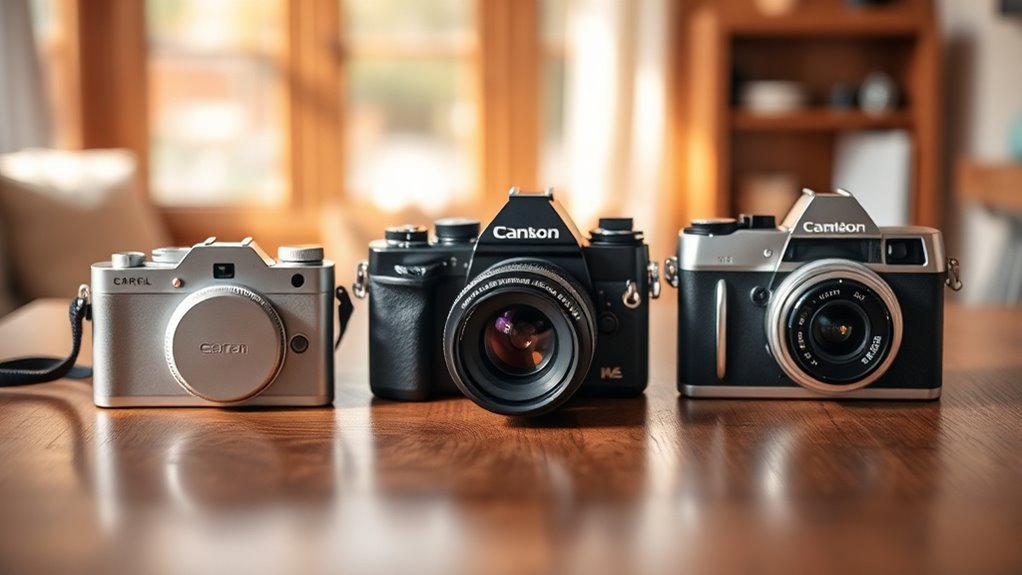
For 2027, the top three second-hand digital cameras you can’t miss are the Sony Cybershot DSC-S700, Canon EOS Rebel T7 with dual lenses, and Sony Cyber-shot DSC-HX9V. These cameras offer excellent value for those looking to buy used gear without breaking the bank. Whether you want something compact, versatile, or powerful, these models stand out in the second-hand market.
You’ll get sharp images from the T7’s large APS-C sensor and versatile zooms, the S700’s lightweight design with clear photos, and the HX9V’s impressive zoom and low-light capabilities.
Each balances image quality, zoom range, and battery life perfectly. Keep exploring to discover which fits your style best.
| Image | Name | Editor's Rating | Price |
|---|---|---|---|

|
|
||

|
|
||

|
|
Sony Cybershot DSC-S700 7.2MP Digital Camera with 3x Optical Zoom
- 7.2-megapixel CCD captures enough detail for photo-quality 14 x 19-inch prints
- 2.4-inch LCD display; 3x optical zoom
- High-sensitivity shooting mode increases ISO to maximum of 1000
Experience clear and detailed photography with the Sony Cybershot DSC-S700, a compact camera designed to fit effortlessly in your pocket. Its 7.2-megapixel sensor captures sharp images, while the 3x optical zoom lets you frame subjects between 35 and 105mm with ease. This camera helps you get the perfect shot without fuss, whether you’re snapping everyday moments or special occasions.
The camera’s 1/2.5-inch Super HAD CCD sensor reduces noise and improves sensitivity, making your photos clearer in various lighting conditions. A bright 2.4-inch LCD screen simplifies framing and lets you quickly switch between scene modes like Twilight and Sports. This functionality caters to different shooting environments, enhancing your creative options.
Maintenance is straightforward thanks to the rechargeable NiMH battery, which offers reliable power on the go. The Memory Stick Duo support provides expandable storage, so you don’t have to worry about running out of memory during your outings. Keep in mind, battery life varies with battery type, and video recording is limited to QVGA resolution.
Overall, the Sony Cybershot DSC-S700 combines ease of use with solid image quality in a lightweight, portable design. Its features address common photography challenges, making it an accessible tool for capturing memories.
Best for: Casual photographers and beginners seeking an easy-to-use compact digital camera with versatile shooting modes and reliable performance.
What We Like:
- Clear 7.2 MP sensor with noise reduction for sharp images
- Handy 3x optical zoom with practical 35–105mm range
- Bright 2.4-inch LCD for easy composition and scene mode selection
- Rechargeable NiMH battery and Memory Stick Duo support for dependable use
Specification:
| Feature | Details |
|---|---|
| Manufacturer | Sony |
| Dimensions | Compact pocket-sized |
| Weight | Lightweight |
| Sensor Type | 1/2.5-inch Super HAD CCD |
| Resolution | 7.2 Megapixels |
| Optical Zoom | 3x (35–105mm focal length) |
| Display | 2.4-inch LCD |
| Storage Media | Memory Stick Duo |
| Battery Type | Rechargeable NiMH |
| Video Resolution | QVGA (320 × 240) |
Canon EOS Rebel T7 DSLR Camera Double Zoom Lens Kit
- Improved Dual Pixel CMOS AF and eye detection AF 24.1 Megapixel CMOS (APS-C) sensor with is 100–6400 (H: 12800)
- Built-in Wi-Fi and NFC technology working temperature range: 32-104°F/0-40°C
- 9-Point AF system and AI Servo AF

Discover the Canon EOS Rebel T7 DSLR Camera Double Zoom Lens Kit, designed to enhance your photography experience with ease and versatility. This kit empowers beginner photographers to capture stunning images across various scenarios without the hassle of frequent lens changes.
Equipped with two zoom lenses—EF-S 18-55mm for wide-angle shots and EF 75-300mm for distant subjects—you can effortlessly switch between landscapes and close-ups. The 24.1 MP APS-C sensor ensures sharp, detailed photos, while Full HD 1080p video lets you explore creative filming with clear results.
Connectivity is streamlined through built-in Wi-Fi and NFC, enabling quick sharing of your work and the option to use your camera as a high-quality webcam via EOS Utility Webcam Beta. Its lightweight, user-friendly design makes it easy to handle and maintain, encouraging you to develop photography skills with confidence.
While the fixed LCD screen limits some shooting angles and the camera records only up to Full HD video, the Rebel T7 offers solid autofocus and manual controls to support your creative growth.
Best for: Beginner photographers and amateurs seeking an affordable, versatile DSLR kit with straightforward features and wireless connectivity.
What We Like:
- Two versatile zoom lenses included for varied shooting needs
- High-resolution 24.1 MP sensor delivers crisp images
- Built-in Wi-Fi and NFC simplify sharing and webcam use
- Lightweight and easy to operate for skill development
- Reliable autofocus with manual control options
Specification:
| Feature | Details |
|---|---|
| Manufacturer | Canon |
| Sensor | 24.1 MP APS-C |
| Lenses Included | EF-S 18-55mm, EF 75-300mm |
| Video Resolution | Full HD 1080p |
| Connectivity | Wi-Fi, NFC |
| Weight | Approx. 475 g (body only) |
| LCD Screen | Fixed (non-articulating) |
Sony Cyber-shot DSC-HX9V 16.2MP Digital Camera
- Speaker is present beside the power button.
- This item has a built in GPS to geo tag photos.
- Full HD 1080/60p with dual record of stills and movies
The Sony Cyber-shot DSC-HX9V redefines what a compact camera can do by blending powerful features into a sleek, easy-to-carry design. Its 16.2 MP Exmor R sensor captures crisp images with vivid detail, even in challenging low-light conditions. This lets photographers focus on creativity without worrying about technical limits.
Equipped with a 16x optical zoom Sony G lens, it handles everything from sweeping landscapes to distant wildlife with ease. The camera’s Full HD 1080/60p video recording ensures smooth, high-quality footage, while built-in GPS tracks your shooting locations automatically, adding valuable context to your photos and videos.
Designed for convenience, it offers Wi-Fi and HDMI connectivity for quick sharing and viewing on larger screens. Optical image stabilization and rapid 10 fps continuous shooting help keep action shots sharp and blur-free. Maintenance is straightforward, with a fixed 3-inch LCD that’s durable but lacks touchscreen capability.
Keep in mind the aperture range of F3.3–F5.9 can limit performance in very low light, especially at full zoom. The battery weight is noted as unusually light, which may suggest a smaller capacity.
Best for: Photographers seeking a compact, versatile camera that delivers high-resolution images and Full HD video in a portable package.
What We Like:
- Sharp 16.2 MP Exmor R sensor for detailed, low-light images
- Versatile 16x optical zoom Sony G lens for varied shooting needs
- Full HD 1080/60p video with built-in GPS for location tracking
- Wi-Fi and HDMI connectivity for easy sharing and viewing
- Optical image stabilization and fast continuous shooting for clear action shots
Specification:
| Feature | Details |
|---|---|
| Manufacturer | Sony |
| Dimensions | Compact (exact size not specified) |
| Weight | Battery approx. 1 g (may indicate limited capacity) |
| Sensor Resolution | 16.2 Megapixels |
| Lens | 16x optical zoom Sony G lens |
| Video Recording | Full HD 1080/60p |
| Display | Fixed 3-inch LCD |
| Connectivity | Wi-Fi, HDMI |
| Additional Features | Built-in GPS, Optical Image Stabilization |
Factors to Consider When Choosing a Second Hand Digital Camera
When picking a second hand digital camera, you’ll want to focus on image quality and the lens options available. Pay close attention to sensor size and battery life to guarantee it meets your needs.
Also, check for connectivity features and compatibility with your devices before making a decision. It’s all about finding something that fits smoothly into your routine and setup.
Image Quality Importance
Although choosing a second-hand digital camera can be cost-effective, you need to prioritize image quality to get the best value. Sensor size and type play a vital role—larger sensors like APS-C or full-frame with CMOS designs deliver better dynamic range, lower noise, and superior low-light performance.
Don’t focus solely on megapixels; while 16–24MP offers more detail and cropping flexibility, it doesn’t guarantee better image quality. Pay attention to real-world ISO performance since high nominal ISO often results in noisy images.
Also, inspect the camera for dust, scratches, or dead pixels, as these defects directly affect image quality. Finally, lens quality—aperture, sharpness, and stabilization—significantly impacts resolution and contrast, so consider these factors when evaluating your second-hand camera’s image output.
Lens and Zoom Options
Considering lens and zoom options plays a crucial role in selecting a second-hand digital camera that fits your shooting style. First, check the lens mount and compatibility to make certain it accepts the lenses you want—whether wide-angle, standard, or telephoto—and any adapters you might use.
Look at the focal length range and 35mm-equivalent measurements to understand zoom coverage. Also, evaluate the maximum aperture across the zoom range; wider apertures like f/2.8 improve low-light shots and depth of field.
Confirm if image stabilization is in the lens or camera body, as this impacts handheld performance. Finally, inspect the lens condition carefully—check for scratches, fungus, oil on aperture blades, smooth zoom and focus action, and accurate autofocus to avoid surprises after purchase.
Sensor Size Significance
Since sensor size plays a major role in image quality, you’ll want to understand how it affects your second-hand digital camera choice. Larger sensors like APS-C or full-frame capture more light, giving you better low-light performance and less noise at higher ISOs.
They also offer a shallower depth of field, making it easier to isolate subjects and create pleasing background blur. Keep in mind, larger sensors usually need longer focal lengths or wider lenses to match a smaller sensor’s field of view, which impacts your lens options and system size.
Additionally, bigger sensors typically provide greater dynamic range, letting you recover more highlight and shadow details. Be cautious of very high megapixel counts on small sensors—they can increase noise and reduce image quality compared to fewer pixels on larger sensors.
Battery Life Expectations
When you buy a second-hand digital camera, expect its battery life to be noticeably shorter than a new model’s. Used batteries usually hold only 60–80% of their original capacity, meaning fewer shots per charge.
Check the camera’s reported shot counts and battery type—Li-ion packs typically offer 300–500 shots new, while NiMH AA batteries often provide under 200. Ask about the battery’s charge cycle history and storage conditions, since over 300 full cycles or long storage discharged can reduce capacity quickly.
Always test the camera by fully charging it and taking continuous photos or videos to see if the battery meets your needs. Finally, factor in replacement battery availability and cost, verifying compatibility and genuine capacity before you buy to avoid surprises.
Connectivity and Compatibility
Although second-hand digital cameras offer great value, you’ll want to make sure their connectivity options and compatibility meet your needs. Check which memory card formats and sizes the camera supports, like SDXC or microSD. Also, see if it handles higher capacities or fast UHS speed classes for video.
Verify available ports—USB type/version, HDMI, Wi-Fi, Bluetooth, or NFC—to guarantee smooth file transfers and device connections. Confirm supported file formats and codecs to fit your editing workflow and playback devices.
Also, ensure the camera’s firmware and software utilities are compatible with your computer’s operating system for updates, tethering, or webcam use. Finally, check physical compatibility with your lenses, tripods, microphones, and accessories through mounts, threads, and hot shoe standards.
Physical Condition Check
Before you commit to buying a second-hand digital camera, you’ll want to thoroughly check its physical condition to avoid costly surprises. Inspect the body for dents, deep scratches, or loose seams, which might signal internal damage.
Take a close look at the lens or mount for scratches, fungus, haze, or separation. You can do this by extending the zoom and shining a light through it—fungus can spread and ruin image quality.
Power on the camera and check the LCD and viewfinder for dead pixels or discoloration. Test all buttons and dials to make sure they click smoothly without sticking.
Don’t forget to cycle the zoom and focus rings, listening for any grinding or resistance. Also, verify that the autofocus works properly.
Finally, have a look at the battery compartment and card slot for any signs of corrosion or moisture damage. Make sure the battery door closes securely and that the battery holds a charge.
Frequently Asked Questions
How to Verify the Authenticity of a Second Hand Digital Camera?
You can verify a second hand digital camera’s authenticity by checking its serial number with the manufacturer. This helps confirm if the camera is genuine and not a counterfeit.
Also, inspect the camera for any physical damage. It’s a good idea to test all the functions to make sure everything works properly.
Don’t hesitate to ask for the original receipts. And, double-check that the firmware matches the official versions—this can tell you a lot about the camera’s legitimacy.
What Accessories Should I Buy With a Second Hand Camera?
You should grab extra batteries, memory cards, and a sturdy camera bag—did you know 70% of users report running out of power during shoots?
Also, consider a tripod and lens cleaning kit to keep your gear steady and spotless. It really makes a difference when you’re out capturing those perfect shots.
Can Second Hand Digital Cameras Be Repaired Easily?
Yes, you can usually repair second hand digital cameras easily, especially common issues like lens or shutter problems.
Just make sure to find a reliable technician or service center familiar with your camera model.
That way, you’ll have a better chance of getting your camera fixed properly without any hassle.
It’s always good to ask around or check reviews before choosing where to get it repaired.
How to Clean and Maintain a Second Hand Digital Camera?
Oh sure, just ignore cleaning!
But if you want your camera to last, gently wipe the lens and use a blower for dust.
Keep sensors covered and store it in a dry, cool place.
Maintenance really matters!
Are Refurbished Cameras a Better Option Than Second Hand Ones?
Refurbished cameras often offer better reliability than second hand ones since they’re professionally inspected and repaired. You’ll get a warranty too, giving you peace of mind.
They might cost a bit more upfront, but that extra cost can be worth it for the added security. So, if you want something dependable, refurbished could be the way to go.
Conclusion
Choosing the right second hand digital camera can feel like finding a needle in a haystack, but with options like the Sony Cybershot DSC-S700, Canon EOS Rebel T7, and Sony Cyber-shot DSC-HX9V, you’re already ahead. Remember to take into account factors like condition, features, and price carefully.
With a little patience and know-how, you’ll capture stunning shots without breaking the bank. Don’t rush—your perfect camera is waiting to tell your story.
When searching for a second hand digital camera, focus on cameras that suit your style and needs. Check the camera’s condition thoroughly and compare prices to get the best deal. Cameras like the Sony Cybershot DSC-S700 and Canon EOS Rebel T7 offer excellent value for their features.
In the end, choosing a second hand digital camera is about balancing quality, affordability, and your photography goals. Take your time, do your research, and soon you’ll have a reliable camera that helps you create amazing photos without spending a fortune. Your ideal second hand digital camera is out there—happy hunting!