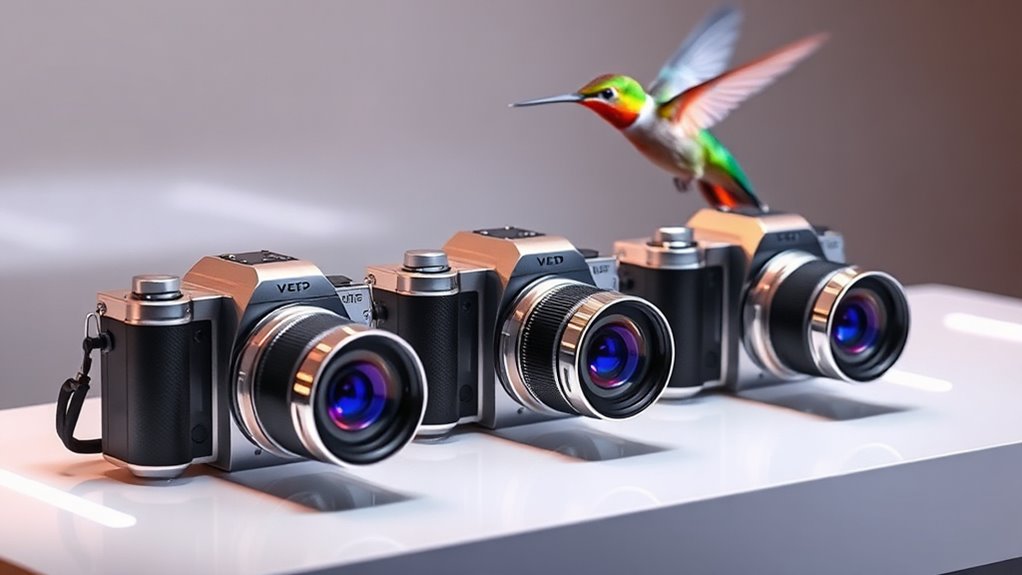
3 Best Slowmo Cameras for 2027 That Capture Every Detail
For 2027, the top three slow-mo cameras that capture every detail are the DJI Osmo Action 4 Essential Combo, DJI Osmo Pocket 3, and GoPro Hero12 Black. These cameras are perfect if you want to nail every frame in slow motion and keep your footage crisp.
You’ll get up to 4K at 120fps on the Osmo models, which is fantastic for super smooth slow-mo shots. Plus, thanks to 10-bit recording, the color grading is stunning and vibrant.
On the other hand, the GoPro Hero12 Black offers up to 5.3K at 60fps with excellent stabilization, making it a solid choice for action-packed scenes. Each camera handles slow motion smoothly, balancing sharp detail and motion clarity.
Keep exploring to find out which one suits your filming style best!
| Image | Name | Editor's Rating | Price |
|---|---|---|---|
|
|
||
|
|
||

|
|
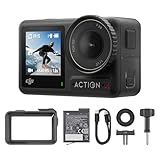
DJI Osmo Action 4 Essential Combo, Waterproof Action Camera Vlogging Camera
- Superior Low-Light Performance with 1/1.3-inch Sensor - Struggling with grainy footage in low light? Osmo Action...
- Pro-Grade Color Science - Worried your videos lack real-life colors? 10-bit color depth captures subtle shades, while...
- See More, Feel More - Want to capture more action and scenery? Shoot in 4K at 120fps with a 155° ultra-wide field of...
Capture every thrilling moment with the DJI Osmo Action 4 Essential Combo, designed for those who demand more from their action cameras. This rugged, waterproof camera excels at filming smooth slow-motion footage, making it ideal for adventures on land and underwater.
Its advanced 1/1.3-inch sensor delivers sharp, vibrant 4K video at up to 120 fps, allowing you to relive your experiences in stunning detail. The wide 155° ultra-wide lens ensures immersive shots, while the 10-bit color depth and D-Log M profile provide flexibility for professional-grade editing.
Built to withstand tough conditions, the camera stays waterproof up to 18 meters and functions in temperatures as low as −20°C. Magnetic quick-release mounts and dual bright touchscreens offer quick setup and intuitive control, helping you focus on your activity instead of fiddling with settings.
Maintenance is straightforward thanks to its durable design, but note that battery life lasts up to 150 minutes, so carrying extras is wise for longer outings. The Essential Combo does not include the curved adhesive base found in other bundles, which may limit mounting options for some users.
Best for: vloggers, adventurers, and underwater enthusiasts seeking a versatile action camera with excellent slow-motion capabilities and rugged durability.
What We Like:
- Captures crisp 4K video at 120 fps with a wide field of view
- Waterproof up to 18 meters and cold-resistant to −20°C
- Dual ultra-bright touchscreens for easy control
- Magnetic quick-release mounts for fast setup
- Supports professional editing with 10-bit color and D-Log M profile
Specification:
| Feature | Details |
|---|---|
| Manufacturer | DJI |
| Dimensions | Compact (exact size not specified) |
| Weight | Lightweight (exact weight not specified) |
| Sensor Size | 1/1.3-inch |
| Video Resolution | Up to 4K at 120 fps |
| Field of View | 155° ultra-wide |
| Waterproof Depth | Up to 18 meters |
| Operating Temp | Down to −20°C |
| Color Depth | 10-bit |
| Mounting | Magnetic quick-release mounts |
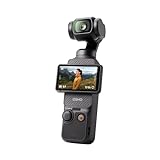
DJI Osmo Pocket 3 Vlogging Camera with 1” CMOS & 4K/120fps Video
- Capture Stunning Footage - Osmo Pocket 3 vlogging camera features a 1-inch CMOS sensor and records in 4K resolution at...
- Effortlessly Frame Your Shots - Get the ideal composition with Osmo Pocket 3's expansive 2-inch touch screen that...
- Ultra-Steady Footage - Say goodbye to shaky videos! Osmo Pocket 3's advanced 3-axis mechanical stabilization delivers...
Capture stunning slow-motion videos with the DJI Osmo Pocket 3, designed to elevate your vlogging game. Its 1-inch CMOS sensor records crisp 4K footage at 120fps, solving the challenge of blurry or shaky clips. This camera ensures your slow-motion videos are smooth and vibrant, thanks to 10-bit color depth for richer details.
The built-in 3-axis gimbal stabilizes every shot, eliminating unwanted movement. ActiveTrack 6.0 enhances your recordings by keeping your subjects perfectly in focus, even during fast action. Its compact, pocket-sized design with a rotatable 2-inch touchscreen makes framing shots easy from any angle.
Maintenance is straightforward, but note that the charger comes separately, so plan ahead to keep your device powered. Battery life supports about 166 minutes, giving you ample time for extended shooting sessions. Pair it with the DJI Mic 2 to improve audio quality for professional results.
Best for: Vloggers and content creators seeking a compact, high-quality 4K slow-motion camera with advanced stabilization and tracking for dynamic, professional-looking videos.
What We Like:
- Crisp 4K/120fps slow-motion with 10-bit color depth
- Smooth stabilization via integrated 3-axis gimbal
- Precise subject tracking with ActiveTrack 6.0
- Compact design with rotatable 2-inch touchscreen
- Long battery life ideal for extended shooting
Specification:
| Feature | Details |
|---|---|
| Manufacturer | DJI |
| Sensor | 1-inch CMOS |
| Video Resolution | 4K at 120fps |
| Color Depth | 10-bit |
| Stabilization | 3-axis gimbal |
| Screen Size | 2-inch touchscreen |
| Battery Life | Approx. 166 minutes |
| Dimensions | Pocket-sized design |
| Charger | Sold separately |
GoPro Hero12 Black Waterproof Action Camera
- What's Included: Hero12 Black Camera, enduro battery, usb-c charging cable, curved adhesive mount, mounting buckle, and...
- Rugged & Waterproof to 33ft (10m): HERO12 Black is built to withstand extreme conditions and is fully waterproof, making...
- 2x Longer Runtime: Achieve up to 70 minutes of continuous recording at 5.3K60 with dramatically improved battery...
Capture every thrilling moment with the GoPro Hero12 Black Waterproof Action Camera, engineered to keep up with your most intense adventures. Whether you’re racing down a mountain or diving underwater, this camera delivers sharp, realistic footage that preserves every detail.
Its advanced sensor and 5.3K60 Ultra HD video ensure vibrant colors and clarity, while HyperSmooth 6.0 stabilization and 360° Horizon Lock eliminate shaky footage. This means your videos stay smooth and professional, even during fast, unpredictable action.
Designed to withstand rugged environments, the camera is waterproof up to 33 feet and built tough for outdoor use. The Enduro battery offers up to 70 minutes of continuous recording, though carrying extras is wise for longer sessions. The intuitive GoPro OS supports live streaming and voice commands, enhancing ease of use in dynamic situations.
Maintenance is straightforward; simply rinse after exposure to saltwater and keep the lens clean for optimal performance. Its compatibility with external microphones expands audio quality, making it a versatile tool for content creators.
Best for: Adventurers and content creators needing a durable, high-quality waterproof camera with advanced stabilization and slow-motion capabilities.
What We Like:
- Ultra HD 5.3K60 video with HDR and up to 8x slow motion at 2.7K
- HyperSmooth 6.0 and 360° Horizon Lock for steady footage
- Rugged, waterproof design with Enduro battery for extended use
- Supports live streaming and voice commands
- Compatible with external microphones for enhanced audio
Specification:
| Feature | Details |
|---|---|
| Manufacturer | GoPro |
| Dimensions | Approx. 2.6 x 1.8 x 1.4 in |
| Weight | Approx. 154 g (0.34 lb) |
| Sensor Size | 1/1.9″ |
| Waterproof Depth | Up to 33 ft (10 m) |
| Video Resolution | Up to 5.3K60 Ultra HD |
| Field of View | Extra-wide 156° |
| Battery Life | Up to 70 minutes (Enduro) |
Factors to Consider When Choosing a Slowmo Camera
When choosing a slowmo camera, you’ll want to check the frame rate options to capture the perfect moment. Don’t forget how sensor size impacts image quality and low-light performance.
Also, consider resolution capabilities and stabilization technology to make certain smooth, clear footage every time. These factors really make a difference when you want those slow-motion shots to look professional and crisp.
Frame Rate Options
Choosing the right frame rate is essential for achieving smooth slow-motion footage that fits your creative vision. Higher frame rates like 120 fps, 240 fps, and even 960 fps let you slow down motion by 4×, 8×, or 32× respectively, creating dramatic effects.
Keep in mind, though, that pushing frame rates often means lowering resolution—true 4K may max out at 120 fps, while higher rates drop to 1080p or 720p. Also, high frame-rate shooting usually shortens continuous recording time due to heat and codec limits, so check tested runtimes before committing.
Since higher frame rates need more light per frame, plan for brighter scenes or faster lenses to avoid noisy footage. Finally, consider your editing workflow—recording in 10-bit or log at high fps offers color flexibility but demands more storage and processing power.
Sensor Size Impact
Beyond frame rates, the sensor size plays a key role in shaping your slow-motion results. Larger sensors—1 inch and above—collect more light per pixel, boosting low-light performance and cutting noise in high-frame-rate shots.
Don’t overlook pixel size either; bigger pixels (around 2.4 micrometers or more) capture more photons, delivering cleaner footage with better dynamic range. While higher resolution sensors let you crop and stabilize slow-mo clips, they can increase rolling-shutter effects and demand more processing power at extreme frame rates.
Sensor readout speed and type matter too—global shutters or fast readouts minimize motion artifacts like skew and wobble. Ultimately, a sensor’s size and tech affect dynamic range, letting you preserve details in highlights and shadows during capture and color grading.
Resolution Capabilities
Capture stunning slow-motion footage by assuring resolution capabilities in your camera choice. Higher resolutions like 4K preserve incredible detail, letting you inspect frames closely or reframe without pixelation.
Remember, though, many cameras reduce resolution at ultra-high frame rates—240 fps or more often drop to 1080p or 720p. Sensor size and megapixels also affect sharpness, so bigger sensors with more pixels deliver clearer slow-mo shots.
Don’t overlook bit depth and color sampling; 10-bit and 4:2:2 color preserve smoother gradients and richer hues, which is essential for post-processing. Finally, consider sustained recording limits since high-res slow motion generates large files that can overwhelm buffers or cause overheating.
Balancing resolution with frame rate and recording constraints assures you get the best slow-motion quality possible.
Stabilization Technology
Resolution plays a big role in slow-motion quality, but without solid stabilization, your footage can still look shaky or blurry. To capture smooth slow-mo, you need a combination of optical or mechanical stabilization plus electronic stabilization to handle both big movements and subtle shakes at 120–240 fps or higher.
Mechanical 3-axis gimbals keep motion and horizon steady, preserving fine details that electronic stabilization might sacrifice through cropping or resolution loss. Keep in mind, electronic stabilization often crops the field of view and can introduce rolling-shutter artifacts, especially at high frame rates.
Faster sensor readout speeds and low processing latency improve real-time stabilization and reduce motion distortion. Also, when shooting handheld, consider your camera’s battery and heat management, since extended high-fps recording stresses stabilization processing and can cause frame-rate drops or quality loss.
Low-Light Performance
When shooting slow-motion footage in low light, your camera’s sensor size and pixel pitch play an essential role in capturing clear, detailed images. Larger sensors with bigger pixels gather more light, improving the signal-to-noise ratio and preserving detail despite reduced exposure times at high frame rates.
Opt for lenses with wider apertures (lower f-numbers) to let in more light. This lets you use faster shutter speeds or lower ISO settings for cleaner slow-mo shots.
High native ISO performance and low read noise are vital since slow-motion reduces per-frame exposure time. Cameras offering 10-bit color and log gamma profiles help retain shadow detail, giving you more flexibility in color grading without crushing blacks.
Additionally, technologies like sensor stabilization, gimbals, and efficient codecs reduce the need to push ISO. This minimizes noise while maintaining usable exposure in challenging lighting.
Battery Life Duration
Managing battery life plays a crucial role in slow-motion filming, especially since recording at high frame rates like 4K at 120 fps drains power much faster than standard video. You’ll notice a 30–70% drop in runtime compared to normal 30–60 fps shooting.
To extend your sessions, opt for batteries with higher mAh ratings. Keep in mind, heat buildup from prolonged shooting can force thermal throttling or shutdowns, cutting your effective recording time.
Features such as image stabilization, wireless connections, bright displays, and external mics also increase power consumption, so use them wisely. Always carry spare batteries or an external power source like a power bank or battery grip, especially for fieldwork.
Slow-motion recording often maxes out at just tens of minutes per battery. Planning your power needs guarantees uninterrupted filming. It’s better to be prepared than to run out of juice mid-shot!
Mounting Versatility
Battery life can limit how long you film, but how you mount your slow-motion camera affects how easily you capture the shots you want. Make sure your camera supports common mounting standards like 1/4″-20 tripod threads, cold shoes, or GoPro-style three-prong mounts. That way, you can use a wide range of accessories without needing extra adapters.
Look for magnetic or quick-release mounts to switch angles quickly during fast-paced shoots. It really helps keep things moving smoothly. Also, check if the camera works with extension gear like rods, poles, or gimbals.
You’ll want a camera that supports both horizontal and vertical orientations for versatile framing. Integrated self-locking mounts and vibration-damping features are a big plus too—they keep your shots stable during high-G or shaky conditions. And don’t forget to confirm the camera’s compatibility with waterproof housings for secure underwater or wet-environment mounting.
Audio Recording Quality
Because slow-motion footage stretches time, it also alters the audio, often increasing pitch and revealing artifacts. To capture clear sound, rely on external microphones recording independently with higher bit depth and bitrate.
Built-in mics on compact cameras usually sample at lower rates (16-24 bit, 48 kHz) and pick up wind and handling noise, especially at high frame rates. Aim for at least 48 kHz/24-bit audio to preserve transient details, vital for dialogue or percussive sounds.
Use wind protection and shock mounts to reduce noise. Also, synchronize audio and video using timecode or clap-based methods to prevent drift during extended takes.
Always monitor sound with headphones and record a secondary safety track at lower gain to avoid clipping from unexpected loud events that slow motion can emphasize. It’s a simple step that really pays off!
Frequently Asked Questions
How Do Slow Motion Cameras Affect Battery Life During Extended Shoots?
Slow motion cameras drain your battery faster during extended shoots because they process more frames per second.
You’ll want extra batteries or external power to keep filming without interruptions and capture every detail smoothly.
Trust me, having backup power sources can make a huge difference when you’re shooting for a long time. It helps you stay focused on getting the perfect shot without worrying about your camera dying on you.
Can Slow Motion Footage Be Edited on Standard Video Editing Software?
Editing slow motion footage on standard software is like sculpting a detailed statue from clay—you can shape it, adjust speed, and add effects effortlessly.
Just make sure your software supports high frame rates and formats for smooth results. That way, your slow motion clips will look silky and professional every time.
What Lighting Conditions Are Best for Capturing High-Quality Slow Motion Videos?
You’ll want bright, well-lit environments to capture high-quality slow motion videos. Natural daylight or strong artificial lighting reduces motion blur and noise.
This lets your camera record crisp, detailed frames even at super high frame rates. So, think about shooting outside on a sunny day or using powerful lights indoors. It really makes a big difference!
Are There Any Slowmo Cameras Specifically Designed for Indoor Sports?
When the rubber meets the road indoors, you’ll want slowmo cameras with excellent low-light sensors and fast autofocus.
Models like the Sony RX100 VII or GoPro Hero 11 excel, capturing every play without missing a beat.
These cameras are designed to keep up with the fast pace of indoor sports, even in challenging lighting conditions.
How Do Slowmo Cameras Handle Audio Synchronization With Video?
Slowmo cameras often record audio separately or at lower frame rates, so you’ll need to sync audio manually during editing.
Many use timecode or clapperboards to align sound perfectly with your slow-motion footage.
It might seem tricky at first, but with the right tools, syncing audio becomes pretty straightforward. Just keep an eye on those cues, and you’ll nail it every time!
Conclusion
Choosing the right slowmo camera means balancing cutting-edge features with your unique needs. While the DJI Osmo Action 4 dazzles with a rugged waterproof design, the Osmo Pocket 3 offers sleek portability without sacrificing power.
Meanwhile, the GoPro Hero12 Black stands out as a versatile all-rounder. You’ll find that the perfect camera isn’t just about specs—it’s about how seamlessly it fits your style.
Whether you’re capturing fast-paced action or subtle moments, these slow-motion cameras excel at turning every moment into a masterpiece. So, when picking the best slowmo camera, consider what matters most to you—durability, portability, or versatility—to find the perfect fit for your creative vision.