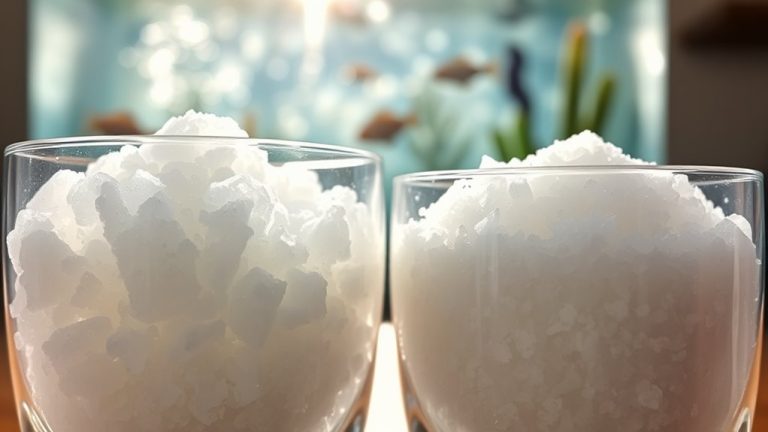

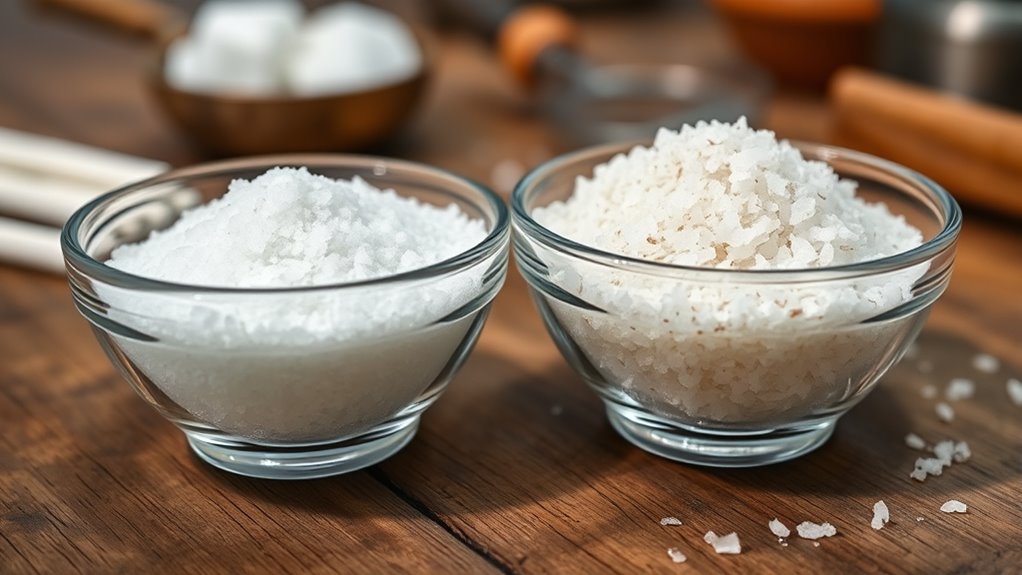
10 Things You Should Know When You Substitute Canning Salt for Kosher Salt
When you substitute kosher salt for canning salt, always weigh it since crystal size varies and affects salt volume and salinity.
Kosher salt needs about 25% more by weight because larger crystals take up more space.
Grinding kosher salt helps it dissolve faster and keeps brines clear.
Avoid salts with additives or iodine to prevent cloudiness and off-flavors.
Getting these details right guarantees safe, tasty pickling.
Keep going to uncover more essential tips for perfect results.
Key Takeaways
- Always weigh kosher salt when substituting for canning salt. This is because the grain size differences affect salt concentration and recipe accuracy.
- Increase kosher salt by about 25% by weight compared to canning salt. This helps maintain proper salinity and keeps your preservation safe.
- Grinding kosher salt before use really helps. It improves dissolution, prevents cloudy brines, and ensures even salt distribution in pickling.
- Avoid iodized or additive-containing salts. They can cause brine cloudiness, discoloration, and might affect fermentation quality.
- Make sure to use trusted food preservation guides. Also, double-check salt labels to pick pure, additive-free salt for a safe substitution.
Why Measure Salt by Weight When Substituting?
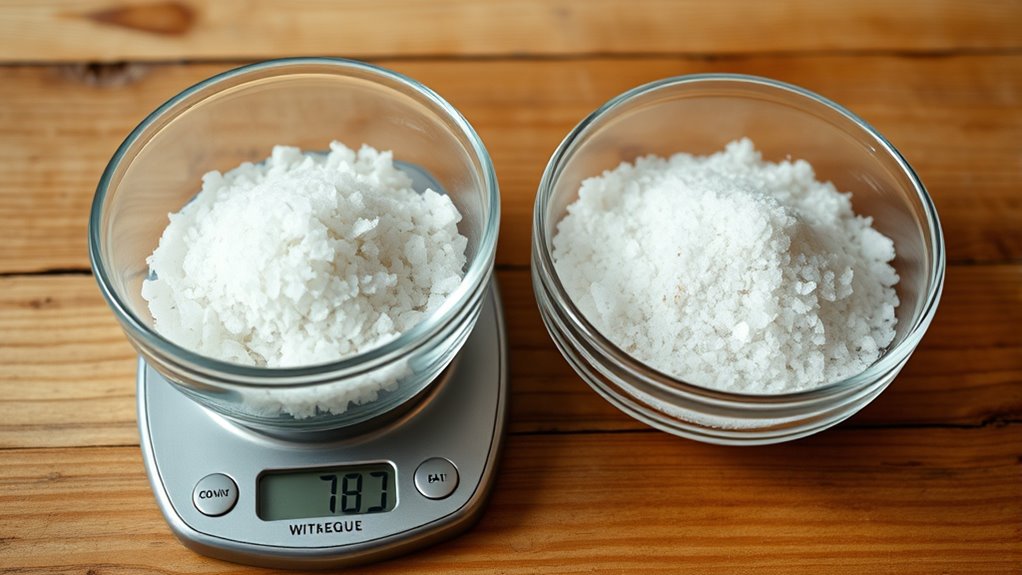
Although it’s tempting to measure salt by volume, you should always weigh it when substituting because different salts vary in crystal size and density. Measuring salt by volume can mislead you—tablespoons of coarse kosher salt don’t pack the same amount of actual salt as fine canning salt.
When you rely on weight measurement, you get a consistent and precise quantity every time, which is essential for both safety and the quality of your preserved foods. Since salt substitution ratios are based on weight, you’ll often need to increase the amount by about 25% when swapping kosher salt for canning salt.
Using a scale eliminates guesswork, helping you maintain the correct salt concentration necessary for proper preservation. So, to guarantee your recipes turn out safe and flavorful, always trust weight measurement over volume when measuring salt. It’s a simple step that makes all the difference.
How Crystal Size Affects Salt Volume and Salinity
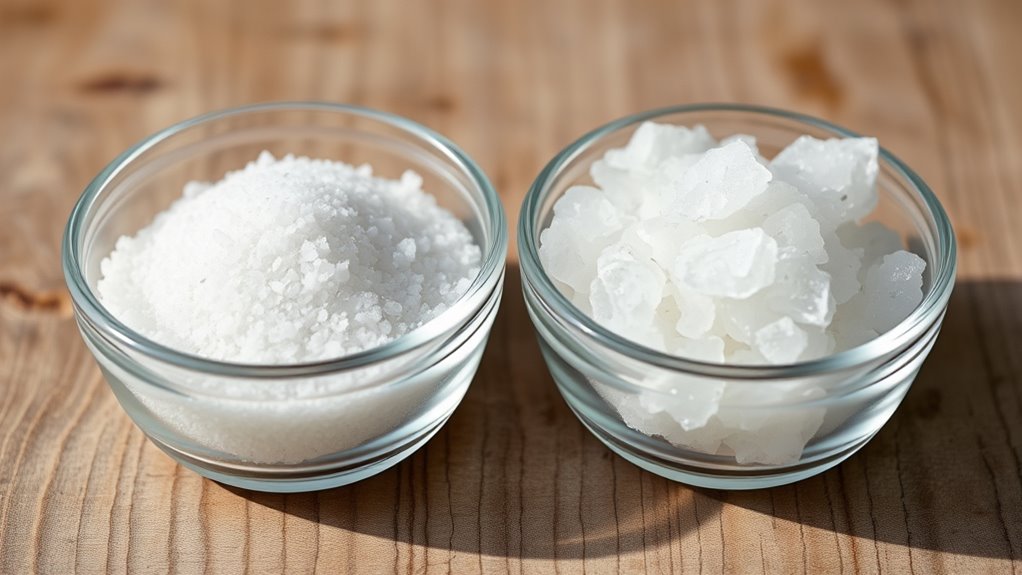
Because salt crystals come in different sizes, the same volume of salt doesn’t always mean the same amount of salt. Larger crystals, like those in kosher salt, take up more space per teaspoon, so they don’t pack as densely.
Finer salts, like canning salt, have smaller crystals that fit more tightly in the same volume. This means you get more salt by weight in a teaspoon of fine salt compared to coarse salt.
So, if you measure by volume alone, using kosher salt instead of canning salt can actually reduce the salinity in your recipe. When you swap salts, knowing how crystal size affects volume helps you keep the right saltiness.
Coarser salts need more volume to match the salinity of finer salts. To avoid messing with flavor or preservation, think about the crystal size before changing your measurements.
Being aware of this ensures your canned or pickled goods stay both safe and tasty every time.
How Much Kosher Salt Replaces Canning Salt
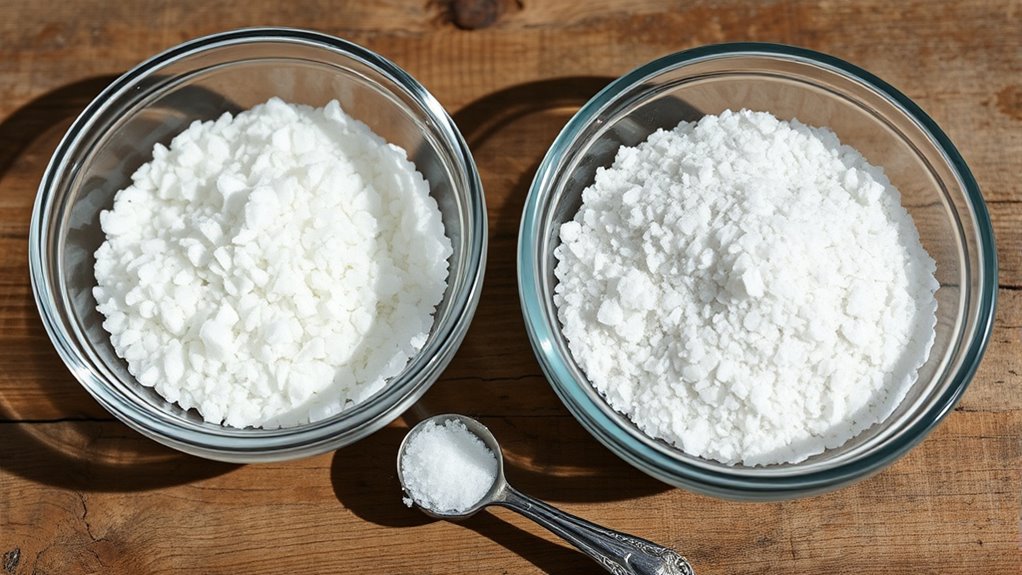
When substituting kosher salt for canning salt, you’ll need to increase the amount by about 25% because of its coarser crystals. Measuring by weight is your best bet since volume can be misleading.
Keep in mind, the grain size varies between brands, so weight guarantees a more accurate swap. It’s always a good idea to double-check your measurements to get the best results.
Kosher Salt Measurement
Since kosher salt has larger crystals than canning salt, you’ll need to increase the amount by about 25% by weight to substitute it accurately. Proper kosher salt measurement is essential because its grain size differs, affecting volume measurements.
To get the best results, always weigh your salt instead of relying on volume. Here’s a quick reference for substitution:
| Canning Salt (Volume) | Kosher Salt (Volume) |
|---|---|
| 1 tablespoon | 1 1/4 tablespoons |
| 2 tablespoons | 2 1/2 tablespoons |
| 3 tablespoons | 3 3/4 tablespoons |
Using a kitchen scale ensures precision and consistency in your pickling or canning recipes. Just adjust as needed based on your kosher salt’s grain size.
Weight Versus Volume
Although kosher salt’s larger crystals affect volume measurements, you can achieve accurate substitution by weighing your salt. Since kosher salt crystals are bigger and less dense than canning salt, measuring by volume alone will under-salt your recipe.
For example, one tablespoon of pickling salt weighs about ¾ oz, but the same volume of kosher salt contains less salt by weight. To substitute effectively, increase the weight of kosher salt by roughly 25% compared to canning salt.
Using a kitchen scale guarantees you get the right salt concentration, which is vital for safe canning or pickling. Relying on volume measurements risks inconsistent seasoning and safety issues, so always prioritize weight over volume when swapping these salts.
How to Grind Kosher Salt for Better Pickling
Grinding your kosher salt can make a big difference in how well it dissolves during pickling. You can use a food processor or spice grinder to achieve a finer, more consistent texture that helps flavors develop evenly.
Taking a moment to grind and sift your salt guarantees your pickles turn out perfectly every time. It’s a simple step that really ups your pickling game!
Benefits Of Grinding
Three key benefits come from grinding kosher salt before using it in pickling: it dissolves faster, distributes more evenly, and helps maintain a consistent salt concentration.
Grinding kosher salt reduces its particle size, which speeds up solubility and prevents cloudy brines. This even distribution makes sure every bite is perfectly seasoned and safe.
Maintaining a consistent salt concentration is super important for effective preservation.
| Benefit | Explanation |
|---|---|
| Faster Dissolving | Smaller grains dissolve quickly in brine |
| Even Distribution | Uniform salt spread avoids uneven seasoning |
| Consistent Concentration | Accurate salting for safe, effective pickling |
Grinding Methods Explained
To get the most out of kosher salt in your pickling, you’ll want to break down those large crystals into smaller, more uniform grains. Grinding coarse salt helps it dissolve faster and more evenly in your brine.
You can pulse kosher salt in a food processor for 10-15 seconds to achieve this finer texture quickly. If you prefer a hands-on approach, use a spice grinder or mortar and pestle for precise control over the grind size.
Grinding chunky salts like sel gris also boosts solubility, preventing undissolved crystals in your pickling liquid. Remember to measure your ground salt by weight since volume can vary after grinding.
Proper grinding ensures consistent flavor and a clear, well-balanced brine every time.
Impact On Pickling
When you break down kosher salt into finer grains, you’ll notice it dissolves faster and more evenly in your pickling brine. This makes a big difference compared to using coarse kosher salt, which can leave uneven saltiness and cloudy brine.
To get the best results, grind your kosher salt until it resembles the fine texture of canning salt. Here’s why it matters:
- Finer kosher salt dissolves quickly, ensuring consistent flavor.
- It prevents sediment and cloudiness in the pickling liquid.
- Even salinity improves fermentation quality.
- Grinding coarse kosher salt with a food processor or mortar and pestle mimics canning salt’s purity.
Using properly ground kosher salt helps you achieve clear, flavorful pickles every time. Give it a try—you’ll taste the difference!
What Anti-Caking Agents Do to Your Pickle Brine
Although anti-caking agents like sodium ferrocyanide help keep salt free-flowing, they can cause your pickle brine to become cloudy and murky. These additives, designed to prevent clumping, often introduce cloudiness that’s especially noticeable in clear jars or during long-term storage.
When you use salt containing anti-caking agents, your pickles might develop off-colors or discoloration over time, affecting the final appearance. This cloudiness can make your preserved foods look less appealing, even if the flavor remains intact.
To avoid this, it’s best to choose pure, additive-free salt when making pickle brine. Doing so helps maintain a clear, visually appealing brine, ensuring your pickles look as good as they taste.
Why Canning Salt Makes a Clearer Brine Than Kosher Salt
Because canning salt contains pure sodium chloride without additives, it creates a much clearer brine than kosher salt. When you use canning salt, your brine stays transparent, which is vital for the visual appeal and quality of your preserved foods.
Here’s why canning salt outperforms kosher salt in clarity:
- Canning salt has no anti-caking agents, so it doesn’t cloud the brine.
- Kosher salt often contains anti-caking agents like sodium ferrocyanide, causing a cloudy solution.
- The fine, uniform grains of canning salt dissolve completely, eliminating sediment.
- Kosher salt’s coarser grains dissolve slower and can leave particles that make the brine murky.
Effects of Iodized and Additive Salts on Pickling
The clarity you achieve with pure canning salt highlights why iodized and additive salts can cause trouble in pickling. Iodized salt contains iodine and anti-caking additives that lead to discoloration and cloudiness in your brine, making your pickles look less appealing.
These additives don’t just affect appearance; iodine can react with certain ingredients, further altering the visual quality. Sometimes, it can even impact the safety of the fermentation process by disrupting microbial activity.
Similarly, salts with additives, like some kosher salts, may introduce off-colors and reduce the overall clarity of your preserved foods. To keep your pickles bright and clear, avoid iodized salt and any salts with additives.
Using pure, additive-free canning or pickling salt ensures your brine stays visually clean and your fermentation process remains on track. This way, you get the best results every time.
How Substituting Salt Affects Pickle Flavor and Texture
When you substitute canning salt for kosher salt, you’ll notice changes in both the flavor and texture of your pickles. This happens because of differences in purity, mineral content, and grain size. These factors affect how the salt dissolves and interacts with your pickling ingredients.
To get your salt to equal the intended effect, consider these points:
To achieve the desired pickling results, pay close attention to salt type, grain size, and accurate measurement.
- Canning salt dissolves more completely, ensuring a uniform brine and consistent flavor throughout your pickles.
- Kosher salt’s coarser grains may leave tiny crunchy bits if not fully dissolved, which can change the texture a bit.
- The mineral content in kosher salt can add subtle flavor differences compared to the purer canning salt.
- Accurate measurement is really important—using salt to equal volume can be misleading. It’s best to weigh your salt for consistent pickling results.
Common Mistakes When Swapping Canning Salt for Kosher Salt
Mistakes often happen if you don’t adjust for the differences between canning salt and kosher salt. One common error is measuring by volume rather than weight—kosher salt crystals are much larger, so a cup of kosher salt weighs less than a cup of canning salt. This can throw off your salt ratios, leading to overly salty or under-seasoned results.
Another pitfall is swapping canning salt directly for kosher salt without adjusting amounts, which affects flavor and preservation. You also need to check that your canning salt is free of anti-caking agents; otherwise, you risk cloudiness or discoloration in your canned goods.
Additionally, not accounting for grain size differences impacts how quickly salt dissolves and interacts during canning. Avoid relying solely on generic conversion ratios since different brands and grain sizes vary. This can potentially compromise both safety and quality when swapping canning and kosher salt.
Trusted Resources for Safe Canning Salt Substitution
Although substituting kosher salt for canning salt might seem straightforward, you’ll want to rely on trusted resources to guarantee safety and accuracy. Safe canning depends on using the right type and amount of salt, so consulting reliable guides is key.
Substituting kosher salt for canning salt requires trusted guidance to ensure safety and precise measurements.
Here are four trusted resources to help you:
- USDA and National Center for Home Food Preservation – They recommend pure canning or pickling salt and stress safety in preservation.
- The Ball Blue Book – This reputable guide specifies using additive-free salts for consistent results.
- Food safety experts – They warn against iodized or table salt due to additives causing cloudiness or discoloration.
- Salt packaging labels – Verify kosher salt contains no anti-caking agents that can interfere with safe canning.
Frequently Asked Questions
What Happens if I Use Sea Salt Instead of Kosher Salt?
If you use sea salt instead of kosher salt, you might notice cloudiness or flavor changes in your preserves.
You’ll need to weigh it carefully, since its grain size and saltiness can vary considerably.
How Much Canning Salt Equals 1 Cup Kosher Salt?
Since kosher salt weighs about 10 ounces per cup, use ¾ cup of finer-grained canning salt to match it.
Don’t just eyeball it—measuring by weight guarantees your recipe stays perfectly salted every time.
It’s a simple trick that makes a big difference in your cooking. Trust me, your taste buds will thank you!
What Can I Use if I Don’t Have Canning Salt?
If you don’t have canning salt, you can use kosher salt without additives, measuring by weight and increasing the amount by about 25%.
Just make certain it’s fine-grain and additive-free for safe, clear pickling results. That way, your pickles will turn out great without any cloudiness or off flavors.
What’s so Special About Canning Salt?
When it comes to canning salt, you can’t judge a book by its cover—it’s pure and free from additives.
You’ll love how it dissolves completely, keeping your brine clear and your preserved foods looking just right.
Conclusion
Remember, when swapping canning salt for kosher salt, measuring by weight is key—did you know kosher salt crystals can be up to 50% larger than canning salt? This difference can seriously affect your brine’s salinity and your pickles’ flavor.
By paying attention to crystal size and avoiding additives, you’ll keep your pickles tasty and safe. It’s all about getting that perfect balance in your brine.
Keep these tips in mind, and your next batch will turn out just right every time! Using the right amount of salt, whether canning salt or kosher salt, ensures your pickles stay flavorful and properly preserved. So, next time you substitute canning salt for kosher salt, remember to measure carefully and consider crystal size to maintain the best brine salinity and overall pickle quality.