
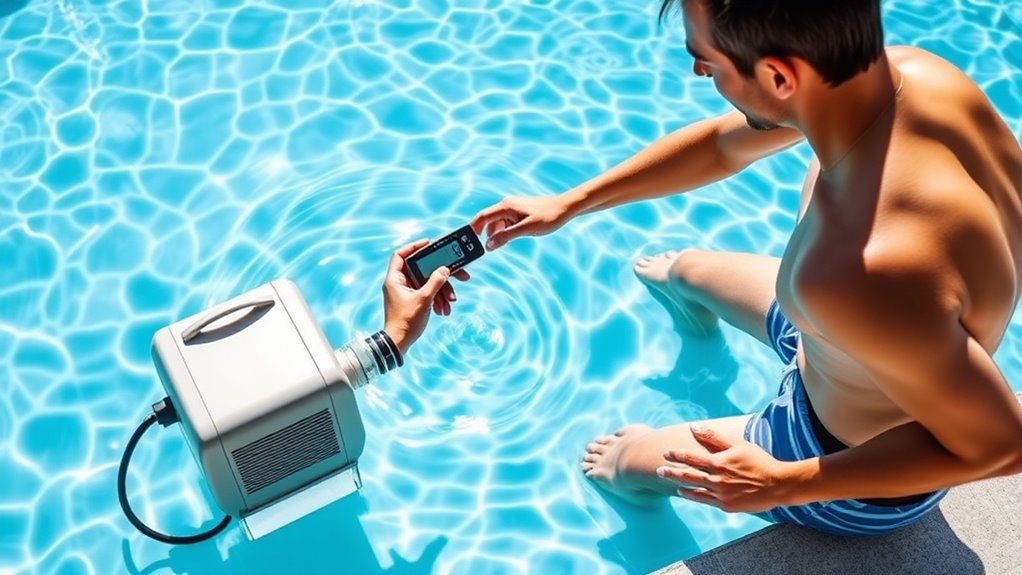
How to Maintain Salt Pools and Do They Need Chlorine
To maintain your saltwater pool, it’s important to regularly test and balance the water’s pH, salt, and chlorine levels. Doing this keeps your pool clean, safe, and enjoyable for everyone.
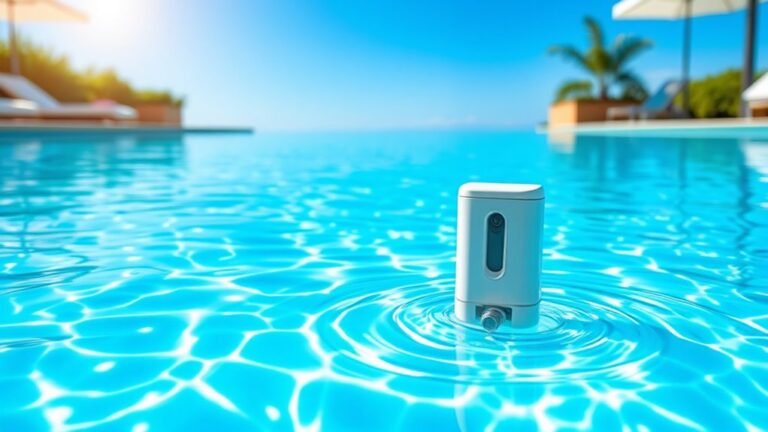
Saltwater pools are popular because they offer a softer swimming experience, but they still need chlorine to stay sanitized. That’s because the salt system actually produces chlorine, which is what kills bacteria and keeps the water clear.
Don’t forget to clean the salt cell every few months to prevent buildup. This helps the system work efficiently and keeps chlorine production steady.
By following these simple steps consistently, you can avoid common issues like scaling, stains, and algae growth. With a little regular care, you’ll keep your pool sparkling and inviting all season long.
Key Takeaways
– Maintain salt pools by regularly testing and balancing water chemistry, including pH, alkalinity, and salt levels around 3,200 ppm.
Keeping these levels in check helps your pool stay clean and comfortable.
– Salt pools require chlorine, produced by the salt cell, to sanitize and keep water safe and clear.
So, even though you’re using salt, chlorine is still the key player here.
– Clean the salt cell every three months to prevent calcium buildup and ensure efficient chlorine production.
A quick clean-up goes a long way in keeping your system running smoothly.
– Monitor chlorine levels frequently, aiming for 1-3 ppm, and adjust chlorinator output as needed.
It’s all about finding that sweet spot to keep your water fresh.
– Use shock treatments during heavy use or storms to quickly restore chlorine sanitizer levels and prevent algae.
This helps you bounce back fast when your pool gets extra busy or messy.
Keeping Your Saltwater Pool Balanced and Clean
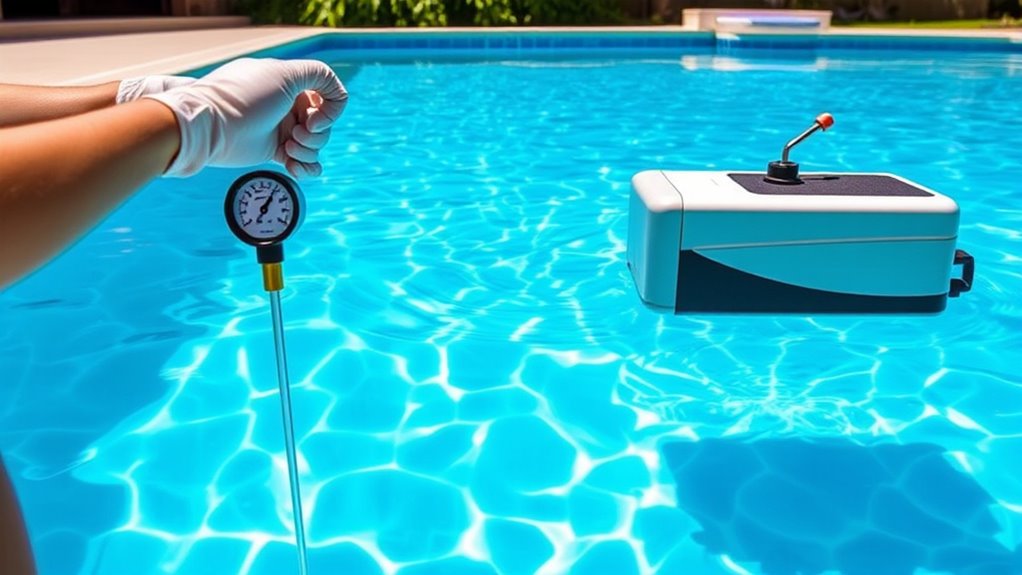
Although saltwater pools require less chlorine than traditional pools, you still need to keep their chemistry balanced and clean to guarantee efficient chlorine production and prevent damage.
In your saltwater pool, regularly test and adjust pH levels between 7.2 and 7.8. This helps avoid scale formation and supports proper chlorine generation.
Keep salt levels around 3,200 ppm, using salt test strips or professional analysis. Incorrect salt levels can harm the salt cell or reduce its effectiveness.
Every three months, clean the salt cell and check for calcium carbonate buildup to maintain system efficiency.
Balancing water chemistry means monitoring alkalinity, calcium hardness, and stabilizer levels. This prevents cloudiness and equipment corrosion.
Additionally, use stain prevention products and brush your pool routinely. This helps avoid scaling, staining, and salt-related damage to porous surfaces.
Consistent pool maintenance focused on water balance ensures your saltwater pool runs smoothly and stays inviting all season long.
Managing Chlorine Levels in Your Saltwater Pool
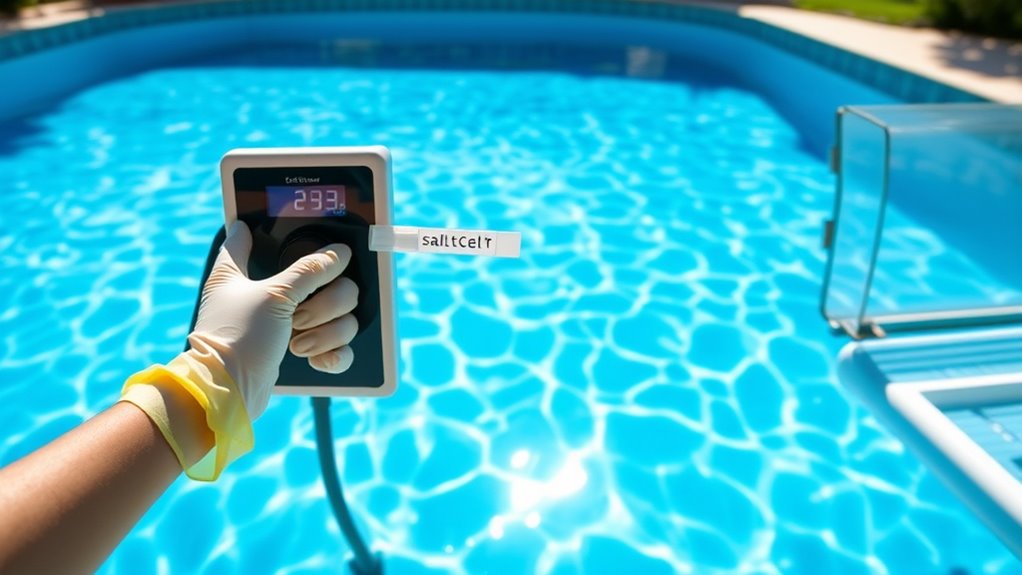
When you manage chlorine levels in your saltwater pool, you keep the water safe and clear for swimmers. Regularly check free chlorine using test strips or a digital tester, aiming for 1-3 ppm to maintain proper water quality.
Maintain 1-3 ppm free chlorine in your saltwater pool for safe, clear swimming water.
Adjust your salt chlorinator’s output or pump run time to control chlorine production. Increase it when levels drop or after heavy pool use.
Keep an eye on cyanuric acid since it stabilizes chlorine but can reduce its effectiveness if too high or low. This can affect your pool chemistry.
Incorporate shock treatments during periods of heavy swimming or after storms to quickly restore sanitizer levels. Consistent pool maintenance and monitoring prevent algae growth and harmful bacteria buildup.
This way, you ensure a healthy swim environment. By staying proactive with chlorine levels and pool chemistry, you’ll enjoy sparkling, safe water all season long without guesswork or overuse of chemicals.
Frequently Asked Questions
What Is the Downside of a Salt Water Pool?
The downside of a saltwater pool is that you’ll face corrosion on metal fixtures, scaling on stone surfaces, and damage to liners or plaster if salt levels get too high.
You’ve got to monitor and rinse regularly. It’s really about keeping an eye on things so the salt doesn’t cause problems down the line.
Do You Still Need Chlorine in a Saltwater Pool?
Think of chlorine as the silent guardian in your saltwater pool’s shimmering castle. Yes, you still need it, since the salt cell creates chlorine to keep algae and bacteria at bay.
This process ensures crystal-clear water. So, even with saltwater pools, chlorine is still your best friend.
Is It Hard to Maintain a Saltwater Pool?
No, it’s not hard to maintain a saltwater pool. You’ll just test salt, pH, alkalinity, and chlorine weekly.
Clean the generator a few times a year, and balance chemicals to keep everything running smoothly and equipment safe. It’s pretty straightforward once you get the hang of it!
Is a Saltwater Pool Healthier Than a Chlorinated Pool?
Yes, your saltwater pool is generally healthier than traditional chlorinated ones because it produces gentler chlorine naturally, reducing skin irritation and strong smells.
You’ll enjoy milder water with fewer harsh chemicals and less lung irritation risk. It just feels nicer overall!
Conclusion
Maintaining your saltwater pool doesn’t have to feel like rocket science. By regularly checking your salt and chlorine levels, you’ll keep the water sparkling clear and perfectly balanced.
Remember, even salt pools need a bit of chlorine to stay clean and safe. It’s not about overdoing it, just enough to keep bacteria and algae at bay.
With just a little effort, you’ll enjoy crystal-clear water that feels like swimming in a tropical paradise every single day. Keep it simple, stay consistent, and your pool will thank you!
Salt pools do need chlorine, but thanks to the salt chlorine generator, the process is more natural and easier to manage. Regular maintenance, like balancing salt levels and monitoring chlorine, ensures your pool stays inviting and safe all season long. So, keep up with these simple steps, and you’ll have a beautiful, low-maintenance salt pool that’s perfect for relaxing and entertaining.