
Is Canning Salt the Same as Kosher Salt?
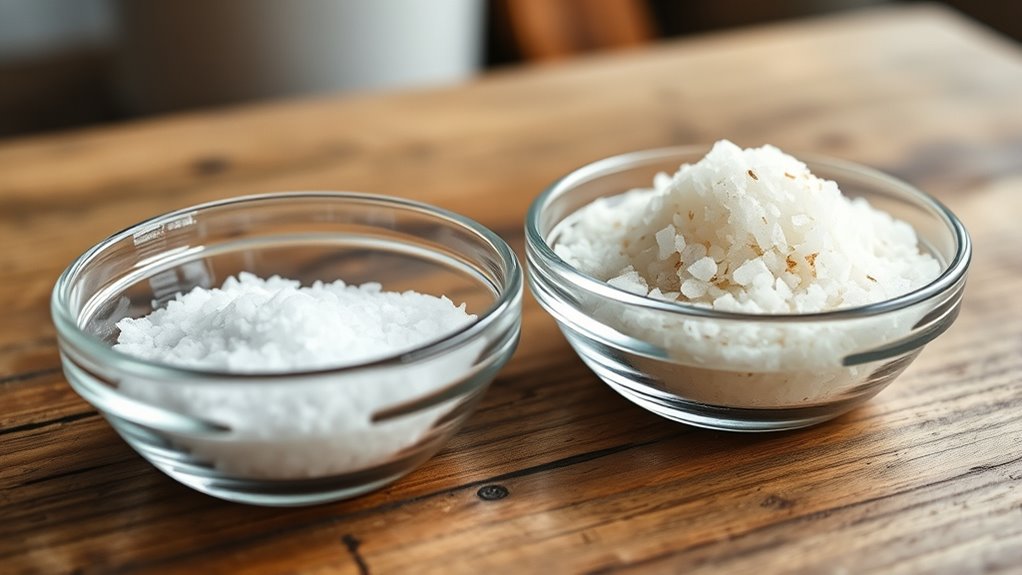
Canning salt and kosher salt aren’t the same, so you can’t just swap them without making some adjustments. Canning salt has fine, uniform grains that dissolve quickly, which makes it perfect for pickling and clear brines.
On the other hand, kosher salt has large, coarse crystals that dissolve slower and add a nice texture when seasoning meats or veggies.
If you decide to use kosher salt for canning, you’ll need about 25% more by weight. You might also want to grind it fine so it dissolves evenly.
Keep these differences in mind as you explore their best uses—you’ll get better results that way!
Key Takeaways
- Canning salt has fine, uniform granules, while kosher salt has larger, coarse crystals. It’s all about the texture and how they dissolve.
- Canning salt dissolves quickly, making it ideal for pickling and clear brines. Kosher salt, on the other hand, provides a noticeable texture and releases flavor more slowly in cooking.
- When you’re substituting, you’ll want to increase kosher salt by about 25% by weight to match the saltiness of canning salt. Also, canning salt is pure without additives, whereas some kosher salts may contain anti-caking agents.
How Canning Salt and Kosher Salt Differ in Texture, Flavor, and Uses
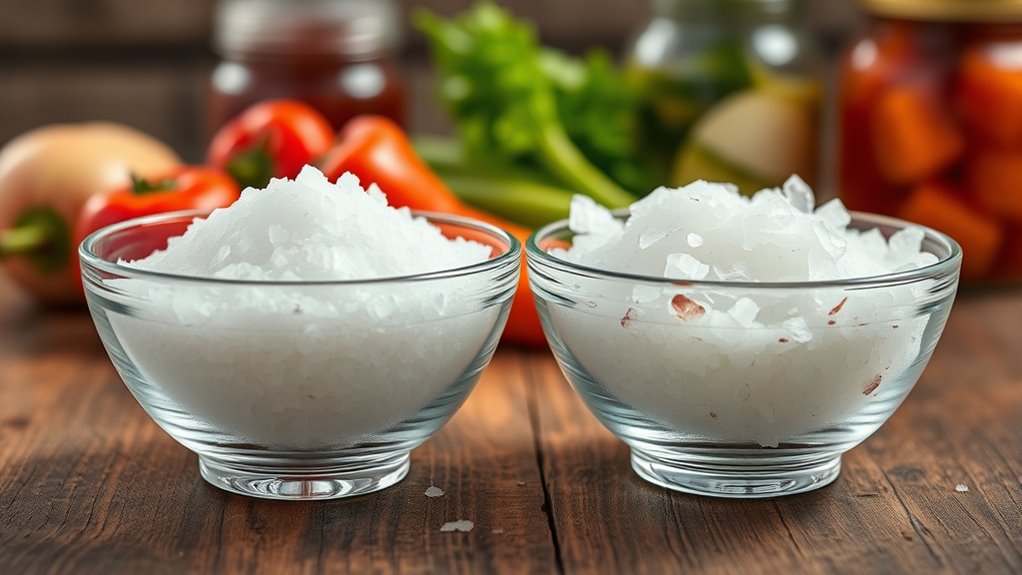
Although both salts are essential in the kitchen, canning salt and kosher salt differ markedly in texture, flavor, and uses. You’ll notice canning salt has a fine texture with small, uniform granules that dissolve quickly, making it ideal for pickling and creating a clear brine.
Canning and kosher salt differ significantly in texture, flavor, and culinary uses.
Its fine grain size guarantees it blends smoothly without leaving any grainy residue. On the other hand, kosher salt features large, coarse crystals that you can easily feel between your fingers. These coarse grains have slower solubility, so they don’t dissolve as quickly.
That slower dissolve time suits seasoning meats and vegetables where a more noticeable texture is preferred. The different grain sizes and textures directly influence their uses: canning salt works best when you need a pure, salty solution with no cloudiness.
While kosher salt is great for adding texture and flavor during cooking. Understanding these differences helps you choose the right salt for your recipe’s needs.
How to Substitute Kosher Salt for Canning Salt: Measuring, Safety, and Tips
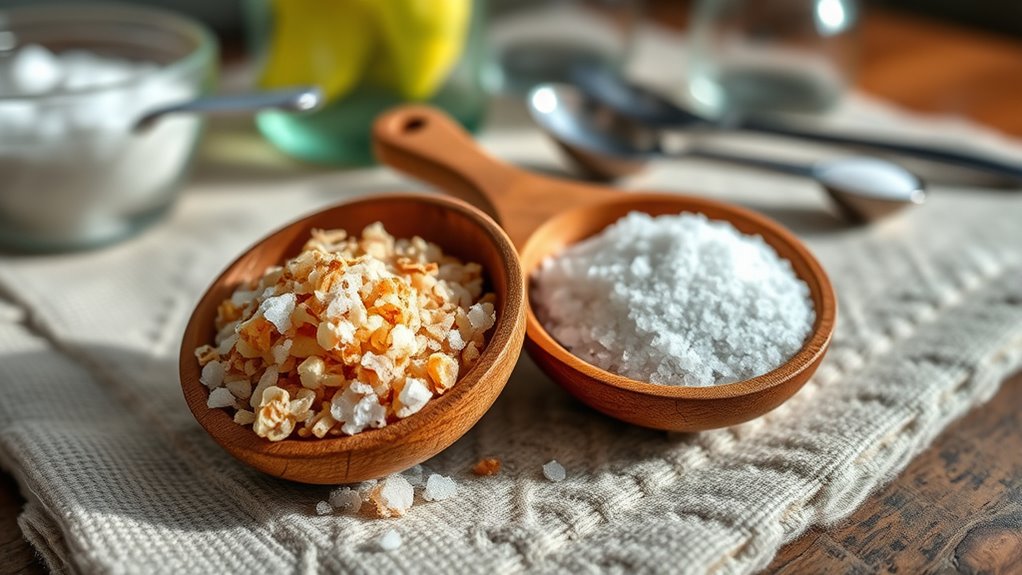
When you need to substitute kosher salt for canning salt, it’s important to adjust the amount carefully to maintain the right salt concentration. Because kosher salt has a larger grain size, increase the amount by about 25% by weight to match the saltiness of canning salt.
Always weigh your kosher salt instead of measuring by volume for accurate measurement, especially in pickling and brine recipes where salt concentration affects safety and flavor.
Choose pure, food grade kosher salt without anti-caking agents, as additives can cause cloudiness in your canned goods and affect preservation.
If your kosher salt is coarse, grind it into a fine powder to help it dissolve evenly in brine.
Frequently Asked Questions
Can I Substitute Kosher Salt for Canning Salt?
You can substitute kosher salt for canning salt, but you’ll need about 25% more due to larger grains. Use pure kosher salt without additives, measure by weight, and adjust carefully to guarantee safe, clear preserves.
Keep in mind, not all kosher salts are created equal, so it’s a good idea to check the packaging or do a quick weight comparison. That way, you’ll get the right amount and keep your preserves tasting great!
What Is a Substitute for Canning Salt?
You can substitute pure, additive-free kosher salt for canning salt by weighing it accurately and increasing the amount by about 25%.
Grinding it finer helps it dissolve better in your canning recipes. This way, you get the right saltiness without any unwanted additives.
What Can I Use to Substitute Kosher Salt?
You can substitute kosher salt for canning salt by increasing the amount by about 25%. Make sure to weigh it for accuracy and choose a pure kosher salt without anti-caking agents to keep your brine clear.
It’s pretty straightforward once you get the hang of it. Just remember, the key is weighing the salt so your brine turns out just right!
Is Morton Kosher Salt the Same as Canning Salt?
No, Morton kosher salt isn’t the same as canning salt. You’ll find kosher salt has larger grains and additives.
Canning salt, on the other hand, is pure and fine. It dissolves faster, which helps keep your brine clear when pickling and canning.
Conclusion
Think of canning salt and kosher salt like dancers in different styles—both salt the stage, but their moves vary. Canning salt’s fine texture is precise, perfect for preserving your culinary masterpieces safely.
Kosher salt, with its coarse flakes, adds flair but needs careful measuring in canning. When substituting, treat them like dance partners—respect their differences to keep your recipes in harmony and your flavors shining bright.
In the world of cooking, especially canning, using the right salt matters. Canning salt dissolves quickly without additives, making it ideal for safe preservation. Kosher salt’s texture can throw off measurements and affect results. So, while both salts season your food, they aren’t exactly the same. For best outcomes in canning and preserving, stick with canning salt to ensure safety and flavor.