
Is Canning Salt the Same as Table Salt?
Canning salt isn’t the same as table salt because it’s pure sodium chloride without additives like iodine or anti-caking agents. These additives in table salt can cause cloudiness in your brine, which isn’t ideal when you’re preserving food.
Using canning salt helps keep your brine clear and your pickles or preserves looking their best.
When you use canning salt, your brine stays clear, which is essential for safe and attractive food preservation.
Table salt’s additives can cloud the brine and affect the appearance of your pickles or preserves.
If you want the best results for canning and pickling, it’s important to choose the right salt and understand how to substitute properly for your recipes.
Key Takeaways
- Canning salt is pure sodium chloride without iodine or anti-caking additives, unlike table salt.
- Table salt contains additives that can cloud brine and affect preserved food appearance.
- Canning salt dissolves quickly and evenly, making it ideal for pickling and preserving.
- Using table salt in canning can compromise the safety and visual quality of preserved foods.
- For food preservation, canning salt is preferred. If you need to substitute, be sure to measure by weight.
What Is Canning Salt and How Is It Different From Table Salt?
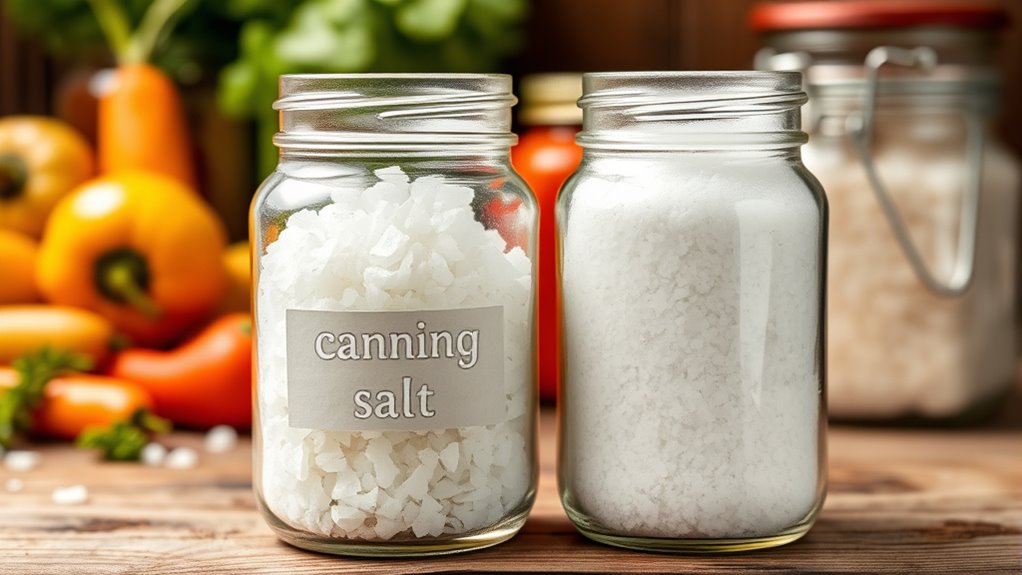
Although both canning salt and table salt are primarily sodium chloride, canning salt is specially formulated without additives like iodine or anti-caking agents. This makes it ideal for pickling and preserving.
When you use canning salt, you get pure sodium chloride with a fine texture that dissolves quickly and evenly. This ensures clear brine clarity, which is essential for food preservation.
Table salt, on the other hand, usually contains additives such as iodine and anti-caking agents. These can cloud your brine and cause discoloration during preserving and pickling.
Because of this, canning salt is a preferred choice over refined salt for canning. It helps maintain the visual appeal and safety of your preserved foods.
If you want the best results in food preservation, relying on canning salt’s purity and fine grind will help you avoid the potential drawbacks of table salt’s additives. This is especially true in delicate pickling processes.
How to Choose and Substitute Canning and Pickling Salt Safely
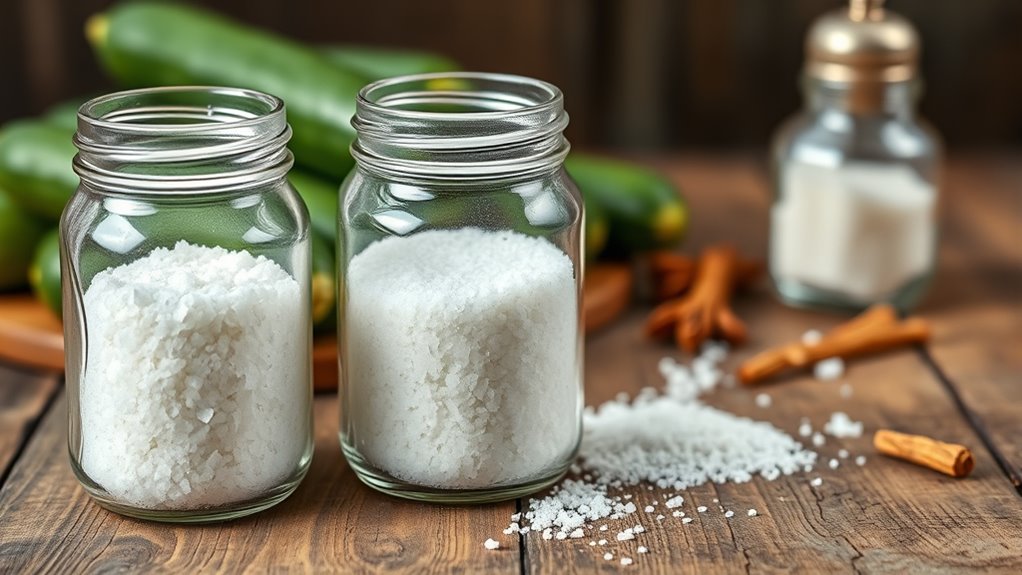
How do you choose the right salt for canning and pickling, and what should you keep in mind when substituting? Always use canning salt or pickling salt, as they contain pure sodium chloride without anti-caking agents or additives that can cause a cloudy brine or affect the food’s safety and appearance.
If you need to substitute, opt for kosher salt or sea salt, but remember to measure by weight, not volume, since their crystal sizes differ. It’s best to fine grind coarse salts to match canning salt’s texture for even dissolving.
Adjust the amount based on conversion ratios—for instance, 1 teaspoon of pickling salt equals about 1¼ teaspoons of kosher salt. Avoid table salt or salts with additives; these can alter your recipe and might make your canned goods unsafe to eat.
Frequently Asked Questions
Can I Use Regular Table Salt Instead of Canning Salt?
You can use regular table salt, but expect cloudy brine and less attractive results.
Be careful with measurements since table salt’s larger crystals can affect salt concentration.
For best results, stick with pure canning salt.
How Much Table Salt Equals Canning Salt?
One teaspoon of canning salt equals about 1 1/4 teaspoons of table salt. Since table salt’s grains are finer, you’ll want to use less by volume to match canning salt’s saltiness accurately in your recipes.
It’s kind of like a little salt swap. So, when you’re cooking or canning, just remember this simple conversion to keep your flavors on point!
What Is a Substitution for Canning Salt?
You can substitute canning salt with kosher salt, but measure by weight and use 1¼ teaspoons kosher salt per teaspoon canning salt.
Fine sea salt without additives also works well if ground finely for proper dissolution. It’s important to make sure the salt dissolves properly for the best results.
What’s so Special About Canning Salt?
You know what they say, “The devil’s in the details.”
Canning salt dissolves quickly without additives, keeping your brine clear and your pickles crisp.
You’ll get consistent, high-quality results every time you preserve or pickle.
Conclusion
When preserving your favorite foods, canning salt is like a trusty sidekick—pure and free of additives that could cloud your brine or jar. Table salt, on the other hand, usually contains additives like iodine and anti-caking agents. These extras can throw off the balance, kind of like an unexpected twist in a recipe.
So, if you want your preserves to shine perfectly, stick to canning salt or choose substitutions carefully. Using the right salt helps keep your jars clear and your flavors true every time. Remember, canning salt and table salt aren’t exactly the same, especially when it comes to preserving.
Choosing canning salt ensures your pickles, jams, and other canned goods stay fresh and delicious without any unwanted cloudiness or texture changes. In short, for the best results in food preservation, canning salt is the way to go!