
10 Key Differences: Is Celtic Salt the Same as Himalayan Salt?
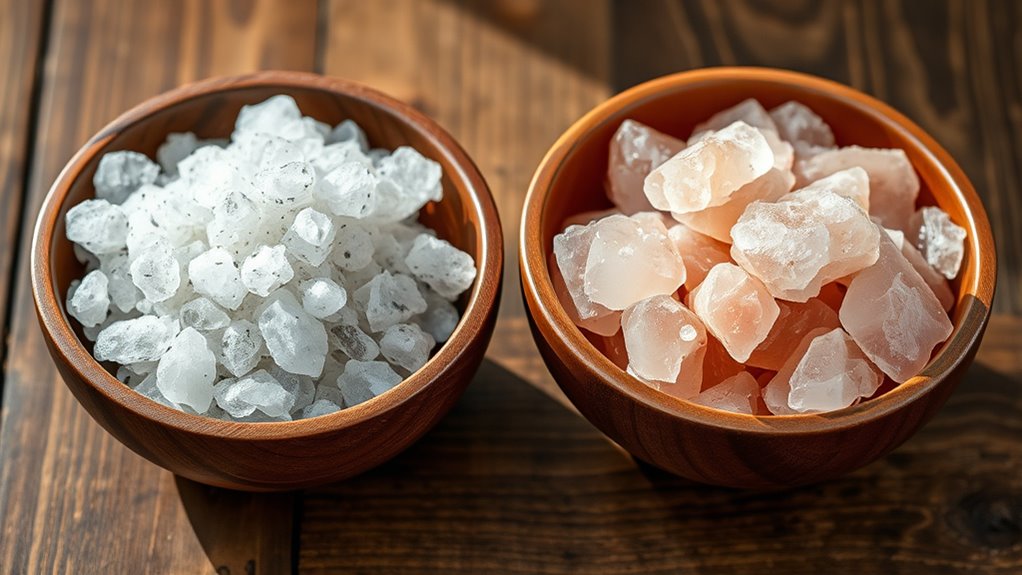
You’ll find Celtic salt and Himalayan salt differ in origin, mineral content, texture, and use. Both are popular natural salts but come from very different places. Celtic salt comes from French tidal pools and is rich in about 34 trace minerals.
It has a moist, soft texture that dissolves quickly—making it great for soups and baking. Himalayan salt, on the other hand, is mined from ancient seabeds in Pakistan. It’s pinkish with over 80 minerals and has a dry, firm texture that’s perfect for finishing dishes.
Both salts offer similar sodium content but bring unique flavors and benefits to your food. Curious about when to choose Celtic salt over Himalayan salt? Stick around to get the lowdown and help you decide which one fits best in your kitchen.
Key Takeaways
- Celtic salt is moist, grey, and sourced from French Atlantic tidal pools, while Himalayan salt is dry, pink, and mined from ancient Pakistani sea beds.
- Celtic salt contains about 34 trace minerals, whereas Himalayan salt has over 80 trace minerals, including higher sodium chloride concentration.
- Celtic salt dissolves quickly due to its moisture content, making it ideal for cooking, while Himalayan salt’s dry crystals provide texture and visual appeal as a finishing salt.
- Celtic salt offers a neutral, earthy flavor supporting hydration, while Himalayan salt has a mild mineral taste linked to respiratory and skin health benefits.
- Their mineral content and texture influence culinary uses, with Celtic salt suited for subtle seasoning and Himalayan salt for decorative finishing and crunch.
Composition of Celtic and Himalayan Salt
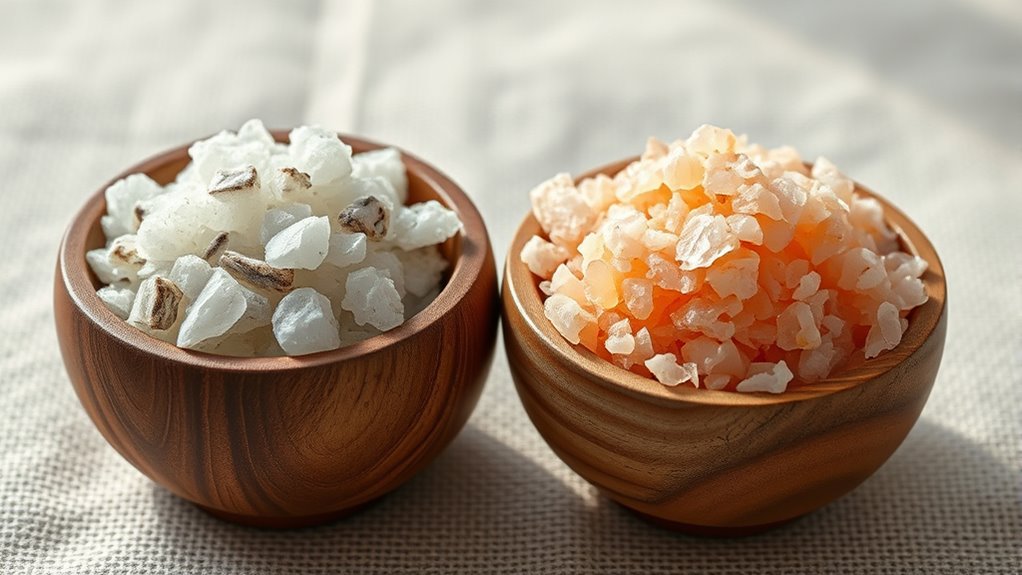
Although both Celtic and Himalayan salts come from natural sources, their compositions differ considerably. When you look at Celtic salt, you’ll find about 34 trace minerals, including magnesium, calcium, and potassium. These contribute to its broad mineral content.
Its moisture content is around 13%, which gives it a slightly damp texture and a grey color. On the other hand, Himalayan salt contains over 80 trace minerals but has a higher sodium chloride concentration—about 98%.
This salt’s distinctive pink hue comes from iron oxide, which colors the crystals and highlights its mineral profile. Unlike Celtic salt, Himalayan salt is nearly moisture-free, making its texture dry and crystalline.
How Their Origins Affect Mineral Content and Flavor
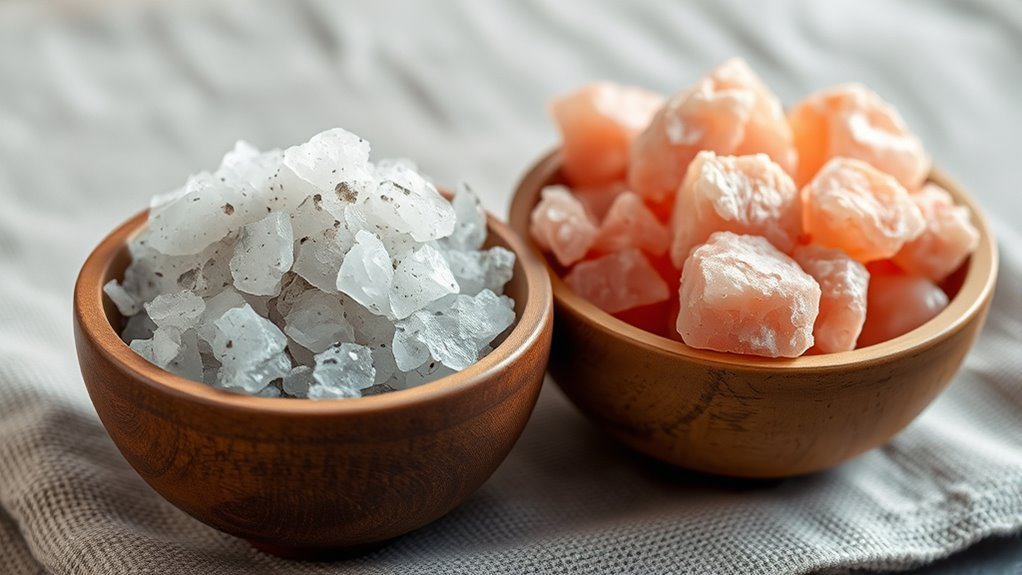
The unique origins of Celtic and Himalayan salts shape not only their mineral content but also their flavor profiles. Celtic salt comes from tidal pools along the French Atlantic coast, giving it a broader mineral content that includes magnesium and calcium.
This coastal origin also means Celtic salt retains higher moisture, which contributes to its distinctive briny flavor.
Celtic salt’s coastal roots keep it moist, enhancing its uniquely briny taste.
On the other hand, Himalayan salt is mined from ancient dried sea beds in Pakistan’s mountains. Its mineral content is dominated by trace elements like iron and magnesium, influenced by iron oxide deposits, which also give it its signature pink hue.
Because Himalayan salt forms in a dry, mountainous environment, it has a cleaner, less moist flavor compared to Celtic salt.
What Their Colors Reveal About Their Minerals
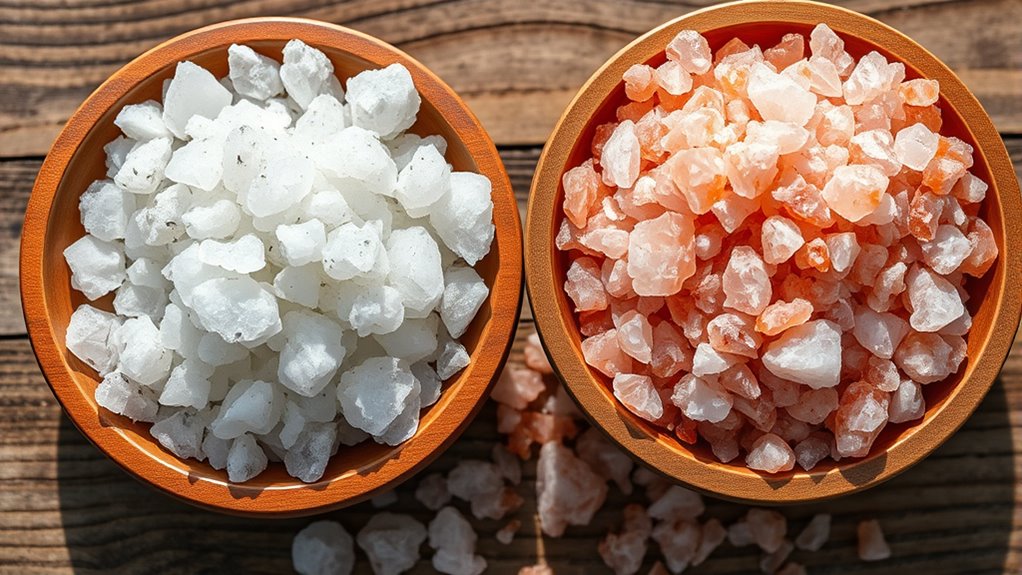
You can tell a lot about a salt’s mineral content just by its color. Celtic salt’s grey tint shows its mix of minerals from seawater and clay.
Meanwhile, Himalayan salt’s pink glow signals iron and other trace elements from ancient deposits. These colors reveal not only their mineral makeup but also where they come from.
Mineral Influence On Color
When you notice the muted grey of Celtic salt or the vibrant pink of Himalayan salt, you’re actually seeing a story told by their minerals. The mineral composition shapes each salt’s unique color, reflecting distinct geochemical processes.
Celtic salt’s grey hue comes from minerals like magnesium, calcium, and zinc absorbed from clay and seawater, giving it a broader mineral spectrum. On the other hand, Himalayan salt’s striking pink color is primarily due to iron oxide, highlighting its rich iron content.
This iron presence not only colors the salt but also distinguishes its mineral profile from Celtic salt. So, their colors aren’t just aesthetic—they reveal the mineral influences that define each salt’s character and origin.
Color Indicates Origin
Colors tell you more than just appearance—they reveal where each salt comes from and the minerals shaping them.
Celtic salt’s grey color comes from its mineral composition, including magnesium, calcium, and iron, absorbed through contact with clay-lined ponds and seawater. This color acts as a visual indicator of its unique geological origin, reflecting exposure to ocean influences and mineral-rich sediments.
On the other hand, Himalayan salt’s distinct pink hue is primarily due to iron oxide, signaling iron-rich deposits formed from ancient seabeds now trapped in mountains. This vibrant color highlights its mineral composition and crystalline structure.
Both salts’ colors serve as clear visual indicators, helping you understand the geological origin and mineral stories behind each type. It makes their differences easy to spot at a glance.
Moisture’s Effect on Texture and Cooking Uses
You’ll notice Celtic salt feels damp and soft because of its moisture, which helps it melt quickly in hot dishes like soups.
In contrast, Himalayan salt is dry and crunchy, making it perfect for finishing touches where you want a bit of texture.
Understanding this moisture difference helps you choose the right salt for your cooking needs.
Moisture Impact On Texture
Although both Celtic and Himalayan salts offer unique flavors, their moisture content considerably affects their texture and cooking uses. Celtic sea salt contains 10-15% moisture, making it damp and prone to clumping. So, you’ll want to store it in airtight containers to maintain mineral retention and prevent spoilage.
This moisture also softens its texture, causing it to dissolve quickly in hot dishes. On the other hand, Himalayan salt has nearly zero moisture, keeping a dry, uniform, and crunchy texture that holds up well over time.
Its low moisture content means less clumping and easier storage, so you won’t have to worry much about mineral loss. Understanding these differences helps you choose the right salt for your culinary needs based on texture and handling preferences.
Cooking Uses By Moisture
The moisture in Celtic salt makes it dissolve quickly, which is perfect for seasoning hot dishes, sauces, and baked goods where rapid melting is needed. Because Celtic salt contains 10-15% moisture content, it integrates smoothly into recipes, enhancing flavor without leaving a crunchy texture.
In contrast, Himalayan salt’s nearly moisture-free crystals (about 0.026% moisture) hold their shape longer. This makes them ideal for finishing dishes where you want a satisfying crunch and visual appeal.
When choosing between these salts, consider their moisture levels and how they affect cooking uses. Celtic salt’s dampness suits recipes requiring quick dissolution, while Himalayan salt’s dryness is better for adding texture and a decorative touch.
Just keep in mind, Celtic salt needs airtight storage to prevent clumping. Himalayan salt, on the other hand, remains stable and easy to grind.
How Celtic and Himalayan Salt Dissolve Differently
When you add Celtic sea salt to hot liquids, you’ll notice it dissolves quickly thanks to its moisture content of 10-15% and fine grain size. This higher moisture content speeds up the dissolution rate, allowing the salt to blend seamlessly into your cooking.
In contrast, Himalayan salt features a dry, crystalline structure with larger crystals that dissolve more slowly. Its texture holds up longer, making it perfect for dishes where you want the salt to remain visible.
Here’s how the two differ in dissolution:
- Celtic salt’s dampness and fine grains accelerate melting in hot dishes.
- Himalayan salt’s dry, coarse crystals slow down dissolution, preserving texture.
- Moisture content directly impacts how quickly each salt integrates into your recipes.
Understanding these differences helps you choose the right salt based on how quickly you want it to dissolve and affect your dish’s texture during cooking.
Flavor Profiles and Culinary Applications
You’ll notice Celtic salt brings a subtle, briny flavor with quick dissolution, perfect for seasoning hot dishes. It melts fast, so it’s great when you want that salty punch to blend right in.
Himalayan salt offers a cleaner taste with a crunchy texture that holds up well as a finishing touch. It’s nice to sprinkle on top because it adds a bit of bite and that pretty pink color.
Understanding these differences helps you choose the right salt for your recipes. Once you get the hang of it, picking the perfect salt becomes second nature!
Taste Differences Explained
Although both salts enhance dishes, Celtic salt brings a subtle, briny flavor with mild earthiness thanks to its higher mineral content and moisture. This gives it a richer taste and makes it ideal for cooking and baking.
In contrast, Himalayan salt offers a cleaner, more neutral salinity with a faint earthy or smoky note, suited for finishing dishes. The crystalline structure also affects their use: Celtic salt’s moisture helps it dissolve quickly, while Himalayan salt’s dry crystals provide a longer-lasting crunch.
Consider these differences for your culinary application: Celtic salt’s complex flavor profile enhances hot dishes and baked goods. Himalayan salt’s texture and mild taste add visual appeal and finishing flair.
Mineral content shapes each salt’s unique taste and how it interacts with food. So, depending on what you’re making, choosing the right salt can really elevate your dish!
Texture and Dissolution
Beyond their taste differences, texture and dissolution play a major role in how these salts perform in your kitchen. Celtic salt’s high moisture content, around 10-15%, gives it a moist, coarse texture that dissolves quickly, especially in hot dishes.
This rapid dissolution makes it perfect when you want salt to blend smoothly during cooking.
Himalayan salt, on the other hand, has dry, crystalline grains with minimal moisture content (about 0.026%), so its coarse crystals hold their shape longer. This slower dissolution provides a satisfying crunch and visual appeal.
Understanding these texture and dissolution differences helps you choose the right salt for various culinary uses. Whether you need fast-melting seasoning or a decorative, crunchy finish that lasts on your plate, knowing this makes all the difference.
Best Culinary Uses
How you use salt in your cooking depends a lot on its flavor and texture. Celtic salt’s subtle briny notes and rich mineral content make it perfect for dishes where quick dissolving is key, like soups, butter, caramel, roasted vegetables, and baked goods.
Himalayan salt, with its clean, neutral salinity and dry crystals, shines as a finishing salt. It adds crunch and visual appeal to meats, salads, and seafood.
Consider these culinary uses when choosing your salt:
- Use Celtic salt for even seasoning and enhancing complex flavors due to its fast dissolving rate.
- Opt for Himalayan salt to add texture and a striking pink hue as a finishing touch.
- Match the salt’s mineral content and texture to your dish’s desired taste and presentation.
Appearance and Use as Finishing Salts
When you use Celtic salt as a finishing touch, its moist, grey crystals dissolve quickly on your tongue or in hot dishes, enhancing flavor almost instantly. Its moisture content and coarse texture make it perfect when you want a subtle melt that intensifies taste without lingering crunch.
Visually, the grey color adds a natural, earthy appeal that complements rustic dishes.
In contrast, Himalayan salt’s dry, pink or reddish appearance stands out on plates, making it ideal when you want to add both visual appeal and texture. Its crystalline structure holds shape longer, offering a satisfying crunch that works beautifully as a finishing salt on salads, grilled meats, or roasted vegetables.
Both salts serve as excellent finishing salts, but you’ll notice Celtic salt’s moisture helps it blend and season quickly, while Himalayan salt’s vibrant color and firm texture shine when you want your garnish to catch the eye and add bite.
Health Benefits of Celtic and Himalayan Salt Compared
Both Celtic and Himalayan salts offer unique qualities that go beyond their appearance and culinary uses. When it comes to health benefits, both are mineral-rich and contain valuable trace minerals, but they serve different purposes.
Celtic and Himalayan salts provide distinct mineral benefits beyond flavor and appearance.
Celtic salt includes about 34 trace minerals, supporting electrolyte balance and hydration, which can aid digestion and muscle function. Himalayan salt, richer with over 80 trace minerals including iron, is often linked to respiratory and skin health benefits, especially in salt therapy.
Consider these key points: Celtic salt has lower sodium content due to higher moisture, potentially impacting blood pressure differently. Both salts provide similar sodium levels but differ in trace mineral variety and concentration.
Health benefits are modest at typical intake, so moderation remains essential. You’ll find that choosing between them depends on whether you prioritize electrolyte balance and digestion (Celtic) or detoxification and respiratory support (Himalayan).
When to Use Celtic Salt vs Himalayan Salt in Recipes
Although Celtic and Himalayan salts share similarities, they excel in different culinary roles that can elevate your dishes. You’ll want to use Celtic salt for recipes needing quick dissolution, like soups and baked goods, thanks to its moist, fine grains and rich mineral content.
Himalayan salt shines as a finishing salt, adding visual appeal and a subtle crunch with its coarser salt texture. Here’s a quick guide for your cooking uses:
| Use Case | Best Salt Choice |
|---|---|
| Quick-melting in cooking | Celtic salt |
| Finishing salt for texture | Himalayan salt |
| Enhancing mineral flavor | Celtic salt |
Choose Celtic salt when you need moisture and a briny complexity. Pick Himalayan salt for clean salinity and longer-lasting texture, perfect for salt crusts or cured meats.
Understanding these differences helps you bring out the best in your recipes. It’s all about matching the salt to the dish!
Choosing the Right Salt for Your Kitchen Needs
Since your kitchen demands vary, selecting the right salt can make a noticeable difference in your cooking results. Celtic salt and Himalayan salt each bring unique qualities that suit different kitchen uses.
Choosing the right salt enhances your cooking, with Celtic and Himalayan salts offering distinct benefits for different uses.
Celtic salt’s high mineral content and moist texture mean it dissolves quickly, perfect for seasoning hot dishes and baked goods. Himalayan salt, with its dry, pink crystals, dissolves slowly and works best as a finishing salt, adding visual appeal and a longer-lasting texture.
Consider these factors when choosing your salt:
- Dissolution rate: Use Celtic salt for quick melting and seasoning; Himalayan salt for slower dissolution.
- Mineral content: Celtic salt offers a richer mineral flavor due to its moisture.
- Kitchen uses: Opt for Celtic salt in cooking processes; Himalayan salt for grinding and decorative finishing.
Frequently Asked Questions
Should I Use Celtic Salt or Himalayan Salt?
You should use Celtic salt when you want quick-dissolving, mineral-rich flavor in your dishes. It really blends in smoothly and gives your food a nice boost of taste.
Choose Himalayan salt if you prefer a dry, visually appealing finish. It adds texture and a subtle pink hue to your presentation, making your plate look extra special.
Who Should Not Consume Celtic Salt?
If you have high blood pressure like Jane, you shouldn’t consume Celtic salt.
It’s high in sodium and minerals that can worsen your condition, so it’s best to avoid it or consult your doctor first.
Is Celtic Salt the Healthiest Salt?
Celtic salt isn’t necessarily the healthiest salt. You should use it in moderation like any salt.
Its mineral content is higher, but those minerals don’t make a huge health difference compared to your overall diet. So, while it’s a nice option, it’s not a miracle ingredient.
What Happens if I Take Celtic Salt Every Day?
If you take Celtic salt every day, you’ll likely support hydration and digestion thanks to its minerals. But, you should watch your sodium intake to avoid high blood pressure or other health risks.
Too much salt isn’t great for your body, so it’s all about balance. Just keep an eye on how much you’re using, and you should be fine!
Conclusion
You might think Celtic and Himalayan salt are just different names for the same thing, but coincidentally, their unique origins and mineral profiles set them worlds apart. While both add a special touch to your dishes, knowing when to use each can elevate your cooking in surprising ways.
So, next time you reach for salt, remember—choosing between Celtic and Himalayan isn’t just a flavor choice, it’s a small but powerful kitchen decision. Understanding the differences between Celtic salt and Himalayan salt helps you bring out the best in your recipes.
Whether you prefer the moist texture and briny flavor of Celtic salt or the delicate crunch and rosy hue of Himalayan salt, each has its own place in your pantry. Picking the right salt can truly transform your meals and enhance your cooking experience.