
Are Kosher Salt and Sea Salt the Same?
You might think kosher salt and sea salt are the same, but they’re actually quite different in flavor, texture, and use. Both are popular types of salt used in cooking, but each brings something unique to the table. Understanding these differences can really up your cooking game.
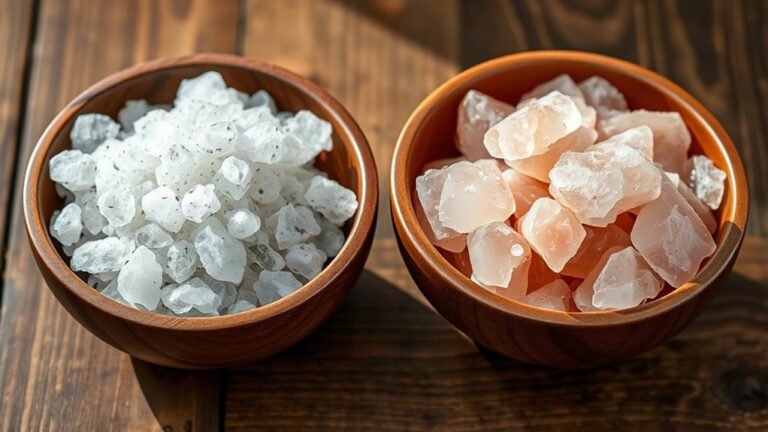
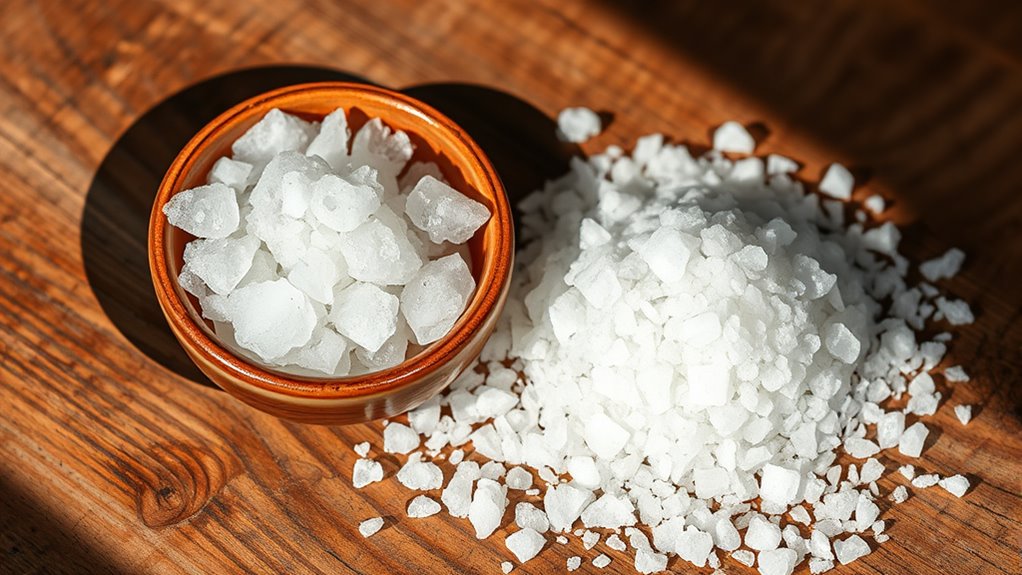
Kosher salt has larger, flat crystals with a clean, mild taste, making it great for cooking and seasoning meat. Its texture helps it dissolve slowly, giving you more control over seasoning.
Sea salt contains trace minerals that add subtle flavors and comes in varied textures, perfect for finishing dishes with a crunchy touch. It’s often sprinkled on top of food to enhance flavor and provide a bit of crunch.
If you want to master their differences, you’ll find plenty more to discover ahead. So, let’s dive in and explore what makes kosher salt and sea salt unique!
Key Takeaways
- Kosher salt has large, coarse, flat crystals. Sea salt, on the other hand, can range from flaky to fine grains and comes in all sorts of textures.
- Sea salt also contains trace minerals that give it a bit of extra flavor. Kosher salt tastes milder and more neutral in comparison.
- People often prefer kosher salt for cooking and koshering meat because its uniform crystals dissolve slowly. This makes it really handy in the kitchen.
- Sea salt is usually used as a finishing salt. It adds texture, flavor, and even a nice visual touch to dishes.
- You can swap one for the other, but you’ll want to adjust amounts. That’s because their crystal sizes and mineral contents are different, which affects how they work in recipes.
How Kosher Salt and Sea Salt Differ in Flavor, Texture, and Use
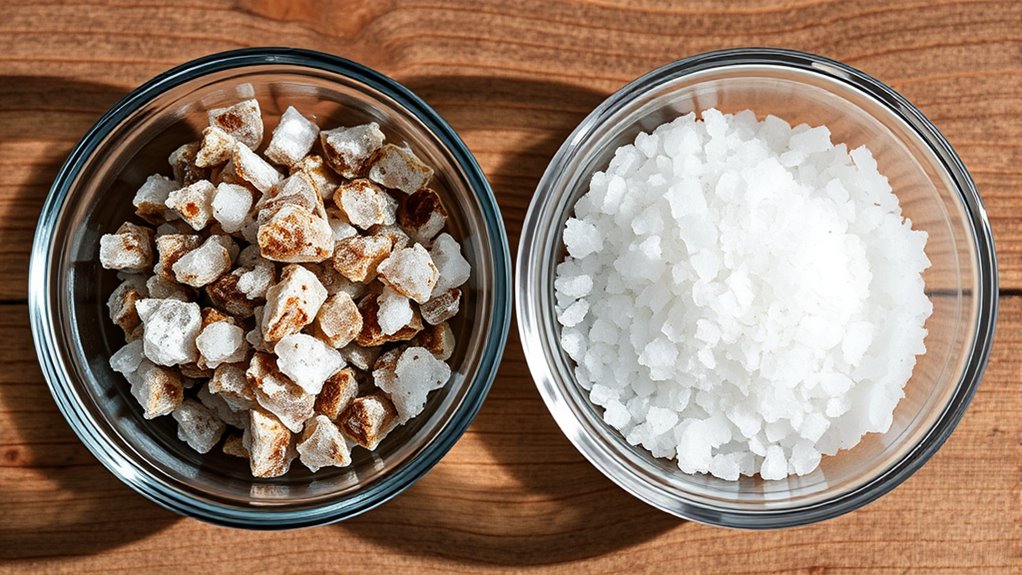
Although both kosher salt and sea salt add seasoning to your dishes, they differ noticeably in flavor, texture, and typical use. Kosher salt features large, coarse, flat crystals that dissolve slowly, giving you more control over seasoning thanks to its uniform crystal size.
Kosher salt offers large, coarse crystals that dissolve slowly, providing precise seasoning control and a mild flavor.
Its flavor is mild and clean, with minimal mineral content, making it ideal for cooking and koshering meat.
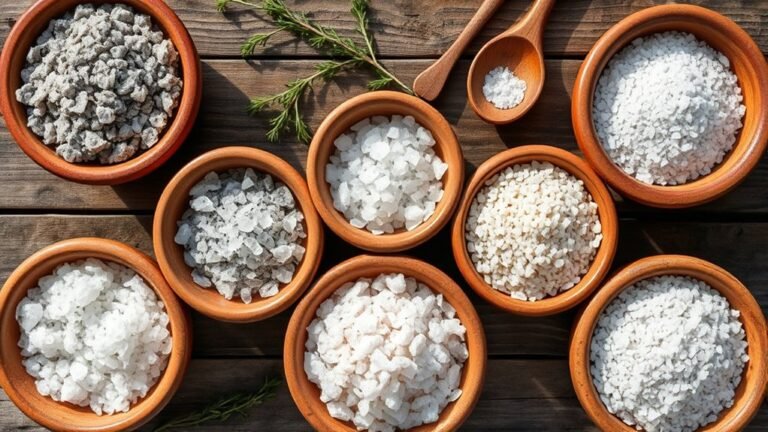
Sea salt, on the other hand, varies in crystal size—from flaky to fine grains—depending on its source. It often contains trace minerals that subtly influence its taste, enhancing the overall flavor profile.
Because of its varied texture and mineral content, sea salt shines as a finishing salt, adding both flavor and a satisfying crunch at the end of cooking.
While you can swap one for the other, keep in mind their differences in crystal size and mineral content, which affect how much you use and the taste they bring to your dish.
When to Use Kosher Salt or Sea Salt in Cooking
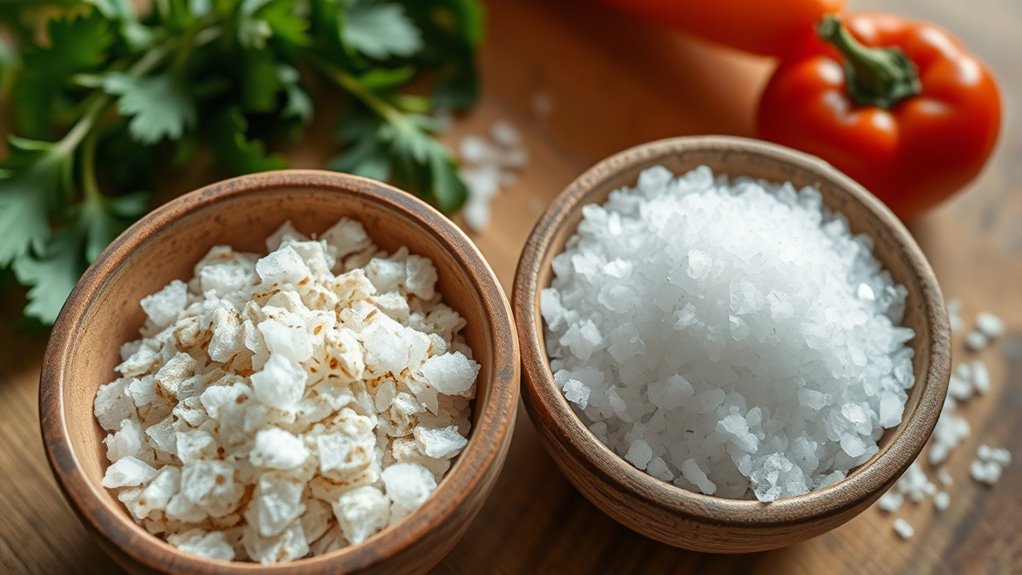
The differences in flavor, texture, and crystal size between kosher salt and sea salt guide how you use them in cooking. When seasoning meat or vegetables, kosher salt works best because its large salt crystals dissolve slowly, giving you control and even coverage.
Its uniformity makes kosher salt ideal for precise culinary use and brines. On the other hand, sea salt shines as a finishing salt. Its flaky texture and subtle flavor enhance salads, grilled meats, or desserts, adding both crunch and visual appeal.
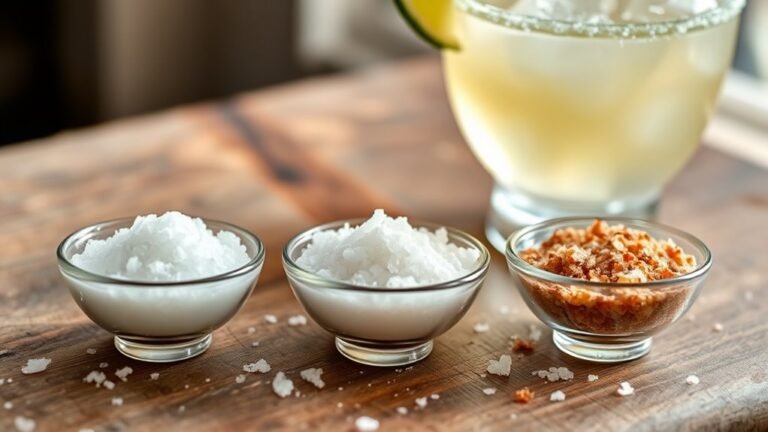
Coarse sea salt, especially, is perfect for rimming cocktail glasses or topping baked goods, where the salt crystals provide extra texture. Remember, with kosher salt vs sea salt, you’ll want to adjust amounts since flaky sea salt can taste saltier per teaspoon.
Frequently Asked Questions
Can I Substitute Kosher Salt for Sea Salt?
Yes, you can substitute kosher salt for sea salt, especially with coarse varieties. Just remember to taste and adjust seasoning, since texture and mineral content might slightly affect flavor and how much you’ll need in your recipe.
It’s a pretty simple swap, but keep an eye on the quantities. Sometimes kosher salt flakes are bigger or lighter, so you might want to start with a little less and add more if needed.
Why Do Chefs Use Kosher Salt Instead of Sea Salt?
Think of kosher salt as your seasoning paintbrush—chefs use it because its coarse grains give you precise control. It dissolves evenly, and feels easier to handle.
This makes your dishes consistently flavorful and beautifully seasoned every time. Pretty handy, right?
Is It Better to Use Sea Salt or Kosher Salt?
It depends on your needs. Use kosher salt for even seasoning and cooking, since it’s pure and affordable.
Choose sea salt when you want subtle mineral flavors or a finishing crunch to enhance your dish’s texture.
Is Kosher Salt Healthier Than Regular Salt?
Think of kosher salt as a gentler wave—it’s not healthier by itself, but its coarse crystals help you control seasoning better.
You’ll likely use less sodium, which can benefit your overall health in the long run.
Conclusion
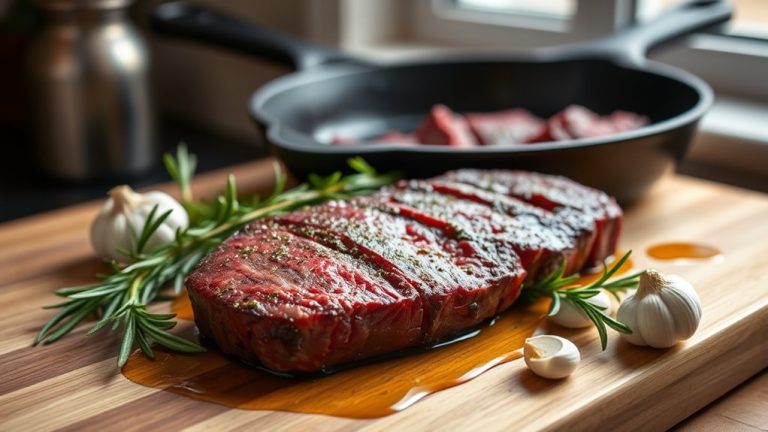
When you reach for kosher salt, imagine coarse, flaky crystals that effortlessly season your steak, giving it a bold, clean flavor. Sea salt, on the other hand, feels like tiny ocean jewels, adding a subtle crunch and delicate brininess to your salad.
Though they come from different places and textures, both salts bring their own magic to your kitchen. Knowing when to use each lets you paint your dishes with the perfect touch of flavor and flair.
Kosher salt and sea salt aren’t exactly the same, but each has its unique role in cooking. Kosher salt’s larger flakes make it easy to pinch and control, ideal for seasoning meat and vegetables. Sea salt, with its finer crystals and natural minerals, enhances dishes with a mild crunch and nuanced taste. Understanding the difference between kosher salt and sea salt helps you choose the right one, making your meals taste amazing every time. Use them wisely, and your cooking will shine with just the right balance of saltiness and texture.