
5 Reasons Kosher Salt and Canning Salt Are Not the Same
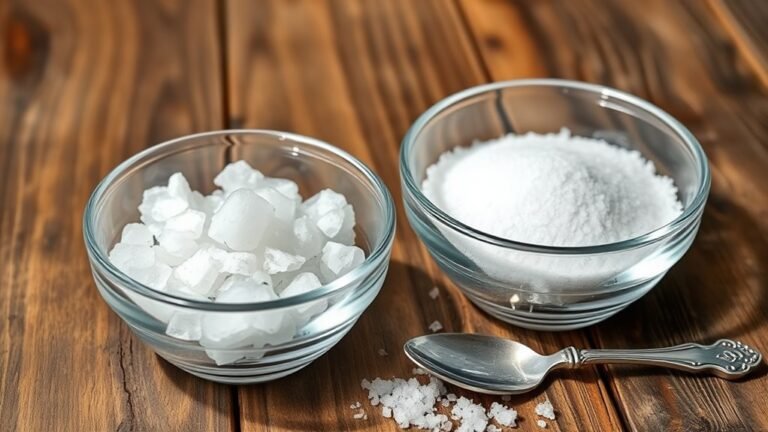
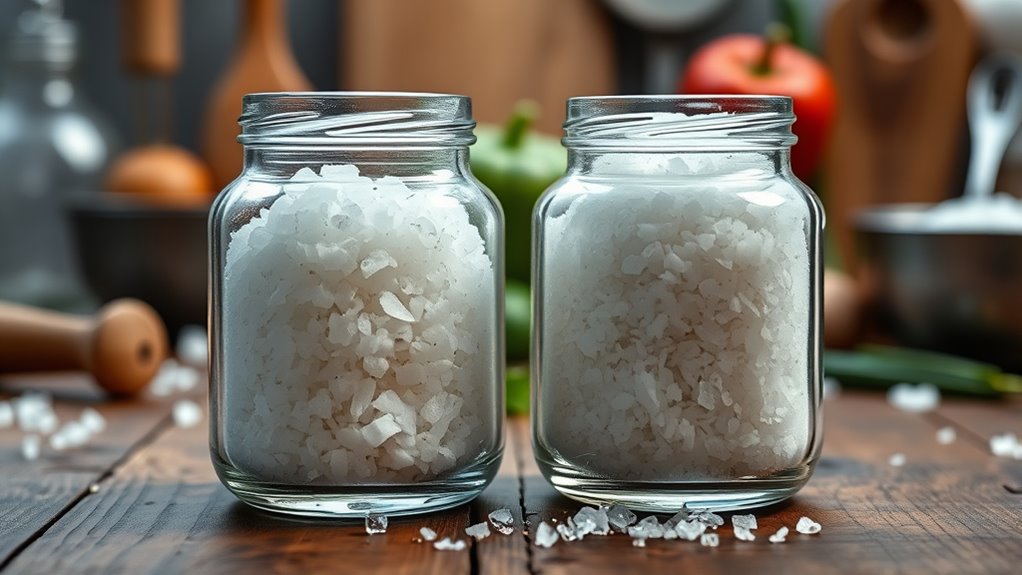
You’ll notice kosher salt and canning salt differ mainly in grain size and texture—kosher salt is coarse with flaky crystals, while canning salt’s grains are fine and uniform. These differences affect how they perform in the kitchen, especially when it comes to preserving food. Understanding why kosher salt and canning salt aren’t interchangeable can save you from some tricky cooking mishaps.
Canning salt is purer, free from additives, which keeps your brine clear and your preserved food looking great.
Kosher salt dissolves slower, risking cloudiness. Plus, measuring kosher salt by volume can cause errors because of its larger crystal size.
For effective preservation, canning salt is usually the better choice. Keep exploring to understand why these differences really matter.
Key Takeaways
- Kosher salt has large, coarse crystals, while canning salt features fine, uniform grains that dissolve faster.
- Canning salt contains no additives, ensuring clear brine, unlike kosher salt which may have impurities or anti-caking agents.
- Kosher salt dissolves slowly, risking cloudy brine, whereas canning salt dissolves quickly for clear pickling solutions.
- Volume measurements differ due to grain size; kosher salt is less dense, making weight-based measurement essential for accuracy.
- Canning salt is specifically refined for preservation, guaranteeing safety, clarity, and consistent results that kosher salt may not provide.
Grain Size and Texture Differences Between Kosher and Canning Salt
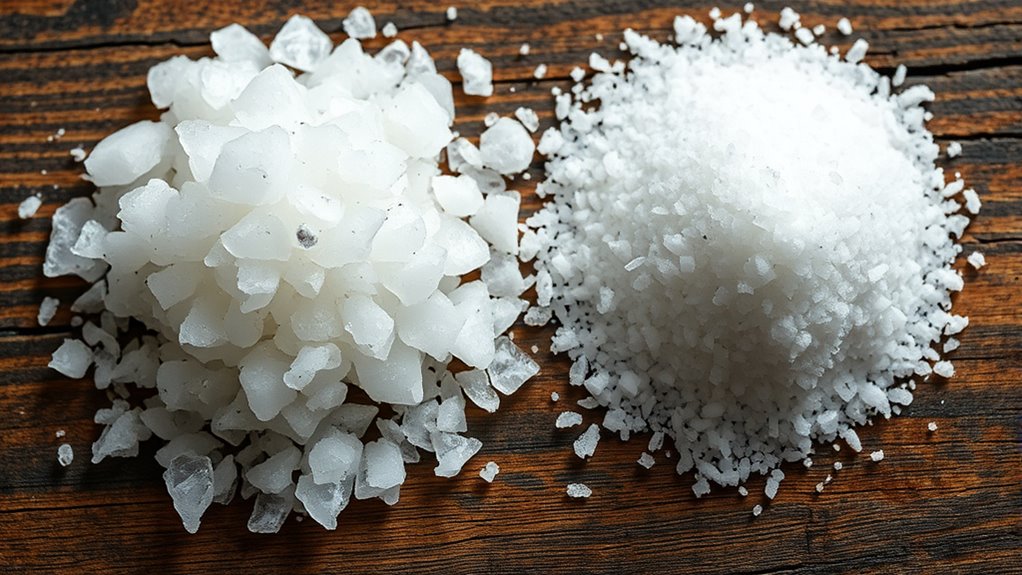
When you handle kosher salt, you’ll notice its large, coarse crystals feel flaky and irregular compared to the fine, uniform grains of canning salt. This difference in grain size directly impacts the texture and how each salt behaves in your kitchen.
Kosher salt’s larger, less dense crystals give it a distinct, tactile texture that’s easy to pinch and sprinkle, but they dissolve more slowly. Because of this slower dissolution, you’ll often need to stir or crush kosher salt longer to achieve even distribution in your recipes.
On the other hand, canning salt has a fine grain size similar to table salt, which means it feels smoother and denser. This fine texture allows canning salt to dissolve quickly and uniformly, making it ideal when precise measurements and rapid dissolution are essential—such as in brining or pickling.
Understanding these grain size and texture differences helps you choose the right salt for your culinary needs and guarantees consistent results every time.
Why Purity and Additives Matter in Canning Salt
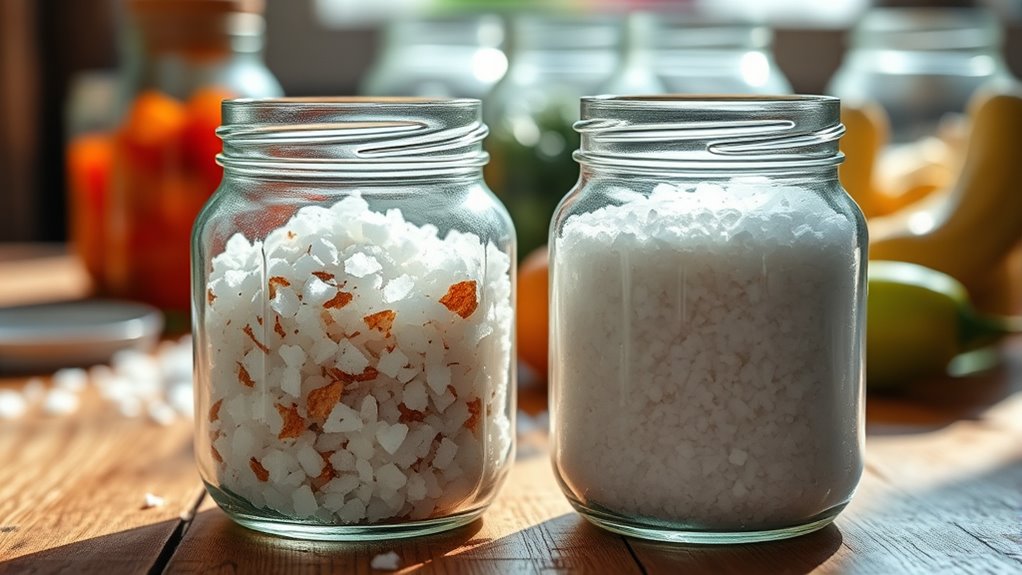
Because canning salt contains no additives or anti-caking agents, it guarantees your brine stays clear and free from cloudiness. The purity of canning salt ensures that nothing interferes with the preservation process.
Additives found in other salts, like iodine or anti-caking agents, can cause discoloration and cloudiness, which negatively affect your canned foods’ appearance and quality. When you choose pure, additive-free canning salt, you avoid these issues and maintain ideal brine clarity.
This clarity is essential—not just for looks but also because additives can alter how salt dissolves, potentially impacting preservation. Using salt with impurities risks unwanted chemical reactions that might spoil your batch or change flavors.
How Kosher and Canning Salt Affect Brine Clarity and Pickling
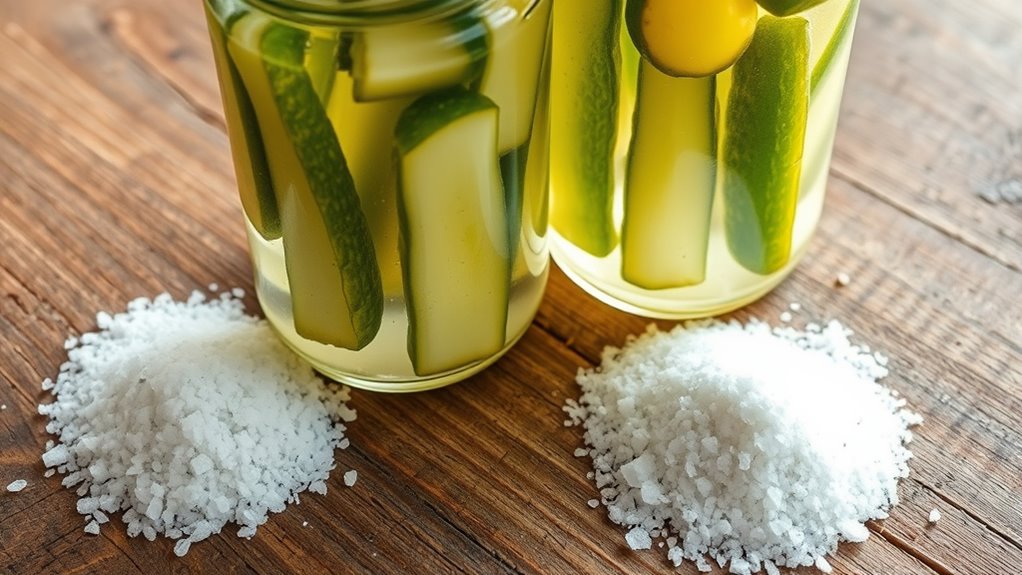
Although both kosher and canning salts are popular choices for pickling, they affect brine clarity in very different ways. Canning salt, with its fine, pure texture, dissolves quickly and creates a crystal-clear brine. This is super important if you want your pickles to look visually appealing.
On the other hand, kosher salt has larger, coarser crystals that dissolve more slowly. If you don’t stir it well, these crystals can leave cloudiness or sediment in the brine. That leads to cloudy pickles, which can really hurt the overall appearance of your pickled goods.
Since canning salt is specifically formulated to prevent clouding and discoloration, it’s often the better choice when brine clarity is essential. While kosher salt works for pickling, you’ll need to dissolve it thoroughly to avoid those cloudy results.
Knowing these differences helps you pick the right salt for the best pickling outcome. It’s all about getting that perfect, clear brine!
Measuring Kosher vs. Canning Salt: Avoid Volume Substitutions
Getting the right salt amount is just as important as choosing the right type. When measuring kosher and canning salt, relying on volume can throw off your recipe.
Accurately measuring salt amounts is as crucial as selecting the right salt type for your recipe.
Kosher salt’s larger, coarser grains mean a teaspoon holds less salt than the same volume of finer-grained canning salt. So, to avoid mistakes, always measure by weight.
Here’s what you should do:
- Use a kitchen scale to weigh salt in grams or ounces for precise measurements.
- Avoid substituting kosher salt for canning salt by volume, since crystal size affects density.
- Adjust recipes by weight to ensure consistent salt levels, preventing under- or over-salting.
When to Use Canning Salt Instead of Kosher Salt for Preservation
When preserving foods, you should choose canning salt over kosher salt to guarantee your brine stays clear and free of sediment. Canning salt is specially refined without additives, which keeps your preservation liquid transparent—crucial for spotting spoilage early.
Its fine, uniform grain size dissolves quickly and evenly, preventing cloudiness and sediment buildup that can occur with kosher salt’s coarse, irregular crystals. Using canning salt as directed ensures consistent salt concentration, which is essential for microbial safety during preservation.
If you substitute kosher salt, you’ll need to measure by weight, not volume, to avoid under- or over-salting, since grain size and density differ markedly. Overall, for reliable, safe preservation and clear brine, canning salt is your best bet.
It’s specifically designed to meet the demands of preserving foods, while kosher salt is better suited for seasoning and cooking where these factors aren’t as critical.
Frequently Asked Questions
Can You Use Kosher Salt Instead of Canning Salt When Canning?
You can use kosher salt instead of canning salt, but you’ll need to weigh it carefully and adjust amounts to avoid over-salting or preservation issues.
Measuring by volume won’t give you accurate results for safe canning. So, it’s best to use a scale and be precise with how much you add. That way, your canned goods turn out just right!
Why Do Chefs Use Kosher Salt Instead of Sea Salt?
You use kosher salt because its large, flaky crystals give you better control when seasoning and dry brining. It’s pure, free of additives, and easy to pinch, making it perfect for precise, versatile cooking techniques.
Plus, the texture feels great between your fingers, so you can really get a sense of how much you’re adding. It’s just easier to handle compared to finer salts like sea salt.
How Much Canning Salt Equals 1 Cup Kosher Salt?
You’ll need about ¾ cup of canning salt to equal 1 cup of kosher salt since canning salt is denser.
For best results, weigh the salt to get the seasoning just right in your recipe. It really helps make sure everything turns out perfect!
Is Morton Kosher Salt the Same as Canning Salt?
No, Morton Kosher Salt isn’t the same as canning salt. You can’t swap them directly because kosher salt’s crystals are coarser and may have additives.
This affects the weight and how it dissolves in recipes like brines. So, it’s best to use the salt type the recipe calls for to get the right results.
Conclusion
You can’t confuse kosher salt and canning salt—they’re distinctly different in grain, purity, and purpose. When preserving pickles or crafting clear brines, canning salt’s clean, consistent crystals come through clearly.
Kosher salt’s coarse crunch is better for seasoning and cooking. So, choose carefully to keep your canned creations crisp and your culinary creations flavorful.
Remember, mixing kosher salt and canning salt might muddle measurements and mar your masterpiece! Using the right salt ensures your pickles stay crisp and your dishes have the perfect flavor balance. Always pick canning salt for preserving and kosher salt for cooking to avoid any kitchen mix-ups. That way, your recipes turn out just right every time!