
What Is Coarse Salt and How Is It Used?
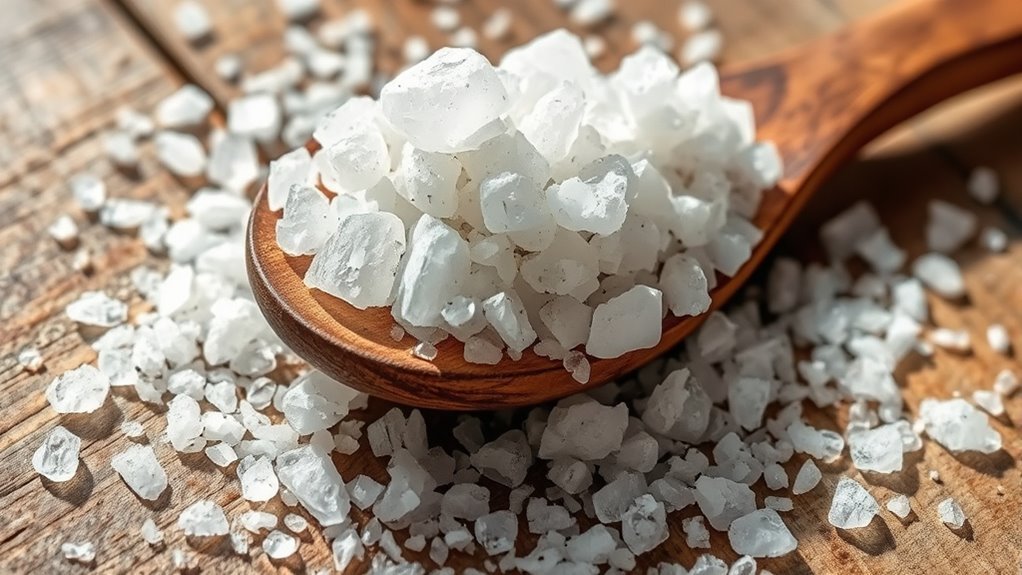
Coarse salt has larger, jagged crystals that dissolve slowly, giving you a milder, gradual flavor release. This type of salt is perfect if you want to add texture and depth to your dishes without overwhelming them right away.
You can use it to add crunch as a finishing salt or mix it into rubs and marinades for a deeper seasoning experience.
Its irregular shape also helps create a crust in salt-baking, which locks in moisture and enhances the overall flavor of your food.
Plus, coarse salt’s texture and mineral flavor can elevate your dishes with ease, making it a versatile ingredient in any kitchen.
Keep exploring and experimenting to discover how to make the most of this flavorful ingredient in your cooking.
Key Takeaways
- Coarse salt consists of larger, irregularly shaped crystals ranging from 1 to 4 millimeters. It dissolves slowly, providing a gradual saltiness and enhanced flavor development in dishes.
- The salt’s texture adds a crunchy finish when sprinkled on foods like salads and desserts. It’s pretty great for that little extra touch.
- Coarse salt is commonly used in rubs, marinades, and salt-baking to lock in moisture and flavor. It really helps keep your food juicy and tasty.
- It offers a subtle mineral taste and helps draw out moisture for better seasoning. So, it’s not just about saltiness, but also about boosting the overall flavor.
What Makes Coarse Salt Different From Fine Salt?
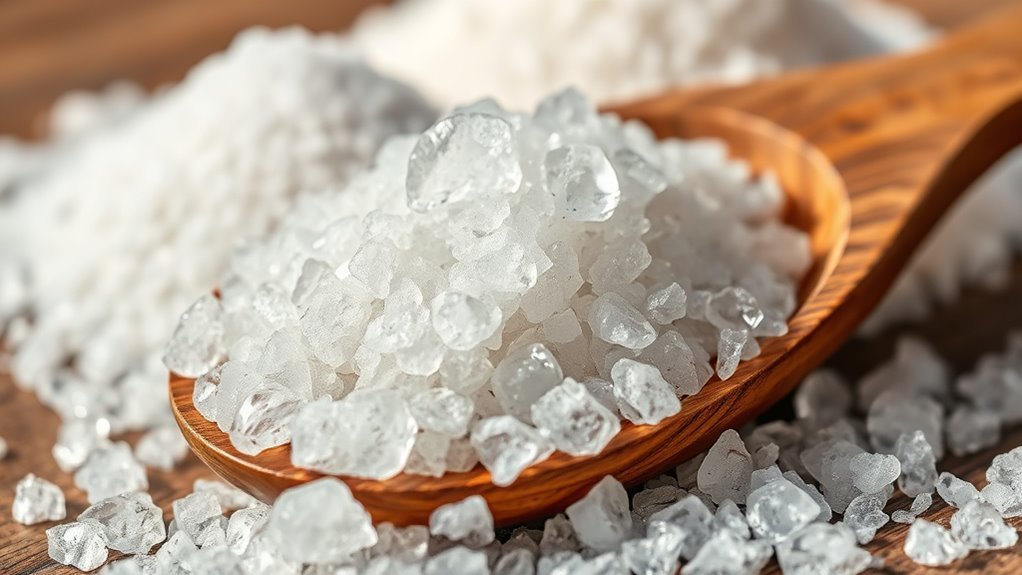
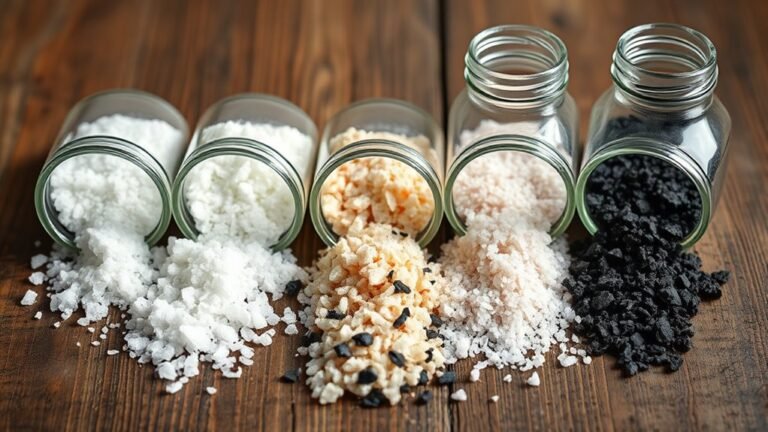
Although both types are salt, coarse salt stands out because of its larger, jagged crystals that range from 1 to 4 millimeters. This makes it visibly bigger than fine salt’s small, uniform grains.
Coarse salt features larger, jagged crystals from 1 to 4 millimeters, noticeably bigger than fine salt’s uniform grains.
When you look closely, coarse salt’s irregular shape creates bigger salt particles and noticeable air gaps between the salt grains. These gaps reduce the overall saltiness per volume, giving coarse salt a milder taste compared to fine salt.
The larger crystal size means coarse salt dissolves slowly, unlike fine salt, which quickly melts due to its smaller, uniform salt crystals. This difference in salt texture affects how each salt interacts with food.
Coarse salt’s distinct salt particles provide a crunch and a gradual release of flavor, while fine salt blends in almost immediately. Understanding these variations helps you choose the right salt for your cooking needs, especially when you want to control how saltiness develops during preparation.
How To Use Coarse Salt To Boost Flavor And Texture
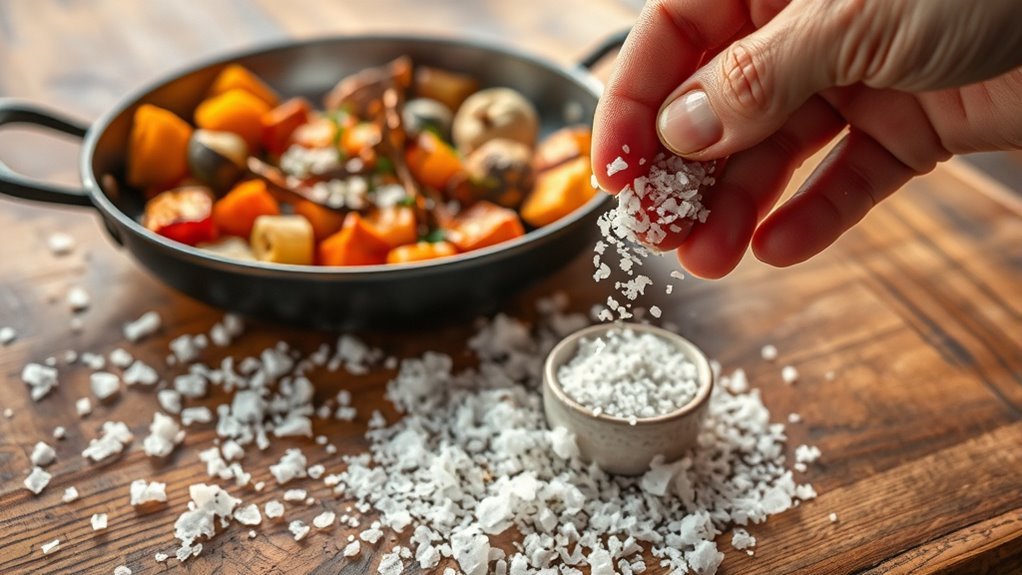
Coarse salt’s larger crystals and slower dissolution make it perfect for enhancing both flavor and texture in your dishes. When you sprinkle coarse salt as a finishing salt, it adds a satisfying crunchy texture and a subtle mineral flavor that lingers.
Use it in rubs and marinades to boost flavor penetration by drawing out moisture and forming a flavorful seasoning crust. In salt-baking, coarse salt creates an even heat barrier, locking in moisture and enhancing taste.
| Use Case | Effect | Result |
|---|---|---|
| Sprinkle on salad | Crunchy texture | Flavor boost & visual appeal |
| Rub on meat | Flavor penetration | Juicy, seasoned crust |
| Salt-baking fish | Even heat barrier | Moist, evenly cooked dish |
| Finish desserts | Mineral flavor | Balanced sweetness |
Try coarse salt to boost flavor and texture effortlessly in your cooking. It’s an easy way to take your dishes up a notch!
Frequently Asked Questions
Is Coarse Salt Better Than Regular Salt?
Coarse salt isn’t better than regular salt; it just suits different uses. You’ll find it great for adding texture and a milder flavor, especially as a finishing touch.
On the other hand, regular salt dissolves faster, making it perfect for everyday seasoning. It’s all about what you need for your dish!
What Do People Use Coarse Salt For?
You’ll find yourself using coarse salt to crust-roast meats, sprinkle on bread for crunch, or finish salads with a burst of flavor.
It’s perfect for brining and adds that satisfying texture you didn’t know you needed.
What Is Another Name for Coarse Salt?
Another name for coarse salt is kosher salt, which you might use for seasoning or koshering meat.
People also call it sea salt or rock salt, depending on where it comes from or how it’s processed.
What Is the Best Coarse Salt to Use?
You’ll want to choose high-quality, unrefined coarse salts like Sel Gris or kosher salt, depending on your use.
Look for large, irregular crystals from reputable regions to enhance flavor, texture, and visual appeal in your dishes.
These salts really bring out the best in your cooking, trust me! Plus, their unique textures can make a big difference.
Conclusion
Now that you know what sets coarse salt apart, imagine sprinkling those large, glistening crystals over a sizzling steak or fresh garden veggies. As they crunch between your teeth, they release bursts of flavor and add a delightful texture.
Whether you’re finishing a dish or seasoning while cooking, coarse salt turns ordinary meals into sensory experiences. It’s all about that satisfying crunch and the way it enhances the natural taste of your food.
So next time you reach for salt, grab the coarse kind. Using coarse salt not only adds a unique texture but also boosts flavor in ways fine salt can’t. Watch your food come alive with savory magic, making every bite memorable and delicious. Coarse salt is truly a simple ingredient that transforms everyday cooking into something special.