

How to Choose Safe Salt for Dogs
To choose safe salt for your dog, it’s important to pick pet-friendly ice melts. Avoid harsh chemicals like sodium chloride because they can irritate your dog’s paws and even cause poisoning if your dog licks or ingests them.
Look for products that are labeled safe for pets, such as Morton Safe-T-Pet. These options are specially made to be gentler on your furry friend. Some ice melts also come with tinted crystals, which help ensure even application and make it easier to see where you’ve already spread them.
Always protect your dog’s paws by using booties or applying a paw balm before going outside. And once you’re back indoors, make sure to wash their paws to remove any salt or chemicals.
Keep these tips in mind, and you’ll find more ways to keep your dog safe and comfortable all winter long.
Key Takeaways
– Select ice melts labeled specifically as pet-safe and free from sodium chloride or harsh chemicals.
This helps keep your furry friend safe while clearing ice.
– Choose products like Morton Safe-T-Pet that ensure safety for dogs and family members.
These options are made with your whole family’s well-being in mind.
– Prefer colored or tinted ice melts for better visibility and even application on surfaces.
It’s easier to see where you’ve spread the salt, so you don’t miss any spots.
– Opt for fast-acting salt alternatives effective at low temperatures (down to -15°F).
That way, they work well even when it’s really cold outside.
– Always follow manufacturer instructions and use paw protection like booties or balms to minimize exposure.
Taking these extra steps helps protect your dog’s paws from irritation.
Why Rock Salt Hurts Your Dog’s Paws and Health
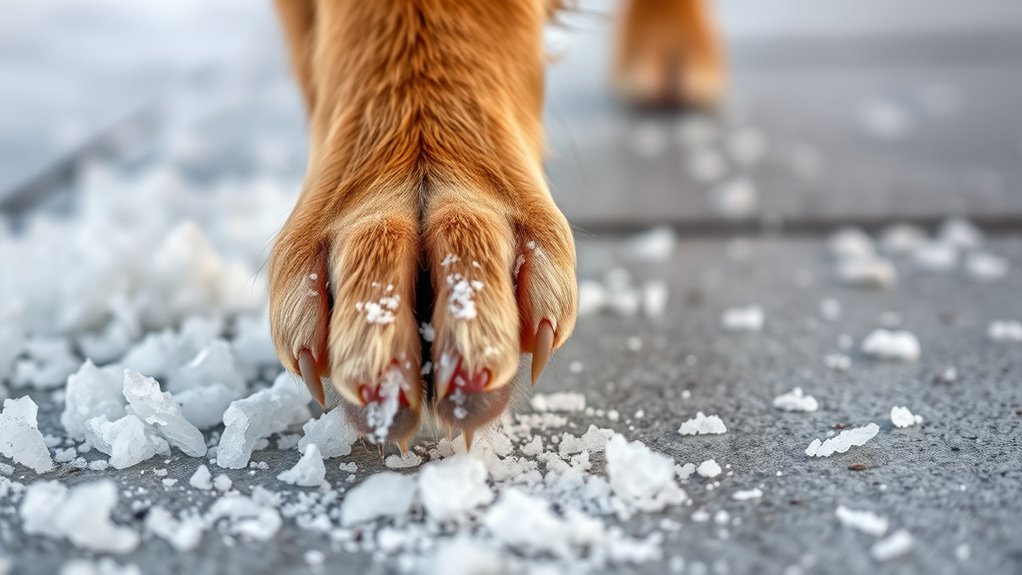
Although rock salt effectively melts ice, it can seriously harm your dog’s paws and health. Rock salt contains sodium chloride, which causes chemical burns and irritation on your dog’s paw pads.
Its sharp, crystalline pellets can lodge between paw pads, causing pain and discomfort. Prolonged exposure dries out and cracks the paw pads, leaving them vulnerable to further injury.
When your dog licks or grooms these irritated paws, they risk ingestion of the salt residue. This can lead to gastrointestinal problems like vomiting and diarrhea, and in severe cases, salt poisoning.
Salt poisoning is dangerous, affecting your dog’s internal organs and overall well-being. To protect your dog, it’s essential to understand the harmful effects of rock salt on both their paws and health.
Avoid letting your dog walk on treated surfaces without protection, and always clean their paws after exposure to reduce irritation, chemical burns, and the risk of salt poisoning.
How to Pick the Safest Ice Melts for Your Dog
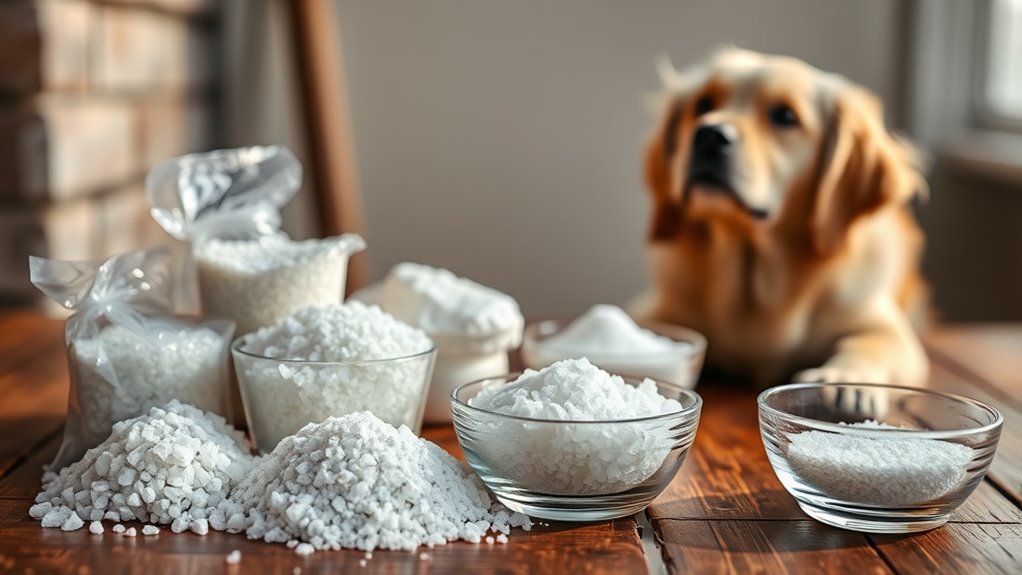
When you want to keep your dog safe during icy weather, choosing the right ice melt is essential. Opt for pet-friendly ice melts that are free from sodium chloride and other harsh chemicals to protect your pets’ paws from irritation and toxicity.
Look for products clearly labeled as safe for pets and family members, like Morton Safe-T-Pet, which minimize risks and are safer during the winter. Colored or tinted crystals help you see where you’ve applied the ice melt, ensuring even coverage and preventing missed icy spots.
Choose fast-acting ice melts that work down to at least -15°F, so your dog spends less time on slippery surfaces. Always follow the manufacturer’s instructions for proper application.
To further protect your dog, consider using booties or paw balm. By selecting the safest ice melts, you’re not only shielding your furry friend’s paws but also keeping your entire family safe throughout winter.
Frequently Asked Questions
What Type of Salt Is Best for Dogs?
You want pet-safe, chloride-free salts like Morton Safe-T-Pet because they’re non-toxic and gentle on paws.
Avoid traditional rock salt since it can irritate and harm your dog if ingested or touched during winter walks.
It’s much safer to choose products designed with your furry friend in mind. That way, you can enjoy winter walks without worrying about their safety.
How to Tell if Salt Is Dog Safe?
When Jake bought pet-safe ice melt, he checked for a “dog-friendly” label and rounded pellets.
You’ll spot dog-safe salt by verifying ingredient lists and avoiding sharp, toxic crystals.
This way, you can make sure your pup’s paws stay safe and comfy.
Is Morton Safe T Salt Ok for Pets?
Yes, Morton Safe-T-Pet salt is okay for pets. You’ll appreciate that it’s designed to avoid paw irritation and toxicity.
It melts ice safely even in cold temperatures without harmful chemicals that could hurt your dog’s health. So, you can feel good about using it around your furry friends.
What Salt Is Not Safe for Dogs?
Think of rock salt like a sneaky villain—it’s not safe for dogs. Avoid sodium chloride, calcium chloride, and magnesium chloride, as they cause paw burns and toxicity.
Stick to pet-safe alternatives to keep your furry friend safe this winter. Your dog will thank you!
Conclusion
Imagine your dog’s paws padding softly on a safe, salt-free path instead of harsh, biting rock salt. Choosing the right ice melt means protecting those sensitive pads and keeping your furry friend healthy through winter’s chill.
By opting for pet-friendly options, you’re not just melting ice—you’re melting away worries. It’s all about finding that perfect balance between safety and effectiveness.
Keep your dog’s paws happy and safe, letting every winter walk feel like a gentle stroll through freshly fallen snow. Remember, using safe salt for dogs helps prevent painful burns and irritation, so your pup can enjoy the outdoors without any discomfort.
When selecting ice melt products, look for labels that specifically mention pet safety. This simple step ensures your dog’s paws stay healthy and your winter walks remain worry-free.