
10 Types of Salt – Which Is Best for You?
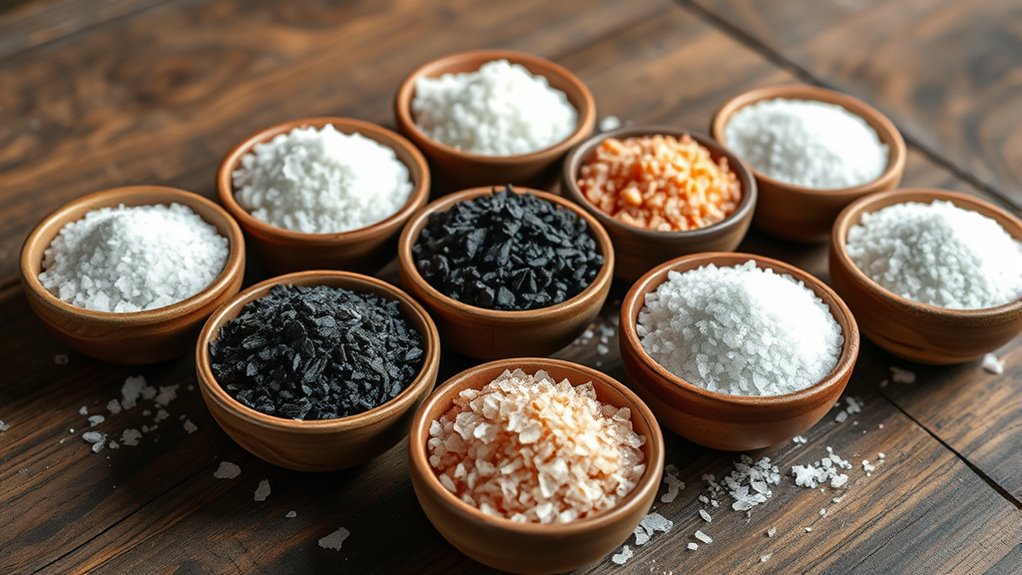
You have many salt options to choose from, each with its unique qualities. From table salt with iodine to kosher salt’s flaky texture, and sea salts like fleur de sel that add a delicate crunch, there’s something for every palate and dish.
Himalayan pink salt is popular for its trace minerals, though it offers minimal health benefits compared to others.
If you’re managing sodium intake, potassium-based substitutes can help you reduce salt without losing flavor. It’s all about choosing the right salt for your cooking needs and health goals.
Remember to use them sparingly—balancing taste and wellness is key.
As you explore different salt varieties and learn to use them mindfully, you’ll discover how they can elevate your meals safely and deliciously. So, go ahead and experiment to find the best salt for you!
Key Takeaways
- Table salt is fine-grained and versatile, ideal for everyday cooking and seasoning.
- Kosher salt’s large flakes provide precise seasoning control and dissolve well in recipes.
- Sea salts vary in texture and mineral content, enhancing flavor and presentation.
- Himalayan pink salt offers trace minerals and a distinctive color but minimal health benefits.
- Finishing salts like fleur de sel add texture and visual appeal to dishes without altering sodium levels.
Why Salt Is Essential for Flavor and Health
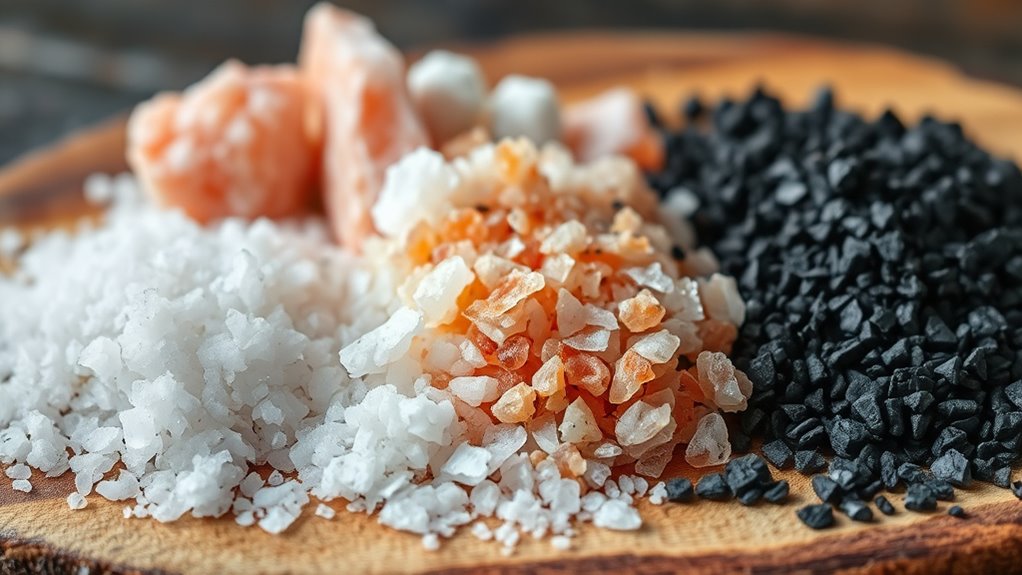
While you might think salt’s main job is just to add flavor, it actually plays several essential roles in both cooking and your health. Salt enhances the natural flavor of your food, making dishes more satisfying without needing extra seasoning.
Whether you use sea salt or iodized salt, each contains sodium, which your body relies on to regulate fluid balance and nerve signals. Iodized salt goes a step further by providing iodine, an essential trace mineral vital for thyroid function and brain development.
Sea salt also contains various trace minerals that can contribute to your overall health. Beyond flavor, salt acts as a natural preservative, helping prevent spoilage and extending the shelf life of your meals.
How to Choose the Best Salt for Cooking and Finishing
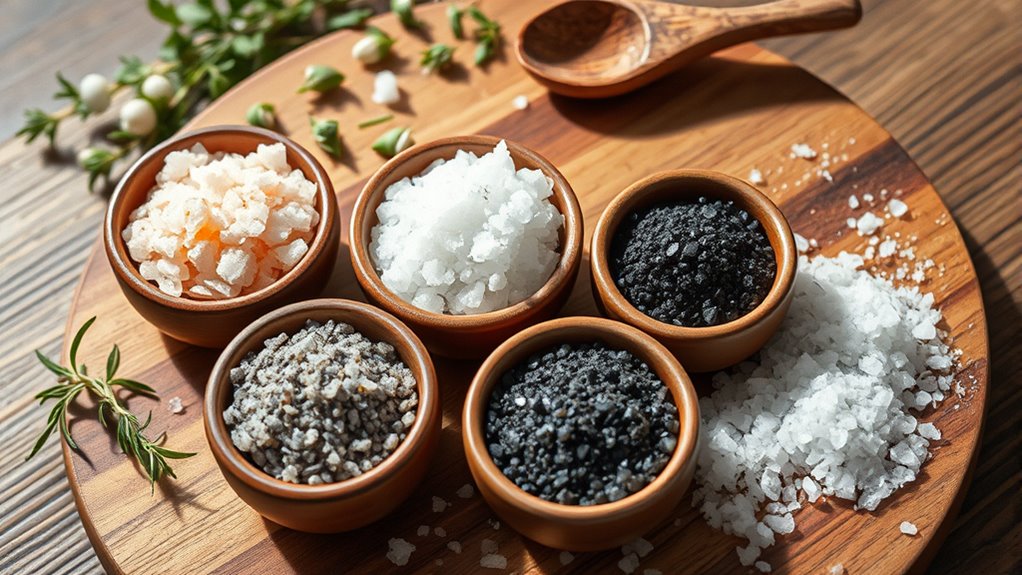
Salt comes in many forms, and choosing the right one can make a noticeable difference in your cooking and presentation. For everyday cooking, refined salts like table salt or kosher salt offer consistent flavor and easy measurement.
If you want to guarantee iodine intake, iodized salt is a smart choice. When it’s time to finish a dish, reach for finishing salt such as flaky sea salt or fleur de sel. These add a delightful texture and visual appeal without overpowering the flavors.
Pay close attention to texture and grain size: fine salts dissolve quickly for seasoning, while coarse salts work well as garnishes. Don’t hesitate to experiment with seasoned salts or smoky varieties to enhance your culinary needs, tailoring flavor profiles to your dishes.
Table Salt: Everyday Staple With Iodine
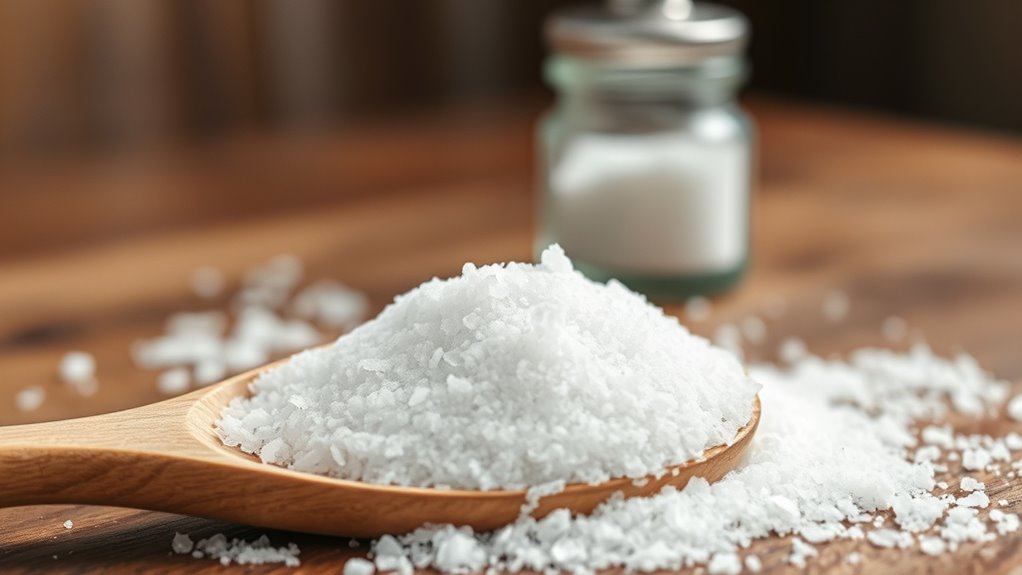
You probably use table salt every day without thinking much about it, but it plays an important role beyond flavoring your food. Iodine added to table salt supports your thyroid and brain health, making it a simple way to meet your daily needs.
Plus, its fine texture makes it perfect for cooking and seasoning a wide range of dishes. It’s one of those everyday staples that quietly does a lot for you!
Iodine Benefits Explained
Why is iodine so important for your health? Iodine plays a key role in thyroid health by helping your body produce thyroid hormones, which regulate metabolism and growth.
Without enough iodine, you risk iodine deficiency, which can lead to goiter and developmental issues. Iodized salt offers a simple way to boost your iodine intake daily.
Consider these iodine benefits:
- Supports healthy thyroid hormone production
- Prevents iodine deficiency disorders like goiter
- Essential for fetal brain development during pregnancy
- Complements iodine-rich foods to maintain balanced iodine intake
Using iodized salt is an effective form of iodine supplementation for most people. It ensures you meet your needs easily without drastic diet changes.
Common Culinary Uses
Since iodine plays a vital role in your health, choosing the right type of salt can make a difference. Table salt, often iodized, serves as an everyday staple with essential iodine to support your thyroid. Its fine crystals dissolve quickly, making it perfect for most culinary uses—from baking to cooking.
You’ll appreciate its uniform granulation, which allows precise measuring and even seasoning, ensuring your dishes maintain a balanced flavor profile. Thanks to added anti-caking agents, table salt flows smoothly without clumping, so it’s always easy to sprinkle from your salt shaker.
Affordable and versatile, iodized table salt is your go-to for consistent seasoning and reliable dissolvability. It fits seamlessly into any recipe where you need a dependable salt that enhances taste and nutrition.
Kosher Salt: Why Chefs Prefer Its Texture
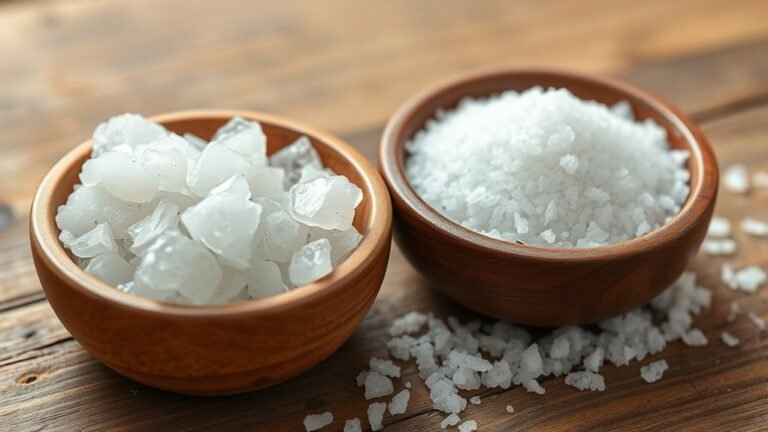
Chefs often reach for kosher salt because its large, flaky crystals offer exceptional control when seasoning. You’ll find its coarse texture makes it easy to pinch and sprinkle evenly, helping you season with precision.
Kosher salt’s mineral profile remains pure since it usually lacks additives like iodine or anti-caking agents. This natural quality enhances flavor without unwanted bitterness. Its large crystals dissolve gradually, perfect for developing a flavorful crust on meats or during brining.
Kosher salt’s pure mineral profile and slow-dissolving crystals enhance flavor without bitterness, perfect for crusts and brining.
Here’s why kosher salt stands out:
- Coarse texture allows you to control seasoning intensity
- Large crystals provide a tactile way to measure salt by hand
- Ideal for brining, as it penetrates meat slowly for even flavor
- Free from additives, preserving a clean mineral profile
When you use kosher salt, you tap into the trusted choice of chefs who value its texture and flavor-enhancing properties. It’s all about that perfect balance of texture and taste!
Sea Salt Varieties: From Coarse Grains to Delicate Fleur De Sel
Sea salt comes in a range of textures, from coarse grains to delicate flakes like fleur de sel, each suited for different culinary uses. You’ll find that coarse grains add a satisfying crunch when finishing dishes, while fine sea salt dissolves quickly, perfect for seasoning during cooking.
Fleur de sel stands out with its delicate crystals, hand-harvested from the surface of salt ponds, offering a subtle crunch and refined flavor. Different harvesting methods influence mineral retention, which directly impacts the flavor profile of sea salt varieties.
For example, Celtic salt is harvested from clay-lined salt flats, preserving higher mineral content like magnesium and potassium that enrich its taste. These trace minerals are naturally retained in minimally processed sea salts, enhancing their unique flavor.
When choosing sea salt, consider how the texture and mineral content fit your cooking needs—whether you want a robust crunch or a subtle seasoning boost. It really depends on what you’re aiming for in your dish.
Himalayan Pink Salt: Health Myths and Facts
You might be drawn to Himalayan pink salt because of its unique color and the minerals it contains. But those minerals are only in tiny amounts.
Don’t expect it to offer major health benefits compared to regular salt, even though some claims suggest otherwise. Instead, focus on how it can enhance your dishes with its flavor and appearance.
Mineral Content Reality
Three key points debunk common claims about Himalayan pink salt’s mineral content. While it contains trace minerals like potassium, magnesium, and iron, these exist only in trace amounts, too small to offer meaningful health benefits.
The pink color comes from iron oxide, which doesn’t increase its nutritional value. Studies show that any mineral advantages are outweighed by its high sodium content, which poses health risks if you consume too much.
To get significant minerals, you’d have to eat far more salt than recommended, which isn’t safe.
- Contains trace minerals but in minimal amounts
- Pink hue from iron oxide, not enhanced nutrition
- High sodium content negates mineral advantages
- Excessive intake needed for mineral benefits, risking health
Himalayan pink salt’s mineral levels don’t justify claims of superior health benefits.
Health Benefit Misconceptions
While Himalayan pink salt’s mineral content is often highlighted, many health claims about it don’t hold up under scrutiny. Pink Himalayan salt does contain trace minerals like magnesium and potassium, but these amounts are too small to offer real health benefits.
Marketing myths often exaggerate its superiority over processed salt or other salt types. If you consume pink Himalayan salt in large quantities hoping for health benefits, you risk excessive sodium intake, which can lead to hypertension.
It’s also important to remember that pink salt doesn’t prevent iodine deficiency, a common concern with some processed salts fortified with iodine. Ultimately, pink Himalayan salt isn’t nutritionally better than regular salt.
Culinary Uses Explained
Himalayan pink salt serves primarily as a flavorful and visually appealing finishing touch in many dishes rather than a health remedy. While it contains trace minerals like magnesium and potassium, their mineral content is too minimal to impact health.
You’ll find Himalayan pink salt valued more for its unique flavor and attractive pink salt crystals than for any nutritional superiority over iodized salt.
For your culinary uses, consider these ideas:
- Sprinkle Himalayan pink salt from a salt shaker for a delicate crunch
- Use it as a finishing salt on grilled meats or roasted vegetables
- Add visual appeal to salads or desserts with its pink hue
- Swap specialty salts like sea salt for Himalayan pink salt to vary flavor profiles
Specialty Salts: Unique Flavors and Culinary Uses
Specialty salts like fleur de sel, flaky sea salts, and smoked varieties bring unique flavors and textures that can elevate your dishes instantly.
Fleur de sel and flaky sea salts are hand-harvested from seawater. They’re prized for their delicate crystalline texture that adds a satisfying crunch and visual appeal to your gourmet presentation.
Smoked salts, infused with hickory or applewood smoke, introduce a rich, smoky depth. They’re perfect for enhancing meats and vegetables.
Seasoned salts blend herbs and spices into the mix, offering quick flavor enhancements without extra prep.
While specialty salts shine in culinary uses by boosting taste and aesthetics, keep in mind they contain sodium levels similar to regular salt. Use them as finishing touches to maximize their impact.
Salt Substitutes: Healthy Alternatives for Sodium Reduction
You might enjoy the unique flavors and textures that specialty salts bring, but if you’re looking to cut back on sodium, salt substitutes offer a practical alternative. These products often replace sodium chloride with potassium chloride, helping you achieve sodium reduction without compromising flavor.
Many salt substitutes also include added flavoring and minerals to mimic regular salt, making them ideal for cooking and seasoning. So, you get the taste you love without all that extra sodium.
Salt substitutes blend added flavors and minerals to replicate salt’s taste without the extra sodium.
Using salt substitutes can provide notable health benefits, especially if you have high blood pressure. They help align with dietary guidelines recommending lower sodium intake.
But, you should be cautious if you have kidney disease or take medications affecting potassium levels. High potassium can pose health risks, so it’s best to check with your doctor first.
Consider these points about salt substitutes:
- Contain potassium chloride instead of sodium chloride
- Help reduce sodium intake while preserving flavor
- May benefit those managing high blood pressure
- Require medical advice if you have health conditions or take certain meds
How Much Salt Is Safe and Best for Flavor?
Although salt enhances flavor and makes food more enjoyable, it’s important to use it in moderation to stay within safe limits. The CDC recommends keeping your sodium intake below 2,300 mg daily, ideally around 1,500 mg for most adults.
Since processed foods often push sodium levels beyond these limits, choosing the right salt types and controlling amounts is essential. Iodized salt provides essential minerals, but watch your overall salt moderation to avoid health risks like high blood pressure.
Using salt thoughtfully enhances flavor without excess, balancing mineral content and taste.
| Salt Types | Sodium Content (mg per 1g) |
|---|---|
| Table Salt | 400 |
| Sea Salt | 380 |
| Himalayan Salt | 370 |
| Kosher Salt | 430 |
| Iodized Salt | 400 |
Understanding these helps you balance flavor enhancement while maintaining safe sodium intake.
Tips for Using Salt Mindfully in Your Cooking
When seasoning your dishes, add salt gradually and taste often to avoid overdoing it. Mindful use of salt lets you enhance flavor without overwhelming your palate or increasing sodium unnecessarily.
Try experimenting with different salt types—like kosher salt for cooking and finishing salts such as fleur de sel—to bring texture and visual appeal to your meals. Combine salting with herbs and spices to boost taste while keeping sodium in check.
Here are some tips for mindful use:
- Season during cooking and finish with a small pinch of flaky sea salt for balanced flavor.
- Regularly taste your dish to adjust seasoning and avoid over-salting.
- Use herbs and spices alongside salt to create rich, layered flavors.
- Be aware of sodium in packaged foods; home salting adds less than you might think.
Frequently Asked Questions
What Is the Healthiest Salt to Use Daily?
The healthiest salt for daily use is iodized salt because it provides essential iodine for your thyroid and brain. Just watch your total sodium intake, and choose salt based on taste and cooking needs, not minerals.
It’s really about balance. Too much sodium isn’t good, so keep an eye on how much you use. But getting enough iodine? That’s important for your overall health.
What Is the Unhealthiest Salt?
Imagine you’re grabbing processed table salt loaded with anti-caking agents—that’s often seen as the unhealthiest.
But really, it’s your overall high sodium intake that harms you more than the salt type itself.
Is Himalayan or Celtic Salt Better?
You won’t find one salt better health-wise; Himalayan and Celtic salts differ mainly in flavor and texture.
Choose based on what you enjoy cooking with, since their mineral content won’t impact your nutrition considerably. It really comes down to personal preference.
Which Is Healthier, Sea Salt or Iodized Salt?
You’ll find iodized salt healthier since it provides essential iodine for your thyroid, which sea salt usually lacks.
Both have similar sodium, so choose based on taste. But don’t expect major health differences otherwise.
Conclusion
You might think all salt is the same, but choosing the right type can transform your cooking—and even your health. Whether you reach for kosher salt to season steak or sprinkle delicate fleur de sel over dessert, each salt brings something unique to your table.
And here’s the coincidence: the perfect salt for flavor often aligns with the healthiest option. So next time you cook, remember, the salt you pick isn’t just seasoning—it’s a game-changer.
Picking the best salt for you means considering both taste and health benefits. From sea salt to Himalayan pink salt, each type offers different minerals and textures that can elevate your dishes while supporting your well-being.
So, when you’re seasoning your meals, think beyond just salt as a simple additive. The right type of salt can enhance flavor, boost nutrition, and transform your entire cooking experience. Choose wisely and enjoy the difference!