
Best 10 Types of Salt for Electrolytes (Top Picks for Hydration)
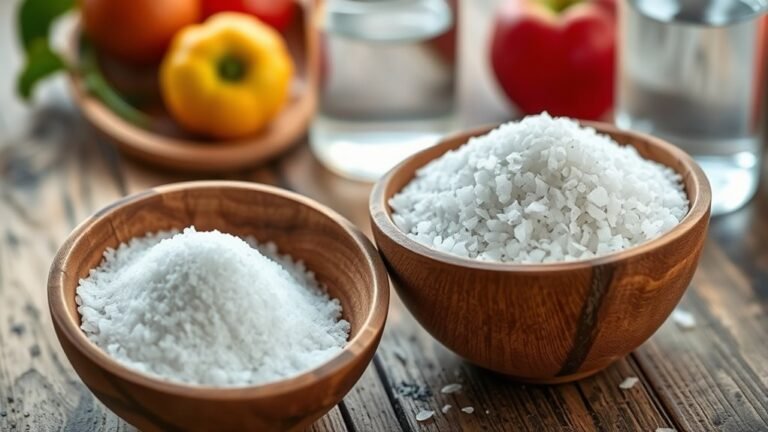
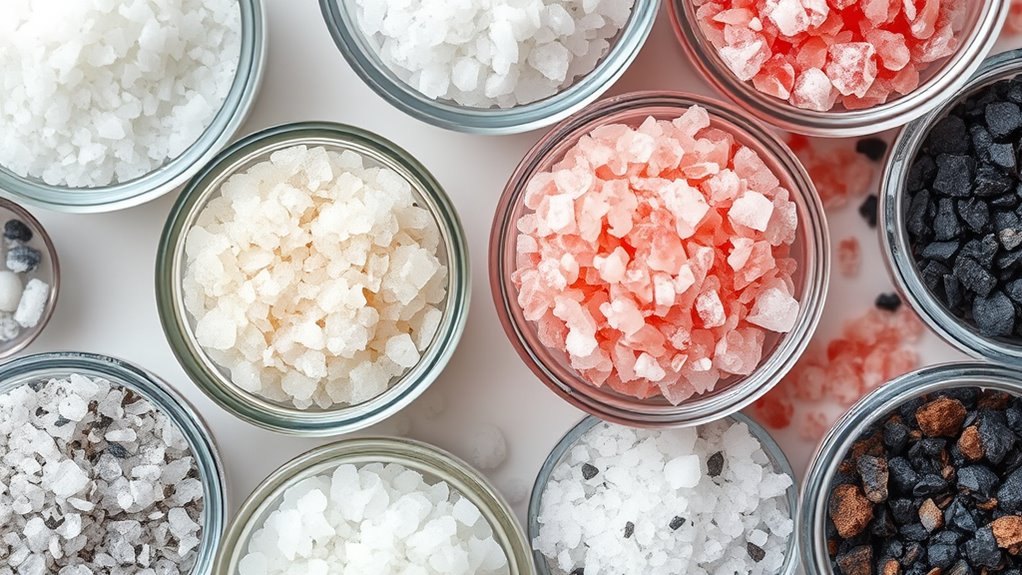
You’ll want natural salts like Himalayan pink salt, Celtic sea salt, and unrefined sea salt because they provide a rich balance of sodium, potassium, magnesium, and calcium—key electrolytes for hydration and muscle function. Adding potassium chloride helps prevent cramps while magnesium sulfate (Epsom salt) aids relaxation and recovery. Calcium lactate supports your muscle and bone health, too.
Using these salts wisely boosts your electrolyte balance and endurance. Keep exploring to fine-tune your hydration strategy for ideal results.
Characteristics Of Ideal Electrolyte Salts
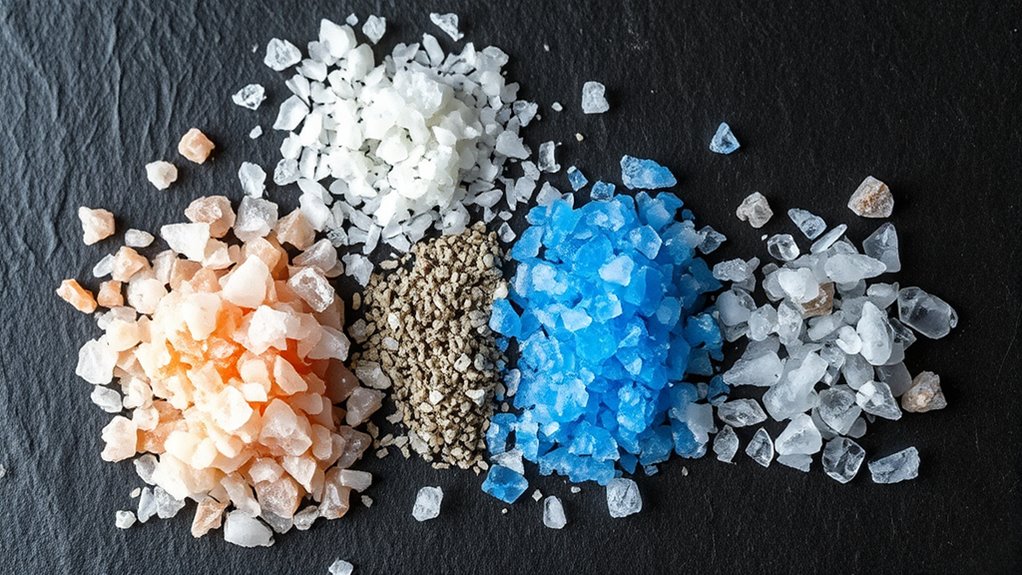
When choosing electrolyte salts, you want ones that offer a balanced mix of sodium, potassium, magnesium, and calcium to effectively support hydration and muscle function.
Ideal salts maintain this electrolyte balance by being minimally processed, preserving their natural trace minerals that boost mineral content and absorption.
Choosing minimally processed salts preserves essential trace minerals, enhancing both mineral content and absorption for better hydration.
While Himalayan salt is known for its rich mineral profile, the focus should be on salts free from additives that could hinder hydration benefits.
Including magnesium and potassium alongside sodium ensures your muscles and nerves function smoothly during physical activity.
Choosing salts with a clean, natural flavor and minimally refined guarantees you get the full spectrum of essential minerals without contaminants.
This careful selection supports optimal hydration and overall wellness, making your electrolyte intake both effective and safe.
Natural Salts For Electrolyte Balance: Sea Salt, Himalayan, And Celtic
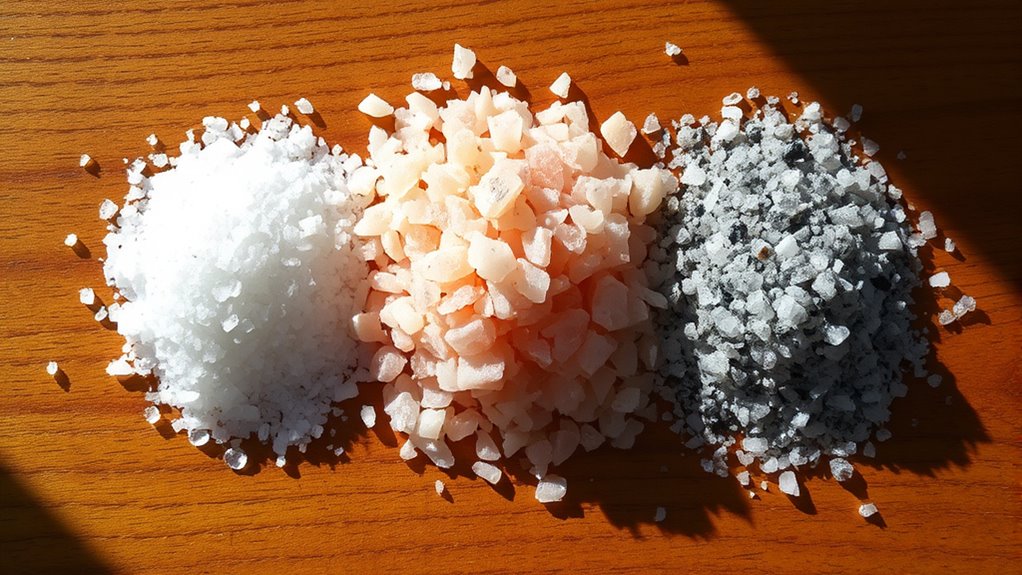
Choosing the right salt plays a big role in maintaining your electrolyte balance, especially if you want to support hydration and muscle function naturally. Natural unrefined salts like sea salt, Himalayan salt, and Celtic salt offer superior electrolyte support thanks to their rich mineral content.
- Sea salt contains 1-2% trace minerals such as magnesium, potassium, and calcium that aid electrolyte balance.
- Himalayan salt boasts over 80 trace minerals, including iron and magnesium, boosting hydration and mineral intake.
- Celtic salt retains natural moisture and about 1.5-2% minerals, harvested traditionally to preserve its benefits.
- These salts provide a broader spectrum of electrolytes compared to refined salts, enhancing fluid regulation and muscle function.
Choosing these natural salts helps you maintain excellent hydration and electrolyte balance effectively.
Potassium Chloride: Preventing Muscle Cramps And Supporting Contractions

Because potassium chloride plays a crucial role in muscle contractions, you’ll find it necessary for preventing cramps and maintaining proper cellular function.
When you engage in physical activity, your body loses potassium through sweat, disrupting electrolyte balance and increasing the risk of muscle cramps.
Supplementing with potassium chloride helps replenish minerals lost during exercise, supporting hydration and nerve function.
It works alongside sodium and magnesium to regulate muscle contractions efficiently, reducing muscle spasms and enhancing performance.
By maintaining adequate potassium levels, you ensure your muscles contract smoothly and recover faster, preventing discomfort caused by electrolyte imbalances.
Incorporating potassium chloride into your electrolyte support routine is a smart way to stay energized and avoid cramps, especially in hot, humid conditions where mineral loss is accelerated.
Magnesium Sulfate (Epsom Salt): Enhancing Energy And Muscle Relaxation
Although you might primarily think of Epsom salt as a simple bath additive, magnesium sulfate offers significant benefits for energy and muscle relaxation. This mineral compound delivers bioavailable magnesium, which is essential for electrolyte balance and muscle function.
When you soak in Epsom salt baths, magnesium absorbs through your skin to support nerve signaling and muscle relaxation.
Here’s how magnesium sulfate helps:
- Boosts energy by activating ATP, fueling your body after exercise.
- Enhances muscle recovery by reducing cramps and spasms.
- Promotes relaxation and reduces inflammation, aiding restful sleep.
- Supports overall athletic recovery through improved electrolyte balance.
Incorporating Epsom salt into your routine helps you maintain ideal magnesium levels, which are indispensable for muscle relaxation and efficient athletic recovery.
Calcium Lactate: Supporting Muscle And Bone Health
You rely on calcium lactate to keep your muscles contracting smoothly and your bones strong. It’s easily absorbed, helping you maintain the calcium levels needed for both muscle function and bone health.
Muscle Contraction Benefits
When you engage in physical activity, calcium lactate plays a key role in supporting muscle contractions by supplying essential calcium ions needed for neuromuscular signaling. This mineral acts as a crucial electrolyte that helps maintain mineral balance, nerve function, and hydration—essential for efficient muscle performance.
Here’s how calcium lactate benefits you:
- Supports neurotransmitter release at neuromuscular junctions for smooth muscle contractions.
- Provides bioavailable calcium, a key trace mineral for muscle fiber activation.
- Helps prevent muscle cramps by maintaining ideal calcium levels during exercise.
- Enhances overall electrolyte balance, supporting nerve impulses and muscle responsiveness.
Bone Health Support
Calcium lactate doesn’t just support muscle function—it also plays an essential role in maintaining strong bones. When you take calcium lactate, you improve mineral absorption, which directly boosts bone health by enhancing mineralization and skeletal strength.
This form of calcium is highly bioavailable, making it easier for your body to utilize essential trace minerals and electrolytes needed for muscular function and bone repair.
Adequate calcium intake through calcium lactate helps prevent osteoporosis and supports your bones during intense physical activity by maintaining proper calcium levels.
Zinc Sulfate: Boosting Immunity And Recovery
Although often overlooked, zinc sulfate plays a crucial role in boosting your immunity and speeding up recovery. This essential mineral supports immune function by promoting white blood cell production and maintaining electrolyte balance.
Incorporating zinc sulfate into your routine aids tissue healing and cellular repair, especially after intense exercise or injury. Here’s how zinc sulfate benefits you:
-
- Enhances immune support by reducing the severity and duration of colds.
- Prevents zinc deficiency, which can impair immune defenses and delay recovery.
- Supports enzyme function and DNA synthesis critical for cellular growth.
- Accelerates wound healing and tissue repair for faster recovery.
Phosphate & Bicarbonate Salts: Fighting Fatigue And Boosting Energy
Because phosphate and bicarbonate salts play distinct but complementary roles in energy metabolism and acid-base balance, they’re key to fighting fatigue and boosting your endurance.
Phosphate salts are essential for energy production, fueling ATP synthesis that powers your muscles during high-intensity exercise.
Phosphate salts drive ATP creation, energizing muscles for peak performance during intense workouts.
Meanwhile, bicarbonate salts help maintain electrolyte balance by regulating pH, neutralizing lactic acid buildup that causes muscle fatigue.
Together, they enhance exercise performance by sustaining muscle endurance and delaying exhaustion.
Supplementing with these salts supports ideal pH regulation, allowing you to push through prolonged workouts with less discomfort.
Comparing Natural Salts And Mineral Supplements For Hydration
When you’re looking to stay properly hydrated, choosing between natural salts and mineral supplements can make a big difference. Natural salts like Himalayan pink salt offer a broad range of trace minerals, enhancing mineral absorption and electrolyte support.
Mineral supplements provide concentrated electrolytes for precise electrolyte balance.
Here’s how they compare:
- Natural salts contain diverse trace minerals, unlike refined table salt, which is mostly sodium chloride.
- Mineral supplements target specific electrolytes like potassium and magnesium for hydration.
- Natural salts support gradual mineral absorption; supplements offer rapid uptake.
- Combining both can optimize hydration during intense activity or recovery.
How To Customize Electrolyte Salt Intake Based On Your Needs
To customize your electrolyte salt intake effectively, start by considering your activity type and duration, since endurance athletes typically need 400-600mg of sodium per hour during prolonged efforts.
Monitor your sweat rate to adjust mineral ratios, boosting magnesium and potassium if you often face muscle cramps or fatigue.
Before exercise, try pre-loading with about 1/4 teaspoon of sea salt 2-3 hours prior to enhance cellular hydration.
During intense or hot conditions, increase your electrolyte consumption every 15-20 minutes to maintain balance and prevent dehydration.
After your workout, focus on replenishment by adding natural salts rich in sodium, magnesium, and potassium to your drinks or meals.
This tailored approach assures proper hydration, supports muscle function, and optimizes recovery based on your unique needs.
Choosing And Using Electrolyte Salts For Hydration
When choosing electrolyte salts for hydration, focus on natural options like Himalayan pink salt or Celtic sea salt to get essential minerals without additives.
You’ll want to contemplate the timing and dosage based on your activity level to maximize absorption and benefits.
Understanding the difference between natural and commercial salts helps you pick the right type for your needs.

Types Of Electrolyte Salts
Since your body relies on a balance of minerals to stay hydrated, choosing the right electrolyte salts is essential. Natural salts like Himalayan salt and unrefined sea salt offer superior electrolyte support due to their rich trace minerals.
Here’s what to think about when selecting electrolyte salts:
- Mineral Content: Opt for natural salts with diverse minerals for hydration, such as magnesium, potassium, and calcium.
- Type of Salt: Himalayan salt contains over 80 trace minerals, making it ideal for replenishing electrolytes.
- Processing Level: Choose minimally processed salts; processed salts lose essential minerals.
- Source Quality: Unrefined salts from clean environments reduce contamination risks.
Natural Vs Commercial Salts
Choosing the right type of salt can make a big difference in how well your body stays hydrated. Natural salts like Himalayan pink salt and unrefined sea salts offer a richer mineral content, including essential trace minerals such as magnesium, potassium, and calcium.
These salts undergo minimal processing, preserving mineral retention and enhancing bioavailability, which supports better hydration and electrolyte support.
On the other hand, processed salts often lose many beneficial minerals during refining and may contain additives that reduce their effectiveness. When you choose natural salts over commercial processed salts, you boost your body’s ability to maintain electrolyte balance and improve overall hydration, especially during physical activity.
Opting for high-quality natural salts ensures you get the full spectrum of minerals your body needs for exceptional hydration.
Timing And Dosage Strategies
Proper timing and dosage of electrolyte salts play a crucial role in enhancing your hydration and performance. To maintain fluid balance and support muscle function, follow these dosage strategies:
- Consume electrolyte salts 2-3 hours pre-workout for peak absorption and cellular prep.
- During exercise, sip 6-8 ounces of a balanced electrolyte solution every 15-20 minutes to sustain hydration and mineral levels.
- For workouts longer than 2 hours, increase sodium intake to 400-600mg per hour to prevent imbalances.
- Post-exercise, replenish electrolytes gradually within 30-60 minutes, tailoring doses based on your sweat rate and electrolyte loss.
Avoid overconsuming salts to maintain proper fluid balance and prevent adverse effects. Following these timing and dosage strategies ensures your electrolyte salts effectively support hydration and muscle function.
Frequently Asked Questions
What Salt Has the Best Electrolytes?
You’ll find Himalayan pink salt offers the best electrolytes because it contains over 80 trace minerals like magnesium, potassium, and calcium.
Using this natural salt helps you maintain hydration and supports muscle function effectively.
What Are the 10 Basic Salts?
You’ll find the 10 basic salts include sodium chloride, potassium chloride, magnesium sulfate, calcium lactate, zinc sulfate, phosphate salts, bicarbonate salts, and trace mineral salts.
These salts are essential for maintaining your body’s electrolyte balance.
Which Salts Are Strong Electrolytes?
Strong electrolytes like sodium chloride, potassium chloride, magnesium sulfate, and calcium salts dissolve completely, letting you charge your body’s cells like a lightning bolt. They keep your nerves firing and muscles moving smoothly every day.
What Is the Best Sodium for Electrolytes?
You should choose unrefined sea salt or Himalayan pink salt for sodium in electrolytes because they provide essential trace minerals. These minerals help your body absorb sodium better and maintain hydration more effectively than refined table salt.
Conclusion
Choosing the right salts for your electrolyte balance isn’t just about staying hydrated—it’s about nurturing your body’s quiet strength. By tuning into natural options like sea salt or magnesium sulfate, you’re gently supporting your muscles, energy, and overall well-being.
Remember, customizing your intake helps you dance through daily challenges with ease. So, embrace these mineral allies thoughtfully—they’re the subtle whispers behind your vigor and resilience.
Incorporating the best types of salt for electrolytes into your routine can enhance hydration and maintain electrolyte balance effectively. Sea salt, Himalayan salt, and magnesium sulfate are excellent choices that provide essential minerals your body needs. Prioritize these salts for optimal electrolyte support and overall health.