How to Use Chilli Vinegar to Make Paneer at Home
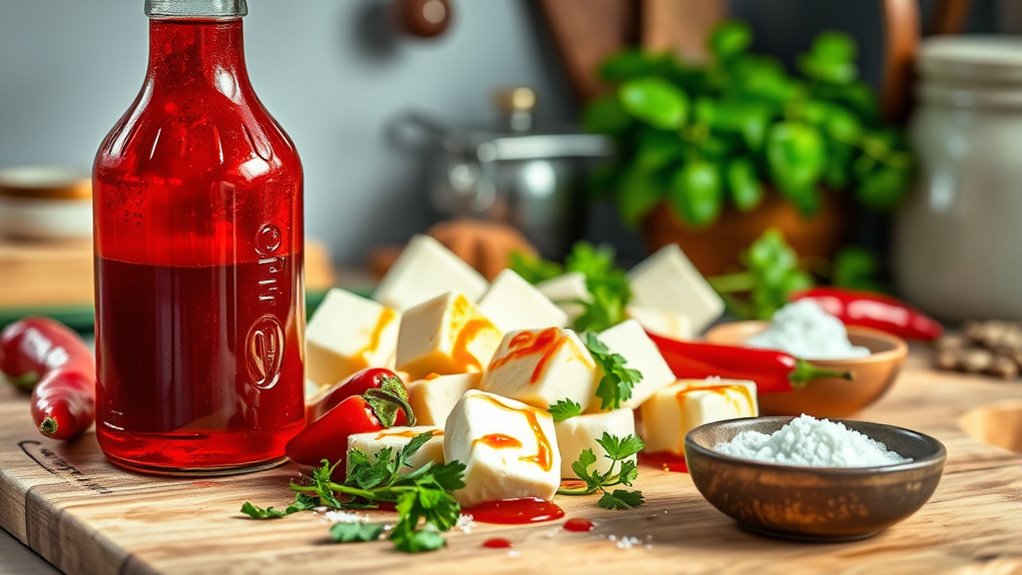
To make paneer at home using chilli vinegar, start by heating milk and adding chilli vinegar to curdle it. This method infuses a subtle tangy and spicy flavor right from the beginning.
Once the milk curdles, drain the whey and press the curds into a solid block.
When cooking, cut the paneer into cubes and fry them until golden brown. Then, toss the fried cubes with a mixture of chilli vinegar and your favorite sauces to enhance the tanginess and spice.
Add the vinegar gradually to keep the paneer tender and prevent the flavor from becoming overpowering.
If you want to master balancing taste and texture, there’s more to explore.
Understanding Chilli Vinegar and Its Role in Chilli Paneer
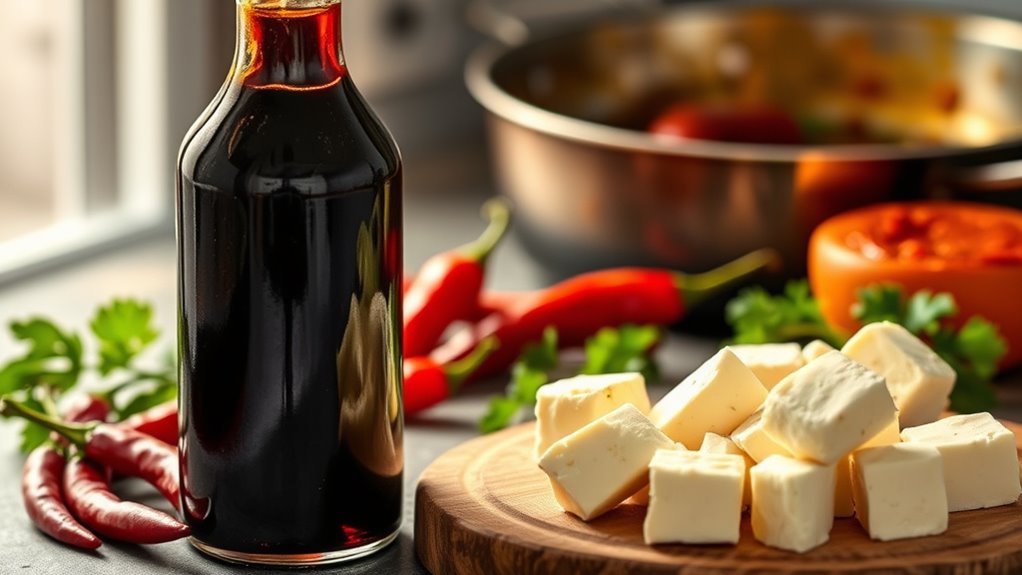
What makes chilli vinegar a key ingredient in Chilli Paneer? When you add chilli vinegar, you introduce a tangy, spicy kick that lifts the dish’s flavor. Its acidity balances the richness of paneer, creating a harmonious taste.
If you’re starting a new account of your culinary experiments, chilli vinegar becomes essential. It lets you control heat and acidity, tailoring the dish to your preference. In Chinese and Indo-Chinese cuisine, this flavored vinegar infused with chili peppers is a staple, adding depth and brightness to recipes.
While you can prepare it yourself, understanding its role first means you’ll appreciate how it transforms your Chilli Paneer from bland to brilliant. So, next time you cook, don’t overlook this versatile condiment’s impact.
Preparing Homemade Chilli Vinegar for Your Recipe
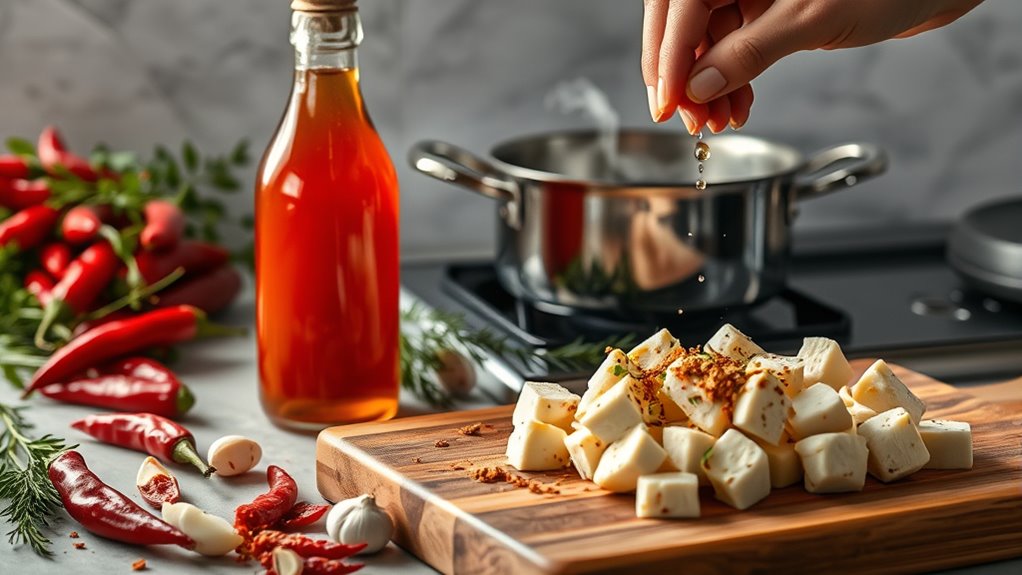
Now that you understand how chilli vinegar enhances Chilli Paneer, making it at home lets you tailor the flavor precisely. Start by combining equal parts peeled red chilies and vinegar in a clean jar. To boost the taste, add optional ingredients like garlic, ginger, or a pinch of sugar.
Seal the jar tightly and store it in a cool, dark place for at least 1 to 2 weeks. During this time, shake the jar occasionally to spread the chili flavors evenly throughout the vinegar. Once infused, strain the chilli vinegar through a fine sieve or cheesecloth to remove any solids.
This fresh, homemade chilli vinegar will add a vibrant, spicy kick to your paneer dishes.
How to Make Fresh Paneer at Home
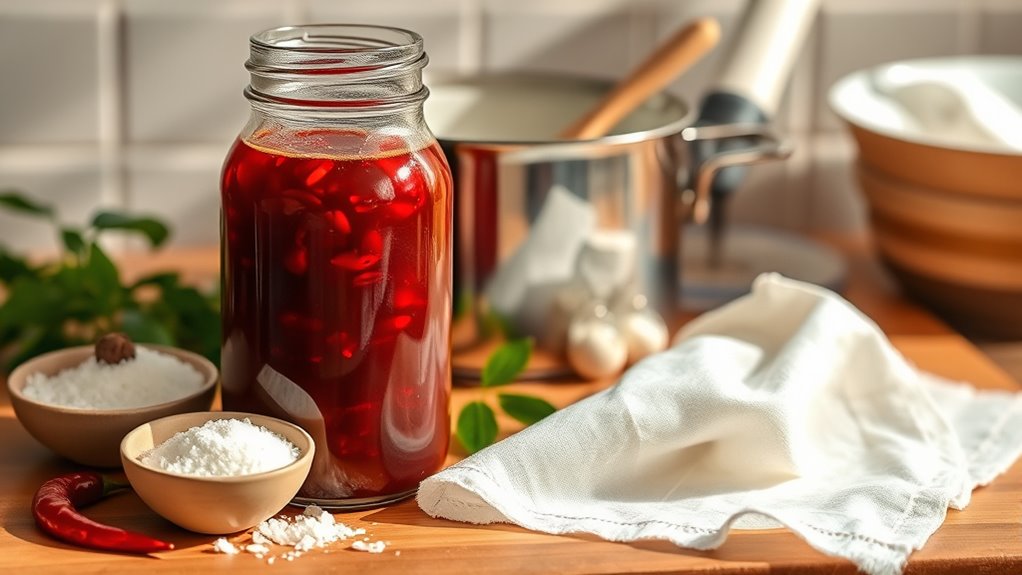
Although making fresh paneer at home may seem challenging, you can easily do it by boiling milk and adding lemon juice or vinegar to curdle it. Start by heating 1 liter of milk until it boils, then stir in 2-3 tablespoons of lemon juice or vinegar gently. When the milk separates into curds and whey, turn off the heat and let it rest for a few minutes.
Next, strain the mixture through a muslin cloth, rinsing the curds with cold water to remove acidity. Finally, press the curds into a block, weight it for 1-2 hours, and cut into cubes.
- Heat 1 liter milk to boiling
- Add 2-3 tbsp lemon juice or vinegar
- Let curds form and rest
- Drain and rinse curds
- Press, set, and cut paneer cubes
How to Cook Chilli Paneer With Chilli Vinegar
Wondering how to elevate your paneer dish with a bold twist? Start by cubing and frying your paneer until golden brown.
Next, mix chilli vinegar with hot mixed sauce, soy sauce, and a pinch of sugar to create a tangy, spicy sauce. Stir-fry the fried paneer with diced bell peppers and onions in this sauce.
Adjust seasoning by adding more chilli vinegar or sauces to hit your perfect balance of tanginess and spice. Serve hot, garnished with chopped spring onions and an extra drizzle of chilli vinegar for that final zing.
| Step | Key Tip |
|---|---|
| Fry Paneer | Golden brown cubes for texture |
| Make Sauce | Balance tangy and spicy flavors |
| Stir-fry & Serve | Garnish with spring onions & vinegar |
Best Vegetables and Sauces to Pair With Chilli Vinegar Paneer
Which vegetables and sauces bring out the best in chilli vinegar paneer? You want ingredients that add crunch, freshness, and depth to complement the tangy, spicy paneer. Vegetables like bell peppers, bok choy, and snap peas bring crisp textures and balance the heat.
Adding sliced onions and spring onions boosts the savory flavor and adds a pleasant bite. For sauces, layering soy sauce, garlic sauce, or sweet chili sauce with chilli vinegar creates a richer, more complex taste. Consider these pairings to enhance your dish:
- Bell peppers, bok choy, snap peas for crunch and freshness
- Sliced onions and spring onions for savory crispness
- Soy sauce, garlic sauce, sweet chili sauce for depth
- Steamed jasmine rice or fried noodles to complete the meal
- Garnishes like coriander, sesame seeds, and green chilies for aroma and flavor
Tips to Balance Heat and Flavor in Chilli Paneer
Pairing the right vegetables and sauces with chilli vinegar paneer sets a flavorful foundation, but balancing the heat and tang requires a careful touch. Start by using chilled chilli vinegar to add a tangy kick that complements the paneer’s richness. Add the vinegar gradually—begin with a small amount, then increase to suit your spice tolerance.
To keep the acidity from overwhelming the dish, splash some vinegar at the end of cooking, enhancing brightness without overpowering flavors. You can also blend chilli vinegar with sweet elements like sugar or savory ones such as soy sauce to create harmony. Remember, too much vinegar can make the dish overly sour, so taste as you go and adjust carefully for a perfectly balanced chilli paneer.
How to Store and Reheat Chilli Vinegar Paneer
When you have leftover chilli vinegar paneer, storing it properly is key to maintaining its flavors fresh and vibrant. Place the paneer in an airtight container and refrigerate it for up to 2-3 days. When you’re ready to enjoy it again, reheat carefully to preserve texture and taste.
Store leftover chilli vinegar paneer in an airtight container and refrigerate for 2-3 days to keep flavors fresh.
Keep these tips in mind:
- Use a preheated oven at 180°C (356°F) for 10-12 minutes to retain crispiness.
- Alternatively, warm gently in a skillet over medium heat, stirring occasionally.
- Avoid microwaving for long periods to prevent sogginess.
- Reheat just before serving for the best flavor.
- Store in an airtight container to maintain freshness.
Following these steps ensures your chilli vinegar paneer stays delicious and satisfying every time.
Common Mistakes When Using Chilli Vinegar in Chilli Paneer
You might be tempted to add a lot of chilli vinegar, but too much can overpower the dish and make your paneer too tangy. It’s important to get the quantity just right to keep the flavors balanced.
Also, don’t forget that soaking paneer too long in vinegar can ruin its texture, leaving it soggy.
Overpowering Vinegar Flavor
Although chili vinegar adds a vibrant tang to your paneer, using too much can easily overpower its delicate flavors. You want the vinegar to enhance, not dominate, the dish. Avoid adding it too early without balancing other ingredients, as this can create a sharp, unpleasant taste.
Also, remember that vinegar strength varies, so adjust accordingly. Relying solely on chili vinegar without sweetness or spices can leave your paneer tasting one-dimensional and overly sour. Finally, don’t forget to taste as you cook—adjusting vinegar gradually helps maintain harmony in flavors.
- Excess chili vinegar masks paneer’s subtle taste
- Adding vinegar too soon can lead to harshness
- Different vinegar acidity needs different amounts
- No balance with sweet or savory seasonings causes imbalance
- Skipping taste checks risks overpowering vinegar flavor
Incorrect Vinegar Quantity
If the amount of chilli vinegar isn’t measured carefully, it can easily throw off the balance of your chilli paneer. Using too much vinegar overwhelms the dish with excessive tanginess, masking the paneer’s natural flavors and making the sauce watery or too sharp.
On the flip side, adding too little leaves your chilli paneer bland and lacking the essential zing that chilli vinegar provides. Since vinegar acidity varies by type, you should always start with a small amount and adjust gradually to suit your taste.
Measuring accurately guarantees you hit the perfect balance between tang and spice without compromising the dish’s texture or flavor. Avoid guessing—this simple step makes all the difference in creating a delicious chilli paneer at home.
Neglecting Paneer Texture
When preparing chilli paneer, paying close attention to the paneer’s texture is essential for a satisfying dish. Neglecting this can lead to disappointing results, especially when using chilli vinegar. You want the paneer to be firm yet tender, not rubbery or mushy.
Here are common mistakes to avoid:
- Overmixing or stirring too vigorously breaks down the paneer’s structure.
- Choosing low-quality or overly acidic chilli vinegar weakens the paneer’s firmness.
- Failing to drain excess moisture leaves the paneer watery and soggy.
- Cooking at too high a heat or too long toughens the paneer.
- Adding chilli vinegar too early or in large amounts causes the paneer to fall apart.
Keep these tips in mind to maintain perfect paneer texture in your chilli paneer.
Frequently Asked Questions
Which Vinegar Is Best for Paneer?
You’ll want to use mild, food-grade vinegar like apple cider or white vinegar with about 5-7% acidity to make paneer. They coagulate milk well without overpowering flavor, ensuring your paneer tastes fresh and authentic.
Can I Use Vinegar to Make Paneer at Home?
You absolutely can use vinegar to make paneer at home—it’s like magic in your kitchen! Just add 1-2 tablespoons per liter of heated milk, stir until curdled, then strain and rinse for perfect paneer every time.
What Is Chilli Vinegar Used For?
You use chilli vinegar to add tangy heat to dishes like stir-fries, salads, and marinades.
It livens up snacks and sauces with a spicy, acidic kick, enhancing flavors and giving your meals a bold, zesty twist.
How to Make Chilli Paneer Ingredients?
You’re about to create a culinary masterpiece with fresh paneer, vibrant bell peppers, onions, soy sauce, ginger-garlic paste, cornstarch, and of course, a dash of lively chilli vinegar to awaken those flavors beautifully.
Conclusion
Now that you’ve mastered using chilli vinegar to make paneer, you’re ready to add a fiery twist to your meals. Remember, “too many cooks spoil the broth,” so keep the balance of heat and flavor just right.
With fresh paneer and your homemade chilli vinegar, you’ll impress every time. Don’t forget to store your chilli paneer properly to enjoy it later.
Happy cooking, and savor every spicy bite! Using chilli vinegar to make paneer not only enhances the taste but also adds a unique zing that elevates your homemade dishes.