7 Best Salts to Use for Cooking and Health
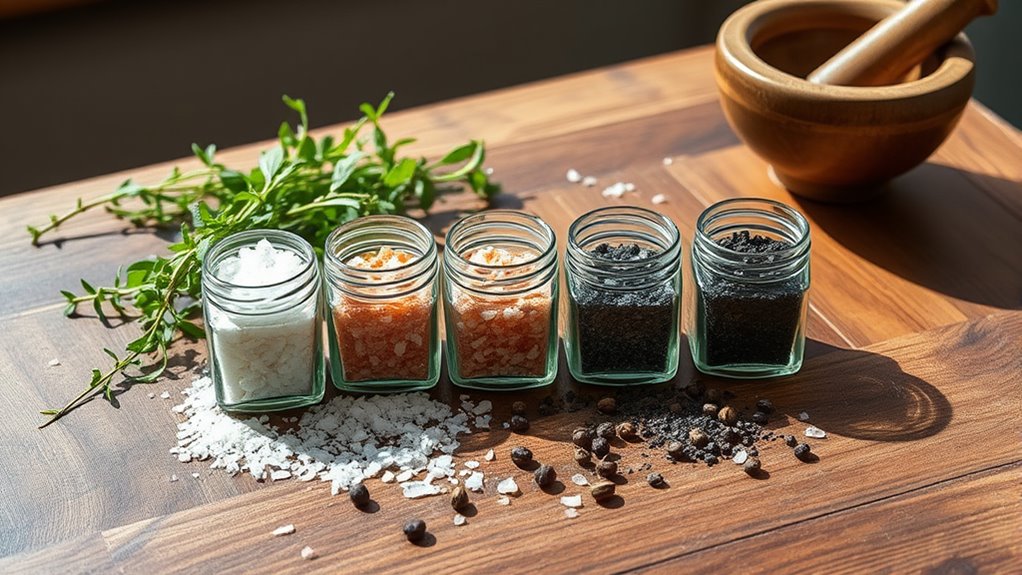
You’ll want to pick salts that enhance flavor and support health, like Himalayan pink salt with its trace minerals or kosher salt for easy sodium control. Sea salt gives you natural minerals, while table salt provides consistent seasoning and iodine for thyroid health.
Specialty salts like Hawaiian red and grey salts add unique tastes and textures. Using these thoughtfully lets you reduce excess sodium without sacrificing flavor.
Keep exploring to discover how these salts can best suit your cooking needs.
How to Choose the Healthiest Salt for Cooking
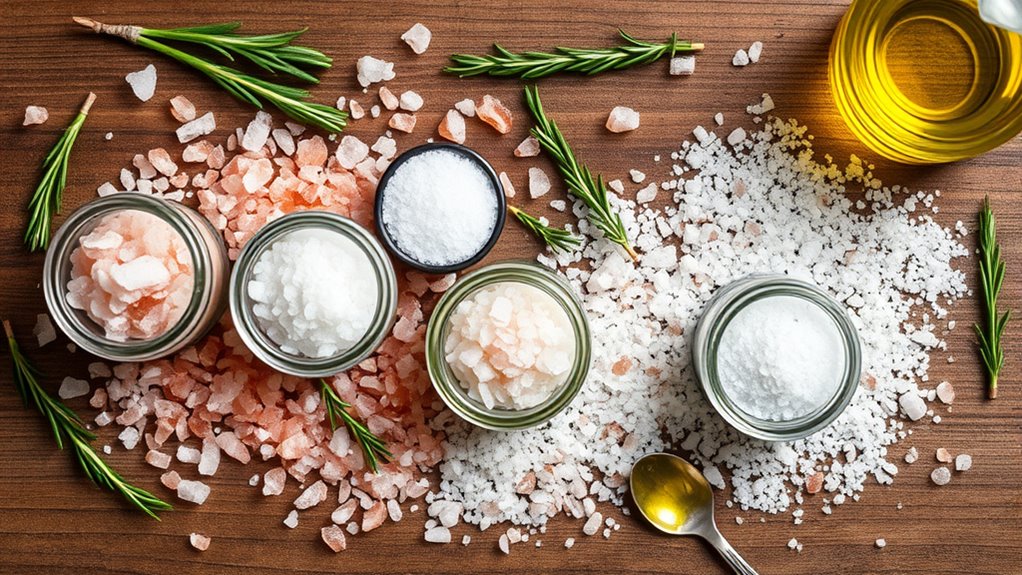
When choosing the healthiest salt for cooking, you should opt for minimally processed options like sea salt or Himalayan pink salt, as they retain more trace minerals and natural flavors. These salt types offer a richer mineral content compared to heavily refined iodized salt, which is primarily valued for its iodine.
If you’re mindful of sodium intake, consider using coarse kosher salt or coarse sea salt with larger salt crystals; their texture allows you to season with less volume while still delivering flavor.
While trace minerals may provide subtle health benefits, the difference in mineral content isn’t significant enough to drastically impact your diet.
Ultimately, pick salts based on taste and cooking needs rather than health claims, and remember that moderation is key regardless of the salt type you choose.
Why Table Salt Is a Healthy Cooking Staple
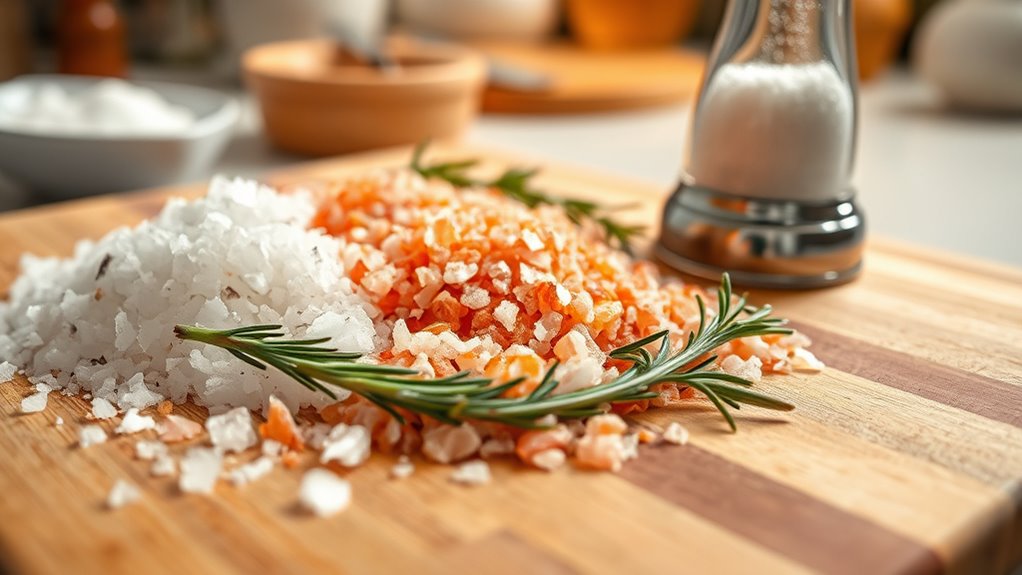
Although table salt is highly refined, it offers you a reliable source of sodium essential for your body’s functions. Composed mainly of sodium chloride, this refined salt dissolves quickly, making it an efficient seasoning for your dishes.
As a cooking staple, table salt ensures consistent flavor and precise sodium intake, helping you control your diet effectively.
Iodized salt, a common variety, adds essential iodine to your meals, supporting thyroid health and preventing deficiencies.
Despite its lower mineral content compared to other salts, table salt’s health benefits and food safety standards make it a practical choice.
Widely available and cost-effective, table salt remains a dependable option that balances convenience with nutrition, keeping your cooking flavorful and health-conscious.
How Kosher Salt Balances Flavor and Sodium Control
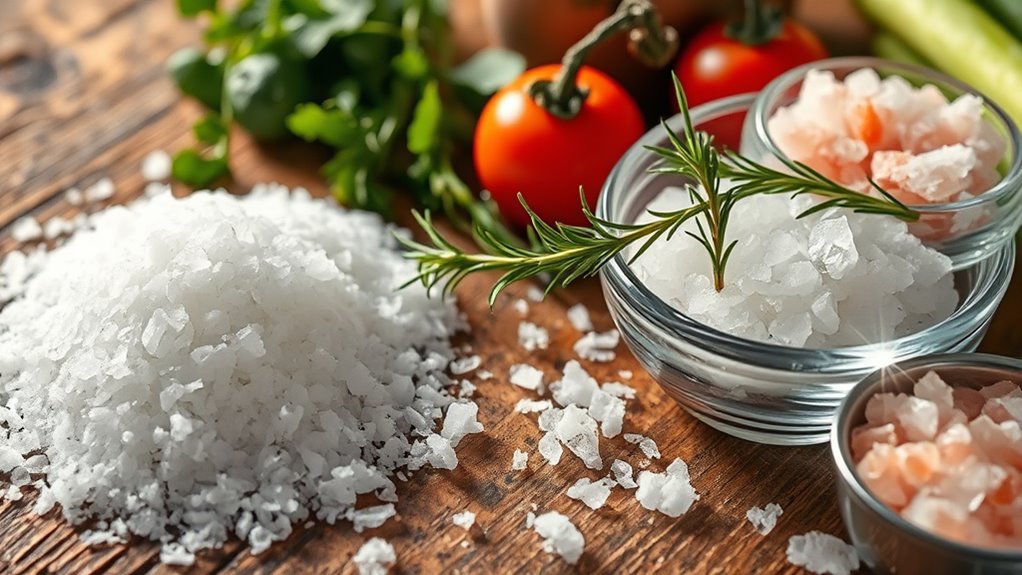
You’ll notice kosher salt’s larger crystals mean less sodium fits in a teaspoon compared to table salt. This helps you control your intake.
Its coarse texture makes it easier to measure salt accurately by feel, so you can season without overdoing it.
Using kosher salt lets you balance flavor and sodium more effectively in your cooking.
Sodium Content Comparison
How can kosher salt help you balance flavor and sodium intake in your cooking? Kosher salt’s larger crystal size means less sodium per teaspoon compared to table salt, letting you control sodium content without losing flavor.
While gram for gram all salts like pink Himalayan salt, sea salt, and iodized salt have similar sodium levels, volume measurements differ due to crystal size and trace minerals.
| Salt Type | Sodium per Teaspoon (mg) | Notes |
|---|---|---|
| Table Salt | 590 | Iodized, fine crystals |
| Kosher Salt | 280 | Larger crystals, less dense |
| Pink Himalayan | ~580 | Contains trace minerals |
Choosing kosher salt helps you enjoy the healthiest salts with controlled sodium content.
Crystal Size Impact
Kosher salt’s larger crystals play a key role in balancing flavor and sodium control in your cooking. Its coarse grain size means a teaspoon holds more air and fewer sodium ions than finer sea salt or table salt.
This crystal size difference lets you season with precision, reducing sodium content without sacrificing taste. When using kosher salt as a salt substitution, remember its larger grains deliver less sodium per volume, so you may need to adjust amounts compared to table salt.
The coarse texture also makes it easier to pinch or sprinkle, enhancing your culinary use by allowing better control over seasoning. Considering health impact, kosher salt’s structure helps you manage sodium intake more effectively than finer salts during measuring salt and cooking.
Measuring Salt Accurately
Although salt measurement can be tricky, using kosher salt helps you control flavor and sodium more accurately. Its large crystal size means each salt grain takes up more space, so a teaspoon of kosher salt contains less sodium than fine table salt. This lets you reduce salt intake without sacrificing taste.
When measuring salt by volume, kosher salt’s flaky crystals create air pockets, making flavor adjustment easier and milder. You’ll find that using kosher salt by pinches rather than weight offers better sodium control and culinary precision.
Just remember to adjust recipes for crystal size to ensure accurate measurement and avoid over-salting.
Sea Salt: Mineral Benefits and Culinary Uses
When you choose sea salt, you’re opting for a seasoning that not only adds flavor but also brings trace minerals like magnesium, potassium, and zinc to your dishes. Made by evaporating seawater, sea salt’s mineral content varies by source, offering subtle flavor enhancement and a coarse texture. It’s ideal as a finishing salt, adding crunch and complexity.
Though the mineral benefits are real, their amounts don’t markedly impact your health, so use sea salt in moderation like any other salt.
| Feature | Description | Benefit |
|---|---|---|
| Source | Evaporated seawater | Natural mineral content |
| Texture | Coarse | Adds crunch |
| Minerals | Magnesium, potassium, zinc | Flavor enhancement |
| Culinary uses | Finishing salt | Enhances dish complexity |
| Sodium content | ~1560 mg per teaspoon | Use moderately |
Himalayan Pink Salt: Unique Flavor and Health Facts
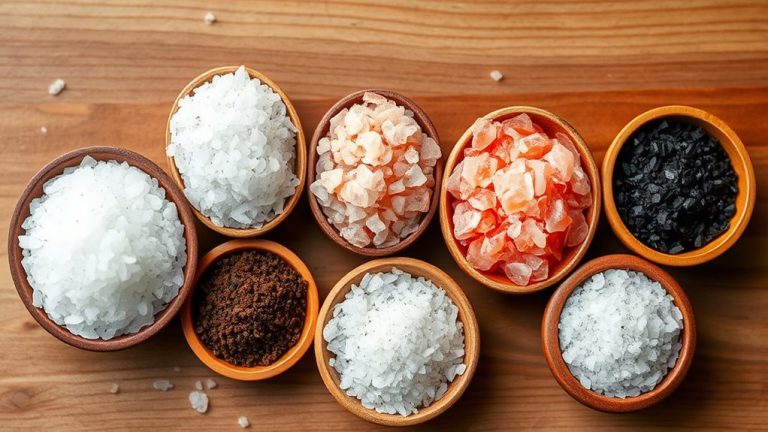
If you appreciate the mineral nuances and texture of sea salt, Himalayan pink salt offers another option with its own distinct qualities. Mined from the Khewra Salt Mine in Pakistan, its vibrant pink color comes from iron oxide.
Himalayan pink salt contains over 80 trace minerals, but like sea salt, these are in such small amounts that they provide no significant health benefits. Its sodium content is slightly lower than regular table salt, making it a reasonable sea salt alternative.
You’ll find it popular as a finishing salt, where its coarse grains and striking pink color enhance both flavor and presentation.
While the mineral comparison shows no major health advantage, Himalayan pink salt remains a favored choice for diverse culinary uses due to its unique appearance and texture.
Specialty Hawaiian and Grey Salts: Flavor and Health Benefits
While you explore unique salts beyond the usual options, specialty Hawaiian and grey salts offer distinctive flavors and mineral profiles that can elevate your cooking. Grey salt, a type of sea salt, is harvested from mineral-rich coastal clay and seawater, containing valuable minerals like calcium and magnesium.
Grey salt’s moisture and mineral content enhance flavor. It is minimally processed, preserving its natural mineral content and unique texture, making it perfect for culinary use. Though its health benefits are subtle, these salts add complexity and depth to dishes.
Grey salt’s natural minerals and texture elevate dishes, adding subtle health benefits and rich flavor depth.
Hawaiian salts, including volcanic salt varieties like black and red alaea salt, boast earthy flavor profiles and trace minerals such as iron and potassium. Black Hawaiian salt’s activated charcoal adds earthiness, while red alaea salt offers a striking color and iron content.
Both salts remain minimally processed for natural minerals. They are ideal for finishing dishes with unique texture and taste.
Using Different Salts to Reduce Sodium and Boost Flavor
Specialty salts like Hawaiian and grey salts offer more than unique flavors—they can also help you manage sodium intake without sacrificing taste. Using kosher salts or Himalayan salt with larger crystal size gives you better salt control, as their coarse grains contain less sodium per pinch, making it easier to reduce sodium.
Mineral-rich salts such as sea salts and Himalayan salt add depth, boosting flavor enhancement so you can use less overall. You might also consider salt substitutes containing potassium chloride to cut sodium intake further, but consult your doctor first.
Frequently Asked Questions
Which Is Better for You, Himalayan Salt or Celtic Salt?
Neither Himalayan nor Celtic salt is better for you; their sodium levels and mineral content are similar.
You should pick based on taste, texture, and cooking needs rather than expecting significant health benefits from either.
What Is the Best Salt for Health Without Heavy Metals?
Think of choosing salt like picking gems—go for natural, unrefined Himalayan or Celtic sea salt.
They’re your safest bet, free from heavy metals if you stick to trusted brands and avoid those with added chemicals.
Which Salt Should Be Used for Daily Cooking?
You should use kosher salt or refined table salt for daily cooking since they’re easy to measure and dissolve quickly.
They offer consistent flavor without additives, making your meals tasty and healthy without complications.
What Is the Best Salt According to Chefs?
You want control, you want flavor, you want texture—chefs choose kosher salt for seasoning, fine sea salt for dissolving, flake salts for finishing, and Himalayan pink salt for presentation,
so pick based on your cooking needs and style.
Conclusion
So, next time you reach for that plain old salt shaker, remember: not all salts are created equal—some come with spa-like minerals, others with a dash of drama.
You don’t have to be a gourmet chef to sprinkle smartly; just pick the salt that jazzes up your dish without turning it into a sodium bomb.
Who knew seasoning your food could be a health quest? Salt wisely, and let your taste buds thank you!
Choosing the best salts to use for cooking and health can enhance both flavor and nutrition. Incorporate quality salts into your meals to enjoy the perfect balance of taste and wellness.