
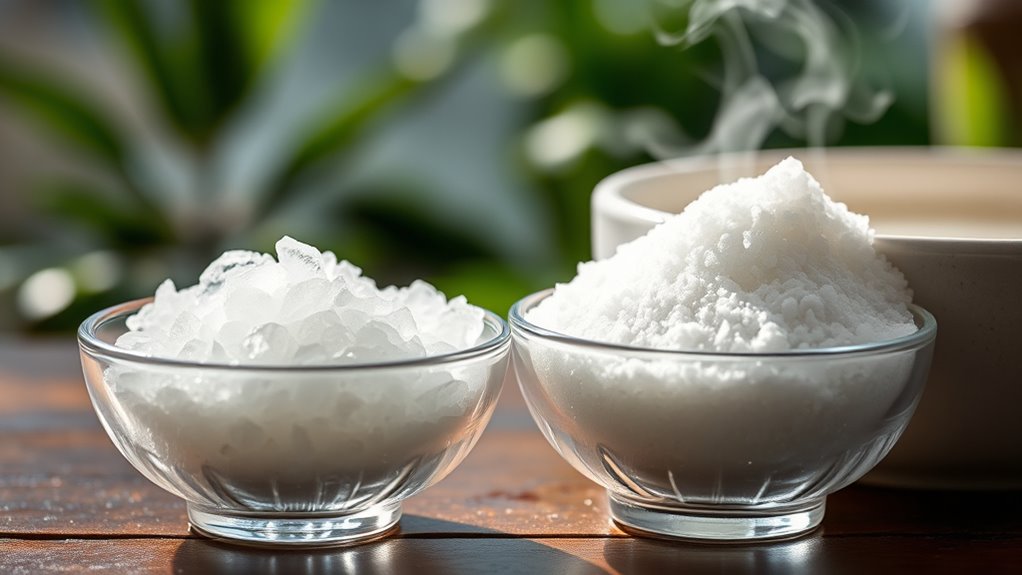
Is Dead Sea Salt the Same as Epsom Salt?
No, Dead Sea salt isn’t the same as Epsom salt. Dead Sea salt is packed with over 21 minerals like magnesium, calcium, and potassium, making it great for skin hydration and soothing conditions like eczema.
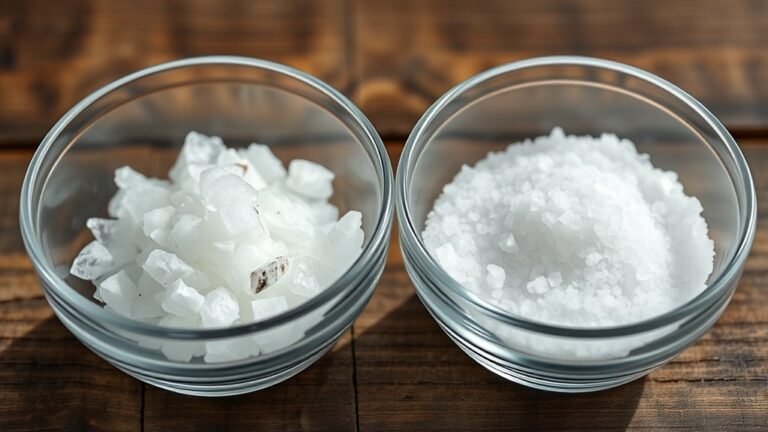
Epsom salt mainly contains magnesium sulfate, which is perfect for relaxing muscles and easing soreness. Their textures and scents differ too—Dead Sea salt is coarse and earthy, while Epsom salt is fine and odorless.
Keep exploring to discover how to best use each for your wellness. Understanding their unique properties can help you choose the right salt for your needs.
What Is Dead Sea Salt?
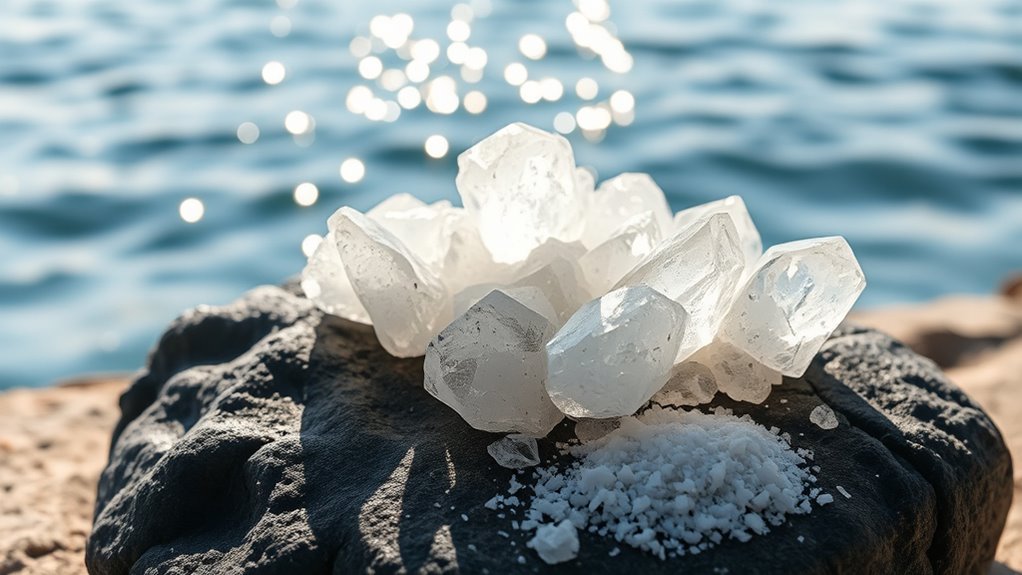
What makes Dead Sea salt stand out is its origin and mineral richness. Harvested from the mineral-rich waters between Jordan and Israel, Dead Sea salt boasts a unique mineral composition that sets it apart from other salts, including Epsom salt.
Dead Sea salt’s unique mineral-rich origin distinguishes it from other salts like Epsom salt.
Its mineral content includes magnesium, calcium, potassium, and bromide, which contribute to its renowned therapeutic properties.
When you use Dead Sea salt in spa treatments or natural remedies, you tap into its ability to boost skin hydration, reduce inflammation, and enhance overall skin benefits.
Its moist, crumbly texture and earthy scent make it ideal for skincare routines aimed at detoxification and relaxation.
What Is Epsom Salt and How Is It Different?
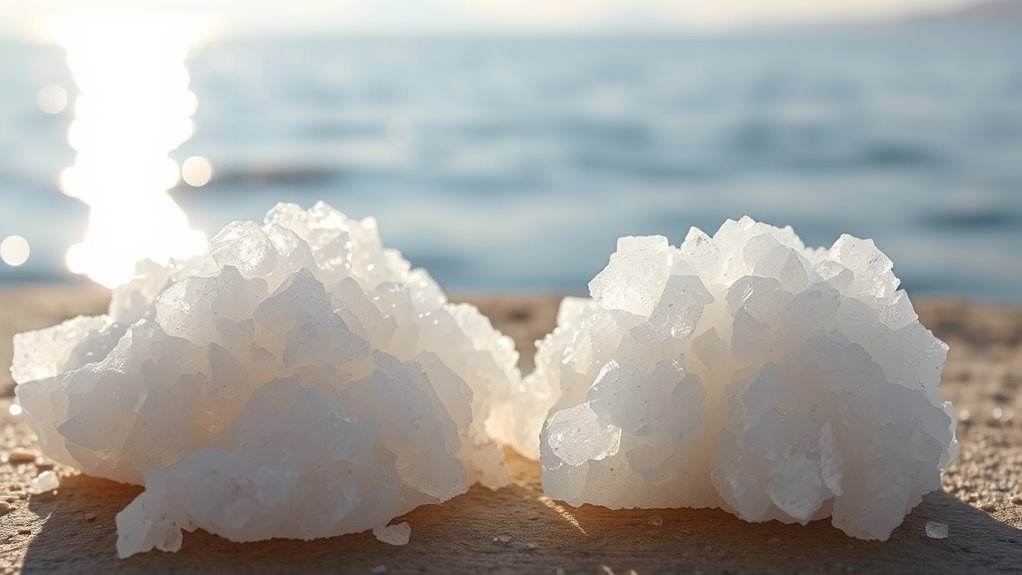
Epsom salt offers a different set of benefits compared to Dead Sea salt, largely because it’s not a true salt but a mineral compound known as magnesium sulfate. This mineral compound has a crystalline structure similar to table salt but functions uniquely, providing magnesium and sulfate ions essential for muscle relaxation and detoxification.
You’ll find Epsom salt highly soluble in water, making it ideal for baths and compresses that soothe tired muscles. Unlike natural sea salts, its mineral profile is limited, and it’s odorless and dry.
Epsom salt also works as a gentle exfoliant, helping refresh your skin without harsh abrasives.
Sourced mainly from Germany and the USA, it’s a versatile product used in beauty routines and cleaning, distinct from the broad mineral complexity found in Dead Sea salt.
Dead Sea Salt vs Epsom Salt: Mineral Differences and Benefits
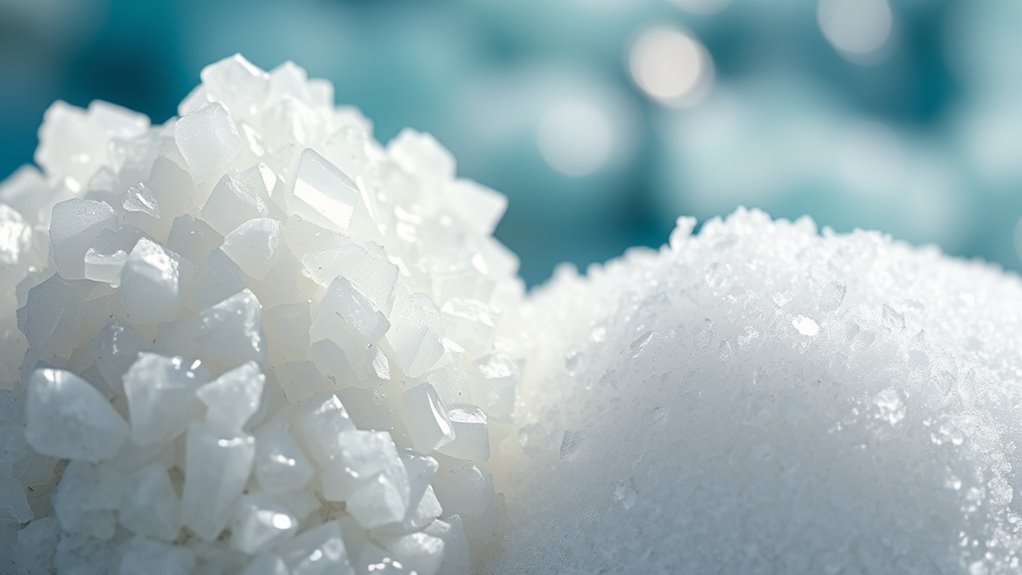
Although both Dead Sea salt and Epsom salt offer therapeutic benefits, their mineral compositions set them apart markedly. Dead Sea salt contains over 21 natural minerals like magnesium, calcium, and potassium, while Epsom salt is pure magnesium sulfate.
This mineral content difference influences their benefits:
- Dead Sea salt’s diverse minerals provide broad skin benefits, improving hydration and helping skin conditions like psoriasis and eczema.
- Epsom salt focuses on muscle relaxation and detox baths by delivering magnesium sulfate efficiently.
- Dead Sea salt’s coarse texture contrasts with Epsom salt’s fine, odorless crystals.
- Dead Sea salt suits luxurious skin treatments; Epsom salt targets muscle soreness affordably.
Understanding these mineral differences helps you pick the right salt for your specific skin or muscle needs.
How to Use Dead Sea Salt and Epsom Salt in Your Routine
When you want to relax your muscles, dissolving 1-2 cups of Epsom salt in warm bath water works wonders, while adding the same amount of Dead Sea salt creates a mineral-rich soak that detoxifies and nourishes your skin.
You can also boost your bath routine by infusing either salt with essential oils for added relaxation. For exfoliation, mix Epsom salt with carrier oils and Dead Sea salt with honey or clay to enhance skin detoxification.
Here’s a quick guide:
| Use Case | Epsom Salt | Dead Sea Salt |
|---|---|---|
| Bath Routine | Muscle relaxation | Skin detoxification |
| Exfoliation | Mix with oils | Mix with honey or clay |
| Skincare | Soothing sore muscles | Mineral-rich hydration |
| Foot Soaks | Relieves muscle tension | Helps skin conditions |
| Essential Oils | Lavender, eucalyptus | Lavender, eucalyptus |
Which Salt Should You Choose for Your Needs?
Since your needs vary, choosing the right salt can make a big difference in your self-care routine. Epsom salt and Dead Sea salt offer distinct therapeutic benefits, so pick based on what you want to achieve.
Selecting the right salt enhances your self-care by targeting your specific wellness goals effectively.
- For muscle relief and quick detox, Epsom salt’s magnesium sulfate works fast.
- If you have skin conditions like eczema, Dead Sea salt’s rich minerals provide better healing.
- Use Dead Sea salt for skin hydration and gentle exfoliation with bath salts.
- Choose Epsom salt for odorless, speedy muscle recovery after workouts.
Understanding these differences helps you select bath salts that truly support your body’s needs, whether for muscle recovery or exhaustive skin nourishment.
Frequently Asked Questions
Can You Use Dead Sea Salt in Place of Epsom Salt?
You can use Dead Sea salt instead of Epsom salt for skin care, but it won’t provide the same muscle relief.
For muscle aches, stick with Epsom salt since it’s better at easing tension.
What Is Better, Epsom Salt or Sea Salt?
It depends on your needs. You’ll want Epsom salt for muscle relief and detox, but choose sea salt, like Dead Sea salt, if you’re aiming for skin hydration, exfoliation, and mineral-rich spa treatments.
Which Is Better, Epsom or Dead Sea Salt for Joint Pain?
Imagine a swift river washing away pain—that’s Epsom salt, easing your joints quickly with magnesium.
Dead Sea salt is like a deep lake, offering slower, lasting relief and skin nourishment.
For fast joint pain help, choose Epsom.
Are Epsom Salts Safe in Pregnancy?
You can use Epsom salts safely during pregnancy for baths, but don’t soak too long or use very hot water.
Always check with your healthcare provider first, especially if you have any pregnancy complications.
Conclusion
You might’ve heard people use Dead Sea salt and Epsom salt interchangeably, but they’re not the same. Dead Sea salt is rich in minerals like magnesium and potassium, great for skin detox and relaxation.
Epsom salt, mainly magnesium sulfate, excels at soothing muscle aches. So, if you’re targeting muscle relief, go for Epsom salt; for skin benefits, Dead Sea salt is your best bet.
Choosing the right salt can totally boost your wellness routine! Understanding the difference between Dead Sea salt and Epsom salt ensures you get the most out of your bath and skincare rituals.