
Is Kosher Salt the Same as Canning Salt?
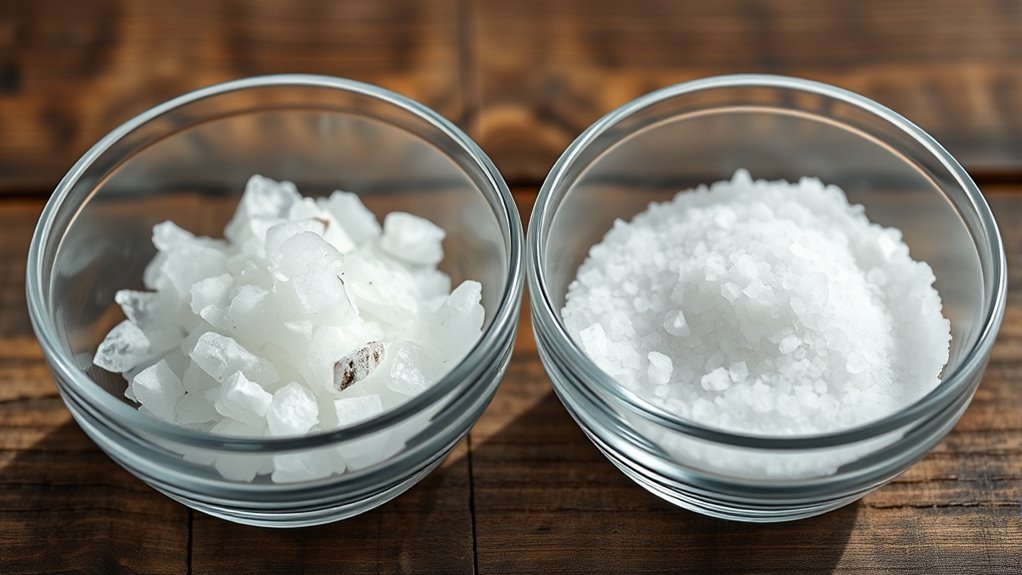
You can’t just swap kosher salt for canning salt without adjustments. Kosher salt has larger crystals and sometimes additives, while canning salt is fine-grained and additive-free to dissolve quickly and create a clear brine.
Both are important in cooking and preserving, but they aren’t exactly the same.
You’ll need about 25% more kosher salt by weight to match salinity. Using the wrong amount or type can affect flavor, texture, and safety, especially in pickling or preserving.
So, it’s not just about swapping one for the other — you’ve got to consider their differences carefully.
If you want to get the best results, there’s more to take into account about their differences. Knowing how kosher salt and canning salt behave will help you make the right choice for your recipes.
Key Takeaways
- Kosher salt has larger crystals and weighs less per tablespoon than the fine-grained canning salt.
- Canning salt contains no additives, while some kosher salts may include anti-caking agents affecting clarity.
- Kosher salt dissolves more slowly due to the larger grain size, which can impact brine uniformity and clarity.
- So, if you’re substituting kosher salt for canning salt, you need to increase the amount by about 25% to keep the same level of salinity.
- Canning salt is specially formulated for pickling, which means it dissolves quickly and helps ensure safe, clear preservation.
Can You Substitute Kosher Salt for Canning Salt?
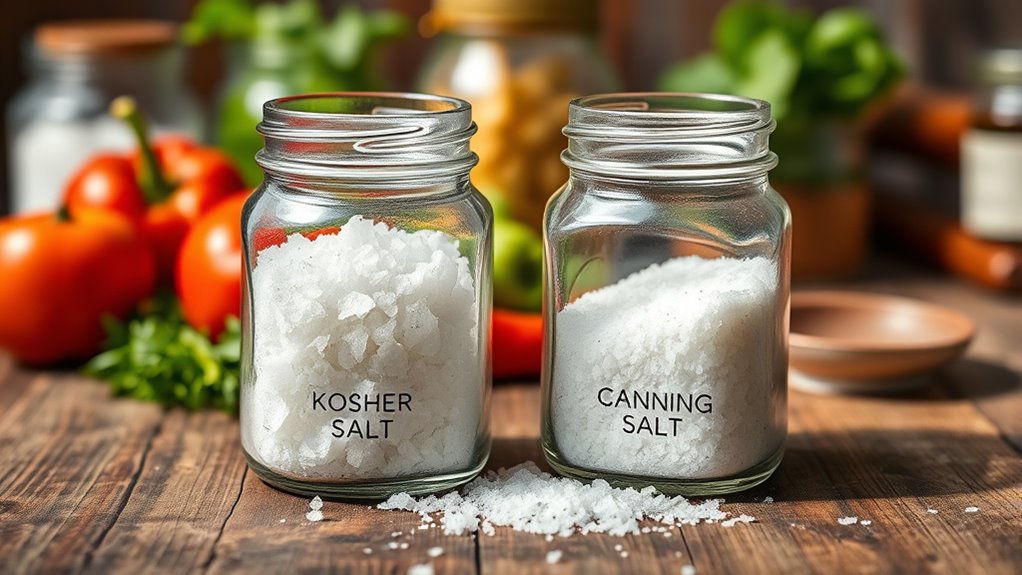
Although kosher salt and canning salt differ in texture and additives, you can substitute kosher salt for canning salt if you adjust the amount by about 25% and measure it by weight to guarantee accuracy.
Because kosher salt has larger crystal size and often contains anti-caking agents, it’s important to choose a pure, additive-free kosher salt when using it as salt for canning to avoid cloudiness or discoloration in your pickling.
Choose additive-free kosher salt for canning to prevent cloudiness and discoloration in your pickles.
When recipes call for canning salt, replacing it with kosher salt requires you to increase the quantity to equal the salinity, as kosher salt’s larger grains pack less densely. Measuring by weight, rather than volume, ensures you maintain the correct salt concentration for safe preservation.
Although kosher salt may dissolve more slowly in pickling solutions due to its texture, adjusting the amount properly preserves flavor, texture, and safety. So, while you can substitute kosher salt for canning salt, careful measuring by weight is key for success in your recipes.
How Is Kosher Salt Different From Canning Salt?
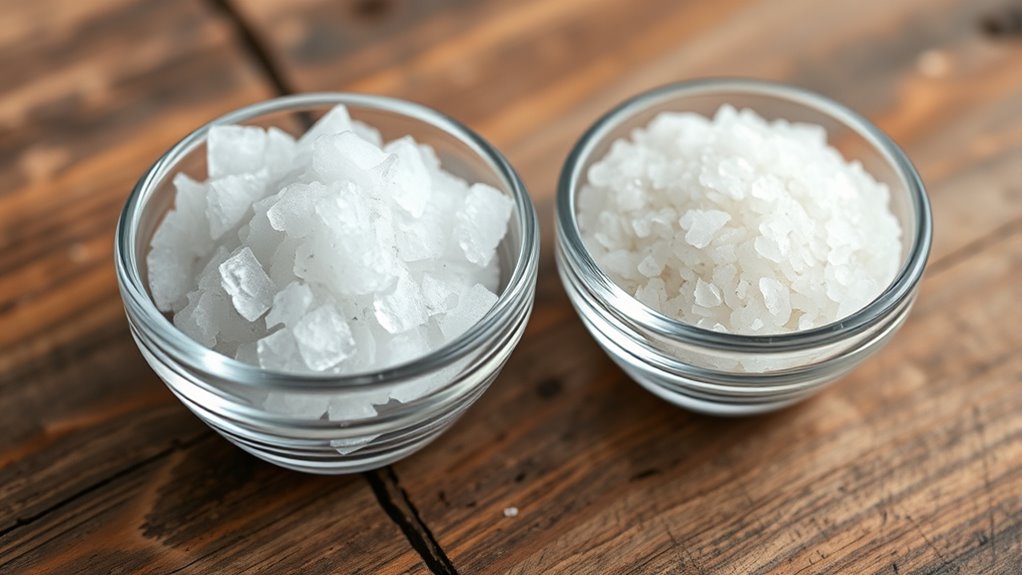
When you compare kosher salt to canning salt, you’ll notice key differences in grain size, additives, and how they dissolve. These salt types serve distinct purposes, and here’s how they differ:
- Grain Size: Kosher salt has coarse grains, while canning salt features fine grain particles for uniformity.
- Additives: Canning salt usually contains no additives or anti-caking agents, but some kosher salt brands do include anti-caking agents.
- Dissolution: Canning salt dissolves quickly, creating a clear brine perfect for pickling. Kosher salt’s larger grains dissolve slower unless ground finely.
- Usage & Weight: Kosher salt is ideal for koshering meat and seasoning, weighing less per tablespoon than canning salt, which is formulated specifically for canning and pickling.
Understanding these differences helps you choose the right salt type for your recipe without compromising texture or flavor.
Frequently Asked Questions
Can I Use Kosher Salt in Place of Canning Salt?
You can use kosher salt instead of canning salt if you weigh it properly and use pure kosher salt without additives.
Make sure to dissolve it thoroughly to avoid cloudiness or slow dissolving in your preserved foods.
Just keep an eye on the amount, because kosher salt flakes can vary in size, which might affect the saltiness.
But overall, it works fine as long as you handle it carefully!
Can Morton Kosher Salt Be Used for Canning?
Yes, you can use Morton kosher salt for canning, but you’ll need about 25% more by volume and should measure by weight.
Just make sure it’s additive-free to avoid cloudiness or discoloration in your canned goods.
It’s a simple swap, but paying attention to the amount really helps get the best results.
What Is the Ratio of Canning Salt to Kosher Salt?
You should use about 1 tablespoon of kosher salt for every 0.8 tablespoons of canning salt. Since kosher salt crystals are larger, measuring by weight guarantees you get the right salinity for safe canning.
It’s a simple swap, but it makes a big difference. Just keep an eye on those measurements to keep your preserves tasty and safe!
Does It Matter What Kind of Salt You Use for Canning?
Yes, it matters what salt you use for canning. You’ll want pure, additive-free salt like canning salt to keep the brine clear and guarantee safety.
Using kosher salt might cause cloudiness or inconsistent results in your preserves. So, it’s best to stick with the right kind of salt for the best outcome.
Conclusion
You might think kosher salt and canning salt are interchangeable, but they’re not quite the same. Kosher salt has larger, flakier crystals, while canning salt is fine-grained and pure, making it dissolve evenly—essential for safe preserving.
In fact, using the wrong salt can affect the texture and safety of your canned goods. So, stick to canning salt for your preserves to get the best results and avoid any kitchen mishaps!
When it comes to canning salt vs kosher salt, the key difference lies in their texture and purity. Canning salt’s fine grains dissolve quickly and evenly, which is crucial for preserving food safely. Kosher salt’s larger crystals don’t dissolve as uniformly, which can lead to inconsistent seasoning and even affect the shelf life of your canned items. So, if you want to ensure perfectly preserved, safe, and tasty canned goods, always choose canning salt over kosher salt. It’s a small switch that makes a big difference in your canning success!